Thrips on Anacharis / Elodea: Causes, Checks & Fixes
Quick answer
Thrips on Anacharis almost always scar emersed stems above the waterline-not healthy submerged whorls. First step: Trim infested above-water tissue, bag the trimmings, shake remaining stems over white paper to confirm, and submerge only firm clean nodes.
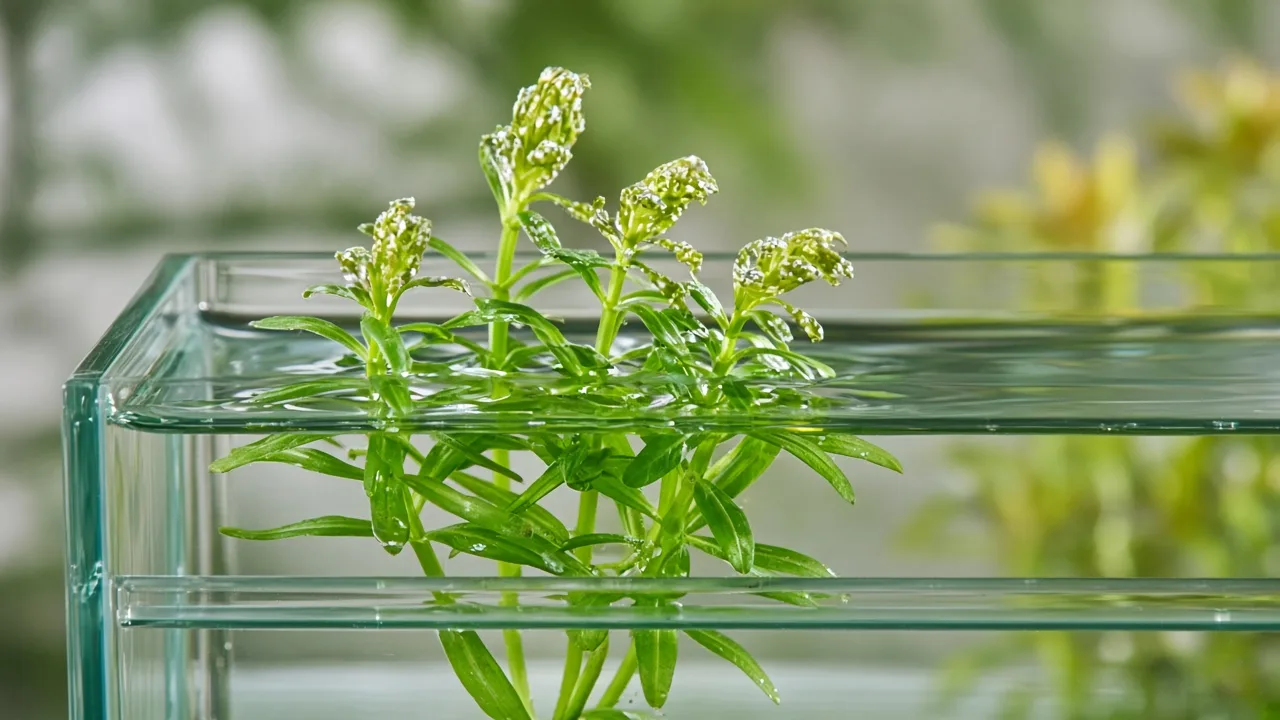
Thrips on Anacharis / Elodea: Causes, Checks & Fixes
This guide covers thrips on Anacharis / Elodea. See also the general Thrips guide, watering, and light pages for this plant.
Thrips on Anacharis / Elodea: Causes, Checks & Fixes
Quick answer
Silver stippling, curled emersed tips, or tiny black specks on stems above the water? On Anacharis (Egeria densa), thrips almost always scar emersed tissue above the waterline-nursery bundles, propagation tubs, pond margins, or stems left floating during acclimation. Look for silvery to dark brown discoloration with dark specks of excrement on newest emersed whorls. Submerged whorls below the surface typically stay clean.
First step: trim every infested emersed section, bag the trimmings, shake remaining stems over white paper to confirm thrips, and submerge only firm clean nodes. Do not dose terrestrial pesticides into aquarium water.
For how thrips reproduce, why they vector viruses on ornamentals, and general shake-test technique, see our thrips pest guide. On Anacharis, the practical pattern is emersed-tip stippling above the waterline, clean submerged whorls below, and extra caution because insecticidal soap must never enter aquarium water-treat emersed tissue off-tank only.
This guide covers submerged aquarium, turtle tub, riparium, and pond-edge culture-not houseplant pots. For soft pear-shaped insects instead of slender stippling, see aphids on Anacharis. For fine webbing and bronzed stippling, see spider mites on Anacharis. For mushy translucent submerged melt-not insects-see transparent leaves. For culture and quarantine tubs, see the Anacharis overview and propagation guide.
Thrips vs. melt vs. mites on Anacharis
Use location on the stem as your first split-this saves you from chasing water-quality fixes when the problem is emersed tissue:
| Pattern | Location | Key sign | First action | Urgency |
|---|---|---|---|---|
| Thrips | Emersed tips above waterline | Silver stippling, black fecal specks, curled tips | Trim and bag infested emersed tissue; shake test over paper | Moderate - trim first |
| Aphids | Emersed nodes | Soft pear-shaped bodies, honeydew | Trim emersed tips; submerge clean stems | Moderate - isolate from bench |
| Spider mites | Emersed leaves | Fine webbing, bronzed stippling | Rinse emersed leaves off-tank; raise bench humidity | Moderate - warm dry benches worsen |
| Submerged melt | Underwater whorls | Translucent mush, foul odor | Fix water quality-not insect treatment | High if ammonia present |
| Fungus gnats | Air above tank | Flying adults; no stem stippling | Dry adjacent potting soil on stand | Low for submerged Anacharis |
If submerged whorls are firm and green while stippling clusters only on tissue above the waterline, you are dealing with a terrestrial-phase pest on emersed tissue-not an underwater plague or water-quality crash.
Why thrips appear on Anacharis - emersed tips, greenhouse stock, and wind transfer
Thrips are not caused by low nitrates, dim aquarium light, or underwater water quality crashes. They arrive on emersed tissue exposed to open air:
- Greenhouse or pond-supplier bundles with stems protruding above rubber bands or wet newspaper
- Emersed propagation tubs where stems grow above the water surface for faster multiplication
- Pond-margin stems allowed to creep above the waterline in summer tubs
- Garden and houseplant benches - thrips can move long distances on wind or infested plants from roses, impatiens, peppers, and other common hosts to emersed Anacharis tips
- Indoor propagation benches near thrips-heavy ornamentals on the same shelf
- Turtle basking setups and riparium dry zones that intentionally keep emersed growth for aesthetics
Because Egeria densa grows as a fast submerged column feeder, hobbyists often keep tips emersed briefly during shipping acclimation-that window is when western flower thrips and greenhouse thrips scar soft new growth at stem tips. Rubber-band or tie points on supplier bundles compress stems and create sheltered crevices where thrips larvae hide at purchase.
Why submerged whorls rarely host thrips: Thrips puncture the epidermal layer and suck cell contents on tissue exposed to air. Fully submerged whorls in a closed aquarium do not offer the emersed leaf surface where colonies establish. Most pest thrips feed while hidden in buds and shoot tips-on Anacharis, that means emersed whorls above the meniscus, not underwater nodes.
Turtle-tub and riparium note: Setups that keep a permanent emersed dry zone above the waterline create ongoing thrips habitat unless you trim emersed tips on a weekly schedule. A closed aquarium with stems fully submerged carries much lower thrips risk than an open-top turtle tub with basking ledges where stems creep above water all summer.
What thrips look like on emersed Anacharis stems
On emersed Egeria densa tips and waterline stems, expect:
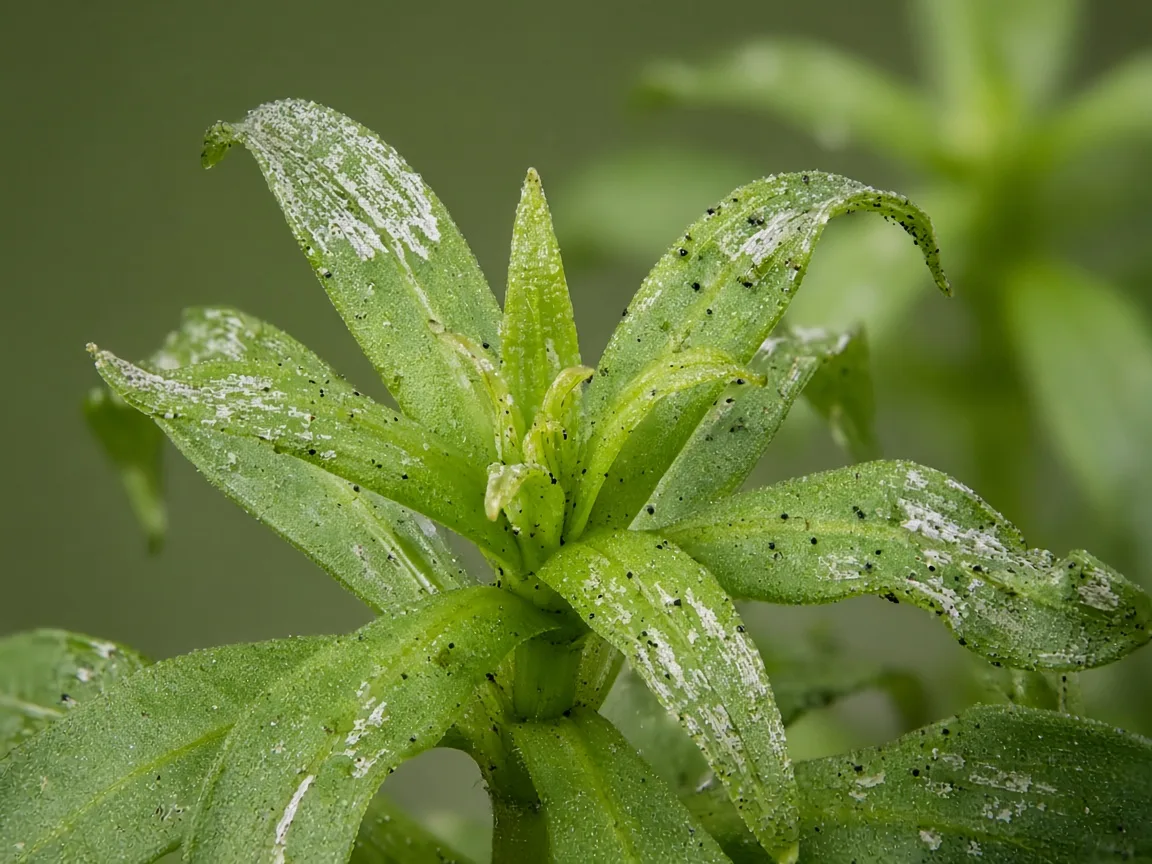
Thrips symptoms on Anacharis / Elodea - compare silver stippling and black fecal specks with healthy submerged tissue on the same plant.
- Silvery, pale, or bronzed stippling on emersed leaves-feeding punctures collapse chlorophyll and leave scabby discoloration that may not show until tissue expands
- Tiny black varnishlike flecks of frass (excrement) on leaf surfaces-dark specks of excrement are a classic thrips sign
- Distorted, curled, or papery emersed tips while submerged whorls below stay bright green
- Slender insects less than 1/20 inch long with fringed wings-visible with a 10x hand lens on emersed leaf undersides; adults are elongate and minute
- Pale yellow to dark brown nymphs without wings, often clustered in emersed whorl forks
Compare newest emersed tip growth to submerged whorls on the same stem: thrips damage stays above water; clean submerged sections confirm the plant can recover once infested emersed tissue is removed.
Does not match thrips:
- Soft pear-shaped insects with cornicles at emersed tips - aphids, not slender stippling with black specks
- Fine silk webbing and bronzed flecking on emersed leaves - spider mites
- Translucent, mushy submerged whorls with foul tank odor - melt or water stress, not insects
- Flying adults over open tanks without stem stippling - damp soil nearby; see fungus gnats
- White cottony wax masses at nodes - mealybugs
Confirm thrips vs. aphids, spider mites, and melt damage
Work through this checklist in order:
- Location test - Stippling only on tissue above the waterline? Submerged whorls clean? Strong thrips signal.
- Shake test - Shake foliage or flowers over white paper to dislodge thrips; slender moving insects confirm. Aphids shuffle slowly and are pear-shaped; mites require a lens and show webbing.
- Fecal specks - Tiny black dots on emersed leaves support thrips over mite stippling alone.
- Tip distortion - Curled, galled, or papery shoot tips on emersed growth; submerged nodes firm.
- Purchase timing - Stippling appeared within one to two weeks of a new emersed bunch? Strong hitchhiker signal from nursery or pond supplier.
- Bench audit - Nearby roses, impatiens, or peppers with thrips damage? Check common hosts on the same greenhouse shelf.
Five-step emersed-stem inspection
- Hold the stem at the waterline and inspect every emersed tip and whorl fork with a hand lens or phone macro photo.
- Shake emersed leaves over white paper and look for dislodged thrips.
- Check rubber-band or tie points where supplier bundles compress stems.
- Compare one stippled stem to a fully submerged stem in the same tank.
- Review nearby garden or houseplants on the same bench or shelf for thrips stippling.
First fix: remove emersed infested tissue and submerge clean stems
Make one focused correction first: trim every emersed section bearing stippling or black fecal specks, bag the trimmings, and replant only firm submerged stems. Wait three to five days before adding soap dips-confirm colonies are not spreading on new emersed regrowth.
Bag-and-discard protocol (invasive fragment safety)
- Trim at least 5 cm (2 inches) below the lowest visible stippling-when in doubt, cut lower.
- Place trimmings in a sealed bag and discard in household trash-never compost near waterways.
- Shake remaining stems over white paper to confirm thrips are gone; dislodge stragglers with a gentle water stream on emersed portions held over a bucket.
- Replant firm sections fully submerged with no emersed tips until the tank is clean.
Egeria densa fragments can establish in wild waterways-treat infested trimmings like invasive waste, not aquarium drain disposal.
When fish and turtles help - and when they do not
In community tanks and turtle tubs, jostle infested emersed tips over open water after trimming so any dislodged thrips fall in. Some hobbyists report surface feeders snapping up fallen insects-that behavior is anecdotal and varies by species; do not rely on fish as your primary treatment. Fish cannot graze stems that remain above the surface.
Escalation: repeat removal and off-tank soap treatment
If thrips return on emersed regrowth within three to five days after the first trim:
- Repeat trim and bag - prune off declining, injured, or infested plant parts rather than treating lightly colonized submerged tissue.
- Off-tank soap dip on emersed portions only - Move stems to a separate bucket. Apply labeled insecticidal soap to emersed tissue above water; soaps provide temporary control when coverage is thorough.
- Rinse thoroughly in clean dechlorinated water until no soap smell remains on stems.
- Return only submerged nodes - bury or weight stems so no dry leaves remain above the waterline.
- Repeat in five to seven days - thrips can complete a generation in as little as two weeks in warm weather; two or more timed treatments are often needed because eggs and pupae in plant crevices survive the first spray.
Shrimp and sensitive invertebrate tanks: Prefer discard-and-rinse over repeated soap near the waterline. Even small soap contamination stresses aquatic invertebrates-EPA product labels prohibit applying insecticidal soap directly to water. When two trim-and-rinse cycles fail, discard the affected batch and restart from a clean submerged cutting rather than risking soap drift.
Do not use copper-based algaecides or terrestrial systemic insecticides to treat thrips-Anacharis is sensitive to copper herbicides and tank chemicals harm fish and invertebrates without reaching thrips hidden inside curled emersed leaves.
Recovery timeline for trimmed stems
After infested emersed tissue is removed, judge success by new submerged whorls and absence of stippling on any regrowth-not by old scarred emersed nodes re-greening. Silver-scarred emersed leaves will not look perfect again; recovery means clean submerged growth at stem tips.
| Phase | Timing | Good signs | Bad signs |
|---|---|---|---|
| Trim + shake test | Days 1-3 | No new stippling on cut stems; paper shake clean | Thrips dislodged on repeat shake |
| Submerged regrowth | Days 7-14 | New whorls at submerged tips; pearling returns | Firm nodes turn translucent |
| Cosmetic recovery | Weeks 2-3 | Stunted emersed tips replaced by clean submerged whorls | Repeated stippling after two trim cycles |
Old emersed tissue may melt during transition to fully submerged culture on Egeria densa-that is acclimation, not a failed thrips treatment, if submerged nodes stay firm.
What not to do in aquariums and ponds
Do not dose terrestrial pesticides, neem concentrates, or systemic houseplant granules into aquarium water.
Do not pour insecticidal soap, horticultural oil, or dish detergent into the display tank-insecticidal soaps are toxic to fish and aquatic invertebrates and must be used only on emersed tissue outside the tank.
Do not leave infested emersed trimmings floating in open tanks or pond margins-winged thrips spread to bench surfaces and neighboring bundles.
Do not assume poor water quality caused thrips and chase ammonia or nitrate fixes while stippling remains on emersed stems.
Do not treat thrips with copper fish medications-copper damages Egeria densa and does not control thrips.
Do not release trimmings into streams, lakes, or storm drains-Brazilian egeria is invasive when fragments escape.
Do not over-fertilize emersed propagation benches-excessive nitrogen can increase thrips populations without helping submerged Anacharis growth.
Prevent thrips on Anacharis next time
Quarantine new stems: Hold pond-purchased or greenhouse bundles in a dedicated tub for 10-14 days. Inspect emersed tips every three to five days with a shake test before adding plants to fish tanks-see the Anacharis propagation guide for floating-acclimation steps after quarantine clears.
Keep display stems submerged: Trim emersed tips regularly so thrips lose their preferred habitat-see Anacharis pruning for cleanup technique. In turtle tubs and ripariums, schedule weekly emersed-tip trims during warm months when basking ledges keep dry zones active.
Separate benches from thrips hosts: Keep emersed propagation tubs away from roses, impatiens, peppers, and other thrips-prone ornamentals and vegetables on the same greenhouse shelf.
Inspect purchases on arrival: Check new plants carefully before introducing them-thrips eggs and nymphs hide in emersed whorl forks in wet-wrapped bundles.
Buy submerged stock when possible: Dealer tanks with stems fully underwater carry lower thrips risk than wet-wrapped bundles with long emersed sections.
Hang sticky traps on benches: Blue or bright yellow sticky traps near emersed culture tubs help detect flying thrips before stippling spreads to Anacharis tips.
When to worry - stippling spread and repeated regrowth
Lower urgency: Faint silver stippling on one emersed stem from a new purchase; submerged whorls firm; shake test shows few insects.
Moderate urgency: Stippling reappears on emersed regrowth within five days after trimming; black fecal specks on multiple stems from the same supplier batch.
Higher urgency: Distorted emersed tips on multiple bench species; winged thrips on sticky traps near propagation tubs; turtle-tub emersed zone regrows faster than you trim; stippling jumps from garden ornamentals to pond-margin Anacharis.
Escalate or discard the batch when emersed regrowth re-stipples after three weekly trim-and-rinse cycles-continued treatment often costs more than restarting from a clean submerged cutting.
For chronic greenhouse or pond-supplier infestations, contact your local cooperative extension office for integrated pest management options suited to your climate.
Escalation summary - trim, soap, or discard
| Your situation | First action | Next step if stippling returns | When to discard batch |
|---|---|---|---|
| New purchase; stippling on emersed tips only; submerged nodes firm | Trim 2 inches below damage; bag trimmings; submerge clean stems | Wait 3-5 days; repeat trim if emersed regrowth shows stippling | N/A after first successful trim |
| Stippling returns on emersed regrowth within 5 days | Repeat trim and bag; shake test over paper | Off-tank soap dip on emersed tissue only; rinse until no soap smell; repeat in 5-7 days | After three weekly trim cycles fail |
| Shrimp or sensitive invertebrate tank | Trim and discard infested emersed tissue; rinse stems | Second trim cycle only-no soap near waterline | Two failed trim cycles-restart from clean cutting |
| Turtle tub with permanent emersed dry zone | Trim all emersed tips weekly; submerge what you can | Move propagation to separate tub; hang sticky traps on bench | Chronic reinfestation from garden bench-discard batch and quarantine new stock |
Trim-and-submerge alone resolves most single-stem nursery introductions. Off-tank soap belongs in the escalation column-not day one. Discard-and-restart is the right move when three weekly trim cycles fail or shrimp-tank soap risk outweighs treating a cheap bundle.
Related Anacharis problems
- Anacharis overview - species hub, culture, and quarantine basics
- Aphids - soft pear-shaped insects on emersed tips; honeydew protocol
- Spider mites - fine webbing and bronzed stippling on emersed leaves in dry greenhouse air
- Mealybugs - white cottony wax on emersed nodes
- Fungus gnats - flying adults from damp soil on tank stand, not submerged stems
- Transparent leaves - mushy submerged melt vs. emersed insect damage
- Water stress - ammonia and shipping shock patterns below the waterline
- Propagation · Pruning - emersed-culture workflows and trim technique
When to use this page vs other Anacharis / Elodea guides
- Anacharis / Elodea watering guide - Use for routine moisture checks before assuming thrips is the main issue.
- Anacharis / Elodea problems hub - Browse all common issues on this species.
- Distorted leaves on Anacharis / Elodea - Different entry point when curl could be thrips or nutrient stress.
- Pale leaves on Anacharis / Elodea - Different entry point when silvering could be light stress vs. thrips stippling.
Related Anacharis / Elodea guides
- Anacharis / Elodea overview
- Anacharis / Elodea watering
- Anacharis / Elodea light
- Anacharis / Elodea soil
- Yellow leaves on Anacharis / Elodea
- Anacharis / Elodea problems
- Chemical damage on Anacharis / Elodea
Related tool
Use the Pest Identifier Tool to narrow causes for thrips on this plant before changing multiple variables at once.