Bottle Gourd Repotting Guide: When & How
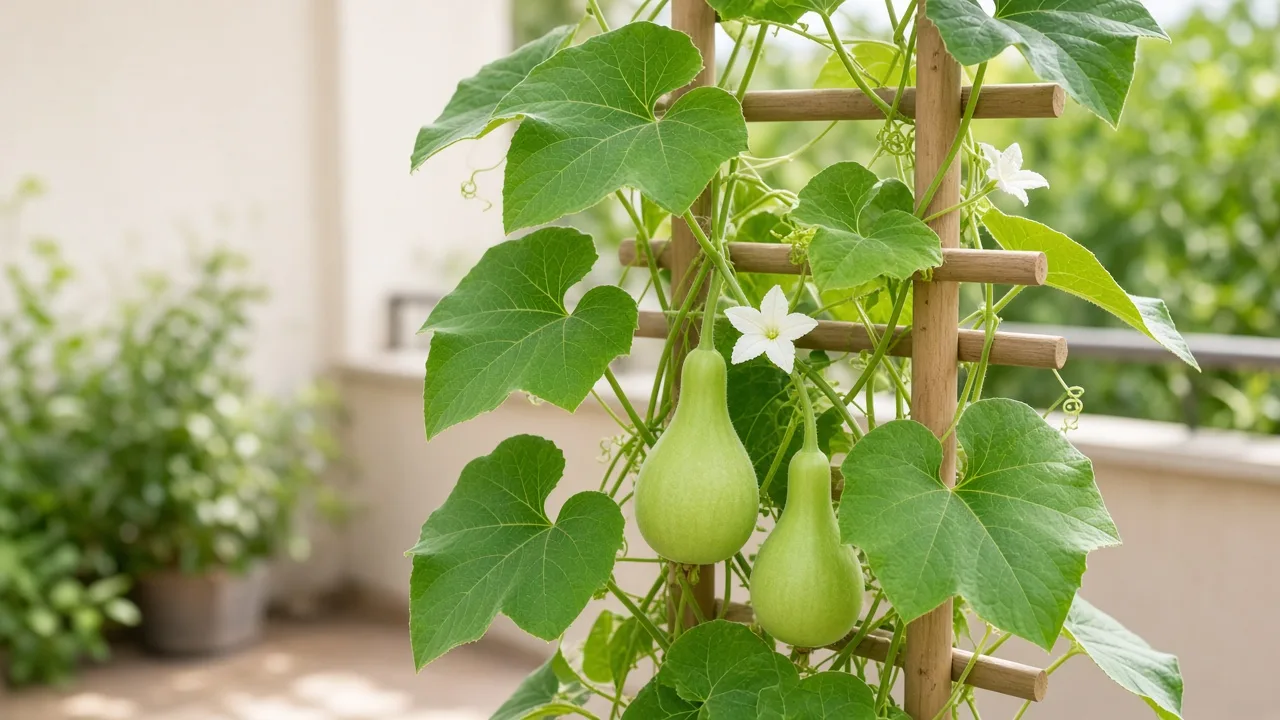
Bottle Gourd Repotting Guide: When & How
Bottle Gourd Repotting Guide: When & How
Bottle gourd repotting for terrace and kitchen gardeners is really potting on: moving young Lagenaria siceraria from cramped seed trays into progressively larger containers until the vine sits in a final pot large enough to carry a summer of night flowers and hanging lauki. Unlike a peace lily or rubber plant, bottle gourd is a fast annual climber—doodhi, ghiya, calabash gourd—that does its best work in one warm season. Once it occupies a roomy container with fresh mix and a trellis is bolted in place, you are done upsizing for the year.
That distinction keeps you from refreshing the same vine on a houseplant calendar. It also explains why the highest-value moves happen before tendrils grab a railing and why an oversized, cold, wet tub can stall a heat-loving seedling as badly as a root-bound plug. This guide covers when to pot up, how big the final container should be on Indian balconies, how to transplant without snapping cucurbit roots, and how to settle the plant afterward without inviting rot.
Bottle gourd repotting: the quick answer
Plan for at most two purposeful container moves: (1) pot up seedlings when they have two to three true leaves and roots fill the cell—cucurbit extension guides use that leaf stage for related vines such as courgettes before outdoor planting—and (2) shift into a final large pot (often 35 cm / 14 inches or larger for one strong terrace vine) before the main stem latches onto a trellis. NC State Extension recommends direct sowing outdoors only after frost danger passes and soil reaches about 70°F (21°C); match that warmth before any outdoor transplant or large final potting.
Use open drainage holes, a fertile well-drained mix aligned with the Bottle gourd soil guide, and only a modest size jump at the seedling stage. After the final potting, focus on even moisture, pollination, and harvest—not another mid-season upsize. When a late-summer vine is exhausted, sow fresh seed next warm window instead of forcing a third repot on a declining annual.
Why bottle gourd is not a houseplant repot
Bottle gourd behaves like a cucumber-family annual, not an indoor foliage plant you upsize every spring on autopilot. NC State Extension describes it as a climbing vegetable that grows quickly from seed but needs a long hot summer to mature quality fruit. Missouri Botanical Garden notes vines can reach 10–16 feet on supports, with large leaves, tendrils, and night-blooming white flowers—scale that demands vertical space, not a decorative shelf pot.
Annual vines finish in one season
Because the plant dies back after seed maturity, routine yearly repotting of the same specimen is not part of lauki culture. You either sow anew or pot up a young plant until it reaches its final container. Repotting fixes cramped seedlings and exhausted starter mix; it does not reverse bitter fruit chemistry, poor night pollination, or drought during flowering. If blossoms drop because the root zone dried out, fix Bottle gourd watering habits before you disturb roots again.
Signs bottle gourd needs potting up
Read the container and roots, not a generic repotting calendar.
Seedling and plug cues
Pot up when:
- Two to three true leaves are open and the stem is sturdy enough to handle by the root ball—RHS courgette guidance treats that stage as transplant-ready for closely related cucurbits started indoors.
- Roots circle the plug, peek through tray holes, or lift out as a tight mat when you tip the cell.
- Seedlings dry out within a day in warm weather despite careful watering—often the first sign cells are too small for fast bottle gourd growth.
- Leaves look pale or stalled while weather is warm and sun is adequate; rule out a Bottle gourd light shortfall before repotting.
Missouri Botanical Garden advises starting seed indoors in peat pots several weeks before the last frost so you can plant out without tearing taproots—ideal when monsoon or terrace timing is tight.
Final-container stress cues
Move into the final pot when an interim container dries almost daily during active vine growth, drainage holes clog with roots, or you must water twice a day to prevent midday wilt. If the plant is already climbing a trellis with tendrils wrapped tightly, postpone upsizing unless you can detach and retie without snapping the leader—usually it is cleaner to have sized the final pot earlier.
The two container moves that matter
Potting up from cells or peat pots
The first move is potting on, not planting into a terrace tub. Slide plugs out gently; hold the root ball, not the cotyledons. Choose a pot one step larger—enough fresh mix for roots to explore without leaving a huge ring of cold, wet compost the seedling cannot use. If you started in peat pots, set the whole pot into the next container so roots are not stripped; Missouri Botanical Garden specifically recommends peat pots for indoor starts of this species.
Keep seedlings warm and bright after the move. Cucurbit roots resent cold, saturated mix; wait for soil warmth near 21°C (70°F) before any outdoor shift, matching NC State’s sowing guidance.
Landing in the final large pot
The second move sets the vine up for flowering and fruit. For one strong plant on a terrace, aim for roughly 35 cm (14 inch) pots or large grow bags as a practical minimum—Ugaoo’s kitchen-garden guide suggests 14-inch containers or big grow bags with one plant per container—while hot, windy balconies often benefit from 40 litres or more so mix does not crash mid-summer. Install a sturdy trellis at the same time; NC State recommends mounds about 3 feet apart on supports (wider if vines trail on the ground), which translates to one vine per large pot on most balconies.
You can direct-sow two or three seeds per prepared large pot, thin to one vigorous seedling, and skip the plug stage when bench space is tight—mirroring field practice where several seeds go in each mound and later thinning is expected Missouri Botanical Garden.
Best timing for potting up in India and warm climates
Bottle gourd potting tracks warm soil and active growth, not a cool-season houseplant schedule.
Summer and monsoon sowing windows
On Indian plains, late February through March sowing targets summer harvest; June–July sowing can extend production through monsoon where nights stay warm. Ugaoo notes summer and monsoon as prime seed-sowing seasons for lauki. Complete the final pot move while seedlings are still small enough to handle and before the main vine attaches to supports. In cooler regions, gardeners often start in small pots indoors and move to garden soil only after frost risk passes—a pattern Chez Shuchi describes when germinating lauki in 10–12 inch pots before transferring to open ground in May.
Avoid potting up during an unexpected cool spell or when monsoon rains keep mix soggy for days. Cucurbit transplants wilt easily when roots sit in cold water; wait for a clear warm stretch and work in morning or late afternoon to reduce immediate stress.
Choose pot volume, drainage, and trellis support
Why large final pots beat undersized tubs
Bottle gourd is a high-water, fast-draining crop: it needs steady moisture but rots in stagnant mix. NC State stresses consistent moisture in well-drained soil. Wide pots dry more evenly than tall, narrow columns. Multiple open drainage holes are mandatory; saucers should be emptied after watering. Dark plastic on hot concrete can overheat roots—elevate pots on feet if the surface bakes in afternoon sun.
If you are unsure about volume, the Pot Size Calculator with bottle-gourd pre-selected offers a starting point, then adjust upward for a full-season terrace vine.
Install the trellis before vines attach
Plan vertical support before the final repot. NC State advises support structures so fruit does not rest on wet ground, reducing rot and soil blemishes—especially important for tender lauki and for clean hard shells. Position the trellis so you will not need to lift a root-bound pot later. Train the main stem upward early; hanging gourds stay cleaner than fruit sitting in monsoon puddles.
Soil mix to refresh at each step
Repotting is your chance to replace compacted, salt-heavy, or pest-carrying starter mix. Use fertile loam or quality potting soil with mature compost and perlite, coarse sand, or coco chips for aeration—roughly the blend in the Bottle gourd soil cluster target (50% mix or loam, 30% compost, 20% coarse amendment). Missouri Botanical Garden lists light, sandy or loamy, well-drained soil in full sun with consistent moisture as the performance baseline.
Never reuse mix from a previous cucurbit that showed sudden collapse at the stem base unless you are certain disease was not involved. Fresh compost supplies nutrients for the first weeks; hold concentrated feeds until roots recover (see below).
How to repot or transplant bottle gourd step by step
Lift, inspect roots, and set planting depth
- Water lightly a few hours before so the root ball holds together without being mud.
- Support the stem and tip the pot; slide the plant out. Tease only the bottom circled roots—avoid shredding the delicate tap region.
- Choose the next pot one size up at the seedling stage, or the prepared final tub with trellis ready.
- Set the plant at the same depth it grew before—cucurbits are not tomatoes; burying the crown invites stem rot in warm, wet weather.
- Firm mix gently around the ball and water once to settle voids.
If you use peat pots, leave the rim below the soil line so it wicks moisture away from the stem collar.
Care after repotting for the first week
Expect mild wilt for a day or two while roots contact new mix. Keep full sun if temperatures allow; bottle gourd needs strong light for fruit set, as covered in the Bottle gourd light guide. Delay heavy fertilizer for about a week so disturbed roots are not burned; resume gentle feeding per the Bottle gourd fertilizer page once new growth looks steady.
Water thoroughly once, let excess drain freely, then return to even moisture checks at 2–3 cm depth—not constant sogginess. Containers dry faster than ground beds; wind on high terraces accelerates wilting the first week after potting. If leaves flag while mix stays wet, pause watering and verify drainage holes are open.
Watch for male and female white night flowers as vines mature; hand-pollinate on insect-poor balconies if young fruit aborts, as Missouri Botanical Garden recommends for improved fruit set. If you need more plants rather than a bigger pot, sow additional seed or follow Bottle gourd propagation rather than dividing vines.
When repotting will not fix the problem
Skip or postpone potting when:
- The vine is already climbing and pot upsizing would break tendrils or snap the leader.
- Cool nights or waterlogged mix make transplant shock likely—wait for warmth and drainage.
- The plant shows stem rot at soil line with sour-smelling mix; fresh soil helps only after you correct drainage and remove affected tissue.
- Late-season decline has begun; an annual vine will not reboot like a perennial houseplant—start new seed next sowing window.
- Bitter fruit appears; repotting does not reset off-flavour chemistry—discard bitter lauki and review seed source per the Bottle gourd overview.
Jumping to a giant final pot from a tiny cell leaves a reservoir of cold, wet mix roots never reach. Repotting mid-climb tears tendrils during peak flowering. Planting too deep invites crown rot. Fertilizing immediately after repot scorches cut roots. Forgetting the trellis until the vine is metres long forces a disruptive move—train early with tips from Bottle gourd pruning once laterals run.
Conclusion
Bottle gourd repotting is warm-season potting on, not a perennial houseplant ritual. Move seedlings at two to three true leaves, step up one container size at a time, then settle the vine into a large, well-drained final pot with a tall trellis ready before tendrils attach. Use compost-rich mix, water in thoroughly, hold off strong feed for about a week, and keep even moisture while roots establish. After that, focus on night pollination, pest checks, and harvesting tender lauki while skins are still soft. When the season ends or the vine outgrows its space, sow again rather than chasing another mid-summer repot on an annual climber.
When to use this page vs other Bottle Gourd guides
- Bottle gourd overview — Identity, sowing seasons, trellis basics, and harvest stage before you choose pots.
- Bottle gourd soil — Mix recipes and drainage when repotting is really a soil-quality fix.
- Bottle gourd watering — Moisture checks after transplant when wilt could mean drought or excess water.
- Bottle gourd light — Sun and heat stress that no pot size corrects alone.
- Bottle gourd propagation — Starting new plants instead of upsizing a finished crop.
- Bottle gourd fertilizer — When to resume feeding after a successful move.
Related Bottle Gourd guides
- Bottle gourd overview
- Bottle gourd watering
- Bottle gourd light
- Bottle gourd soil
- Bottle gourd fertilizer
- Bottle gourd propagation
- Bottle gourd pruning
Related tool
Try the Pot Size Calculator with bottle-gourd pre-selected to estimate container volume for your terrace setup.