Bottle Gourd Watering Guide: Checks & Timing
Bottle Gourd Watering Guide: Checks & Timing
Bottle Gourd Watering Guide: Checks & Timing
Bottle gourd watering is about steady root-zone moisture, not a cute houseplant “sip every Sunday.” Lagenaria siceraria—lauki, doodhi, or ghiya—is a warm-season cucurbit vine that grows several metres in a single summer, flowers at night, and swells fruit fast when heat and water align. NC State Extension describes bottle gourd in sandy or loamy, well-drained soil in full sun, with instruction to provide consistent moisture while vines mature. Missouri Botanical Garden lists medium water needs and notes that best performance occurs with consistent moisture on light, well-drained soils.
That combination matters. Lauki is not a succulent. It is also not a pond plant. Roots need oxygen in draining mix or mounded beds, yet the vine transpires heavily once leaves cover a trellis. Your job is to water when the upper soil dries, soak the root zone deeply, and never let flowering vines crash into bone-dry soil—especially on a sun-baked terrace pot.
This guide covers how much water bottle gourd uses, when to irrigate in Indian heat and monsoon months, how terrace containers differ from ground vines, over- and underwatering signs, and what to do first when leaves look limp. Start with the Bottle Gourd overview for sowing and trellis planning, and pair watering with the Bottle Gourd soil guide when drainage—not frequency—is the weak link.
Why Bottle Gourd Needs More Water Than It Looks
Young fruit is mostly water. Kitchen-garden growers often quote roughly 90–96% water in the edible flesh (Chez Shuchi)—useful context for why the living vine also drinks aggressively in heat, even though the crop feels light in the hand. The plant’s real storage is in soil moisture and a spreading root system, not in thick succulent leaves.
Fast cucurbit vines in full sun
Bottle gourd shares watering biology with cucumber, ridge gourd, and pumpkin: large leaves, rapid vine elongation, and fruit that expand quickly once pollinated. Harvest to Table—written for cucumbers but accurate for the family pattern—notes that cucurbits need uninterrupted moisture from sprouting through harvest, with heavier watering from flowering to harvest for best yield. Afternoon leaf wilt in hot weather can be normal if plants recover overnight; morning wilt usually means the root zone is too dry.
Missouri Botanical Garden also warns that some bottle gourd lines can be bitter and inedible—a food-safety issue separate from watering, but worth remembering when stress and odd fruit coincide. Water stress during flowering more often shows up as small or misshapen gourds and blossom drop, not bitterness alone.
How Much Water Bottle Gourd Actually Uses
There is no honest universal litre count per day. Pot volume, trellis size, wind, and reflected heat from terrace walls all change evaporation. Useful targets still help:
During active growth in warm weather, many fruiting cucurbit vines benefit from roughly 2.5 cm (1 inch) of water per week from rain plus irrigation (Harvest to Table), with more during heat waves and fruit swell and less as vines senesce. On a terrace, that often translates to deep watering every 1–2 days in peak summer when the top 2–3 cm of mix dries—matching the check method on the Bottle Gourd hub—rather than a shallow daily sprinkle.
My Kitchen Garden, an India-focused growing diary, puts the trade-off plainly: bottle gourd needs plenty of water in the growing season but hates wet feet. That is the line to hold—moist, aerated root zone, not a swamp.
When to Water Bottle Gourd
Calendar apps fail here. Soil dryness and vine behaviour decide timing.
The 2–3 cm finger test
Press a finger 2–3 cm into the soil at the root zone (pot rim or mound edge). Water when that depth feels dry and the vine shows early stress—slightly softer leaves or visible midday wilt that recovers by evening. If the finger comes up cool and clinging, wait. Surface colour lies on mulched beds; the finger test beats guessing from dry-looking crust.
In large terrace tubs, also lift or tilt the container after a full soak to learn its weight when adequately moist. Light pots in afternoon sun often need water sooner than ground beds.
Reading midday wilt correctly
On hot north-Indian or Deccan afternoons, large cucurbit leaves often droop while roots still supply enough water—the plant loses moisture faster than it can pull up for a few hours. If vines perk up after sunset or by morning without extra water, you likely do not need an emergency soak.
If leaves stay limp at breakfast, or soil is dry well below 2–3 cm, treat it as underwatering and irrigate deeply. If wilt pairs with sour-smelling mix, yellow lower leaves, and wet soil days after watering, suspect overwatering and fix drainage before adding more water.
How to Water Bottle Gourd the Right Way
Deep root-zone soaks vs light sprinkles
One slow, deep irrigation that wets the full root ball beats five teacups on the surface. Apply water at the base of the stem until it drains freely from container holes or sinks into a mound. Let the top few centimetres dry before the next soak.
Avoid overhead sprinkling late in the day on dense foliage. Harvest to Table recommends watering at the base because wet leaves invite mildew—a common cucurbit issue when monsoon humidity stacks on already-moist canopies. Morning root-zone watering gives leaves time to dry.
Drip lines or soaker hoses along a terrace bed or pot row deliver steady moisture without flooding fruit. They also keep hanging lauki cleaner than overhead spray when gourds mature on a trellis.
Watering Bottle Gourd in Pots and on Terraces
Bottle gourd can grow in large 25–30 cm+ containers, but small decorative pots dry in hours under 8 hours of direct sun—the setup Chez Shuchi describes for home lauki in sunny spots. Plan for daily checks in May–June heat; migrate to every 1–2 days only if the pot still holds moisture at depth.
Use drainage holes and never let saucers hold standing water for days. Elevate pots slightly in monsoon weeks so trays do not re-saturate roots. If rain delivers a heavy soak, skip the next manual watering until the finger test dries again.
Match water to light and trellis size from the Bottle Gourd light guide: more sun and more leaf area mean more transpiration. A shaded corner may need less water but often yields fewer fruit—adjust expectations, not just the can.
Ground Beds, Mounds, and Trellis Culture
NC State Extension recommends sowing in mounds about 90 cm apart on supports or wider spacing if vines trail on soil. Mounds improve drainage in clay; water into the basin around the stem, not across compacted paths.
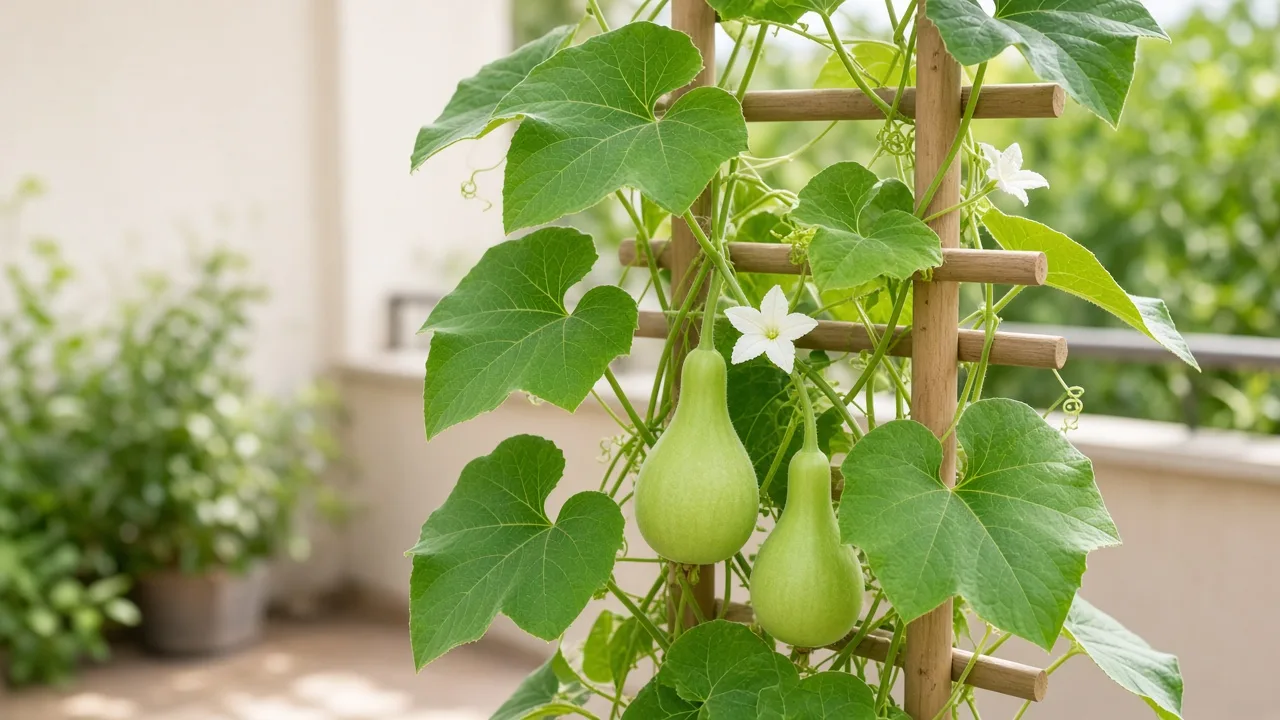
Train cooking lauki on a sturdy trellis so young fruit hangs rather than rests on wet earth—reducing rot and soil stains. Missouri Botanical Garden advises support structures strong enough to keep ornamental hard-shell gourds off the ground for clean drying skins. The same hanging logic protects tender lauki during monsoon.
After soil warms, organic mulch (straw, dried leaves, or compost) slows evaporation and blocks splash onto lower leaves. Pull mulch a few centimetres back from the stem to avoid collar rot in constantly wet weather.
Seasonal Watering Through the Lauki Year
Flowering and fruit swell
Once white night-blooming flowers appear—often around 45–60 days after sowing in warm weather (Chez Shuchi)—moisture swings hurt more. Drought during bloom leads to blossom drop and small, bent fruit. This is the stage to err slightly moist, not flood daily without checking dryness.
Hand pollination on balconies improves set when bees are scarce; steady water keeps new fruit expanding evenly. See the Bottle Gourd propagation guide for flower timing, not irrigation math.
Slowing down near harvest
For tender lauki, pick while skin is still soft; water steadily until you clear the last fruit. For hard-shell gourds left to mature on the vine, reduce irrigation slightly as rinds harden and leaves yellow—roots still need drink, but saturated soil late season encourages fruit rot where gourds touch ground.
In short-season climates, seedlings may start indoors; ease outdoor watering as transplants harden, then ramp up once new growth runs. The Bottle Gourd repotting guide covers transplant timing more than daily irrigation.
Overwatering Signs on Bottle Gourd
Chronic soggy soil is the silent killer. Watch for yellowing lower leaves while the mix stays wet, wilting despite moisture (roots failing to breathe), soft spots on fruit touching damp soil, and musty or sour smell from containers without drainage.
Overwatering pairs with poor airflow and invites cucurbit mildew and root diseases—NC State Extension lists downy mildew, fusarium wilt, and bacterial issues among common cucurbit problems on Lagenaria. Fixing water often means improving drainage, spacing vines, and watering at the root zone—not more fungicide as a first step.
If a terrace pot never dries, repot into fresher, chunkier mix per the soil guide before the vine collapses mid-season.
Underwatering Signs and Blossom Drop
Dry stress shows up as limp leaves that stay wilted into morning, dry soil pulling from pot edges, crispy leaf margins, and flowers falling without fruit set. Fruit that starts then stalls small often rode a drought during swell.
Heat wilt that recovers overnight is different—do not double-water those afternoons. Underwatering needs one deep soak, then a mulch layer and a more frequent finger-test habit—not constant shallow sprinkles that never reach deep roots.
First Action When You Are Unsure
- Check soil at 2–3 cm depth before reacting to leaf droop.
- Note time of day—afternoon sag vs morning limp changes the diagnosis.
- If soil is wet and sour, stop watering, improve drainage, and remove mulch from the stem; read the soil guide before the next soak.
- If soil is dry and morning wilt persists, irrigate slowly until water drains, then mulch.
- If both extremes alternate, stabilize with drip or scheduled deep soaks rather than panic cups daily.
When nutrition—not water—limits fruit, the Bottle Gourd fertilizer guide picks up after moisture is steady.
When to use this page vs other Bottle Gourd guides
Use this watering page for schedules, finger tests, wilt triage, terrace pots, monsoon drainage, and flowering-stage moisture. Use the overview for identity, sowing windows, and trellis planning; the light guide for sun exposure; the soil guide for mix, pH, and drainage fixes; the fertilizer guide when leaves are pale but moisture is correct; the repotting guide for transplant timing; the propagation guide for seed and pollination; and the pruning guide for vine management that changes how much leaf area drinks.
Related Bottle Gourd guides
- Bottle Gourd overview — species habit, harvest goals, and cluster map.
- Bottle Gourd light — full sun needs that drive transpiration.
- Bottle Gourd soil — drainage and mix when water will not behave.
- Bottle Gourd fertilizer — feeding after moisture is stable.
- Bottle Gourd propagation — flowers, seed, and pollination timing.
Conclusion
Bottle gourd rewards consistent, checked moisture on well-drained soil or mix—not a rigid calendar and not a waterlogged terrace saucer. Water when the top 2–3 cm dries, soak the root zone, favour morning base irrigation, and learn the difference between recoverable heat wilt and true drought. Increase attention from flowering through fruit swell; ease off as vines finish. Get those habits right, and lauki vines stay productive without the blossom drop and fruit rot that dry swings and soggy feet cause.