Best Bottle Gourd Soil for Beds & Pots
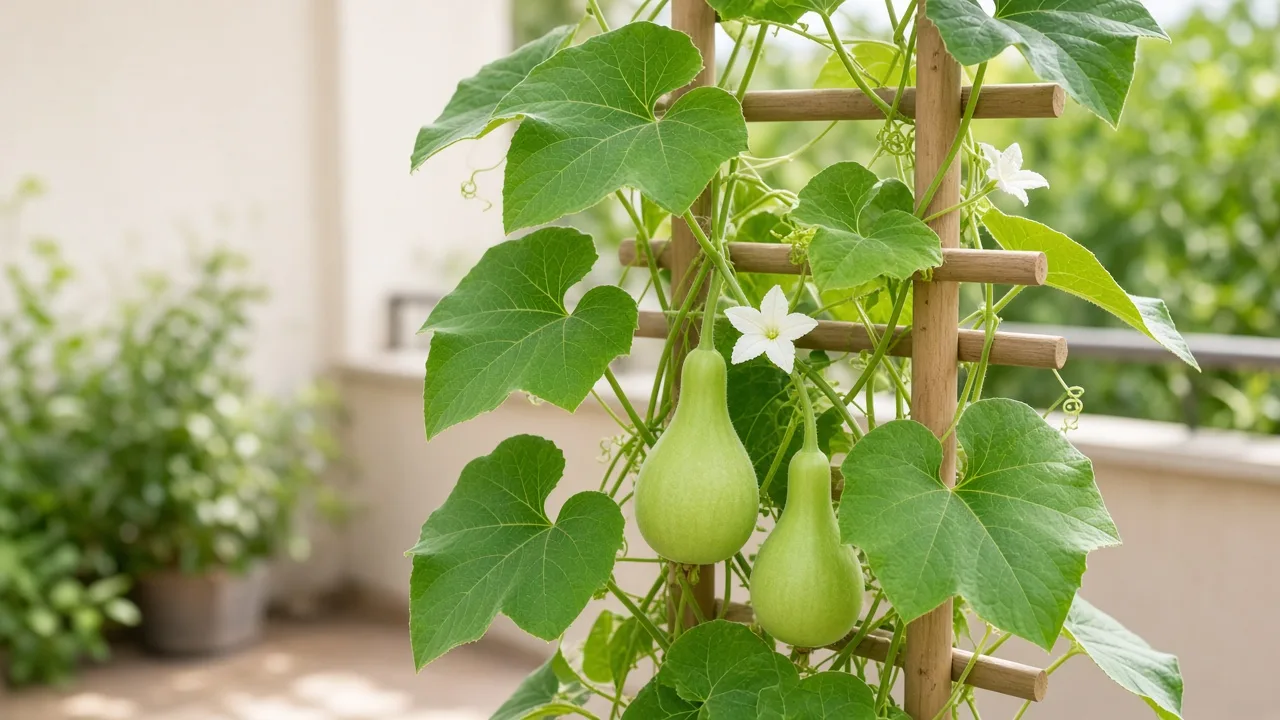
Best Bottle Gourd Soil for Beds & Pots
Best Bottle Gourd Soil for Beds & Pots
Bottle gourd (Lagenaria siceraria)—lauki, doodhi, or calabash gourd—is a warm-season climbing cucurbit grown for tender young fruit on a long vine, not a compact houseplant that survives on cactus mix. A single plant can spread several metres across a trellis, set heavy hanging gourds, and pull water and nutrients from a wide root zone in one summer. Soil for bottle gourd must therefore be rich, moisture-retentive, and well drained at the same time: fertile enough to feed rapid growth, open enough that monsoon downpours or daily terrace watering do not leave roots gasping for oxygen.
If you are deciding whether this crop fits your space, start with the Bottle Gourd overview. This page covers the root zone only—texture, pH, bed prep, mounds, and container blends. Once the mix behaves correctly, use the Bottle Gourd watering guide for how often to irrigate and the Bottle Gourd fertilizer guide for feeding through flowering and fruit swell.
Why bottle gourd punishes the wrong root zone
Bottle gourd shares the same basic soil logic as cucumbers, courgettes, and other fruiting cucurbits: large leaves transpire quickly, roots expect even moisture, and flooded soil triggers decline faster than a single missed watering. NC State Extension describes Lagenaria siceraria as doing best in sandy or loamy, well-drained soil in full sun, with consistent moisture through the growing season. That combination rules out both desert-style mixes and dense, airless peat that never dries on a humid balcony.
A fast cucurbit vine, not a windowsill succulent
In one warm season the vine builds metres of stem, foliage, and fruit weight on a trellis. The RHS courgette guide notes that related cucurbits want a warm, sunny position with rich soil and regular watering—language that fits a vegetable bed, not ornamental indoor potting soil. Treating lauki like a succulent guarantees midday wilting during fruit fill, even if you water daily.
Drainage failure vs drought in the same pot
Cucurbit relatives are sensitive to flooding while still needing frequent water. Bottle gourd shows the same split personality on terraces—cracked, hydrophobic mix one week and sour, saturated mix the next after heavy rain. The fix is structure (compost plus coarse aeration), not simply watering less or more on a calendar. Soil choice and irrigation work together; see the Bottle Gourd watering guide once drainage is confirmed.
Ideal soil texture for Lagenaria siceraria
Think vegetable-garden loam: crumbly, dark with organic matter, and able to hold water in the root zone for a day or two without turning into mud. NC State Extension lists acceptable textures from sand through clay when organic matter is high and drainage is good, with the root zone described as moist rather than bone-dry or stagnant.
Sandy loam, organic matter, and steady moisture
Sand alone drains too fast on a hot terrace; pure clay holds water against roots after every storm. The practical target is a sandy loam or improved loam with mature compost worked through the planting zone. LeafyPixels hub data for bottle gourd suggests a container starting point of about 50% quality potting mix or garden loam, 30% mature compost, and 20% perlite, coarse sand, or fine bark for aeration—adjust if your balcony dries overnight or stays humid through monsoon.
pH 6.0–7.5 and when to soil-test
NC State’s plant toolbox places bottle gourd in neutral soil roughly pH 6.0–8.0, while many lauki growers aim for about 6.0–7.5 in kitchen gardens. Treat 6.0–7.5 as a sensible home range, then follow a local soil-test report instead of adding lime or sulphur by guesswork. Do not chase a decimal on paper while ignoring structure—compacted, waterlogged soil at “ideal” pH will still produce weak vines and small gourds.
Preparing garden beds in India and warm climates
Clear weeds and old cucurbit debris before sowing. Bottle gourd is often direct-sown into warm ground, so prepare the full row or mound, not a rich pocket surrounded by compacted native soil.
Compost and manure before sowing
The RHS advises digging lots of garden compost or well-rotted manure into each sowing or planting site, roughly a spade depth and width, ideally a few weeks before seeds go in so the bed settles. For lauki on a kitchen plot, spread mature compost across the bed and fork it through the top 20–30 cm rather than concentrating fertiliser only where you will dibble seed. Keep detailed nitrogen timing in the Bottle Gourd fertilizer guide once roots are established.
Mounds, raised rows, and monsoon drainage
NC State Extension recommends planting several seeds in mounds about 90 cm (3 ft) apart when vines climb supports, or wider spacing if stems trail on the ground. Mounds lift roots slightly above puddles, improve warm-up in cool springs, and help fruit stay off saturated soil when you cannot trellis every stem. On flat terraces, use raised planters or grow bags with open drainage holes rather than saucers that hold water.
Sandy soils, clay soils, and native ground fixes
Walk the site after rain or a deep watering. Water should soak in within minutes, not pool for hours. Dig a small inspection hole: soil that glistens, smells sour, or squeezes into a tight, shiny ribbon needs structural work before seed goes in.
Improving light sand without losing moisture
Sandy plots drain fast and leach nutrients. Repeat light compost additions and use mulch after seedlings establish so the surface does not bake. A modest band of coarse organic matter through the row holds moisture better than a single deep hole of pure manure that can burn young roots.
Opening heavy clay without a single sand dump
Clay can grow excellent lauki when organic matter and drainage outlets improve. Build raised beds, add mature compost and coarse grit through the planting zone, and avoid sowing into low spots where monsoon water collects. Dumping one bucket of sand into clay often creates a concrete-like layer; work amendments through the whole bed width you plan to use.
Container mixes for terraces and kitchen gardens
Bottle gourd is a large vine; a shallow decorative pot without support will not produce reliable fruit. Plan one strong plant per large container, a sturdy trellis, and a mix that matches vegetable beds—not houseplant blends.
Starting blend: loam, compost, and grit
Use the 50 / 30 / 20 loam–compost–grit ratio from the hub as a starting point. Terrace guides for lauki commonly recommend roughly 35 cm (14 in) pots or large grow bags with a quality vegetable potting mixture—one plant per container. Fill to within a few centimetres of the rim so water does not spill off a crusty surface without reaching roots.
Pot size, grow bags, and trellis anchors
Anchor the trellis or railing support at planting so a 3–5 m vine does not topple a light pot later. Confirm water flows freely from drainage holes; a layer of stones does not fix blocked outlets. For moving seedlings from trays, see the Bottle Gourd repotting guide and Bottle Gourd propagation guide.
Soil at sowing, transplant, and establishment
Bottle gourd seed rots in cold, wet ground. Soil preparation and soil temperature matter as much as mix ingredients.
Warm soil before seeds go in
NC State Extension directs sowing outdoors after frost danger passes and ground temperature reaches about 21°C (70°F). In short-season regions, start seed indoors in peat pots and transplant without disturbing roots once nights stay warm. Press a finger into the bed: if it feels cold and clammy, wait or use black plastic mulch to warm the row.
Transplanting peat pots without disturbing roots
Cucurbit roots resent bare-root handling. Plant peat pots level with the soil surface in the same rich, well-drained mix you prepared for direct sowing. Water once to settle, then let the top 2–3 cm dry before the next deep irrigation—details in the watering guide.
Mulch, side-dressing, and mid-season soil care
After vines cover the ground, bare soil dries quickly and fruit on the ground picks up soil-borne blemishes.
Mulch through hot and windy spells
A thin layer of straw, dried leaves, or compost mulch keeps moisture steadier and reduces splash onto lower leaves. Pull mulch a few centimetres back from the stem base so the crown does not stay wet. Training fruit on a trellis—covered in the Bottle Gourd overview—keeps young lauki off damp soil and cuts rot where gourds rest on wet ground.
Refreshing fertility without waterlogging
Side-dress with mature compost mid-season only when drainage is good and vines are actively growing. A heavy manure layer on constantly wet mix invites soft growth and disease. If lower leaves yellow while soil stays soggy, fix drainage before adding more fertiliser.
Wrong-soil warning signs on bottle gourd
Soil problems show up within days on a fast vine.
Yellow leaves, stalled vines, and blossom drop
Yellow lower leaves with persistently wet mix often mean roots lack oxygen—not that the plant needs more water. Blossom drop and small, misshapen fruit can follow drought, but they also appear when roots sit in saturated soil during flowering. Probe deeper than the surface crust before irrigating again.
Fruit rot where gourds touch wet soil
Soft spots on fruit where gourds rest on damp ground are a classic sign of poor drainage or overhead irrigation on heavy soil. Trellis hanging fruit, use mulch, and improve bed slope or container drainage. Pair soil fixes with the Bottle Gourd light guide so vines photosynthesise strongly enough to recover.
Store-bought potting soil vs a DIY vegetable blend
Bagged mixes vary widely. Read the label: “moisture control” indoor blends often stay too wet for a full-sun cucurbit.
When peat-heavy bags stay too wet
If water pools on the surface and the pot feels heavy days after watering, repot into a grittier vegetable blend before mid-season. Do not wait for root decline when the vine is already fruiting.
When terrace mixes dry out overnight
If pots lighten and leaves wilt by afternoon despite morning watering, increase compost and coir in the blend, shade the pot sides from afternoon sun where possible, and confirm the container is large enough for the root mass. Extremely fast-draining cactus mix is the wrong tool for lauki.
When to use this page vs other Bottle Gourd guides
Use this soil guide to choose bed versus container mix, interpret pH and organic matter, build mounds, and fix drainage before sowing. Use the Bottle Gourd watering guide for when and how much to irrigate, the Bottle Gourd fertilizer guide for nitrogen and compost feeding after roots are healthy, and the Bottle Gourd light guide for full-sun placement on terraces.
For seed timing, hand pollination, and trellis training, use the Bottle Gourd propagation guide and Bottle Gourd pruning guide. Soil cannot replace warm nights; if vines stall in a cold spring despite perfect compost, the next sowing belongs on the calendar, not in a deeper manure layer.
Related Bottle Gourd guides
The Bottle Gourd overview ties together trellis space, harvest stage for tender lauki versus hard shells, and food-safety notes on bitter fruit. The Bottle Gourd watering guide translates your mix’s drainage into a daily check routine, while the Bottle Gourd fertilizer guide explains feeding once structure and moisture are stable.
Container growers can follow the Bottle Gourd repotting guide for moving seedlings into final pots, and the Bottle Gourd propagation guide for direct sow versus indoor starts. If vines lean or fruit load increases, the Bottle Gourd pruning guide helps manage growth without compensating for waterlogged soil.
Conclusion
Good bottle gourd soil is fertile, moisture-retentive, and genuinely well drained—in ground mounds, raised beds, and especially on terraces. Aim for sandy loam or improved loam with high organic matter, keep pH roughly 6.0–7.5 unless a soil test says otherwise, and sow only after soil warms to about 21°C (70°F). Fix structure before chasing fertiliser, trellis fruit off wet ground, and match irrigation to a mix that drains within minutes after watering. When those pieces align, lauki vines reward you with steady growth through the warm season.
Related tool
Try the Soil Mix Calculator with bottle gourd pre-selected to estimate blend volumes for your pots and grow bags.