Bottle Gourd Propagation: Seed Sowing & Germination
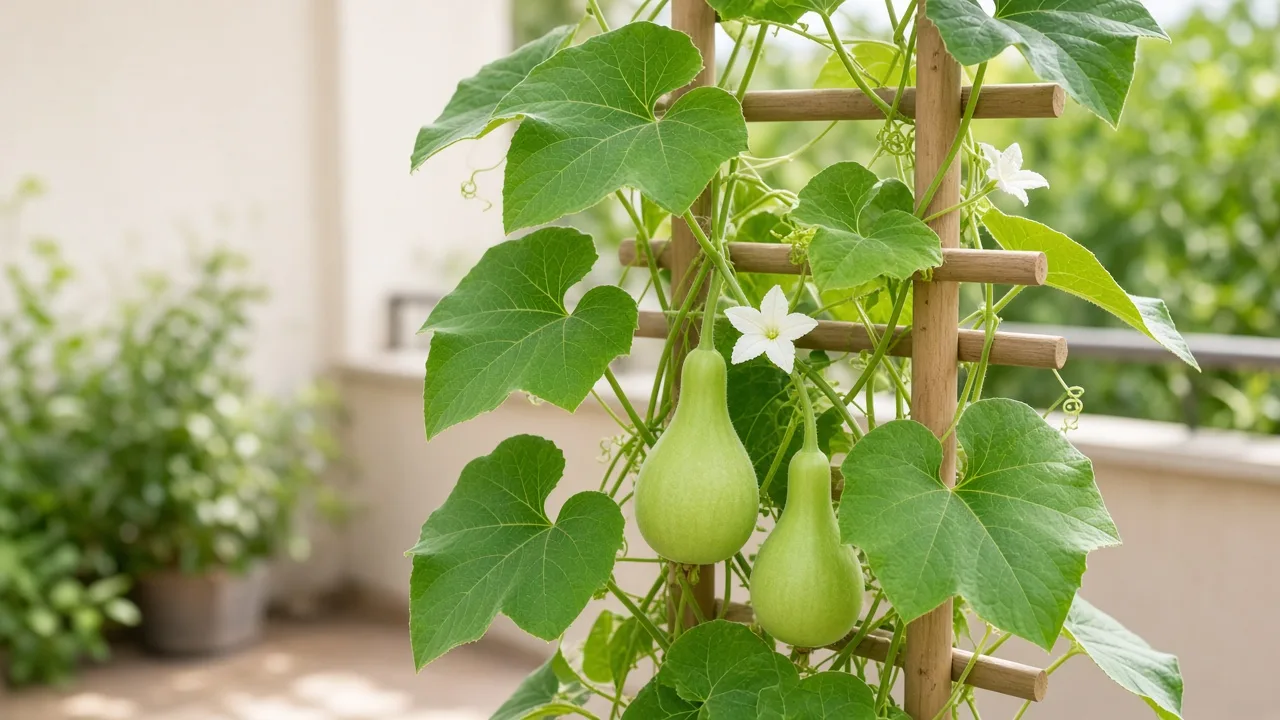
Bottle Gourd Propagation: Seed Sowing & Germination
Bottle Gourd Propagation: Seed Sowing & Germination
Bottle gourd propagation for Lagenaria siceraria—the lauki, doodhi, or calabash vine grown across Indian kitchens—means starting from seed. This fast annual cucurbit does not behave like a perennial you can root from a vine tip; every warm season begins with viable seed, warm soil, and a trellis plan ready before stems lengthen. NC State Extension describes bottle gourd as an annual climbing vegetable sown outdoors after frost when soil reaches about 70°F (21°C), with several seeds per mound and thinning later. Missouri Botanical Garden adds that seed may be started indoors in peat pots several weeks before the last frost in short-season climates—then moved out without tearing roots.
If you are wondering whether a leftover kitchen scrap can spawn another plant, redirect that effort into sowing. The payoff is a single vigorous vine that can cover a balcony railing in weeks when light, water, and support align with the bottle gourd overview.
How Lagenaria siceraria reproduces in the garden
Bottle gourd completes its life in one warm season. It germinates, climbs with tendrils, opens large white night-blooming flowers, sets fruit, and dies back after seed matures—there is no persistent crown to divide. Propagation is therefore about starting the next generation from seed, optionally saving seed from your own mature fruits if quality and bitterness checks pass.
Why seed is the reliable home propagation method
Commercial and home growers propagate bottle gourd almost exclusively from seed. Missouri Botanical Garden notes the vine is “easily grown from seed,” with direct outdoor sowing or indoor starts in peat pots. Stem cuttings and grafting appear in research and specialty production, but they are not part of standard kitchen-garden practice; success rates and equipment needs are poor compared with sowing when soil is warm. Unlike some perennial climbers, L. siceraria does not root reliably from vine segments in typical terrace conditions.
Bottle gourd vs other gourds you might confuse at sowing time
Angled ridge gourd (Luffa acutangula) and smooth sponge gourd share cucurbit habits but differ in fruit shape and cultivar names. Bottle gourd (Lagenaria) produces hard-shelled pepos that can be harvested young like zucchini or dried for crafts. Confirm your packet lists Lagenaria siceraria if you want lauki for curries rather than a decorative birdhouse type. Seed size and sowing depth are similar across summer cucurbits, but spacing and trellis strength must match a vine that NC State Extension notes can spread several metres on supports.
When to sow bottle gourd in India and warm climates
Bottle gourd is a warm-season crop. Seeds sit idle in cold, waterlogged soil, while heat and consistent moisture drive emergence once nights stay mild.
Summer and monsoon planting windows on plains terraces
On many Indian plains, growers sow a summer crop in February–March and a monsoon (kharif) crop in June–July, adjusting for local rain and night temperatures. Ethnobotanical reviews of Indian production note nursery sowing followed by transplant at two to three true leaves, with regional timing split between rabi/summer and monsoon plantings. On a terrace, match sowing to when your container mix stays warm day and night—not merely when the calendar flips. If March nights still dip cool, wait or start under cover and harden off before exposing seedlings to open railings.
Soil temperature checks before you commit seed
Hold off until soil at sowing depth feels warm and stays above about 20–21°C for reliable emergence; many home growers see cotyledons in roughly 7–10 days under those conditions. Missouri Botanical Garden recommends outdoor planting when soil reaches 70°F. My Kitchen Garden notes germination can stretch 7–25 days when soil is cooler, which is why a cheap soil thermometer saves wasted seed. If a cold snap follows sowing, emergence stalls and seedlings become vulnerable to rot—see the bottle gourd light guide for full-sun placement after emergence.
Choose seed and variety before you plant
Propagation success begins with seed quality, not secret soaking formulas. Weak or old seed wastes a long trellis season.
Store-bought hybrid vs open-pollinated lauki lines
Hybrids sold for Indian kitchen gardens are bred for uniform tender fruit and disease tolerance; open-pollinated landraces may vary in length and skin thickness. Buy from a reputable source and note days-to-harvest on the packet. For craft or birdhouse gourds, you may deliberately leave fruits to mature on the vine—still the same sowing method, different harvest goal. Missouri Botanical Garden lists many ornamental cultivar shapes; culinary lauki packets should still read Lagenaria siceraria.
Home-saved seed and bitter-fruit caution
Mature bottle gourd fruits hold hard seed suitable for storage after drying. Home saving works, but cucurbits can occasionally produce bitter fruit, especially with unselected seed. Missouri Botanical Garden warns that some varieties are bitter and inedible. Taste a sliver of raw flesh from the first fruits of a saved line; discard bitter ones and do not reuse seed from those plants. This step matters most when you propagate from seed you saved yourself.
Prepare for sowing: mix, pots, and trellis
Match propagation containers to the soil guide
Use a light, well-drained mix rich in compost—similar to the loam–compost–perlite balance described in the bottle gourd soil guide. Saturated starter mix invites fungi; bone-dry mix prevents imbibition. For direct sowing in beds, work compost into mounds so water drains away from the stem base while the root zone stays evenly moist.
Install supports before vines lengthen
NC State Extension recommends planting several seeds in mounds 3 feet apart on supports or 4–6 feet apart if vines trail on the ground. Set trellis posts, railing nets, or sturdy strings before sowing so you are not piercing roots later. Hanging young fruit stays cleaner than gourds resting on wet monsoon soil—a propagation decision that pays off all season.
Direct sowing bottle gourd outdoors
Direct sowing suits frost-free terraces and kitchen beds once nights are warm and a trellis is ready.
Mound spacing on trellises vs ground trailing
On a trellis, space mounds about 90 cm (3 ft) apart; for ground culture, widen to 1.2–1.8 m (4–6 ft) so sprawling stems do not compete for light and airflow. Each mound can hold two to four seeds; thin to the strongest one or two plants after true leaves expand. Crowded seedlings shade each other and encourage damping-off in humid flats—less of an issue in open mounds but still relevant if you over-sow thickly in one pocket.
Sowing depth, thinning, and first true leaves
Sow about 1–2 cm (½ inch) deep, cover lightly, and firm the mix. My Kitchen Garden suggests half-inch depth in small pots or ground. Keep evenly moist until cotyledons open, then ease watering slightly while maintaining steady moisture at depth. Transplant or final spacing should leave one vigorous plant per mound when stems show two to three true leaves and roots hold the plug together.
Starting bottle gourd indoors for short seasons
Short monsoon windows or hill districts may not offer enough warm days for direct sowing alone. Indoor starts buy time if you respect cucurbit roots.
Peat pots and transplant timing
Missouri Botanical Garden recommends starting seed indoors in peat pots several weeks before the last frost date in cool climates—the same logic applies when March nights are still cool on a north Indian terrace. Sow one seed per cell or two per pot to thin later. Move plants out when frost risk is gone and soil is warm; bury the entire peat pot so roots are not exposed. Deep trays matter less than width: roots are sensitive, but the vine’s length is the real constraint—plan the final large container or bed before you sow.
Hardening off without shocking young vines
Expose seedlings to outdoor sun gradually over 5–7 days, increasing hours each day and protecting from strong wind at first. Cucurbits wilt dramatically when moved from dim rooms to full terrace sun; partial shade for the first afternoon prevents scorched cotyledons. Once hardened, plant at the same depth as in the pot and water in well. Post-transplant care overlaps with the bottle gourd repotting guide when you move seedlings into final large tubs.
Optional seed soaking and scarification
When a warm soak helps—and when it does not
Soaking 12–24 hours in room-temperature water can soften the seed coat; My Kitchen Garden recommends overnight soaking and sowing seeds that sink. Drain and plant promptly—do not leave seed submerged for days. Soaking is optional when soil is already warm and kept evenly moist; it matters more for older seed or slow first germination.
Older seed and hard coats
A light nick with a file or gentle scarification on old packets can speed water uptake when germination tests stall. Test five seeds on a damp paper towel at 25–29°C before committing an entire bed. If fewer than three sprout in ten days, buy fresh seed rather than doubling sowing depth—which does not fix viability.
Germination timeline and early seedling care
Cotyledons to transplant-ready seedlings
Under warm, moist conditions, expect emergence in about one week, with a wider 7–25 day window if nights are cool. After cotyledons open, the first true leaves follow quickly; bottle gourd grows fast once roots establish. Provide full sun as soon as seedlings are outdoors—leggy stems on a windowsill rarely recover into sturdy vines without sufficient light.
Moisture, light, and airflow after emergence
Water when the top centimetre dries, but never let deep mix crack in heat. Good airflow around flats prevents fungal collars on stems. If starts lean toward a window, rotate pots daily until they move outside permanently.
Prevent damping-off and failed stands
Sanitation and watering discipline in flats
NC State Extension explains that damping-off fungi attack germinating seed and weak seedlings, especially under cool, wet conditions or thick, shaded stands. Use clean trays, sterile or pasteurized mix for indoor starts, avoid overcrowding, and water in the morning so foliage dries. Once stems pinch at the soil line, discard affected cells rather than trying to rescue collapsed lauki starts.
Cold nights after a warm day spell
Warm days followed by chilly nights stall cucurbit metabolism and invite root pathogens. Delay sowing until lows stay above about 15–18°C, or keep starts under a warm roof until the monsoon settles. Overhead misting cold flats at night is a common terrace mistake—dry, warm roots grow faster than constantly soggy crowns.
After propagation: pollination and first fruit set
Propagation gets you a vine; pollination delivers fruit. Large white flowers open at night, and NC State Extension notes fruit set improves with hand pollination when bee activity is low on balconies. Identify male flowers on thin stems and females with a tiny fruit swelling behind the bloom; transfer pollen with a brush in early morning when flowers are still receptive. Steady moisture from the watering guide during flowering matters as much as pollen—drought during first female blooms aborts fruit even on well-rooted vines.
Saving bottle gourd seed for next season
Mature fruit, drying, and storage
Leave selected fruits on healthy vines until the rind hardens and colour shifts toward yellow or tan, with stem attached at harvest. Scoop seeds, rinse pulp away, and dry thoroughly for several days on a screen before storing in a cool, dark jar. Label cultivar and date. Missouri Botanical Garden notes inner pulp dries in mature shells, leaving hard seed for next year’s sowing.
Isolation when you want a true-to-type line
Bottle gourd crosses readily with other Lagenaria plants nearby. For home kitchen use, casual saving from your best non-bitter vine is usually enough. If you need uniform shape for craft gourds, bag flowers and hand pollinate, or separate vines by distance so bees do not mix pollen.
Common bottle gourd propagation failures
Seeds never sprout
Cold soil, buried too deep, or dead seed are the usual causes. Re-check soil temperature at sowing depth, re-test viability on a towel, and sow fresh if fewer than half sprout in warm conditions.
Seedlings collapse or stall
Damping-off, waterlogged mix, or transplant shock show up as pinched stems or yellow cotyledons. Improve drainage, reduce watering frequency, and never move root-bound plugs into compacted garden soil without loosening the hole and watering in gently.
Leggy starts and weak transplants
Low light indoors produces thin stems that snap in wind. Harden off gradually, pinch only if you understand vine architecture—most lauki growers rely on pruning later for airflow rather than topping tiny seedlings.
When to use this page vs other Bottle Gourd guides
Use this propagation page when you are starting from seed—choosing sowing windows, germinating indoors or in mounds, and avoiding seedling diseases. Once vines are established, shift to watering for daily moisture checks, soil for bed mix and pH, fertilizer for fruit swell, light for terrace placement, pruning for vine management, and repotting when moving seedlings into final containers. The overview ties the full lauki lifecycle together if you need a single starting map.
Related Bottle Gourd guides
- Overview — species identity, trellis planning, bitter-fruit safety, and harvest goals for cooking vs dried shells.
- Light — full-sun placement and signs of weak, leggy growth after germination.
- Watering — steady moisture through flowering without waterlogging monsoon beds.
- Soil — loam–compost mixes for mounds and large tubs.
- Fertilizer — feeding after true leaves expand and fruit sets.
Conclusion
Bottle gourd propagation is straightforward when you treat Lagenaria siceraria as the warm-season seed crop it is: sow into warm, well-drained soil, give each vine room on a trellis, and protect young seedlings from cold, wet flats. Soaking and indoor starts are optional tools for slow germination or short seasons—not substitutes for soil temperature. Save seed only from mild, non-bitter fruits, and hand pollinate when nights bloom on a quiet balcony. Nail those steps and the rest of the lauki cluster—water, feed, and train—turns a single seed into months of harvest.