Crocodile Fern Care – Humidity, Watering and Light
Microsorum musifolium 'Crocodyllus'
Grow Crocodile Fern with bright filtered light, humid air and an evenly moist, freely draining mix. Learn how to water, propagate and protect its patterned fronds.
Crocodile Fern Care Guide
Start with wateringThe most common care mistake for Crocodile FernWatering guide →Crocodile Fern care essentials
Light
Bright indirect light, such as near an east- or north-facing window
Water
Keep the mix lightly and evenly moist in active growth. Water when the surface begins to dry, then let excess drain; do not leave the roots sitting in water.
Soil
Use a rich, coarse, moisture-retentive potting mix that still drains freely. A standard houseplant mix amended with orchid bark and perlite is suitable.
Humidity
High humidity; aim for at least 50% relative humidity indoors
Temperature
60–75°F (16–24°C); protect from cold drafts and temperatures below 50°F (10°C)
Fertilizer
About Crocodile Fern
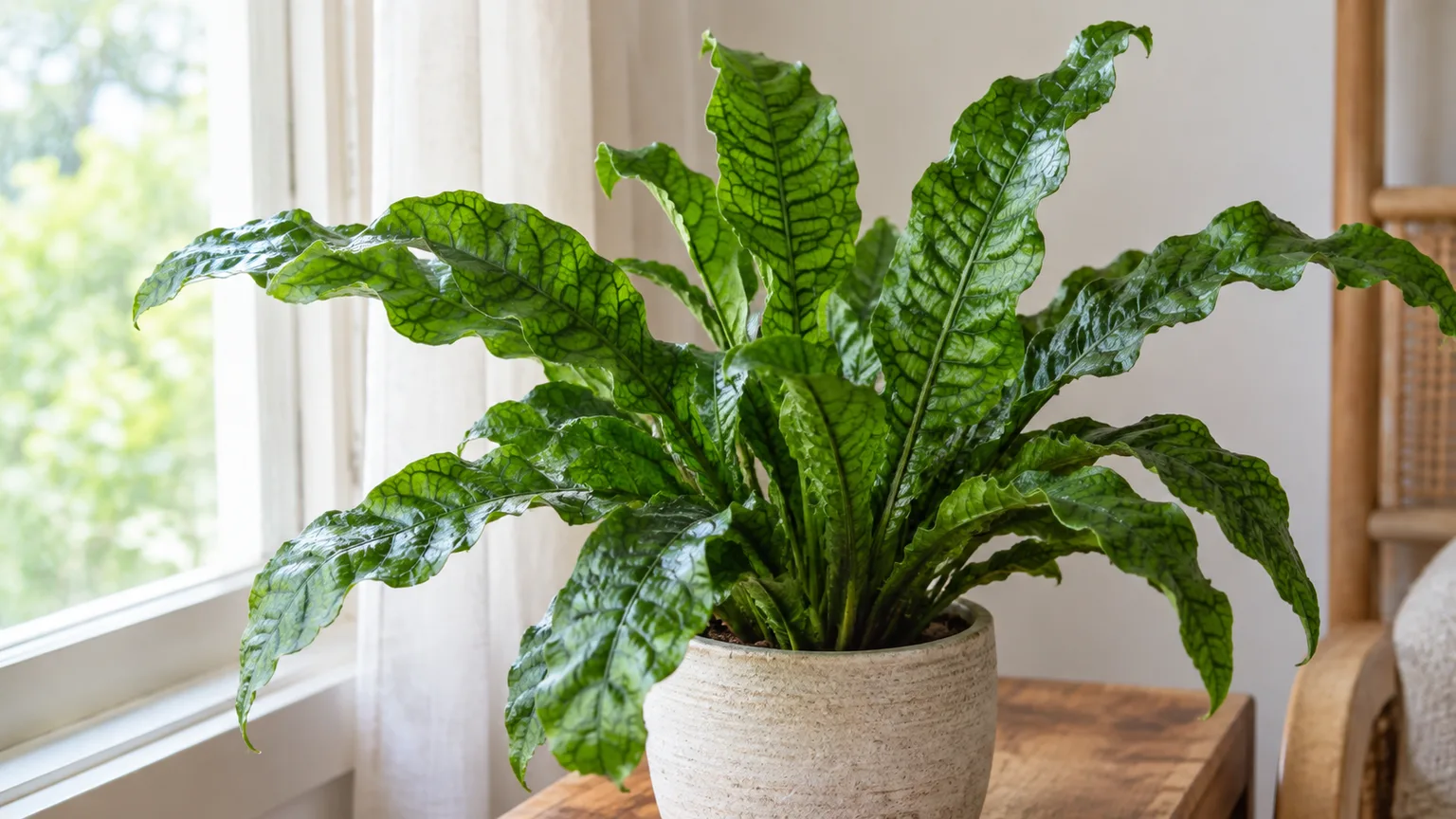
Crocodile Fern is native to Southern Myanmar to New Guinea, typically reaches 1–3 ft (30–90 cm) tall and wide; cultivated fronds may reach 2 ft indoors, with not specified in the species references reviewed; allow room for arching fronds growth. Crocodile Fern has a epiphytic, rhizomatous fern; grown terrestrially in a pot or mounted in cultivation growth habit and part of the Polypodiaceae family. It is also known as Alligator Fern and Microsorum musifolium.
| Detail | Information |
|---|---|
| Also known as | Alligator Fern, Microsorum musifolium |
| Native region | Southern Myanmar to New Guinea |
| Mature size | 1–3 ft (30–90 cm) tall and wide; cultivated fronds may reach 2 ft |
| Growth rate | Not specified in the species references reviewed; allow room for arching fronds |
| Growth habit | Epiphytic, Rhizomatous Fern; Grown Terrestrially In A Pot Or Mounted In Cultivation |
| Scientific name | Microsorum musifolium 'Crocodyllus' |
| Family | Polypodiaceae |
How to care for Crocodile Fern?
How much light does Crocodile Fern need?
Bright indirect light, such as near an east- or north-facing window
- Bright indirect light, such as near an east- or north-facing window - Bright indirect light, such as near an east- or north-facing window.
When should you water Crocodile Fern?
Keep the mix lightly and evenly moist in active growth. Water when the surface begins to dry, then let excess drain; do not leave the roots sitting in water.
- Feel the soil surface. Water when it is beginning to dry - Water when the surface begins to dry, then let excess drain; do not leave the roots sitting in water.
- and empty any water left in the saucer - Water when the surface begins to dry, then let excess drain; do not leave the roots sitting in water.
- Drain excess water - Water when the surface begins to dry, then let excess drain; do not leave the roots sitting in water.
What soil works best for Crocodile Fern?
Use a rich, coarse, moisture-retentive potting mix that still drains freely. A standard houseplant mix amended with orchid bark and perlite is suitable.
- moisture-retentive potting mix or coco coir - Use a rich, coarse, moisture-retentive potting mix that still drains freely.
- orchid bark - A standard houseplant mix amended with orchid bark and perlite is suitable.
- perlite - A standard houseplant mix amended with orchid bark and perlite is suitable.
Grower notes for Crocodile Fern
Give the fronds filtered light
Crocodile Fern grows under tropical canopy conditions. Place it in bright indirect light or partial shade, and keep direct sun off the textured fronds because it can scorch them. A north- or east-facing window is an easy starting point indoors.
Keep moisture steady without waterlogging
Check the surface of the mix instead of watering by the calendar. Water when it begins to dry, then allow the container to drain completely. The goal is a lightly moist root zone with air around the roots, not a pot that stays saturated.
Raise humidity around the plant
This tropical fern prefers humid air. Keep it away from heating or air-conditioning drafts; group it with other plants or use a room humidifier when indoor air is dry. The Spruce recommends at least 50% relative humidity.
Read the frond texture correctly
The long, strap-shaped, glossy fronds have raised, net-like veins that resemble crocodile scales. New growth and the patterned surface are defining features; avoid wiping or polishing the fronds roughly.
Divide a mature plant during active growth
Division in spring or early summer is the most practical home propagation method. Separate a healthy section with roots and fronds, pot it in fresh airy mix, and keep it warm in bright indirect light while it establishes. Spores are another option but take longer.
Keep pet guidance specific
NC State Extension tags this species as non-toxic to cats and dogs. That listing does not establish safety for rabbits, birds, horses, or reptiles, so do not extend the claim to other animals; prevent chewing and ask a veterinarian about an exposure.
Is Crocodile Fern pet safe?
NC State Extension lists Crocodile Fern as non-toxic to cats and dogs. Safety for other animals is not established by the sources reviewed.
NC State Extension tags Microsorum musifolium as non-toxic for cats and dogs. This species-specific listing does not confirm safety for other pets.
Watering Crocodile Fern
For Crocodile Fern, feel the soil surface. Water when it is beginning to dry, and empty any water left in the saucer. and water no fixed calendar interval; check the pot as it dries, and reduce watering when growth slows in cooler months. Keep moisture steady during spring and summer; water less often in fall and winter as the pot dries more slowly.
| Detail | Information |
|---|---|
| How often | No fixed calendar interval; check the pot as it dries, and reduce watering when growth slows in cooler months. |
| How to check | Feel the soil surface. Water when it is beginning to dry, and empty any water left in the saucer. |
| Seasonal changes | Keep moisture steady during spring and summer; water less often in fall and winter as the pot dries more slowly. |
Signs of overwatering
- persistently wet mix
- root rot
Soil & potting for Crocodile Fern
Use a mix of moisture-retentive potting mix or coco coir, orchid bark, perlite for Crocodile Fern. Free draining; avoid compacted mix and standing water around the roots. Target soil pH around Acidic to neutral. Repot no species-specific calendar interval in the references reviewed; repot when the mix has compacted or the rhizome fills the container., ideally in spring or early summer.
| Detail | Information |
|---|---|
| Recommended mix | moisture-retentive potting mix or coco coir, orchid bark, perlite |
| Drainage | Free draining; avoid compacted mix and standing water around the roots. |
| Soil pH | Acidic to neutral |
| Repotting frequency | No species-specific calendar interval in the references reviewed; repot when the mix has compacted or the rhizome fills the container. |
| Best season to repot | Spring or early summer |
Signs it needs repotting
- the coarse mix has broken down or stopped draining freely
- the rhizome has filled the pot
Humidity & temperature for Crocodile Fern
Crocodile Fern prefers high humidity; aim for at least 50% relative humidity indoors, though normal home humidity is usually fine. Keep temperatures around 60–75°F (16–24°C); protect from cold drafts and temperatures below 50°F (10°C).
| Detail | Information |
|---|---|
| Humidity | High humidity; aim for at least 50% relative humidity indoors - normal home humidity is fine. |
| Ideal temperature | 60–75°F (16–24°C); protect from cold drafts and temperatures below 50°F (10°C) |