How to Grow and Care for a Crocodile Fern Indoors
Crocodile fern care indoors: provide filtered light, an airy mix, steady moisture, and warmth. Learn when to water, repot, divide, and solve common problems.
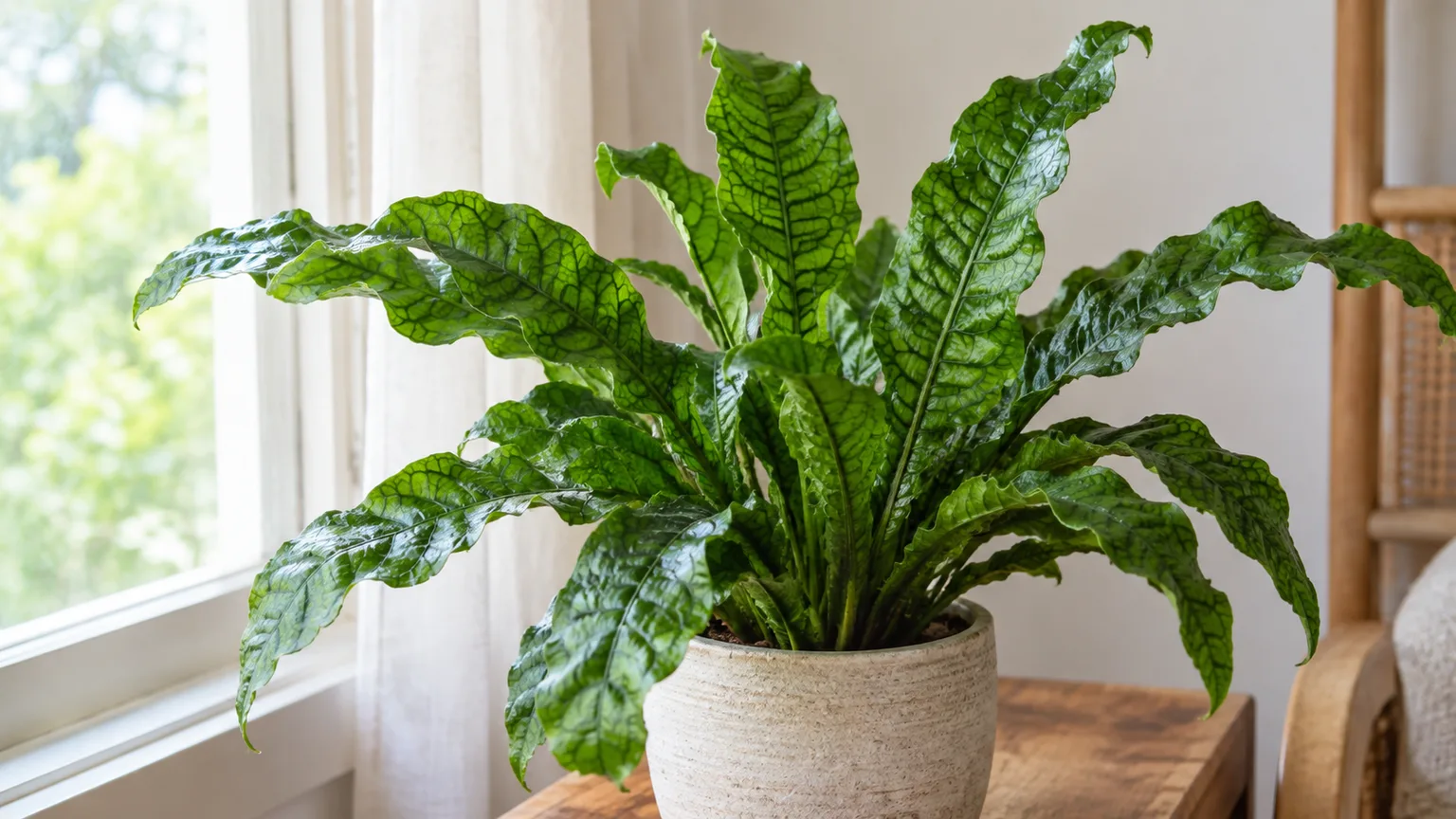
Crocodile fern is an evergreen tropical fern with broad, glossy fronds crossed by a raised network of dark veins. Give it filtered light, a loose mix that stays lightly moist, warm temperatures, and enough humidity to keep the leaf edges from drying; the main balancing act is moisture without stagnant, airless roots. Because it grows as an epiphyte in nature, it benefits from a different potting approach than a fern that naturally grows in deep woodland soil.
| Care factor | Practical starting point |
|---|---|
| Light | Bright, filtered or indirect light; avoid harsh direct sun |
| Water | Water thoroughly when the top layer of mix begins to dry; let excess drain |
| Potting mix | Loose, airy, moisture-retentive, and free-draining |
| Temperature | Warm and steady; protect from cold drafts and temperatures near 50°F |
| Humidity | Higher, stable room humidity helps limit crispy edges; keep some airflow |
| Feeding | Diluted balanced fertilizer during active growth |
Identify the fern you are growing
The accepted botanical name is Microsorum musifolium, a member of the Polypodiaceae family. Kew lists the species as an epiphyte native from southern Myanmar to New Guinea, while NC State Extension also describes it as a tropical fern that attaches to trees rather than growing in ordinary soil. Its leathery, strap-shaped fronds have netted veins that create the quilted, reptile-like texture behind the common name. Kew’s Plants of the World Online NC State Extension
Many houseplants sold as crocodile fern carry the cultivar name ‘Crocodyllus.’ It is a selected form of the species, described by Singapore’s NParks as bushier, with more numerous fronds and smaller rhizomes than the parent form. That distinction matters when comparing photographs or growth expectations: not every M. musifolium will develop exactly the same compact shape or equally pronounced veining. NParks Flora & Fauna Web
Expect a foliage plant, not a flowering one. Ferns make spores rather than flowers or seeds; on a mature crocodile fern, the round spore cases, called sori, appear on the undersides of fronds. The fronds may stand upright at first and arch as they lengthen, so allow room around the plant instead of wedging the foliage against a wall or window. NC State Extension
Give it bright, filtered light
Place the fern where it receives bright ambient light without a strong beam of midday or afternoon sun. An east-facing window, a bright north-facing window, or a spot set back from a brighter exposure can work; in a south- or west-facing room, use a sheer curtain or move the pot out of the direct beam. NC State Extension recommends bright indirect light through shade, and the Chicago Botanic Garden describes filtered light as a close match for its forest habitat. NC State Extension Chicago Botanic Garden
Low light is not the same as safe light. The plant may survive in a dim corner, but slow or stalled growth and smaller fronds are more likely there; direct sun can bleach or scorch the broad leaves. This is consistent with indoor-fern guidance from Epic Gardening and Gardening Know How: both recommend indirect or dappled light for fern foliage, although those broader recommendations do not set a species-specific light meter reading for crocodile fern. Epic Gardening Gardening Know How
Use the new growth as a placement check. If fronds lean toward the window, rotate the pot a quarter turn every week or two; if the side facing the glass develops pale, dry patches, shift it farther back or diffuse the light. Do not respond to browning from direct sun by moving the fern into deep shade, because the plant still needs enough light to replace old fronds with new ones.
Water by the mix, not the calendar
Aim for a root zone that is evenly moist but never persistently saturated. In a home, check the mix rather than following “once a week”: touch the top half-inch to inch, then lift the pot or inspect its drainage holes if you are unsure. When the surface has just started to dry and the pot feels lighter, water slowly until the mix is moistened throughout and excess runs from the drainage holes. NC State Extension Gardening Know How
Let the pot drain completely before returning it to a cachepot or saucer, and pour away standing water. A crocodile fern can suffer from dry conditions, but constant wetness is not a cure for humidity stress: it reduces air in the root zone and raises the risk of rot. The Chicago Botanic Garden specifically recommends a light, freely draining growing medium for this epiphytic species. Chicago Botanic Garden
Tap water is not automatically a problem, but watch the leaves if your supply is hard or leaves mineral residue on nearby surfaces. NC State Extension notes that brown edges may be associated with tap water and suggests rainwater or distilled water; a practical first step is to switch water sources for several weeks while keeping light, moisture, and fertilizer unchanged. That one-variable check helps distinguish water quality from dry air or root stress. NC State Extension
Read the surface, crown, and fronds together
A dry top layer with otherwise firm fronds usually means it is time to water. A pot that stays heavy for days, a sour smell, a soft crown, or leaves turning yellow while the mix remains wet points more toward poor drainage or overwatering; crisp edges combined with a dry root ball point toward underwatering or air that is too dry. No single leaf symptom proves a cause, so read the moisture and condition of the base along with the foliage.
The timing changes with season and location. A warm, bright room, small pot, and bark-heavy mix can dry faster than a cool room, large pot, or mix with more coir; in winter, slower growth and lower light often mean the pot stays wet longer. Keep the moisture target steady, but let the interval between waterings stretch when evaporation slows.
Use an airy mix that still holds moisture
A crocodile fern needs both oxygen around its roots and enough water-holding material to avoid drying between checks. A dense, fine potting soil can collapse around the roots and stay wet too long, while a very coarse bark mix may dry before the plant can use it. The NC State and Chicago Botanic Garden profiles describe moist, well-drained or freely draining media; NParks lists materials such as bark, sphagnum, coir, compost, and coarse sand for the ‘Crocodyllus’ form. NC State Extension Chicago Botanic Garden NParks Flora & Fauna Web
A useful starting recipe is two parts fine orchid bark to one part coir or peat-free houseplant mix and one part perlite or pumice. If your home is hot and the pot dries quickly, increase the moisture-holding component slightly; if the mix stays soggy several days after watering, add bark or perlite and check that drainage holes are open. The recipe is a practical starting point, not a species-specific laboratory formula, so adjust it to your room and watering habits.
Avoid using a layer of gravel at the bottom as a substitute for a free-draining mix. It does not correct compacted soil above it; drainage holes and an evenly blended airy medium do more to prevent water from lingering around the roots. If you reuse a pot, remove old compacted mix and clean the container before planting again.
Choose a stable pot and keep the rhizome near the surface
Because the fern’s rhizome creeps horizontally and produces fronds from its growing points, a stable pot with room across the surface is often more useful than a very deep container. Always use a pot with drainage holes. Keep the rhizome at the surface of the mix or only lightly covered, and never bury the crown deeply to make the plant stand upright; a buried growing point stays wetter and can rot.
A plastic nursery pot inside a decorative cover makes it easy to check drainage and moisture. Unglazed terracotta can dry faster, so it may suit a grower who tends to overwater, but it also means more frequent checks in a warm, dry room. Choose the container by how quickly the mix dries in your conditions, not by material preference alone.
Raise humidity without trapping stale air
Crocodile fern comes from humid tropical environments and grows best when indoor air is not chronically dry. NC State Extension and NParks both describe a preference for high humidity, while the Royal Horticultural Society recommends high humidity for the ‘Crocodyllus’ cultivar. No single indoor humidity percentage is established across these sources, so treat a hygrometer reading as a diagnostic aid: if frond edges repeatedly crisp while the root ball stays evenly moist, raise the room humidity rather than watering more. NC State Extension NParks Flora & Fauna Web RHS cultivar profile
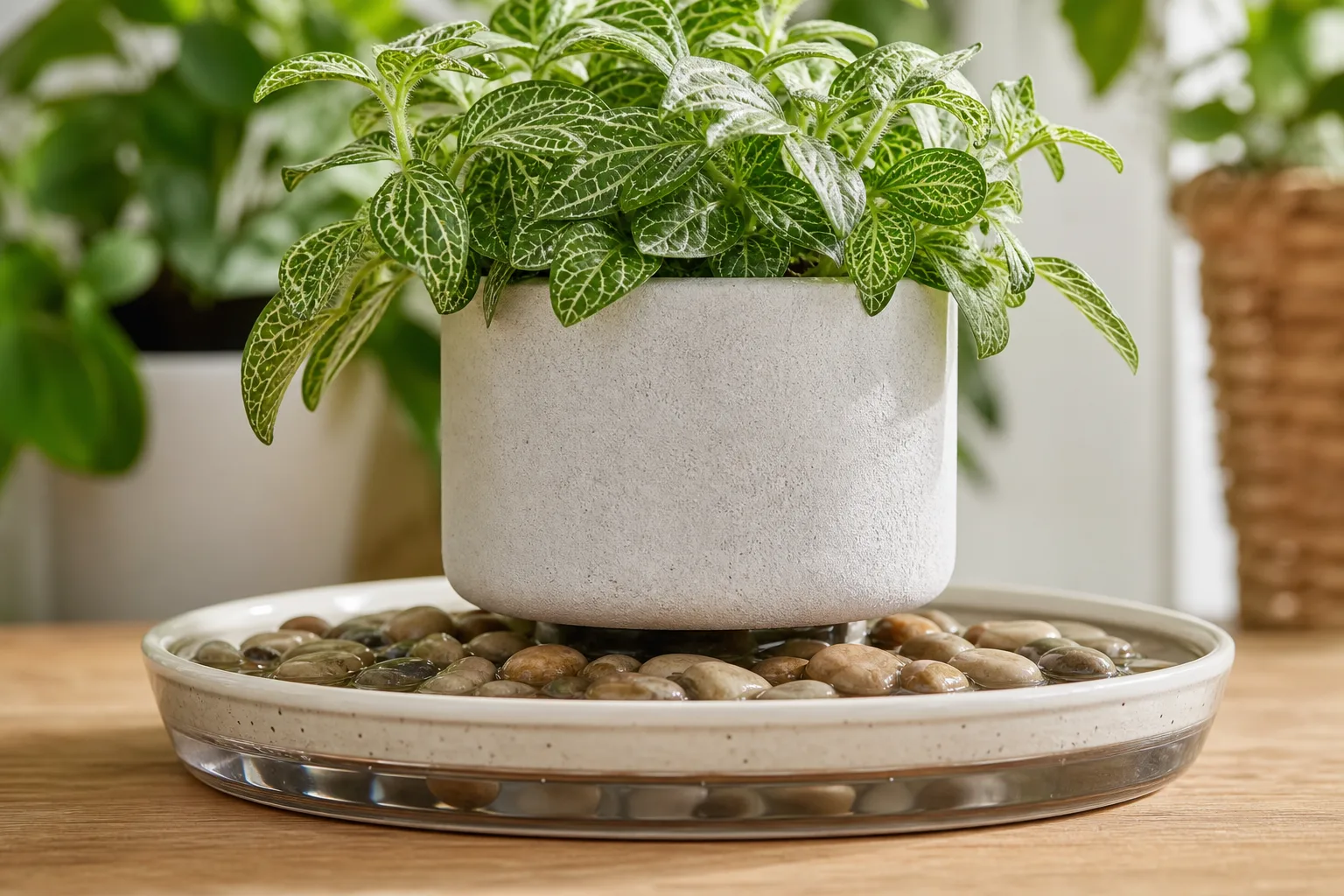
A small room humidifier is usually the most controllable option, especially in winter when heating dries indoor air. Grouping several moisture-loving plants can help create a slightly more humid pocket if the room has some air movement. A pebble tray can catch drips or add a little moisture close to the pot, but it is not a substitute for room humidity; keep the pot base above the waterline and do not let the fern sit in the tray’s water.
Misting is brief and does not maintain a stable humidity level between sprays. On a densely textured frond, repeated wetting without airflow can leave water sitting in the crown or on foliage, while high humidity in still air can favor leaf problems. Keep air moving gently and avoid placing the plant directly against a cold window, in front of a heating vent, or where an air conditioner blows on it.
Keep temperatures warm and steady
A normal comfortable room is usually a good starting point: NC State Extension gives 60 to 75°F as a suitable range. More important than chasing a precise thermostat number is avoiding abrupt temperature swings, cold drafts, and exposure near the plant’s lower limit. NC State Extension and the Chicago Botanic Garden both caution against temperatures below about 50°F, so move the fern inside before nights approach that point rather than waiting for visible damage. NC State Extension Chicago Botanic Garden
Keep the plant away from exterior doors that open in winter, drafty window gaps, and heat sources that make nearby air hot and dry. If fronds develop darkened or limp areas after a cold spell, move the pot to a stable warm location and check that the mix drains well; do not compensate for cold injury by saturating the pot or applying extra fertilizer.
Feed lightly while it is growing
Feed only when the fern is actively producing new growth, typically during brighter, warmer months indoors. NC State Extension recommends a balanced liquid fertilizer at half strength once a month in spring and summer; NParks suggests weak fertilizer more frequently for container-grown plants that cannot collect natural detritus. These are different workable approaches, not a reason to combine both schedules. Start with half-strength monthly feeding and adjust only if the plant is growing steadily and the mix is being flushed with water. NC State Extension NParks Flora & Fauna Web
Do not pour fertilizer onto a dry root ball, and do not increase the dose to force a plant that has stopped growing. Cold, low light, damaged roots, or stale mix are more common reasons for weak growth than a lack of concentrated fertilizer. If leaf tips brown after feeding or a pale crust builds up on the mix, pause feeding and water thoroughly enough to flush salts through the pot.
Repot when roots or mix show a reason
Repotting is not an annual chore for every crocodile fern. Check the drainage holes and surface in spring; repot if roots crowd the pot, water runs through without wetting the mix, the substrate has broken down into a dense mass, or the plant dries unusually fast despite a reasonable watering routine. The RHS recommends free-draining media and the general fern guidance from Gardening Know How suggests repotting when roots fill the pot, rather than moving every plant on a fixed calendar. RHS cultivar profile Gardening Know How
Move it into a pot only modestly wider than the root mass; a much larger volume of fresh mix can stay wet around roots that have not reached it. Loosen only the outermost compacted material and keep healthy roots intact. Set the rhizome at the same height it grew before, refill around it with fresh mix, water once to settle the substrate, then let it drain. Keep the plant warm and out of direct sun while it re-establishes.
Propagate with rhizome division
For a home grower, division is the simplest way to make another crocodile fern that keeps the parent plant’s appearance. NC State Extension recommends division in spring or early summer, and the RHS profile notes that spore-grown plants may vary. Spore propagation is possible, but it takes more controlled conditions and patience; a rhizome division already has a growing point and roots to support recovery. NC State Extension RHS cultivar profile
Wait until the parent is well established and has more than one healthy growth point. Do not divide a small or declining plant just because it is crowded; correcting the root conditions first gives both pieces a better chance. Use clean, sharp snips or a knife, fresh airy mix, and a pot with drainage holes.
Separate a viable section and protect its growing point
Slide the plant out gently and find the creeping rhizome that connects the fronds. Select a section with at least one healthy frond, a visible growing point, and attached roots; a piece of leaf without rhizome will not form a new plant. Separate the section with a clean cut, avoiding unnecessary tearing of the roots.
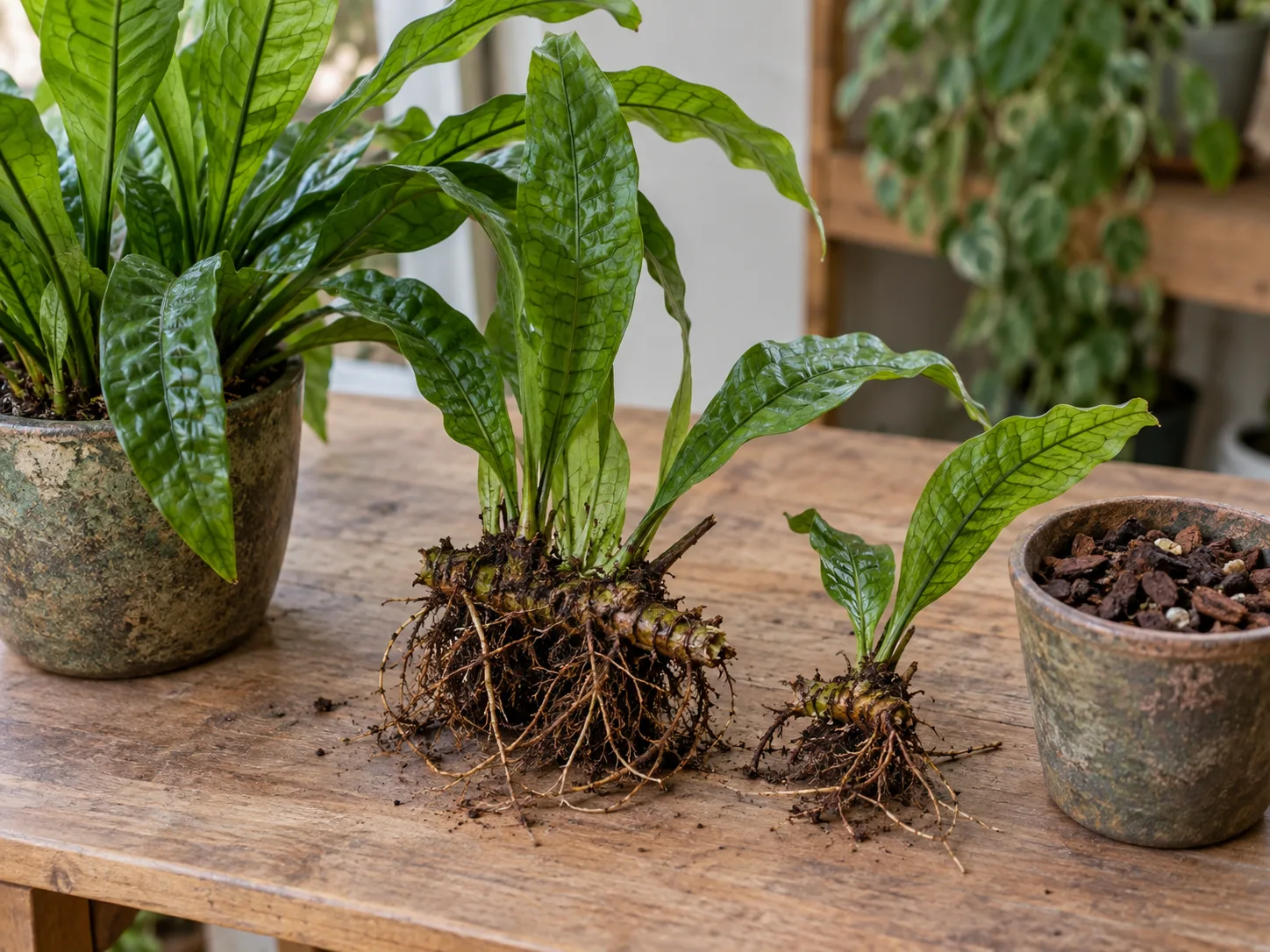
Set each division into its own pot, keeping the rhizome at or just above the mix surface. Press the medium lightly around the roots so the frond is stable, but do not pack it down hard. Water to settle the mix, drain fully, then keep the new plant warm in bright indirect light with evenly moist—not saturated—medium.
A division may pause before producing a new frond while it establishes, so do not keep digging it up to check for progress. If the existing frond remains firm and the rhizome is not soft or foul-smelling, continue steady care. Remove a failed division only if the base becomes mushy or rot is clearly progressing; overwatering it in an attempt to speed growth will make recovery less likely.
If the tag identifies a named, protected cultivar, check the plant label and local rules before propagating divisions for sale. Keeping a division for personal use and selling a protected cultivar are different situations, and restrictions can depend on the cultivar and jurisdiction. RHS cultivar profile
Prune sparingly and keep fronds clean
Crocodile fern needs little shaping. Remove a frond only when it is fully brown, badly damaged, or clearly declining; cut it near the base with clean snips without nicking the rhizome or emerging curled fronds. A single old frond yellowing as new growth appears is different from several fronds changing at once, which can signal a care problem.
Dust can collect on the broad leaves. Wipe them gently with a damp soft cloth or rinse with lukewarm water if the plant is sturdy enough, then let it dry in a warm place with airflow. Avoid polishing products, harsh rubbing, or leaving water pooled in the crown.
Troubleshoot the most common signs
Start by checking light, substrate moisture, drainage, and temperature before changing several things at once. The same brown edge can come from dry air, hard water, excess fertilizer, or an over-dry pot; changing one likely cause at a time makes the plant’s response easier to interpret. NC State Extension also lists scale, mealybugs, spider mites, root rot, and leaf spot among the problems to watch for. NC State Extension
Brown tips or crisp edges
First feel the mix. If the root ball is dry, water it fully and allow the excess to drain; if the mix is already moist, check whether the room air is dry, whether tap water leaves mineral deposits, or whether you recently fertilized. Move the fern out of hot direct sun and away from heater airflow, then change one factor and watch the next fronds rather than expecting damaged tissue to turn green again.
If the symptom is recurring despite stable moisture, try rainwater or distilled water for a few weeks and increase room humidity with a humidifier. Do not increase watering frequency automatically: persistent wetness can create root problems while doing little to fix dry air around the leaves. NC State Extension
Yellowing fronds, soft crowns, or spots
One old outer frond fading while the rest of the plant looks firm may be normal turnover. Several yellow fronds together, a soft or dark crown, or a sour odor are stronger clues that the mix is staying wet too long or the roots have begun to rot; remove standing water, verify the drainage holes, and inspect the root zone if the decline continues. Healthy roots should not be left sitting in a water-filled cachepot.
Small brown or black spots with a water-soaked appearance can be leaf spot rather than simple dehydration. NC State Extension links fungal or bacterial leaf spot in this plant with poor air circulation or foliage remaining wet, so stop frequent misting, improve gentle airflow, and avoid moving water from one plant to another on shared tools. If spots spread quickly, isolate the fern while you assess it. NC State Extension
Also inspect for pests, especially after the plant has spent time outdoors. Scale looks like fixed bumps on stems or leaf undersides; mealybugs look cottony, and spider mites may leave fine webbing and stippled foliage. Isolate an infested plant, remove visible pests where practical, and use only a treatment labeled for the plant and pest if additional control is needed.
Brown dots beneath a frond
Not every brown mark is a pest. Even rows or clusters of round brown sori on the underside of a mature frond are spore cases, part of normal fern reproduction; they are attached to the leaf and do not crawl or wipe away like insects. NC State Extension and NParks describe spores or sori on crocodile fern fronds, so check whether the marks follow a regular pattern before treating the plant. NC State Extension NParks Flora & Fauna Web
Grow it outdoors only in a protected warm climate
In frost-free tropical or subtropical areas, crocodile fern can grow outdoors in bright shade or filtered light, protected from hot direct sun and drying wind. In colder regions, keep it in a container and treat outdoor time as a warm-season stay on a shaded porch or patio. Plant profiles place the fern around USDA Zones 10–11, but local minimum temperatures and sheltered microclimates matter more than a zone label on a single cold night. Chicago Botanic Garden Gardenia
Acclimate it gradually when moving outside: begin in deep shade, then let it experience only brighter filtered light if the fronds remain unmarked. Check the pot more often in wind or heat, and bring it indoors before temperatures approach 50°F. Inspect leaf undersides and the rhizome before bringing it back inside so outdoor pests do not spread to nearby houseplants.
Conclusion
Crocodile fern care works best when you balance moisture with air: give the roots a porous mix and drainage, keep the medium lightly moist, and raise humidity without leaving the crown wet or stagnant. Bright filtered light, steady warmth, restrained feeding, and careful attention to frond and root cues make the routine more reliable than a fixed watering calendar. If the plant needs a reset, correct the environment first; repot only when the roots or mix call for it, and divide only a healthy rhizome section with roots and a growing point.



