Nitrogen Deficiency on Fiddle Leaf Fig: Causes, Checks &
Quick answer
Nitrogen deficiency on fiddle leaf fig shows as pale green to yellow lower violin-shaped leaves while new buds at the apex stay small or slow. First step: confirm yellowing starts on the oldest lowest leaves—not all leaves at once on wet soil—and review whether you have skipped fertilizer for several months.
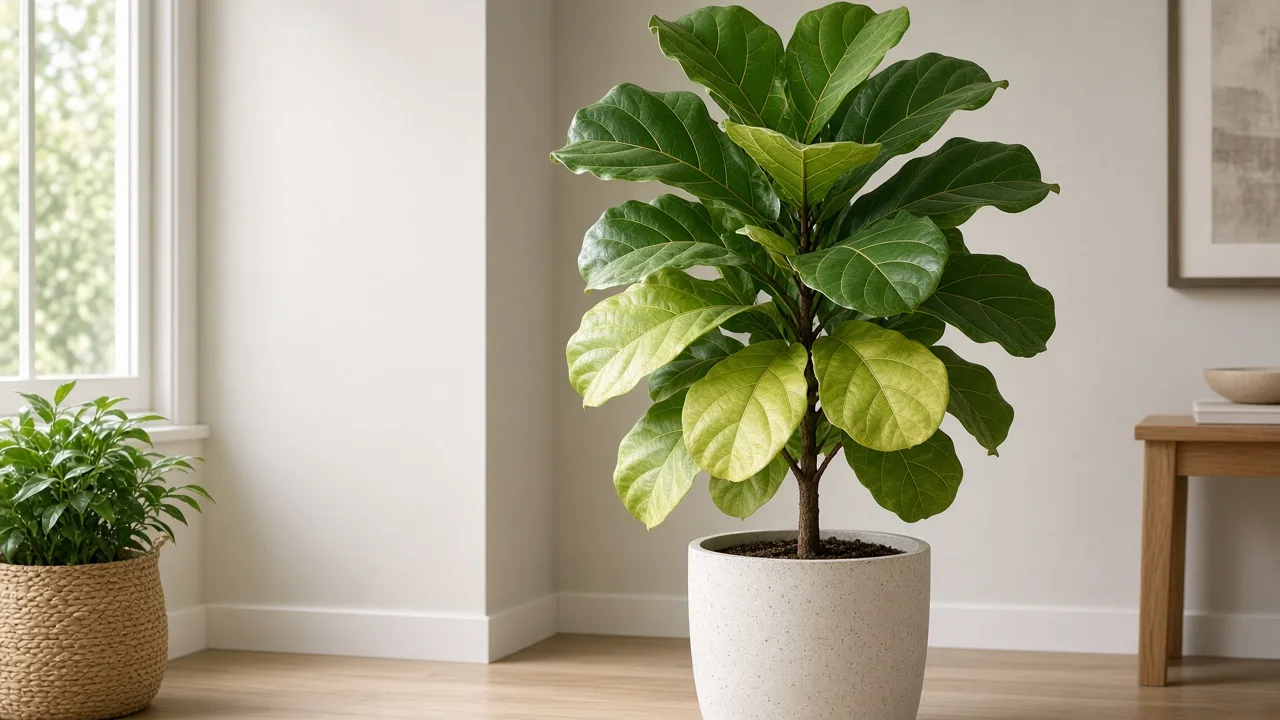
Nitrogen Deficiency on Fiddle Leaf Fig: Causes, Checks & Fixes
This guide covers nitrogen deficiency on Fiddle Leaf Fig. See also the general Nitrogen Deficiency guide, watering, and light pages for this plant.
Nitrogen Deficiency on Fiddle Leaf Fig: Causes, Checks & Fixes
Quick answer
Nitrogen deficiency on fiddle leaf fig (Ficus lyrata) shows as pale green to yellow lower violin-shaped leaves while new buds at the apex stay small or slow. Nitrogen supports chlorophyll and leafy growth—when supplies run low, mobile nitrogen moves from old leaves to new shoots.
See our nitrogen deficiency guide. On fiddle leaf fig, watch the lowest, oldest violin leaves on the trunk first—they pale before the top bud if nitrogen is the issue.
First step: confirm lower old leaves pale first, not all leaves at once on wet soil, and review feeding history.
Why fiddle leaf fig gets nitrogen deficiency
Ficus lyrata is a moderate indoor tree that still needs nitrogen to expand its large violin-shaped leaves in bright indirect light. Months without fertilizer, exhausted peat-based mix in an oversized floor pot, or a root-bound tree that has not been refreshed for years show up as washed-out lower foliage.
Fiddle-leaf-fig-specific causes:
- Skipped feeds during growth season - Owners under-feed fearing burn on a sensitive floor tree.
- Depleted mix in large decorative pots - A modest root ball in a fourteen-inch container loses nutrients while holding moisture.
- Leaching from thorough watering - Fiddle leaf fig needs deep drinks; without replacement feeding, nitrogen washes out of the upper mix.
- Confusion with overwatering - Both can yellow lower leaves; overwatering adds dark mid-leaf spots, mushy stems, and sour soil.
- Post-move leaf drop misread - Relocation stress drops leaves without the progressive lower-to-upper pale pattern of nitrogen loss.
Do not diagnose on wet sour soil with soft trunks—that is root rot.
What nitrogen deficiency looks on fiddle leaf fig
Nitrogen-deficient plants show pale older leaves first.
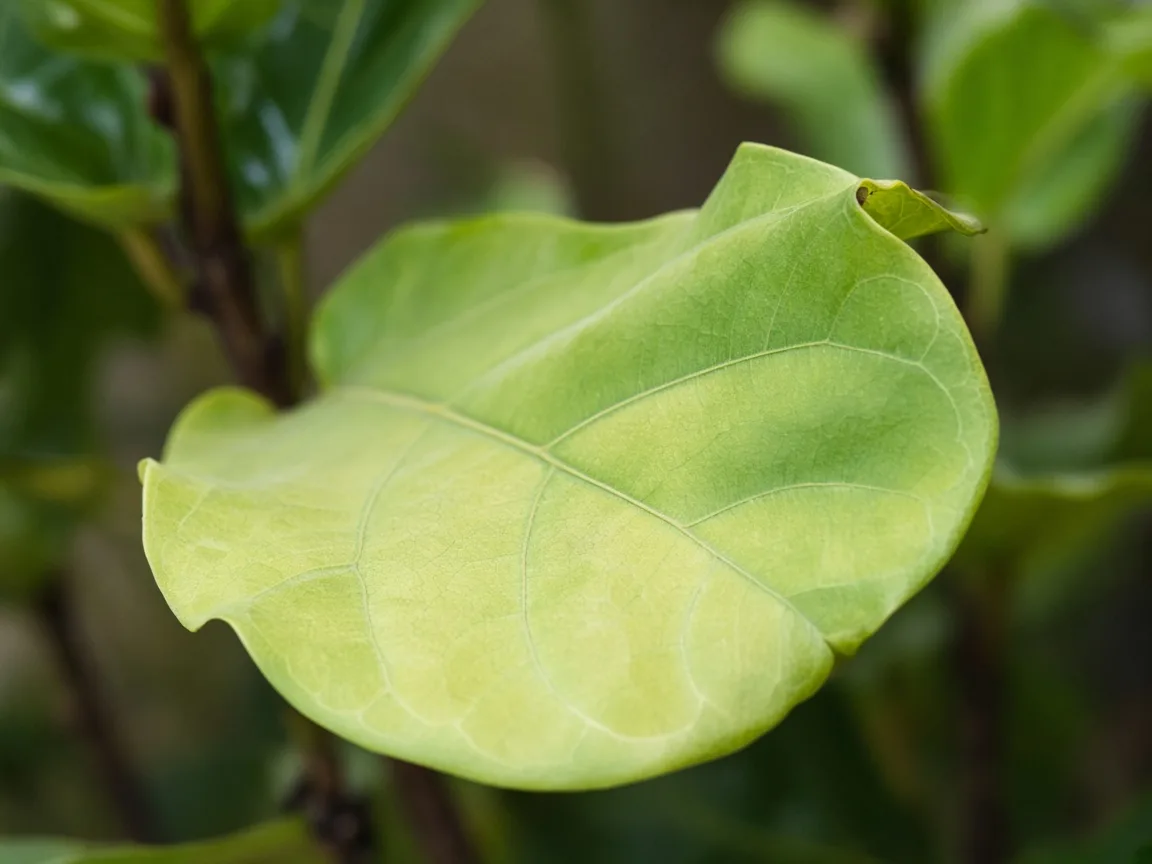
Nitrogen deficiency symptoms on fiddle leaf fig—compare pale lower leaf with greener newer tissue above.
Typical signs:
- Uniform pale green or yellow on lowest, oldest violin-shaped leaves
- Smaller new leaves emerging from the apex bud
- Light green cast across the lower canopy in moderate cases
- Firm trunk and stiff petioles unlike mushy overwatered trees
- Slow vertical extension despite adequate light
Not nitrogen deficiency:
- Yellow new leaves with green veins - iron deficiency
- Dark brown spots in leaf centers on wet soil - overwatering
- Sudden mass leaf drop after a move - leaf drop stress, not nutrient pattern
- Brown dry edges only - underwatering or brown tips
How to confirm
- Leaf age pattern - lowest old violin leaves first, moving up over weeks.
- Feeding history - months without fertilizer during spring and summer growth.
- Root spot-check - firm white roots vs brown mush from chronic wetness.
- Soil age and pot size - same oversized floor pot for two or more years.
- Watering cross-check - pale plant on appropriately dry mix vs yellow on soggy soil.
- Salt crust - white rim deposits suggest salt build-up before adding more feed.
First fix
One dilute balanced liquid fertilizer at half label strength after confirming healthy roots and normal soil moisture.
Per the fiddle leaf fig fertilizer guide. One measured feed—not repotting plus triple fertilizer the same week on a recently moved tree.
Step-by-step recovery
- Feed monthly at half strength through active growth; pause in winter when uptake slows in cooler dim conditions.
- Flush salts if white crust rings the pot—then resume light feeding.
- Repot into fresh well-draining mix if roots fill the pot and pale leaves persist after two measured feeds.
- Remove fully yellow lower leaves that detach easily; do not strip half the canopy at once.
- Monitor apex buds for larger new violin leaves with deeper green color.
Recovery timeline
Three to six weeks for greener, larger new apex leaves on a healthy floor tree. Lower pale violin leaves rarely re-green. If two measured feeds produce no improvement and roots are firm, reassess light and rule out iron deficiency on new growth.
Lower canopy vs apex bud: nitrogen on fiddle leaf fig
Fiddle leaf fig grows as an upright tree with an active apex bud. Nitrogen deficiency starts on the lowest violin leaves and moves upward while the top bud pushes undersized new leaves. That vertical pattern differs from iron deficiency, which hits expanding new tissue with green veins, and from relocation leaf drop, which sheds leaves abruptly rather than progressively pale lower foliage.
On oversized floor pots, rim soil may look fine while center roots sit in depleted mix—check feeding history, not only surface color. A fiddle leaf fig in a decorative cachepot that never drains fully may show nitrogen-like pale leaves from root stress instead—confirm firm roots before feeding.
Lookalike symptoms
| Pattern | Likely cause |
|---|---|
| Lowest old leaves pale, apex leaves small | Nitrogen deficiency (this page) |
| New leaves yellow, green veins | Iron deficiency |
| Dark spots, wet soil, soft stem base | Overwatering |
| Many leaves drop after move | Leaf drop |
| Brown crispy edges only | Underwatering or fluoride stress |
| Pale whole plant after heavy feed | Fertilizer burn |
Mistakes to avoid
Do not heavy-feed a waterlogged tree—excess nitrogen on stressed roots worsens damage. Do not confuse post-move leaf drop with nitrogen loss. Do not repot and triple-feed the same week on a recently relocated floor tree.
Do not strip half the lower canopy at once hoping to force new growth—fiddle leaf fig needs leaves to photosynthesize while roots recover.
How to prevent nitrogen deficiency
Feed lightly during active growth per the fertilizer guide. Refresh depleted mix at repotting every two to three years in appropriately sized pots—not oversized decorative containers that hold excess moisture.
Match watering to season and light so thorough drinks do not leach nutrients without replacement feeding during spring and summer. Fiddle leaf fig prefers bright indirect light and uses nitrogen fastest when actively pushing large new leaves in that light.
When to worry
Act when successive new leaves emerge progressively smaller through spring and summer, the lower canopy is uniformly washed out, and growth stalls despite adequate light and firm roots. If pale leaves coincide with soggy soil and soft stems, fix overwatering before feeding.
Conclusion
Nitrogen deficiency on fiddle leaf fig shows as progressive pale lower violin leaves while the apex pushes undersized new growth. Confirm the pattern, rule out wet soil and root rot, then one measured feed—not a stack of repotting, pruning, and triple fertilizer on a stressed floor tree.
When to use this page vs other Fiddle Leaf Fig guides
Use this page when lower old violin leaves pale progressively while the apex still tries to push small new leaves, and roots are firm on appropriately dry mix. Use overwatering when dark leaf spots and soggy soil appear together. Use iron deficiency when new leaves yellow with green veins.