Frogbit Care Guide: Amazon Frogbit in Aquariums
Limnobium laevigatum
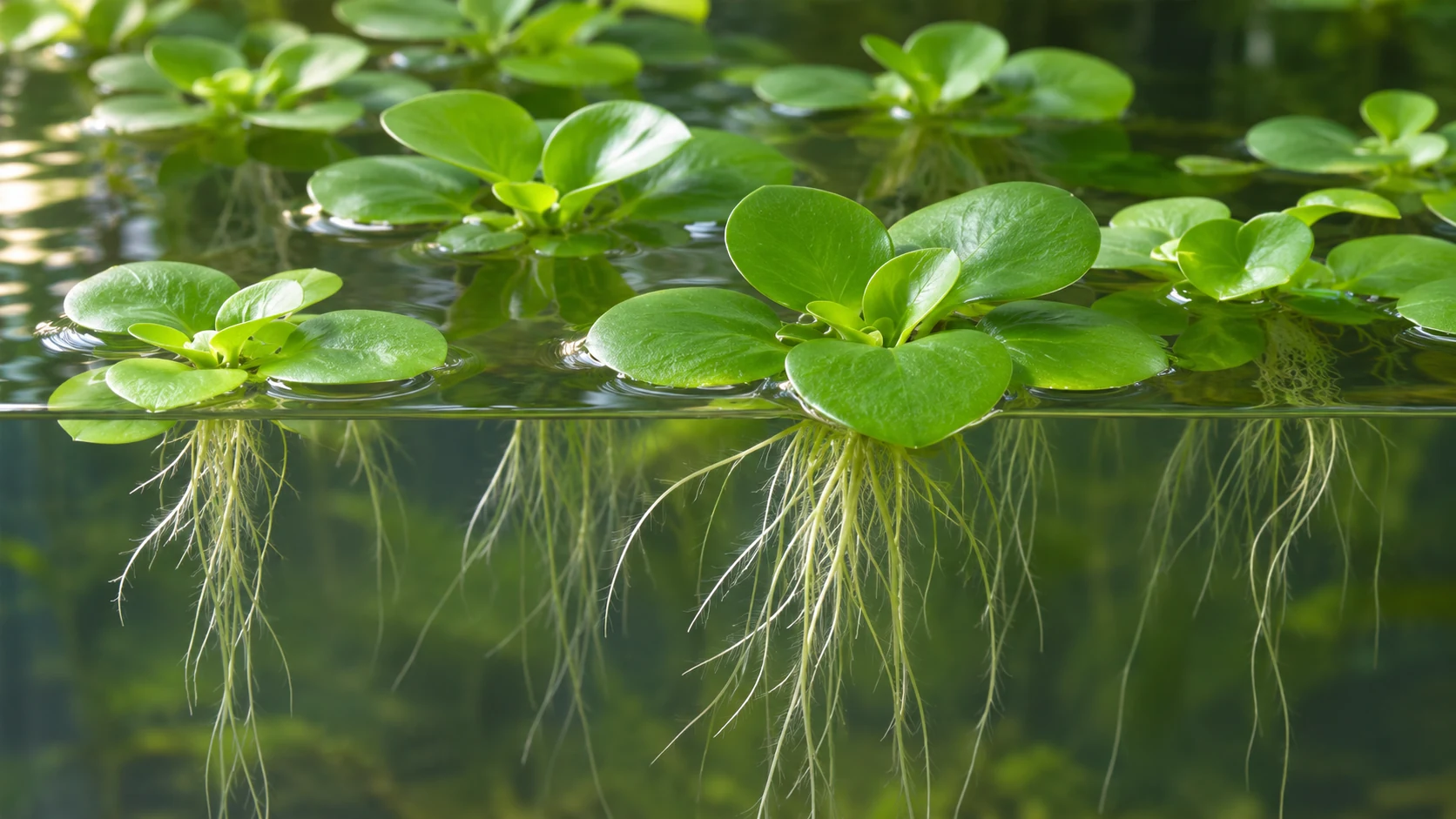
Float Limnobium laevigatum at the surface of a freshwater aquarium. Its roots hang in the water and take up water-column nutrients, so it needs no substrate. Use moderate light, protect it from strong splashing, and thin runners before the rosettes shade the rest of the tank. Never release it or aquarium water into natural waterways.
Frogbit Care Guide for Aquariums
Start with wateringThe most common care mistake for FrogbitRead the Frogbit watering guide →Frogbit care essentials
Light
Moderate aquarium lighting is a useful starting point; adjust to growth and avoid letting a dense mat shade submerged plants.
Water
Keep it free-floating in freshwater with its roots submerged and leaves at the surface. It does not need potting mix or aquarium substrate.
Soil
No substrate is needed in an aquarium. Let the plant float freely; in shallow natural habitat it may root in mud.
Humidity
Temperature
18–28 C (64–82 F)
Fertilizer
No fixed schedule; assess growth and aquarium water nutrients before supplementing.. If needed, use only an aquarium fertilizer suitable for the tank's fish and invertebrates, following its label.
About Frogbit
Frogbit is native to Mexico to South America; ITIS also records native Caribbean territories, typically reaches Rosettes with leaves about 5–15 cm wide and long trailing roots; root length varies with conditions indoors, with medium to fast when light and water-column nutrients are adequate growth. Frogbit has a free floating rosette growth habit and part of the Hydrocharitaceae family. It is also known as Amazon Frogbit, South American Spongeplant, and West Indian Spongeplant.
| Detail | Information |
|---|---|
| Also known as | Amazon Frogbit, South American Spongeplant, West Indian Spongeplant |
| Native region | Mexico to South America; ITIS also records native Caribbean territories |
| Mature size | Rosettes with leaves about 5–15 cm wide and long trailing roots; root length varies with conditions |
| Growth rate | Medium to fast when light and water-column nutrients are adequate |
| Growth habit | Free Floating Rosette |
| Scientific name | Limnobium laevigatum |
| Family | Hydrocharitaceae |
How to care for Frogbit?
How much light does Frogbit need?
Moderate aquarium lighting is a useful starting point; adjust to growth and avoid letting a dense mat shade submerged plants.. low light
- Moderate aquarium lighting is a useful starting point - Moderate aquarium lighting is a useful starting point; adjust to growth and avoid letting a dense mat shade submerged plants..
- adjust to growth and avoid letting a dense mat shade submerged plants - Moderate aquarium lighting is a useful starting point; adjust to growth and avoid letting a dense mat shade submerged plants..
- low light - low light.
When should you water Frogbit?
Keep it free-floating in freshwater with its roots submerged and leaves at the surface. It does not need potting mix or aquarium substrate.
- Check that the rosette stays afloat - Keep it free-floating in freshwater with its roots submerged and leaves at the surface.
- the roots remain submerged - Keep it free-floating in freshwater with its roots submerged and leaves at the surface.
- and leaves are not repeatedly caught under splashing water or pushed below the surface - Keep it free-floating in freshwater with its roots submerged and leaves at the surface.
- Drain excess water - Keep it free-floating in freshwater with its roots submerged and leaves at the surface.
What soil works best for Frogbit?
No substrate is needed in an aquarium. Let the plant float freely; in shallow natural habitat it may root in mud.
- No potting soil or root tab is needed for free-floating aquarium growth - No substrate is needed in an aquarium.
- Keep the crown and leaves at the water surface - Let the plant float freely; in shallow natural habitat it may root in mud.
How to propagate Frogbit?
Allow daughter rosettes to develop, then separate them when they can float and grow independently.
- Daughter plants on runners - Allow daughter rosettes to develop, then separate them when they can float and grow independently.
Grower notes for Frogbit
Keep the rosette afloat
Amazon frogbit is grown at the water surface, not planted in gravel or potting mix. Its fine roots hang beneath the rosette and provide cover for surface-oriented fish and small aquarium animals.
Use moderate light and watch the shade
Aquarium references rate its light demand from low to medium or higher. Begin with moderate tank lighting and judge the plant by its new growth; thin the canopy if it blocks light from submerged plants.
Keep flow gentle around the leaves
Direct filter outflow away from the rosettes so they are not repeatedly pushed underwater or trapped against equipment. Aquarium care references describe still to low flow as a suitable range.
Let roots use the water column
Frogbit does not need a planted substrate. Its trailing roots take up nutrients from the water, and growth may slow as available nutrients decrease. Check tank conditions before adding fertilizer.
Thin runners before the mat closes
Daughter plants form on runners and can spread across the surface. Remove surplus rosettes while small enough to handle easily, preserving open surface patches and light for the rest of the aquarium.
Dispose of surplus plants responsibly
Do not release frogbit, fragments, or aquarium water into ponds, ditches, storm drains, or natural waterways. UF/IFAS reports establishment outside cultivation in parts of the United States and rates the species as a high invasion risk in its Florida assessment; follow local disposal guidance.
Frogbit and pet safety
Species-specific veterinary toxicity information for Limnobium laevigatum was not verified in the sources reviewed. Aquarium use is not a pet-feeding clearance; prevent pets from drinking treated tank water or chewing aquarium plants and contact a veterinarian if a pet becomes unwell after exposure.
No species-specific pet toxicity rating was established for this profile. Do not interpret missing toxicity information as proof that the plant or aquarium-treated material is safe to eat.
Watering Frogbit
For Frogbit, check that the rosette stays afloat, the roots remain submerged, and leaves are not repeatedly caught under splashing water or pushed below the surface. and water no watering schedule applies to a submerged aquarium plant; maintain stable, livestock-appropriate water quality and replace evaporation with conditioned water. Growth can slow when water-column nutrients or light decrease; thin excess growth and keep water conditions stable.
| Detail | Information |
|---|---|
| How often | No watering schedule applies to a submerged aquarium plant; maintain stable, livestock-appropriate water quality and replace evaporation with conditioned water. |
| How to check | Check that the rosette stays afloat, the roots remain submerged, and leaves are not repeatedly caught under splashing water or pushed below the surface. |
| Seasonal changes | Growth can slow when water-column nutrients or light decrease; thin excess growth and keep water conditions stable. |
Soil & potting for Frogbit
Use a mix of No potting soil or root tab is needed for free-floating aquarium growth, Keep the crown and leaves at the water surface for Frogbit. Not applicable; keep the roots submerged in clean freshwater. Repot no repotting; thin and reposition floating growth as needed.
| Detail | Information |
|---|---|
| Recommended mix | No potting soil or root tab is needed for free-floating aquarium growth, Keep the crown and leaves at the water surface |
| Drainage | Not applicable; keep the roots submerged in clean freshwater. |
| Repotting frequency | No repotting; thin and reposition floating growth as needed. |
Signs it needs repotting
- Leaves cover too much of the surface
- Submerged plants receive less light
- Roots gather around filter intakes or block feeding and maintenance access
Humidity & temperature for Frogbit
Keep temperatures around 18–28 C (64–82 F). Aquarium care references vary in their suggested ranges; avoid abrupt temperature changes and follow the needs of the fish and invertebrates sharing the tank.
| Detail | Information |
|---|---|
| Ideal temperature | 18–28 C (64–82 F) |
| Temperature notes | Aquarium care references vary in their suggested ranges; avoid abrupt temperature changes and follow the needs of the fish and invertebrates sharing the tank. |
Fertilizer & pruning for Frogbit
Feed Frogbit no fixed schedule; assess growth and aquarium water nutrients before supplementing. using if needed, use only an aquarium fertilizer suitable for the tank's fish and invertebrates, following its label. Terrestrial fertilizers, unmeasured dosing, and products not labeled for aquarium use.
| Detail | Information |
|---|---|
| Fertilizer schedule | No fixed schedule; assess growth and aquarium water nutrients before supplementing. |
| Fertilizer type | If needed, use only an aquarium fertilizer suitable for the tank's fish and invertebrates, following its label. |
| What to avoid | Terrestrial fertilizers, unmeasured dosing, and products not labeled for aquarium use. |
Pruning
Thin daughter plants and excess rosettes by hand. Keep open surface areas for light and routine tank access, and remove detached or decaying material promptly.