Overwatered Golden Barrel Cactus: Signs and Recovery
Quick answer
A wet pot alone does not prove Golden Barrel Cactus has root rot, but a mix that stays damp plus a soft, darkening base is a serious warning. First, stop adding water. Then empty any standing runoff so the pot is not sitting in it. Keep the cactus in bright, stable conditions, then test the mix near the pot bottom before deciding whether it needs more help.
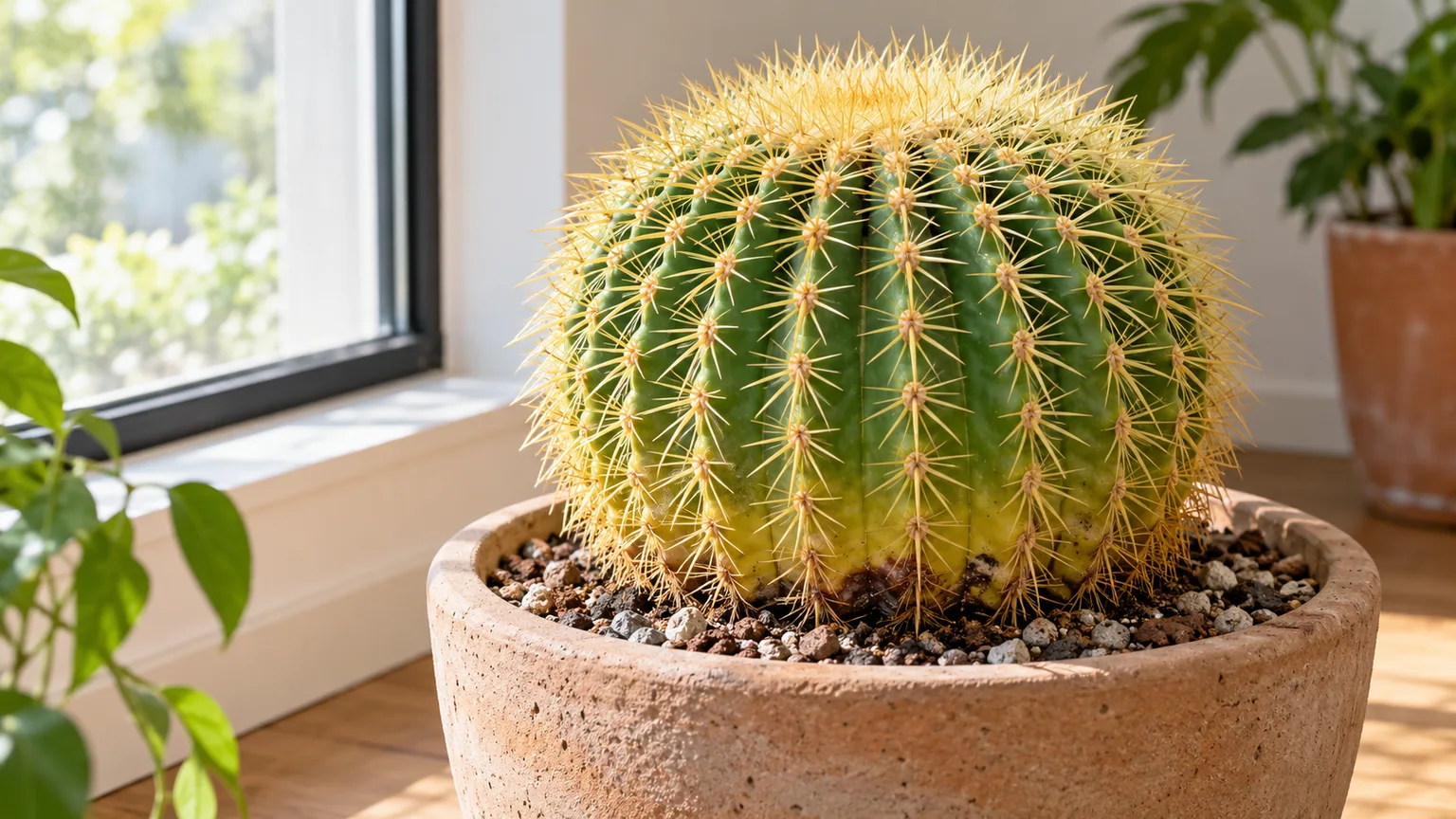
Overwatering Golden Barrel Cactus: Signs, Causes & First Steps
This guide covers overwatering on Golden Barrel Cactus. See also the general Overwatering guide, watering, and light pages for this plant.
Overwatering Golden Barrel Cactus: Signs, Causes & First Steps
Quick answer
A wet pot alone does not prove Golden Barrel Cactus has root rot, but a mix that stays damp plus a soft, darkening base is a serious warning. First, stop adding water. Then empty any standing runoff so the pot is not sitting in it. Keep the cactus in bright, stable conditions, then test the mix near the pot bottom before deciding whether it needs more help. The BYU greenhouse profile calls for deep monthly watering, low humidity, and well-drained soil, not a constantly damp root zone.
This cactus has a fleshy, succulent stem and grows slowly, traits described in Clemson’s cactus guide, so a small change in shape is not enough to diagnose excess water by itself. Compare the base and roots with the moisture in the pot. The key pattern is wet mix plus softening or spreading discoloration; firm tissue with a dry mix points you toward another cause.
What overwatering looks like on Golden Barrel Cactus
Golden Barrel Cactus has a rounded, ribbed stem with golden spines rather than leaves that wilt in the usual houseplant way, as the RHS profile describes. With possible rot, watch for yellowing or softness near the soil line rather than judging the globe shape alone. A wet, heavy pot strengthens that concern, especially if the soft or discolored area is spreading.
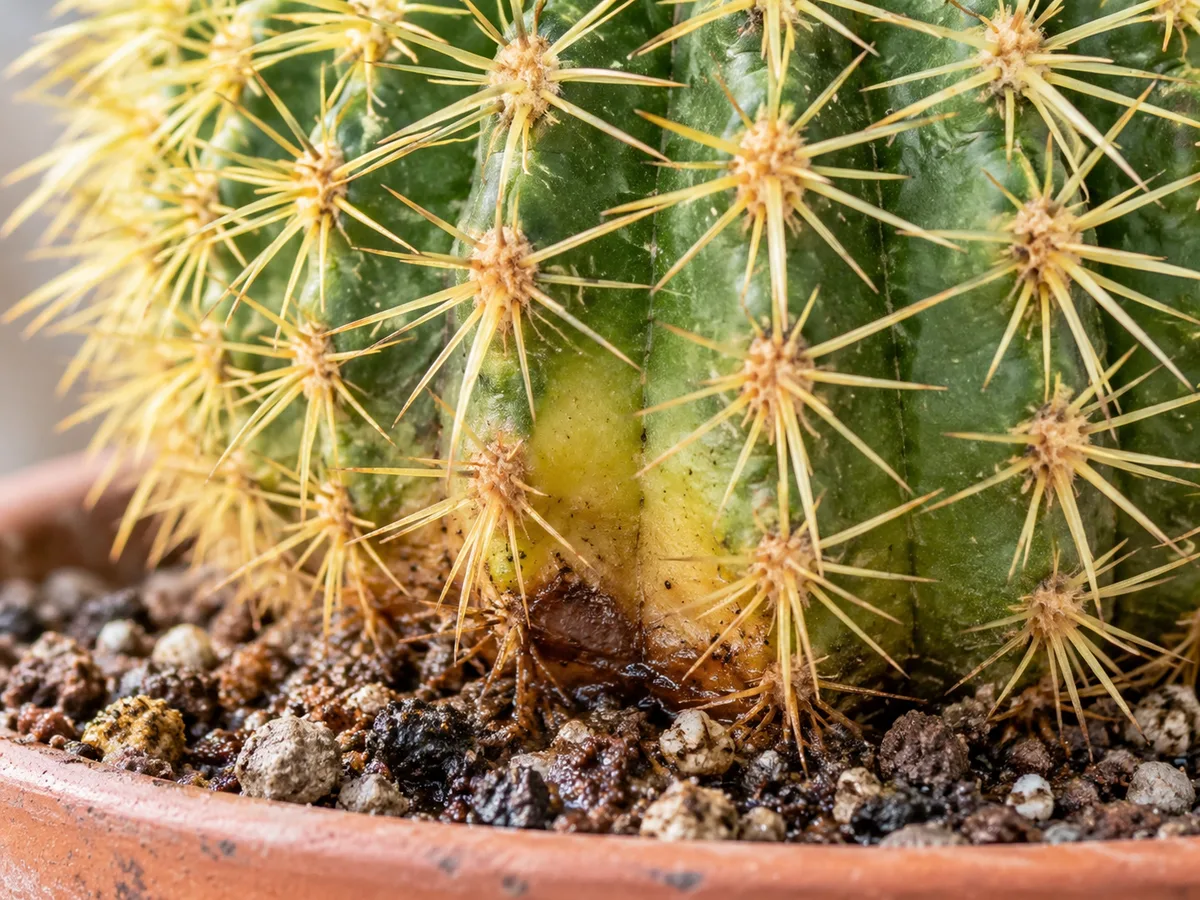
Yellowing or softness at the soil line deserves a root-zone check when the mix is still wet; a dry, firm globe calls for a different diagnosis.
A cactus can also look dull, lean, or slightly smaller after a long dry spell. Those changes do not prove overwatering; inspect the medium before changing the routine. In serious rot, roots may be soft and discolored, while the stem develops yellowing or soft spots from the soil line upward. The barrel-cactus rot guide describes that pattern for Pythium; a visual check alone cannot identify that or another specific pathogen.
Do not wait for the whole globe to collapse before acting. If the pot is wet and the base is soft or darkening, treat the condition as urgent enough to stop watering and inspect drainage. If the cactus is firm, the mix has dried through, and only old discoloration remains, monitor it rather than repeatedly unpotting it.
Why a Golden Barrel can be damaged by wet soil
Overwatering is not just the amount poured in one day. It is a mismatch between water added, drainage, the mix, the pot, and how quickly the cactus can use that water. When soil stays waterlogged, roots can lose the air they need and begin to die; the Missouri Botanical Garden explains the root-oxygen problem. On a desert-adapted Golden Barrel, repeated wet soil is especially out of step with its normal dry-root routine.
The species grows in desert or dry shrubland habitat, according to Kew’s profile. The RHS also recommends well-drained conditions. A dense peat-heavy nursery medium, a pot without an open drainage hole, or water left in a cachepot can keep the center damp after the surface looks dry. Those conditions can cause trouble even if you water only occasionally.
Timing changes the risk. A cactus in strong light and warm active growth may dry faster than one kept cool in winter or moved away from a sunny window. If a summer watering schedule continues through a cool rest, the pot may stay wet much longer. Clemson notes that slow-draining soil or frequent watering can cause root and stem rot in cacti. Do not treat monthly watering as a command: the species profile is a reference, while the actual pot must still dry through.
Watering technique matters too. A small splash on a dry surface may not reach the whole root ball, while repeated small drinks can leave parts of the mix continually damp. When watering is due, the Golden Barrel’s care profile calls for a deep watering; let runoff leave the pot, then wait for the mix to dry through before repeating. Its watering guide explains the plant’s dry-through check and seasonal routine.
Confirm the root zone before calling it overwatering
Start with a wooden skewer inserted near the inside edge of the pot, away from the cactus. Let it sit briefly, then check the lower end. If it comes out cool, damp, or coated in mix, the root zone is not ready for more water even when the top looks dry. The surface dries first, so the top layer cannot confirm moisture near the pot bottom.
Lift the pot by its sides and compare its weight with how it feels after a full dry-down. A pot that remains unusually heavy, drains slowly, or smells sour gives you stronger evidence than a single yellow patch. Check that the drainage hole is open and that the inner pot is not sitting in water. Do not squeeze the globe or grip it by its spines to test firmness.
Next, inspect the base without disturbing the roots. Look for a spreading yellow, brown, or black area at the soil line, a sunken patch, or tissue that feels soft when touched very gently through a protective barrier. A tiny dry scar that has not changed is different from a wet, expanding soft area. Photograph the same side and compare over several days so you can see whether damage is progressing.
Only unpot the cactus if the pot stays wet, drainage has failed, or soft dark tissue is developing. If you do remove it, secure the pot first and use heavy gloves or folded paper because the spines can injure hands. The Spruce guide describes soft, dark roots as a rot warning. Do not diagnose a specific pathogen from color alone.
Separate excess water from other Golden Barrel changes
| What you find | More consistent with | What to do next |
|---|---|---|
| Damp mix deep in the pot, heavy container, and soft or darkening base | Excess water or drainage failure; rot is possible if tissue is deteriorating | Stop watering, drain the pot, and inspect only if wetness or softening persists |
| Firm globe and mix that is dry through | Active overwatering is less likely than when the root zone remains wet | Review recent care and watch for changes at the base |
| Firm pale or tan patch on the window-facing side after a move | Sun stress may be involved | Review recent exposure and acclimate gradually |
| Hard white or gray crust on the soil or pot rim | Mineral deposits are more plausible than soft rot | Clemson Extension distinguishes crusty salt deposits from mold-like growth; compare texture before changing care |
A globe that feels soft together with a wet mix deserves more attention than a single discolored spine or an old scar. If the mix is dry and the body remains firm, do not add water just because the cactus looks less plump; the plant overview describes its normal slow growth and form. A symptom that followed an abrupt move to stronger sun belongs in the light check, not automatically in an overwatering diagnosis.
If fuzzy growth appears on the soil while the pot stays wet, that is a related clue rather than proof of root rot. The Golden Barrel Cactus mold-on-soil guide explains how to distinguish surface growth from damage in the cactus itself. Tiny flies around the pot need their own check in the fungus gnats guide.
First fix: pause watering now
Stop adding water now. If runoff remains in the saucer or cachepot, pour it away; Clemson advises that cacti should never stand in water. This keeps the pot from continuing to sit in runoff while you confirm whether the root zone is damp. Move the cactus to a bright place with ordinary airflow, but do not suddenly expose a shaded plant to harsh direct sun or put it beside a heater to force it dry.
Do not water again until a skewer near the bottom comes out dry and the pot feels light. When the mix has dried through, water deeply only if the season and plant condition call for it, then let excess water drain away. The BYU profile’s monthly deep-water recommendation is a useful reference, but temperature, light, pot size, and the soil blend change how quickly a real container dries.
Do not compensate for a wet pot by adding fertilizer, misting the globe, or repeatedly pouring water through it. More water will not restore roots already damaged by low oxygen. The Golden Barrel Cactus soil guide can help if the medium is dense or stays damp long after watering.
When to unpot and inspect for rot
A firm cactus in a mix that is already drying does not need an emergency repot just because you watered once too soon. Give it time to dry and watch for change. Repot when the drainage hole is blocked, the soil has compacted into a slow-drying mass, or the base is softening while the medium remains wet. The repotting guide can help with the timing when the cactus is stable.
If the base is becoming soft or dark and the pot remains wet, remove the plant carefully and check the roots. Healthy roots should not be mushy; soft, discolored roots with a sour-smelling wet mix support a root-rot concern. Clemson recommends removing infected roots and repotting into clean, well-drained medium for root rot, while its cactus guidance stresses fast drainage. Treat these as general recovery principles; they cannot identify the pathogen in an individual cactus.
Use clean snips to remove only roots that are clearly soft and dead, and avoid tearing firm roots. Replant in a dry, fast-draining cactus mix in a pot with a clear drainage hole. Do not cut into firm stem tissue based only on color; a visual check cannot identify a particular pathogen. If the damage reaches through most of the base or the globe is collapsing, recovery is uncertain; seek help from a cactus specialist or local extension service before taking more tissue away.
Recovery: watch for firm tissue and stopped spread
Overwatered roots do not recover on a fixed calendar. If the base stays firm, the mix dries at a normal rate, and no new yellow or dark area appears, the cactus may be stabilizing. A damaged patch may remain discolored after the underlying cause is corrected; judge recovery by whether it stops spreading and the rest of the globe stays firm.
After a root inspection or soil change, keep a note of the pot’s moisture and weight. Do not restart the old watering schedule automatically. The plant may use less water while it is recovering, while the season and light still determine how quickly the new mix dries. Check before each watering instead of repeating a rescue drench.
Worsening signs include a base that grows softer, a dark area that expands, continued wetness in the pot, or a globe that starts to collapse. Those signs suggest the damage is not limited to surface soil. If most roots or the central stem have rotted, recovery is uncertain; Clemson’s root-rot guidance says a plant with most roots dark, soft, and dead may need to be discarded. Do not promise recovery; ask a cactus specialist or local extension service for an assessment.
Prevent overwatering in this slow-growing globe
Use a mostly mineral, fast-draining mix and a pot with an open drainage hole. Golden Barrel Cactus is slow growing and does not need a large volume of wet soil around its roots. Its soil guide covers the gritty mix used for this plant; if the nursery medium is mostly peat, plan a careful soil refresh rather than watering more often to compensate.
Let the whole mix dry through before watering again. A skewer near the pot edge is more useful than the appearance of the top dressing. In bright warm growth, the BYU profile’s monthly deep watering is a starting point; in a cool winter rest, reduce watering substantially and keep the mix nearly dry. The RHS dormant-season guidance says not to water while the plant is dormant in autumn and winter. A barrel-cactus care guide from Gardening Know How likewise emphasizes well-drained mix and full dry-down between waterings.
Keep the cactus in suitable bright light and acclimate it gradually when moving from shade to a strong window. A dark corner can slow the pot’s drying, but abruptly increasing sun can create separate surface damage. Keep the container stable, empty its saucer after watering, and do not use a fixed weekly reminder as a substitute for checking moisture.
When possible, note the date, skewer result, and pot weight each time you water. This helps you learn how long this particular pot takes to dry in summer and winter. If it remains wet much longer than the previous cycle, check drainage or the mix before adding more water. The Golden Barrel Cactus problems hub can route any new softening, yellowing, or soil symptom to its own diagnosis.
When to use this page vs other Golden Barrel Cactus guides
Use this page when a damp root zone appears with yellowing, softness, or a darkening base. If the mix is dry and the cactus is firm but slightly tightened, review watering practice rather than treating it as rot. If soil fuzz is the main visible change, use the mold-on-soil guide; if adult flies are present, use the fungus-gnat guide.
For a quick room or soil-diagnosis overview that applies across plants, see the overwatering guide. This page applies those checks to a slow-growing, spiny desert cactus with a mineral root zone.
Related Golden Barrel Cactus guides
- Golden Barrel Cactus overview: use to compare the normal firm globe and slow growth.
- Golden Barrel Cactus watering guide: use for dry-through checks and seasonal timing.
- Golden Barrel Cactus soil guide: use when the mix stays wet or drains slowly.
- Golden Barrel Cactus light guide: use if the change followed a move into stronger light.
- Golden Barrel Cactus mold-on-soil guide: use when fuzzy surface growth is the main concern.
- Golden Barrel Cactus fungus gnats guide: use if small flies are present around damp soil.
- Golden Barrel Cactus repotting guide: use if the current mix has broken down or the pot needs a soil refresh.
- Golden Barrel Cactus problems hub: use when a new symptom needs a different diagnosis.
Related tool
Use the Plant Problem Diagnosis Tool to compare damp soil, a soft base, and other visible changes before changing more than one care variable.