Golden Barrel Cactus Turning Yellow: What to Check First
Quick answer
Golden Barrel Cactus has no true leaves, so inspect the green stem and base rather than looking for yellow foliage. Its spines are naturally golden; a yellowing lower stem with a damp mix or soft, dark base is more concerning for water stress or rot. First check moisture through the pot and the base before watering, fertilizing, or cutting anything.

Yellow Leaves on Golden Barrel Cactus: Stem Signs & First Checks
This guide covers yellow leaves on Golden Barrel Cactus. See also the general Yellow Leaves guide, watering, and light pages for this plant.
Yellow Leaves on Golden Barrel Cactus: Stem Signs & First Checks
Quick answer
Golden Barrel Cactus has no true leaves. Its rounded, ribbed stem is the tissue to inspect, while the familiar yellow spines are normal. If the green body itself is becoming yellow, first check the potting mix from top to bottom and look at the base before watering. A damp mix paired with a soft or darkening base is more concerning than a firm, dry patch on the sun-facing side.
The slug says “yellow leaves,” but the useful question for this plant is where the color changed: in the spines, across a sun-exposed patch, or in the stem near the soil. This cactus is a slow-growing globe, so avoid making several changes at once. The Golden Barrel Cactus overview shows the normal rounded form and golden spines for comparison.
What yellowing looks like on Golden Barrel Cactus
Cacti generally have fleshy stems rather than leaves, and the stem stores water; Clemson Extension notes that most cacti lack leaves. Golden Barrel Cactus has a green, ribbed body covered in heavy gold-yellow spines, as shown in the RHS Golden Barrel profile. Separate the spine color from the stem color: naturally gold spines do not mean the plant is turning yellow.
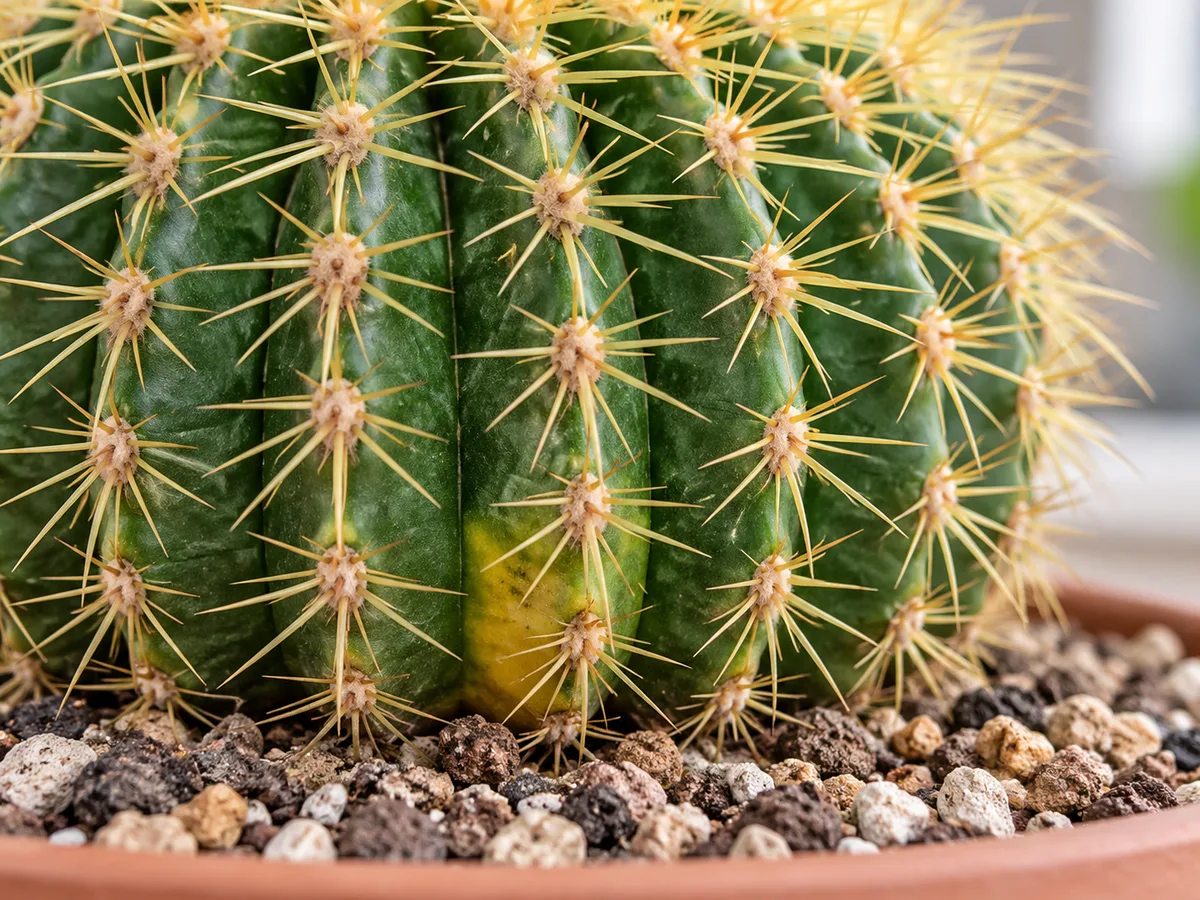
A small change in stem color is easier to judge beside the same plant’s healthy green ribs; do not scrape or cut the surface to test it.
When the stem changes color, note the pattern before acting. A yellow band or soft area that starts where the globe meets the soil deserves a root-zone check. A pale patch on the side that faced a new window or outdoor sun fits a different path. A few discolored spines, with the green stem still firm, may simply reflect the plant’s naturally golden armature rather than a foliage symptom.
Read the location and texture before guessing
Color by itself is a weak diagnosis. Look at the height of the affected tissue, whether it is firm or soft, how quickly it appeared, and whether the mix has stayed damp. The Golden Barrel’s own growing notes list a soft or dark base, yellowing lower tissue, and a pot that remains wet as overwatering clues; slight rib tightening or shrinkage after a long dry spell points more toward drought stress.
| Pattern | What it suggests | What to check next |
|---|---|---|
| Lower stem is yellowing, soft, or dark at the soil line; pot stays wet | Root or stem rot is a concern | Check drainage and use the Golden Barrel overwatering guide to assess the wet mix |
| A firm, pale yellow or white patch faces the window or strongest sun after a move | Sun scorch is possible | Review recent light changes and compare with the Golden Barrel light guide |
| Whole globe looks slightly smaller or ribs tighten after an unusually long dry period | Drought stress may be involved | Confirm the mix is dry through the pot, then follow the Golden Barrel watering guide |
| The plant is stretching or leaning, but there is no distinct yellow patch | Light may be too low overall | Compare its position with the not-enough-light guide |
| The stem stays firm while only a few spines look gold or pale | The spines may be normal rather than damaged tissue | Check the green stem itself, not only the spine tips |
This table narrows the next check; it does not identify a disease by itself. Rot can begin beneath the mix, where it is not visible, so the surface can look deceptively normal. Conversely, a dry, firm patch on the exposed side is not enough evidence to unpot a stable cactus. Use more than one clue before changing the setup.
First check: test the root zone and inspect the base
Before adding water, insert a clean wooden skewer down into the mineral mix near the pot wall and withdraw it to check below the surface. A dry crust on top does not tell you whether the center of the pot is still damp. Missouri Botanical Garden explains that waterlogged soil deprives roots of oxygen and that the surface can dry before the deeper root zone; it also recommends checking below the surface rather than watering by appearance alone.
Look at the stem where it meets the soil without squeezing the spiny globe. A firm, dry base with no spread is different from a soft, dark, sunken area. If the pot is heavy or the skewer comes out damp, do not add water just because the plant looks pale. If the mix is dry throughout and the body is firm but slightly contracted, water only as part of the cactus’s normal dry-through routine, then let excess drain fully.
Keep the plant in its current bright, stable position while you make this first check unless it is receiving a sudden, harsh beam of direct sun. Do not combine watering, repotting, pruning, and fertilizer in one response. One recorded observation now will help you tell whether the yellowing is associated with wet roots, a sun-facing injury, or another pattern.
When wet soil and lower yellowing point toward rot
Golden Barrel Cactus is adapted to a dry root zone, so a pot that remains wet is a meaningful clue. Clemson Extension says slow-draining soil and frequent watering can cause cactus root and stem rots. In its general discussion of barrel cacti, Gardening Know How describes Pythium rot beginning in roots and progressing upward; yellowing at the soil line can appear before the stem becomes soft. That source discusses barrel cacti broadly, not a diagnosis confirmed for every Golden Barrel Cactus.
Treat the combination, not the color alone, as the warning: persistent dampness, yellowing at the base, a soft or dark area, and declining firmness together justify closer root inspection. If the plant is stable and the mix is merely slow to dry, first stop watering and verify that runoff is not trapped in a cachepot or saucer. If the lower stem softens or the discolored area spreads, use the Golden Barrel overwatering guide to decide whether the root zone needs more urgent attention.
Do not pour fungicide, hydrogen peroxide, or an improvised household mixture into the pot based on a yellow patch. Yellowing alone does not identify a pathogen, so avoid applying a fungicide or improvised household mixture based on color alone. If the roots are exposed for a needed inspection, use clean tools and avoid injuring the stem; a local extension service or cactus specialist can help assess extensive decay.
When a pale patch may be sun scorch instead
A yellow-white patch on the side that faced a stronger light source can be a different problem from lower-stem rot, especially if it appeared soon after the cactus moved outdoors or closer to a sunny window. The Gardeners’ Path cactus sunburn guide describes cactus sunburn as pale yellow or white epidermal discoloration that may later turn tan or brown, often after a sudden exposure change. This is general cactus guidance, not a Golden Barrel-specific injury study.
If the patch is dry and firm and the base and mix look normal, move the cactus out of direct midday sun into bright filtered light or gentle morning sun. Keep it bright rather than putting it in a dark corner. The BYU profile for this species lists full sun to light shade, while NC State Echinocactus profile describes Echinocactus as a full-sun genus that tolerates some shade; those are long-term placement ranges, not instructions to skip acclimation.
When the light level is safe again, increase direct exposure in small steps instead of returning it to the original hot beam all at once. A firm sunburn scar may remain discolored after the exposure is corrected. Use the sunburn and scorched-leaves guide for the broader light-injury pattern; this page focuses on telling it apart from yellowing at the base of this cactus.
Do not mistake drought, low light, or spine color for yellowing
A Golden Barrel that has been dry for an unusually long time may show slight rib tightening or modest shrinkage. That is a reason to check the mix, not to water automatically: the same yellow-looking stem can coexist with wet-root damage, and the root zone needs to be known first. Gardening Know How barrel-cactus care guide likewise recommends well-drained soil and restrained watering; it does not support a fixed calendar for every indoor pot.
Insufficient light is more likely to show as a change in the plant’s shape or growth direction than as a yellow band at the soil line. Golden Barrel Cactus is a high-light species, but moving it suddenly from shade into harsh sun can also scorch it. If it is stretching without a discrete pale patch, review the not-enough-light guide and adjust light gradually rather than trying to fix a color change with fertilizer.
Do not remove the normal golden spines or peel the outer stem skin. The crown of new spines and the green ribs are useful reference points; damage to either can create a second problem and make later comparisons harder. If only a few spines are pale while the stem remains firm and green, follow the Golden Barrel brown-tips guide only if the tips themselves are actually drying or browning.
Recovery: look for stability, not instant green color
Yellow or tan stem tissue may not return to its previous color if it has been scarred or damaged. For a suspected light injury, the first useful sign is that the patch stops expanding after the exposure is reduced. For possible wet-root stress, look for the lower tissue to remain firm and for the pot to dry at a reasonable pace after watering has stopped. A damaged area that becomes softer, darker, sunken, or larger needs a fresh diagnosis rather than repeated routine adjustments.
Golden Barrel Cactus grows slowly, so new central spines may take time to become obvious. Do not treat the absence of quick new growth as proof that more water or fertilizer is needed. Take a photo from the same angle, keep a note of when the pot was last watered and where it stood, and compare the same area again after several days. A stable mark with a firm globe is different from a changing base with a wet mix.
If most of the lower stem is soft, the globe is collapsing, or discoloration is climbing from the soil line, the prognosis is more serious. A small stable scar alone is not a reason to discard a firm plant, but widespread soft tissue calls for experienced help. Keep the pot upright and avoid handling the spines while you decide whether a root inspection is necessary.
Prevent yellowing with a dry root zone and steady light
Use a mineral, fast-draining cactus mix and a pot with an open drainage hole. Water deeply only after the mix has dried through the pot, then let runoff escape rather than leaving the container in standing water. Clemson Extension’s indoor cactus guidance emphasizes well-drained soil and warns that waterlogged conditions can rot roots; this aligns with the Golden Barrel’s dry-through care profile. The Golden Barrel soil guide covers mix and drainage if the pot stays damp longer than expected.
Expect watering needs to change with the season, temperature, pot material, and available light. A cool winter room and a warm sunny growing period do not dry a pot at the same rate. Use the skewer and the plant’s firmness as checks instead of repeating a fixed weekly schedule. If the mix stays wet for many days despite no recent watering, look for blocked drainage or a dense nursery substrate before increasing the frequency.
Keep the cactus in bright light, but acclimate it after a move from a shaded shop, indoor shelf, or winter position. The species-specific BYU profile supports a full-sun to light-shade range, and the NC State Echinocactus profile also describes a bright preference. Neither source says that every indoor-grown specimen is ready for abrupt outdoor exposure, so step up the light and watch the stem as it adjusts.
Do not use fertilizer to treat unexplained yellowing. A cactus with wet roots, damaged tissue, or a sudden light injury needs the cause addressed first; a nutrient product will not restore a scar or supply oxygen to saturated roots. Keep the plant stable, change one factor at a time, and use the Golden Barrel watering guide when you need to reset its dry-through routine.
When to use this page vs other Golden Barrel Cactus guides
Use this page when the green globe itself is changing color and you need to separate lower-stem wetness from a firm, sun-facing patch or normal golden spines. If the main clue is a damp pot and soft base, the overwatering guide is the more focused route. If the plant is stretching or leaning without a clear yellow area, use the not-enough-light guide.
For general yellowing on leafy houseplants, the yellow-leaves symptom guide covers actual foliage. Golden Barrel Cactus has no true leaves, so use the stem and root-zone checks here instead. The Golden Barrel Cactus problems hub lists other plant-specific symptoms if the color change comes with a different pattern.
Related Golden Barrel Cactus guides
- Golden Barrel Cactus overview: compare the globe, green ribs, and naturally golden spines.
- Golden Barrel Cactus watering guide: use after confirming the mix is dry through the pot.
- Golden Barrel Cactus soil guide: check drainage if the root zone remains damp.
- Golden Barrel Cactus light guide: choose a bright position once the acute sun-exposure risk is understood.
- Golden Barrel Cactus overwatering guide: follow if wet soil and a soft or dark base point to root stress.
- Golden Barrel Cactus problems hub: route a different or combined symptom.
Related tool
Use the Plant Problem Diagnosis Tool to compare wet-root, sun-exposure, and low-light clues before changing more than one care variable.