Leggy Growth on Hoya: Causes, Checks & Fixes
Quick answer
Leggy Hoya vines show long gaps between leaves, thin pale new growth, and fewer blooms-etiolation from weak light. Stretched internodes are permanent. First step: improve light per the not-enough-light guide, then prune bare sections back to nodes-never remove peduncles (flower spurs).
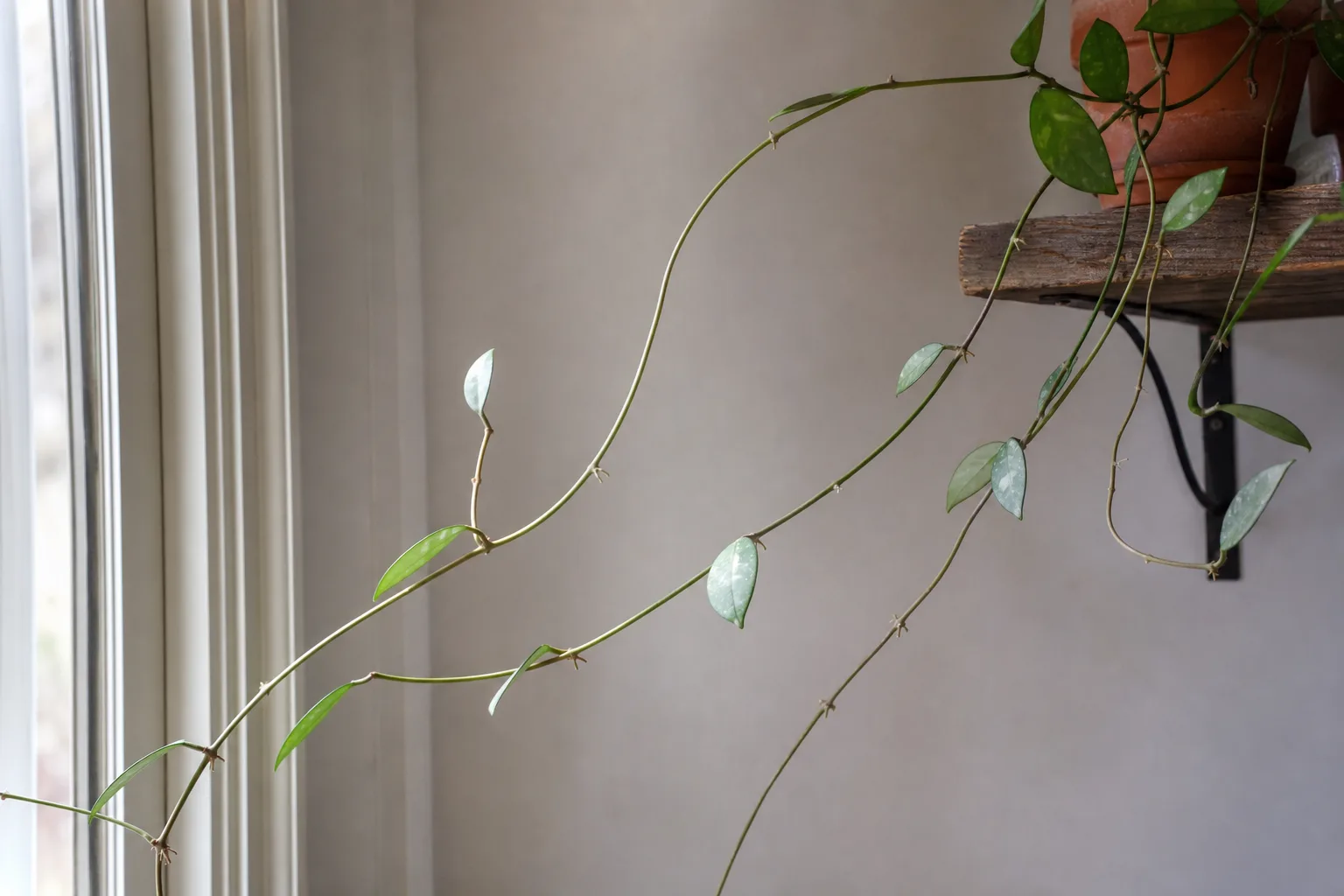
Leggy Growth on Hoya: Causes, Checks & Fixes
This guide covers leggy growth on Hoya. See also the general Leggy Growth guide, watering, and light pages for this plant.
Leggy Growth on Hoya: Causes, Checks & Fixes
Quick answer
Leggy growth on Hoya is etiolation-vines stretch toward light, internodes lengthen, new leaves shrink and pale, and blooms stall when photons are insufficient. Hoyas are epiphytic vines that want bright indirect light for compact growth and peduncle development-not dim corners where they merely survive. For general stretch mechanics, see our leggy growth symptom hub.
Stretched stems never shorten. Better light shapes future leaves only.
First step: brighten exposure using not enough light on Hoya. Wait for tighter new growth. Then prune bare stretched sections back to nodes-never cut peduncles (woody flower spurs that rebloom year after year).
This page covers structural recovery and peduncle-safe pruning. Light diagnosis lives on not-enough-light.
What leggy growth looks like on Hoya
Healthy hoyas carry compact nodes with firm waxy leaves spaced closely on twining stems. Leggy plants show:
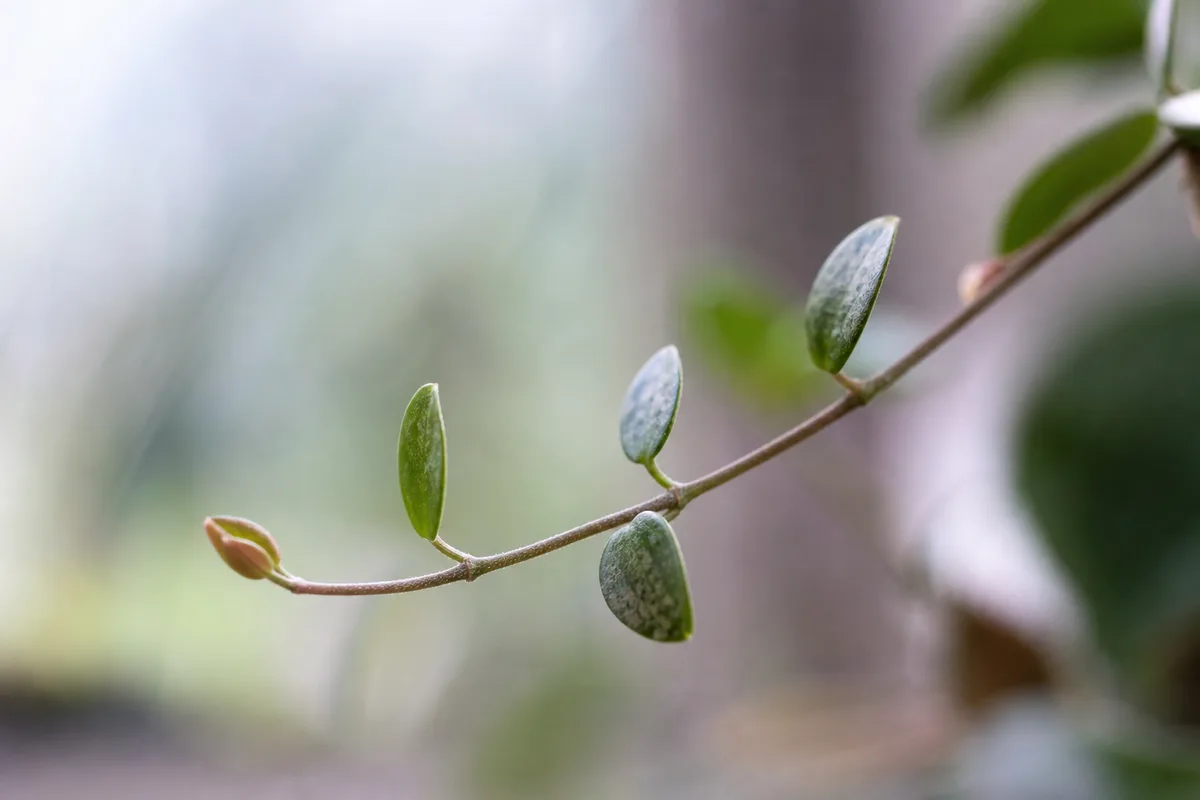
Leggy Growth symptoms on Hoya - compare with healthy tissue on the same plant.
- Long bare gaps between leaves on newer vine tips
- Smaller, thinner, lighter new leaves compared to older growth on the same stem
- Vines reaching toward one window or grow light
- Few or no blooms despite mature vines-peduncles may exist but buds fail without adequate light
- Slow internode production on thin-leaved species (H. linearis, H. bella)-fine leaves shrivel and stretch together
Thick-leaf types (H. carnosa, H. obovata) stretch more slowly but still widen gaps in dim offices over months.
What leggy growth is not:
- Yellow mushy stems on wet soil-overwatering / root issues
- Peduncle drop from moving the plant-separate stress; do not confuse with stretch
- New growth shriveled only on dry heated air without long internodes-dry air on fine-leaved species; see low humidity if applicable
Why Hoya gets leggy
Hoyas climb toward brighter canopy light in habitat. Indoors, weak light produces long internodes and thin stems reaching toward windows.
Epiphytic roots and thick leaves store some moisture, but photosynthesis still drives architecture. Dim placement produces vines, not the compact leaf clusters growers prize.
Blooming ties to light. Hoyas need adequate intensity and duration for peduncle buds to set. Leggy vines with peduncles present but no flowers often mean light improved survival but not bloom thresholds.
Low light also slows dry-down-owners watering on calendar in dim halls get yellow leaves while vines still stretch. Houseplants in dim rooms use less water per week, so the same watering rhythm that worked in a bright window can leave mix damp for weeks in a hallway while vines still etiolate toward the nearest photon source.
How to confirm structural legginess
- Internode comparison on the same vine-widening gaps confirm etiolation
- Light placement - Still marginal? Fix not-enough-light first
- Peduncle audit - Woody spurs along stems are flower sites; map them before pruning
- Two-week light trial - New leaves should open closer together with better color
- Species note - Fine-leaved hoyas stretch faster; thick-leaf types fade variegation patterns when etiolated
First fix for Hoya
Improve light, wait for compact new leaves, prune stretched stems without removing peduncles.
- Move to bright indirect light or add timed grow lights per hoya light guide
- Wait 2–3 weeks for tighter new growth
- Cut leggy sections just below a node on bare internodes-leave peduncles intact even if they look bare; they rebloom on the same spur
Hoyas bloom from peduncles that should not be removed-cutting spurs removes future flower sites.
Step-by-step recovery
- Map peduncles before any cuts-mark spurs with soft ties
- Prune bare internodes between healthy nodes and peduncles
- Root cut tips in moist airy mix if you want fill plants-follow the hoya propagation guide; hoya cuttings root slowly; patience required
- Rotate weekly for even fill
- Adjust watering - Brighter light dries epiphytic mix faster; see watering guide
- Wait for peduncle buds - Blooms may return months after light stabilizes; do not force with heavy feed
Grow lights when a window is not enough
North-facing rooms and office cubicles rarely deliver enough intensity for compact hoya growth. A full-spectrum LED grow light 12–14 inches above the crown for 12–14 hours daily often tightens internodes within two to three weeks without moving the pot to a new room. Supplemental lighting prevents etiolation when natural light is marginal. Start at moderate intensity and watch for pale bleached new leaves, which signal the fixture is too close.
Species differences in stretch speed
Fine-leaved species like H. linearis and H. bella stretch faster and show bare internodes within weeks in dim light. Thick-leaf types like H. carnosa and H. obovata tolerate shade longer but still widen gaps and fade variegation over months. Peduncle-bearing species need adequate light for bud set—leggy vines with intact spurs but no flowers often mean survival light, not bloom-level intensity.
Recovery timeline
Weeks 2–4: Tighter new leaves after light upgrade.
Months 2–4: Side shoots from pruned nodes; peduncles may set buds next bloom cycle.
Old stretched internodes: Permanent unless pruned off.
Blooms: Often next season after light correction-not same week as pruning.
Lookalike symptoms
- Active low light - not-enough-light before structural reset
- Iron-looking pale new leaves on alkaline water - rare on hoya; usually stretch + small leaves = light
- Root rot limp vines - wet soil, sour smell; see root rot on Hoya before pruning alone
What not to do
Do not cut peduncles when trimming leggy vines. Do not fertilize to fix stretch. Do not repot stressed vines before light stabilizes. Do not mist heavily expecting compact growth-humidity does not replace photons.
How to prevent leggy growth next time
- Bright indirect light or 12–14 hour grow lights
- Rotate weekly
- Prune when gaps widen-early intervention beats bare strings
- Preserve every peduncle during grooming
Related Hoya guides
- Hoya overview - species hub, light and watering rhythm
- Not enough light on Hoya - placement and grow-light protocol
- Hoya light guide - window direction and intensity targets
- Root rot on Hoya - when dim light pairs with wet mix
- Hoya propagation - rooting pruned cuttings after structural reset
- Overwatering on Hoya - wet-soil lookalikes during stretch
Training vines after the reset
Once light improves and bare internodes are pruned, rotate the pot weekly so side shoots fill evenly around the support. A moss pole or trellis gives twining stems something to climb, which encourages shorter internodes on species that naturally vine upward. Avoid moving the pot to a new room every week—hoyas also abort peduncle buds after relocation shock, which can look like failed recovery when the real issue is placement instability rather than insufficient light.
Conclusion
Leggy Hoya is a light-and-structure problem, not a feeding gap. Map peduncles before any cut, brighten until new internodes tighten, then prune bare whips while leaving every flower spur intact. Expect blooms on existing peduncles the season after light stabilizes-not on fresh stubs. If vines stay limp on sour wet mix in a dim corner, fix moisture and inspect roots before another light move alone.