Slow Growth on Janet Craig Dracaena: Causes, Checks & Fixes
Quick answer
Slow growth on Janet Craig is often normal in dim rooms, but a complete warm-season stall in decent light usually signals a care bottleneck. First fix the light at the crown, then match watering to that slower metabolism before changing fertilizer or pot size.
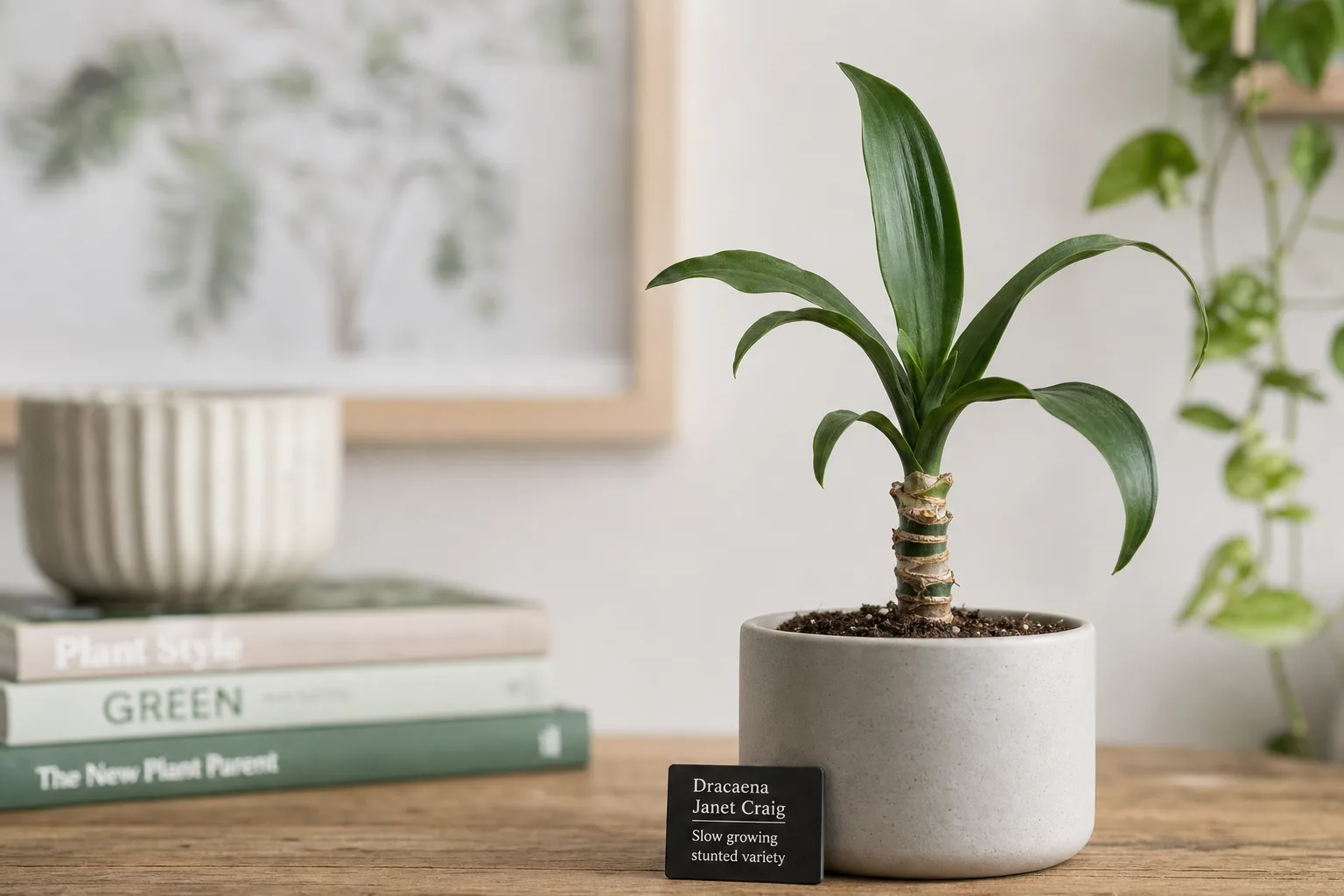
Slow Growth on Janet Craig Dracaena: Causes, Checks & Fixes
This guide covers slow growth on Janet Craig Dracaena. See also the general Slow Growth guide, watering, and light pages for this plant.
Slow Growth on Janet Craig Dracaena: Causes, Checks & Fixes
Quick answer
Janet Craig Dracaena (Dracaena fragrans ‘Compacta’, formerly D. deremensis ‘Janet Craig’) is naturally slow-growing and widely used in interiors because it tolerates low-light conditions better than many foliage plants. That means very slow growth in a dim office can be normal.
The key distinction: normal slow pace vs abnormal stall. If your Janet Craig gets no new crown leaves through an entire warm season in decent bright, filtered light, treat that as a care problem to diagnose.
First fix: correct light at the crown before you repot, fertilize, or prune hard. On Janet Craig Dracaena overview, light and watering speed are tightly linked.
Why Janet Craig grows slowly
Janet Craig grows more slowly than many common houseplants by genetics, then slows further when indoor conditions are suboptimal. Four causes explain most “too slow” cases:
- Low usable light: In weak light, photosynthesis drops and the plant prioritizes survival over pushing new crown leaves on corn-plant types.
- Wet soil in low light: Owners often water on a fixed schedule. In dim rooms, roots use less water, so the mix stays wet longer and growth stalls.
- Temperature drag: Dracaena performs best in warm indoor ranges, with about 70-80 F recommended for interior care. Cooler, drafty spots reduce growth speed.
- Root and salt stress: Root crowding, accumulated salts, or fluoride sensitivity can blunt new growth and crown quality. Clemson notes dracaena is sensitive to fluoride injury, and PNW guidance also describes fluoride buildup affecting dracaena foliage and photosynthetic performance.
What slow growth looks like
Use pattern, not a single symptom:
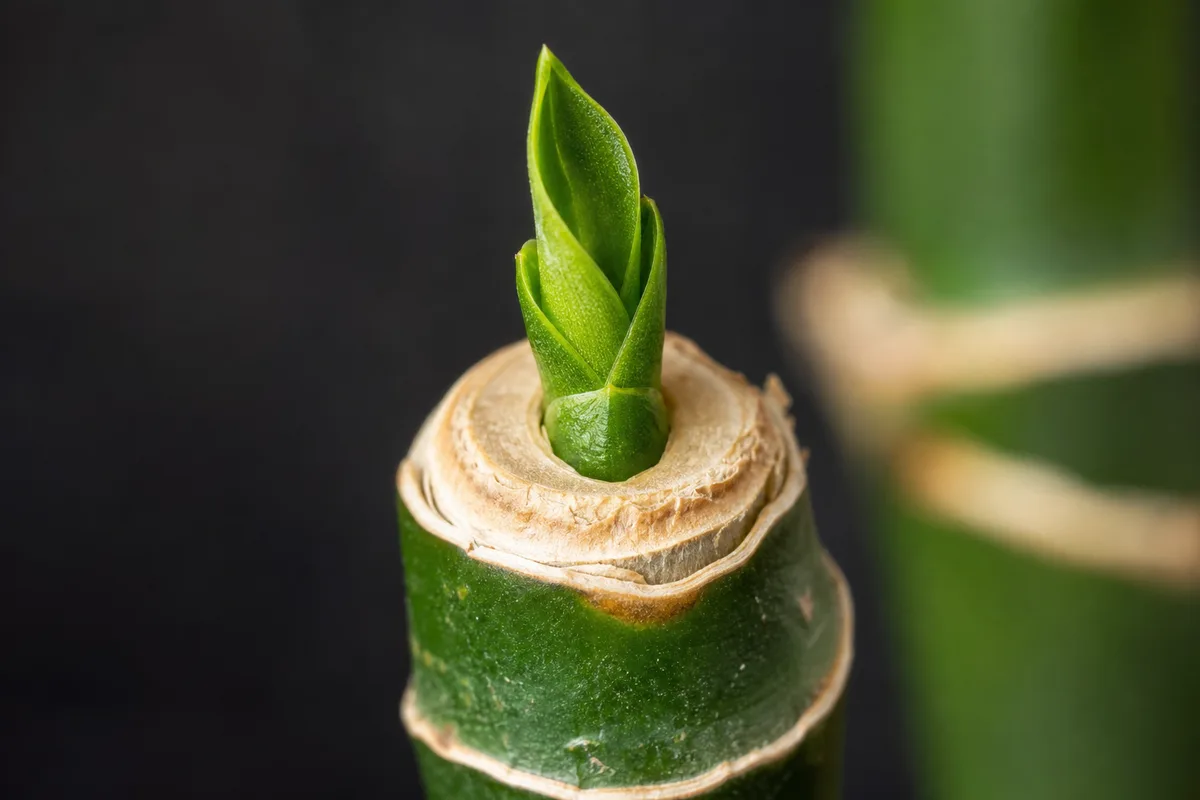
Slow Growth symptoms on Janet Craig Dracaena - compare with healthy tissue on the same plant.
-
Usually normal slow growth
- Firm cane and firm roots
- Deep green mature leaves
- Long gaps between new leaves, but occasional crown movement over time
- Stable plant structure without rapid decline
-
Likely problematic slow growth
- No new crown growth through spring and summer in adequate filtered light
- New leaves that are persistently smaller, paler, or weak
- Pot staying wet for too long with yellowing lower leaves
- Softening at the cane base or sour soil smell (possible rot escalation)
How to confirm the cause
Work this checklist in order:
- Check crown light first. If the top leaves are far from any window view, you may be looking at normal low-light stasis, not a disease.
- Check dry-down time. In low light, watering intervals stretch. If the mix stays wet for long periods, growth can stall from oxygen-poor roots.
- Check temperature and drafts. Keep this cultivar away from cold AC flow and chilly windows; dracaena growth slows markedly in cool conditions.
- Check root status only if indicated. Unpot when you see warm-season stall plus yellowing and prolonged wetness. Firm pale roots suggest correction, mushy roots suggest rot.
- Rule out lookalikes. Compare symptoms with
/plants/janet-craig-dracaena/not-enough-light/,/plants/janet-craig-dracaena/overwatering/, and/plants/janet-craig-dracaena/root-rot/.
First fix
Move the crown into brighter indirect light, then pause extra interventions for 3-4 weeks.
This one action tells you the most about cause and often restarts growth. After the move:
- Water only when meaningful dry-down has occurred.
- Do not fertilize a stalled plant immediately.
- Do not jump to a larger pot unless roots are clearly crowded.
If you suspect fluoride tip-burn pattern, switch to low-fluoride water and avoid high-fluoride inputs as Clemson recommends for dracaena sensitivity.
For fertilizer timing and rates once growth resumes, use your care guide at /plants/janet-craig-dracaena/fertilizer/.
Recovery timeline
Janet Craig recovery is gradual:
- 2-4 weeks: plant stabilizes; no further decline is your first win.
- 4-8 weeks: new crown leaves should look healthier if light was the bottleneck.
- 2-4 months: you see clearer pace change and better leaf quality.
Damaged older leaves usually do not repair. Judge progress by new growth quality, not old leaf scars.
Mistakes to avoid
- Correcting “slow growth” by watering more often in low light.
- Fertilizing before confirming light and root health.
- Repotting preventively into a much bigger container.
- Treating natural slow pace as failure and stacking too many fixes at once.
How to prevent chronic slow decline
Set realistic pace expectations: Janet Craig is not a fast climber, even in good conditions. Prevention is mostly consistency:
- Keep in bright, filtered light (not harsh direct sun).
- Tie watering frequency to actual dry-down, not calendar habit.
- Repot only when roots crowd the container; see
/plants/janet-craig-dracaena/repotting/. - Keep growth-season nutrition light and balanced; see
/plants/janet-craig-dracaena/watering/and fertilizer guidance. - Keep away from pets because dracaena is toxic to cats and dogs.
When to worry
Escalate quickly if you have slow growth plus:
- soft cane base
- persistent yellowing in wet mix
- foul root-zone smell
- continued decline after 6-8 weeks of corrected light and watering
At that point, treat as potential root/stem disease rather than benign slow pace.
When to use this page vs other Janet Craig Dracaena guides
- Janet Craig Dracaena watering guide - Use for routine moisture checks before assuming slow growth is the main issue.
- Janet Craig Dracaena problems hub - Browse all 50 common issues on this species.
- Not Enough Light on Janet Craig Dracaena - Different entry point when symptoms overlap with slow growth.
- Leggy Growth on Janet Craig Dracaena - Different entry point when symptoms overlap with slow growth.
- Yellow Leaves on Janet Craig Dracaena - Different entry point when symptoms overlap with slow growth.