Spider Mites on Java Fern: Causes, Checks & Fixes
Quick answer
Spider mites on Java Fern appear on emersed nursery growth, moist rockwool, or paludarium leaves above water-not healthy submerged fronds. First step: quarantine the plant, strip rockwool, rinse the rhizome, and trim or submerge infested emersed leaves before mounting on hardscape.
Spider Mites on Java Fern: Causes, Checks & Fixes
This guide covers spider mites on Java Fern. See also the general Spider Mites guide, watering, and light pages for this plant.
Spider Mites on Java Fern: Causes, Checks & Fixes
Quick answer
Spider mites on Java Fern (Microsorum pteropus) are a greenhouse and emersed-stock problem, not a typical submerged-aquarium pest. Spider mites are tiny arachnids that pierce leaf cells and leave stippled, bronzed, or yellowing damage, often with fine silk webbing on protected tissue. They need accessible, air-exposed plant surfaces and thrive in warm, dry conditions with low humidity. Healthy fronds growing fully underwater in a display tank should stay clear. When stippling or webbing shows up, it almost always traces to emersed nursery growth, rockwool in the pot, paludarium leaves above the waterline, or a plant quarantined beside infested houseplants.
First step: quarantine the plant, remove all rockwool, rinse the rhizome under lukewarm water, and trim infested emersed fronds (or submerge them fully) before tying the exposed rhizome to driftwood or stone. Do not spray horticultural oil, insecticidal soap, neem, or fish medications into a stocked aquarium.
What spider mites look like on Java Fern
On emersed or potted fronds, expect:
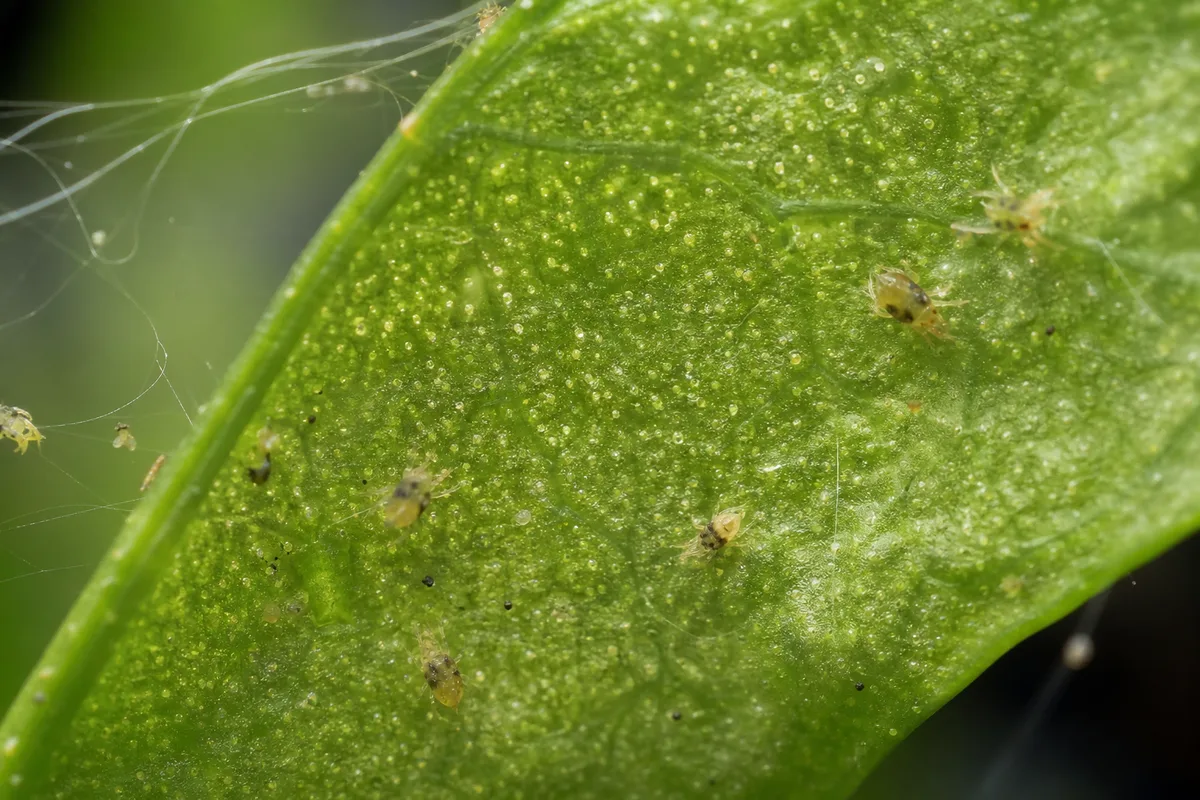
Spider Mites symptoms on Java Fern - compare with healthy tissue on the same plant.
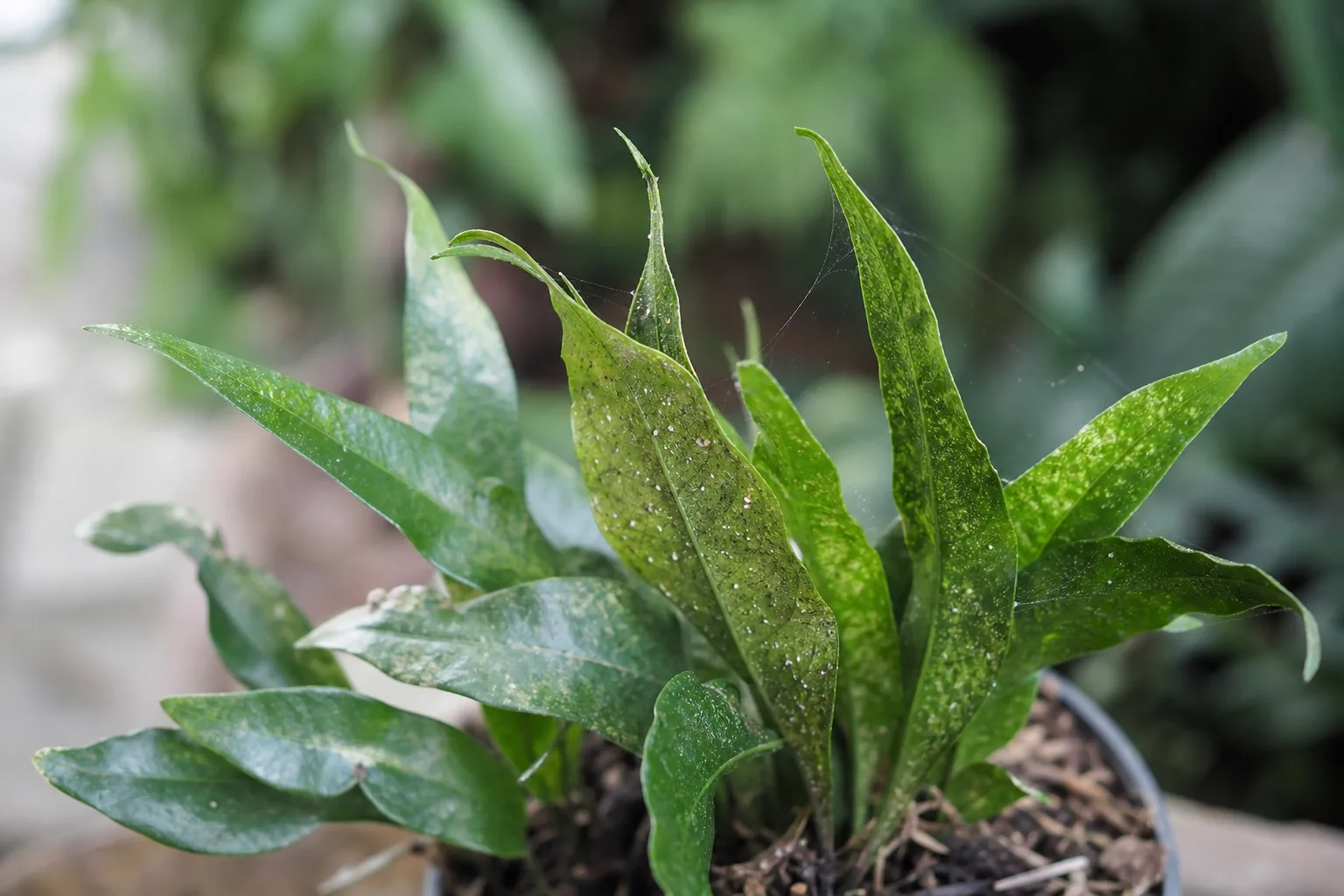
- Fine stippling-thousands of tiny pale or yellow dots where sap was removed from leaf cells
- Bronzing or dull gray-green patches on emersed tissue as feeding continues
- Delicate silk webbing at leaf bases, along the rhizome, or bridging young frond tips
- Crispy, curled emersed tips where populations are heavy
- Tiny moving specks on a white paper after the tap test-often orange, green, or red under magnification
On fully submerged display fronds, spider mites are uncommon. Underwater leaves lack the dry-air habitat mites prefer, and constant immersion washes away webbing. If you see pale speckling underwater, rule out algae, diatom dust, or acclimation melt before assuming mites.
Do not confuse mites with sporangia-the symmetrical dark reproductive dots on firm mature submerged leaves. Sporangia are part of normal fern biology; they do not crawl, produce webbing, or worsen over a week of tap tests. For other white or pale underwater patterns, see white spots on Java Fern.
Why Java Fern gets spider mites
Java fern is a slow-growing rhizomatous epiphyte from Asian stream margins. In aquariums it attaches to hardscape; the rhizome must stay exposed and never buried. Most trade Java fern is grown emersed in humid greenhouses-exactly where spider mites favor dry, warm air around soft foliage.
Submerged culture changes the equation. Underwater fronds sit in constant moisture without the hot, dry microclimate mites need to multiply quickly. That is why a mature submerged clump rarely hosts active spider mites while the same species in a humidity tray, propagation cup, or open-top paludarium can show stippling within days.
The usual introduction routes mirror other emersed pests on Java Fern overview-see also mealybugs on Java Fern and aphids on Java Fern for the same rockwool and paludarium pathways:
- Potted emersed plants shipped in net pots with rockwool that hides pests at the rhizome
- Paludarium or riparium setups where emersed Java fern leaves sit above the waterline in dry greenhouse air
- Quarantine trays shared with infested houseplants from the same bench
- Propagation cups with emergent tips breaking the surface in still, warm rooms
Java Fern’s slow leaf turnover means stippled emersed fronds stay visibly scarred longer than on fast-growing emersed stems-judge recovery by new clean growth, not instant re-greening of old tissue.
Dry air on emersed tips in paludariums and propagation cups
Emergent frond tips above an open aquarium or in a shallow propagation cup sit in the same warm, low-humidity band spider mites prefer indoors. A lid, higher humidity tray, or fully submerged placement breaks that habitat faster than any spray inside a fish tank.
Hitchhiking on emersed nursery stock and moist rockwool
Rockwool fibers hold moisture at the rhizome crown while the exposed emersed tips dry in transit-ideal for mites to persist unseen. Remove rockwool and mount the exposed rhizome on hardscape at purchase, before the plant enters any display tank.
How to confirm the cause
Work through these checks in order:
- Emersed vs submerged - Are the affected fronds above water, in a humid box, or still wrapped in rockwool? Stippling on submerged-only tissue strongly suggests a lookalike, not spider mites.
- Tap test - Hold a white sheet of paper under an affected emersed leaf and tap sharply. Crawling specks the size of pepper grains confirm mites. Wash hands after handling infested plants to avoid spreading them.
- Webbing check - Fine silk at leaf bases or between young frond tips points to spider mites. Webbing often appears as populations climb.
- Stippling pattern - Uniform pinprick dots on emersed tissue match mite feeding; symmetrical dark dots on firm submerged leaves are sporangia.
- Rockwool inspection - Pull the net pot apart. Mites often persist where damp rockwool meets the rhizome.
- Rhizome firmness - A woody, green rhizome can recover after pest removal. Mushy rhizome tissue means rot from burial or decay-address that separately.
Rule out thrips (silver scrape marks, fast-jumping insects), mealybugs (white cottony wax in leaf axils), and acclimation melt (translucent submerged tissue after a tank move with no webbing).
If submerged leaves are clean, the rhizome is firm, and stippling exists only on emersed tips or packing material, you have a confirmed emersed spider mite issue-not a tank-wide aquarium pest emergency.
Tap test and webbing check on emersed tissue
Perform the tap test on emersed fronds only-above the waterline, in the propagation cup, or still in nursery rockwool. Submerged fronds will not yield meaningful mite samples. Repeat every three to five days during treatment until two consecutive tap tests show no crawlers.
First fix for Java Fern
Quarantine the plant in a separate container away from other houseplants and unquarantined aquarium stock.
That single step stops mites from ballooning on silk threads to neighboring pots or hitchhiking on wet leaves into your main tank. In the quarantine tub:
- Remove the net pot and every rockwool fiber you can see; rinse the rhizome under lukewarm water.
- Trim emersed fronds with visible stippling or webbing back to the rhizome with clean scissors, or submerge all emersed tissue fully in clean dechlorinated water.
- Mount or float the rhizome with all tissue exposed-attach to root or stone, not buried substrate.
Hold the plant in quarantine two full weeks while you tap-test emersed tips every few days. Only after that window passes with no new stippling or crawlers should you tie the fern to hardscape in a display tank.
Quarantine, rinse, and rockwool removal
Physical removal beats chemical shortcuts on a slow epiphyte. Stripping rockwool exposes the rhizome crown where mites hide beside melt-prone emersed tissue-the same inspection route used for mealybugs and aphids on Java Fern.
Submerge emersed fronds or raise paludarium humidity
Submerging infested emersed fronds removes the dry-air habitat mites need. In paludariums where tips must stay above water, add a partial lid, mist the emergent zone, or move the plant to a humid quarantine tub until tap tests clear. Do not dose fish medications for a terrestrial pest on emersed tissue.
Emersed-only horticultural oil or soap escalation (out of tank)
If stippling returns after rinsing and trimming, move the plant to a bucket away from open aquarium water and treat emersed portions only with insecticidal soap or horticultural oil per label directions. Rinse thoroughly, quarantine again, and never pour oil or soap into an occupied fish or shrimp tank. Repeat applications every three to five days until webbing stops and tap tests stay clean.
Step-by-step recovery
After quarantine isolation and rockwool removal:
- Physical rinse - A forceful spray of lukewarm water on foliage can reduce spider mite numbers when repeated; let emersed leaves dry in ventilated quarantine afterward.
- Trim heavily stippled emersed leaves - Submerged melt after transition is normal and not mite damage.
- Submersion hold - Keep every emersed frond underwater 24–48 hours per pass if you are not trimming. Repeat if tips break the surface again.
- Reattach properly - Tie the exposed rhizome to driftwood or stone with thread or gel glue; keep it above gravel per Tropica planting guidance.
- Tap-test monitoring - Check emersed tissue every three to five days. Two clean tap tests in a row mean you can stop active treatment.
- Tank placement - Introduce only after quarantine passes. Submerged growth from a clean rhizome should stay pest-free.
- Escalate outside the tank if needed - Bucket-treat emersed portions with soap or oil, rinse, and quarantine again before reintroducing.
For paludarium setups, treat emersed portions in place but keep oils and soaps away from open water where fish drink. Move livestock temporarily if you must treat above-water leaves heavily.
Recovery timeline
Spider mite control on emersed Java fern is a weeks-long watch, not a one-day rinse. Mites complete a generation in roughly five to twenty days under warm conditions, so missing one webbed cluster restarts the cycle.
Expect:
- Week 1–2: Quarantine, rockwool removal, trimming or submersion; no new stippling or crawlers on tap test = good sign
- Week 3–4: First clean submerged or emersed leaves from the rhizome; old bronzed fronds remain until trimmed
- Month 2+: Slow Java Fern growth means full visual recovery takes patience; judge success by firm rhizome tissue and pest-free new fronds, not instant lushness
Worsening signs: webbing spreading across most emersed fronds, tap tests still positive after two weeks of rinsing, or mites appearing on neighboring houseplants beside an open paludarium.
Lookalike symptoms
| What you see | Likely cause | Spider mite? |
|---|---|---|
| Symmetrical dark dots on firm submerged leaves | Sporangia | No |
| White cottony clusters in emersed axils | Mealybugs | No |
| Silver scrape marks with fast-jumping insects | Thrips | No |
| Translucent melting fronds after tank move | Acclimation melt | No |
| Fine stippling and webbing on emersed tips | Spider mites | Yes |
| Pale dust on submerged leaves in high light | Algae or diatoms | No |
What not to do
Do not spray horticultural oil, insecticidal soap, neem oil, or pyrethrin into a stocked aquarium. Residues harm fish, shrimp, and beneficial bacteria even when labels say “natural.”
Do not dose fish medications for terrestrial mites on emersed tissue-those products target aquatic parasites, not spider mites on leaves above water.
Do not plant rockwool-and-all into substrate-traps moisture, hides pests, and buried rhizomes rot.
Do not treat once and stop. Repeat treatments are necessary because eggs and new nymphs hatch on a staggered schedule.
Do not prune healthy submerged sporangia-bearing fronds-they are normal reproductive tissue, not pests.
Java Fern care cross-check
While inspecting for mites, confirm the basics that keep Java Fern resilient-full culture notes live on the Java Fern overview:
- Rhizome above substrate, tied to rock or driftwood-not buried in gravel
- Clean, oxygenated water with regular partial changes
- Low to moderate aquarium light-Java fern is a low-light epiphyte
- No copper or algaecide residues on leaves you might later treat with soap outside the tank
Stressed plants with melting submerged leaves attract secondary problems, but mite control still centers on emersed tissue, rockwool removal, and quarantine, not Java Fern repotting guide or fertilizer changes.
How to prevent spider mites next time
- Quarantine every new Java fern two weeks in a separate tub before tank placement
- Strip rockwool completely at purchase; rinse and inspect the rhizome under bright light
- Mount exposed rhizome on hardscape; never bury it in gravel
- Keep display plants fully submerged when possible; emersed leaves in paludariums need the same scouting you’d give houseplants
- Raise humidity or add a lid on emergent tips in open-top setups-dry air above water is what mites prefer
- Scout weekly in humid grow-out areas during warm months
- Isolate nearby houseplants with mites away from open aquariums
Buying submerged-grown stock reduces-but does not eliminate-the risk. A thirty-second rhizome check at the shop prevents most introductions.
When to worry
Escalate fast if webbing covers most emersed fronds, tap tests stay positive after two weeks of rinsing and trimming, or multiple plants in the same quarantine tray show stippling at once.
Treat as urgent in paludariums when you cannot submerge emersed leaves and must choose between repeated physical removal or escalating to out-of-tank soap or oil treatment. Do not let pesticides enter the water column.
If dense stippling persists after two full treatment cycles with clean tap tests never achieved, discard the most infested emersed fronds or consider replacing small nursery stock rather than risking spread to your entire collection.
Conclusion
Spider mites on Java Fern are an above-water problem on a below-water plant. Confirm them on emersed fronds, rockwool, and paludarium tips-not on healthy submerged tissue. Quarantine, strip rockwool, rinse, trim or submerge, then mount the exposed rhizome on hardscape. In fish and shrimp tanks, physical removal and humidity control protect your animals better than in-tank sprays ever will. Slow regrowth means prevention and quarantine matter-inspect new emersed stock, keep tips submerged when you can, and judge success by the next clean frond, not yesterday’s bronzed one.
When to use this page vs other Java Fern guides
- Java Fern watering guide - Use for routine moisture checks before assuming spider mites is the main issue.
- Java Fern problems hub - Browse all 28 common issues on this species.
- Low Humidity on Java Fern - Different entry point when symptoms overlap with spider mites.
- Curling Leaves on Java Fern - Different entry point when symptoms overlap with spider mites.
- Slow Growth on Java Fern - Different entry point when symptoms overlap with spider mites.