Spider Mites on Lavender: Causes, Checks & Fixes
Quick answer
Spider mites on English lavender (Lavandula angustifolia) thrive in hot, dry, dusty conditions on sun-exposed containers. Confirm fine stippling plus webbing on needle undersides, rinse foliage early in the day, and keep even moisture while roots stay on a dry-down rhythm.
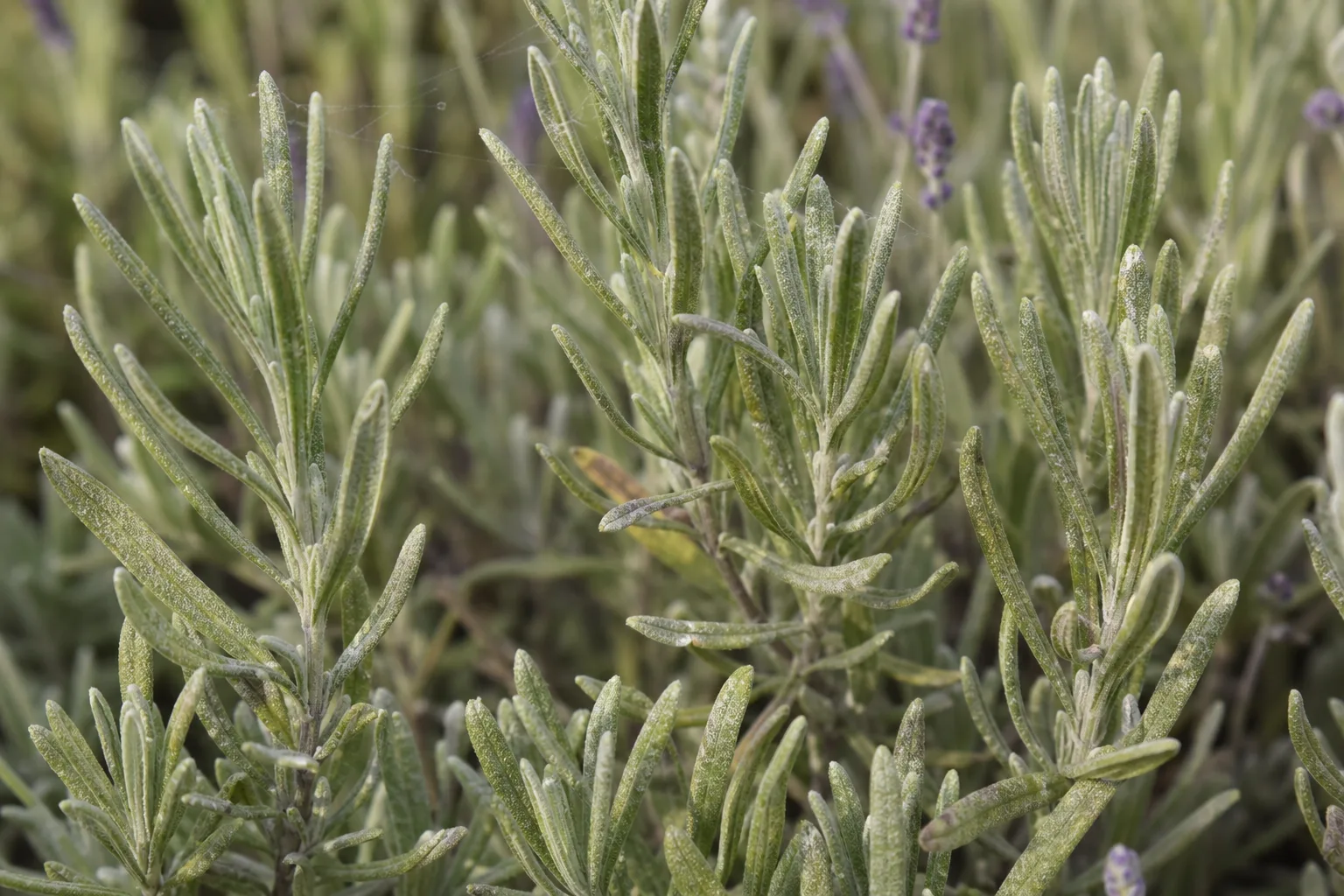
Spider Mites on Lavender: Causes, Checks & Fixes
This guide covers spider mites on Lavender. See also the general Spider Mites guide, watering, and light pages for this plant.
Spider Mites on Lavender: Causes, Checks & Fixes
Quick answer
Spider mites on English lavender (Lavandula angustifolia) are tiny sap-sucking arachnids-not insects-that explode in hot, dry weather on sun-grown containers. The first move is not spray shopping: rinse the entire plant with a strong cool-water stream early in the morning, hitting needle undersides and woody stem forks, then repeat every two to three days until tap tests come back clean.
Confirm stippling plus webbing, not drought dulling alone. Pair rinsing with the lavender watering dry-down rhythm so roots are neither bone-dry nor soggy between treatments. Escalate to insecticidal soap or horticultural oil only when rinsing fails after one week-and never apply oil on scorching afternoons on rooftop pots.
What spider mites look like on Lavender
On lavender, the most common culprit in home gardens is the two-spotted spider mite (Tetranychus urticae), though several web-spinning species produce similar damage on aromatic herbs. Mites are smaller than a pinhead; you often notice the injury before the pest.
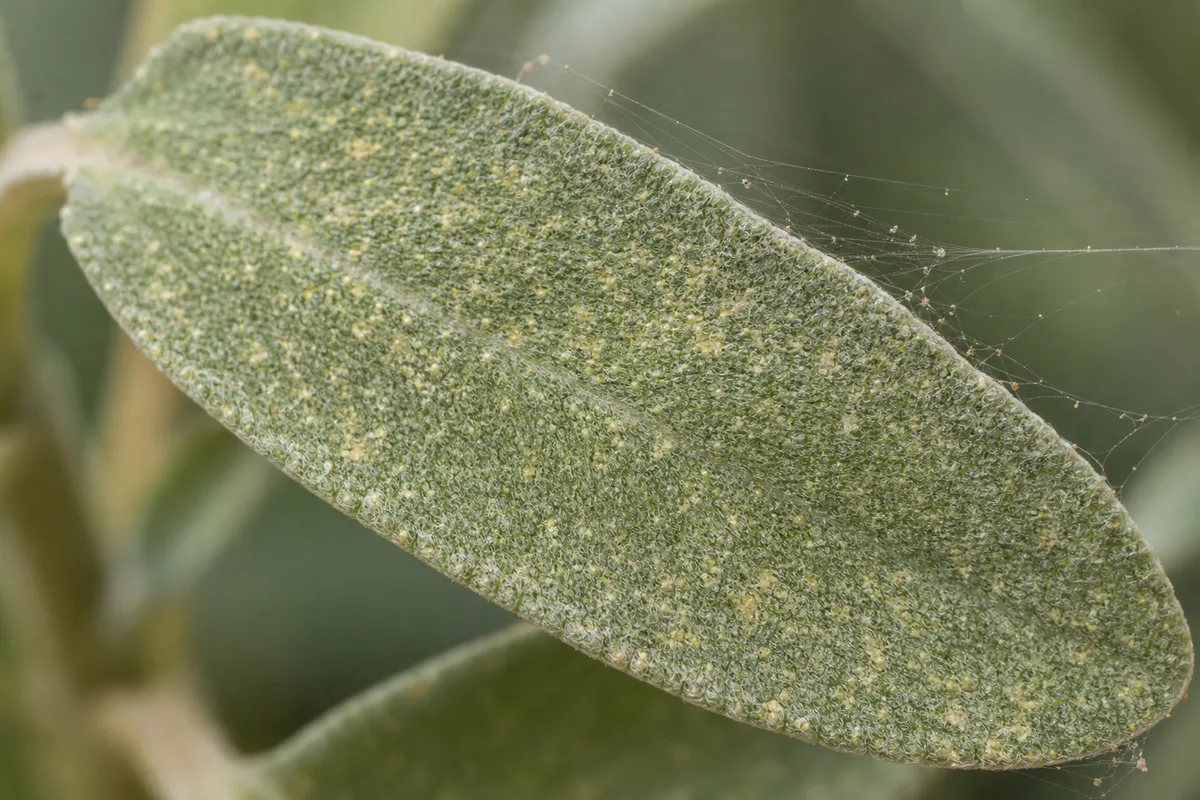
Spider Mites symptoms on Lavender - compare with healthy tissue on the same plant.
Early signs show as fine yellow or bronze stippling on the upper surfaces of narrow, silvery-gray needles. Because L. angustifolia carries narrow gray-green foliage naturally, the contrast between healthy silver and damaged bronze patches is easier to spot than on broad-leaf houseplants-especially when backlight hits container plants on a balcony.
As feeding continues, needles turn dull grey-green and may feel dry or papery. Silk webbing appears under leaves, between woody stem crotches, and around soft growing tips when colonies build. Heavy infestations cause flower wands to abort or fail to open. With a hand lens you may see pale, greenish, or pinkish eight-legged adults and round translucent eggs clustered near webbing.
Container vs. in-ground presentation: Pots on reflective surfaces show damage on the sunward side first and spread faster when mix dries daily. In-ground hedges with deep roots may yellow more slowly, but stippling and webbing at stem forks look the same-do not assume hedge plantings are immune in a drought summer.
Why Lavender gets spider mites
Lavender’s Mediterranean biology sets up a paradox: the plant loves full sun and sharply drained soil, yet the same hot, dry exposure that keeps lavender healthy also favors the pests that attack it when water slips out of balance.
Hot dry-down stress on sun containers
Hot, dry weather favors rapid spider mite development-excess moisture suppresses them, while drought-stressed foliage becomes preferred feeding sites. Lavender growers intentionally let containers dry between waterings; a missed week during a heat wave leaves needles desiccated and roots unable to support transpiration. That stress window is when mites colonize woody stem forks faster than you notice stippling.
Correcting underwatering alone will not evict an established colony. If mites already webbed the growing tips, you still need physical knockdown or targeted sprays even after soil moisture returns. See underwatering on lavender for drought patterns that overlap with mite outbreaks-and heat stress for afternoon wilt that is not pest damage.
Reflected balcony heat and dusty foliage
Container gardens dry faster than in-ground beds because exposed pot walls increase evaporation; small pots on dark plastic saucers over hot pavement can need daily moisture checks in summer. Reflected heat from walls and balcony rails mimics greenhouse conditions. Under those conditions, two-spotted spider mite generations can complete in as few as five to seven days, and populations can increase tenfold in a week when natural enemies are scarce.
Road dust and construction grit on needle surfaces add mechanical stress without supplying root moisture-another reason balcony English lavender breaks out after dry, windy weeks. This is not the same as heat stress droop that recovers overnight when soil was moist; here you will find stippling and silk.
Cultivar and species notes
Most culinary and ornamental pots are English lavender (L. angustifolia) or lavandin (L. × intermedia). Both carry woody crowns that rot if foliage stays wet overnight. Spanish lavender (L. stoechas) and French lavender (L. dentata) are often grown as annual containers in cold climates; their softer growth can show mite damage faster, but crown-rot risk from evening rinsing remains the same-dry the base by nightfall.
Lavender’s aromatic oils deter some pests, but no cultivar is mite-proof when heat, drought, and dust align.
How to confirm the cause
Work through these checks in order before buying sprays:
- White-paper tap test - Hold a suspect stem over paper and tap sharply. Pinhead specks that crawl confirm live mites; static debris does not.
- Webbing inspection - Fine silk at stem forks and growing tips distinguishes mites from most lookalikes. Thrips do not spin protective webs.
- Upper vs. lower needles - Stippling shows on top surfaces first; mites and eggs cluster underneath.
- Environment timing - Recent heat wave, dusty air, or several dry days at 7 cm soil depth increase odds. Pair with the watering guide probe, not guesswork.
- Honeydew rule-out - Sticky shiny leaves point to aphids or scale, not classic mite damage.
- Thrips rule-out - Silvery scrape marks with tiny black specks and no webbing suggest thrips instead.
Spider mites are arachnids, not insects-some generic “insect” sprays lack miticide activity on the label. Clemson IPM guidance recommends combining cultural rinsing, biological predators, and labeled miticides only when monitoring shows populations rising.
The first fix to try
Rinse the entire plant with a strong stream of cool water early in the morning, covering needle undersides, flower wands, and woody stem crotches where webbing hides colonies. Repeat every two to three days.
This single action knocks adults off, breaks webbing that shields eggs, and raises local humidity briefly-without keeping the crown wet overnight. Water-stressed plants are most likely to be damaged by mites; after rinsing, water at the soil line only if the 7 cm profile is dry so lavender is not fighting pests and drought at once.
Do not jump to oil or soap on day one unless webbing already blankets the plant and you cannot physically rinse it clean.
Step-by-step recovery
Week 1 - cultural knockdown
Isolate heavily infested pots on crowded balcony rails so webbing does not bridge to neighbors. Rinse at dawn so foliage dries before evening humidity settles on the woody crown-wet lavender crowns overnight invite rot in humid climates, per Illinois Extension lavender guidance on dampness and poor drainage.
After each rinse, run a tap test on two stems. If specks still crawl after five to seven days, move to step 2. That interval matters because insecticidal soap and horticultural oil kill mobile stages on contact but do not reliably kill eggs-new larvae hatch on a five-to-seven-day cadence in warm weather.
Week 2 - targeted sprays if rinsing fails
Apply insecticidal soap or narrow-range horticultural oil labeled for spider mites on ornamentals. Coat undersides until runoff; missed patches leave survivors. Foliar sprays of horticultural oil or insecticidal soap are effective treatments when coverage is thorough.
Repeat every five to seven days for two to three cycles to catch newly hatched nymphs. Apply at dawn or dusk-not in midday sun on container lavender when oil can burn foliage above 80°F (27°C). Skip oil during peak bloom if you harvest stems for kitchen use; rinsing alone may suffice until after cutting.
Avoid broad-spectrum insecticides that kill predatory mites, lady beetles, and lacewings; they often cause mite flare-ups later in summer.
Biological control option for enclosed or greenhouse-like balconies
If temperatures stay moderate and humidity is not extreme, releasing predatory mites such as Phytoseiulus persimilis can work on container lavender before populations explode. UC IPM notes best results with early releases when spider mite numbers are still low. This is less practical on windy open rails but fits sunrooms and sheltered courtyards.
Ongoing culture
Resume normal dry-down watering-probe at 7 cm, water at soil level, empty saucers. Do not mist lavender crowns “for humidity”; that fights the plant’s drought-tolerant Mediterranean habit without controlling mites.
Recovery timeline
Expect visible knockdown within two to three rinse cycles on mild outbreaks-fewer moving specks on tap tests, no new stippling on fresh needles. Heavy webbed infestations often need two to three weeks combining rinsing and one or two soap or oil cycles.
Damaged needles do not revert to silver; recovery means new clean growth from woody stems. Flower wands that aborted may not rebloom until the next season on young plants. If defoliation reached growing tips and stems stay brittle, partial pruning to firm wood after control can redirect energy-see “When to worry” below.
Lookalike symptoms on Lavender
| Sign | Likely cause | Key difference | Where to read next |
|---|---|---|---|
| Stippling + fine silk webbing, no stickiness | Spider mites | Moving specks on tap test | This page |
| Silvery scrape trails, black specks, no webbing | Thrips | No silk; damage often linear | Thrips on lavender |
| Curled tips, sticky honeydew, soft bodies | Aphids | Honeydew and ants; no mite webbing | Aphids on lavender |
| White cottony clusters in axils | Mealybugs | Waxy patches, not stipple pattern | Mealybugs on lavender |
| Uniform dull grey needles, no crawlies, dry 7 cm soil | Drought stress | Tap test negative; no webbing | Underwatering |
| Afternoon wilt, firm crown, moist soil | Heat stress | Recovers overnight; no stippling spread | Heat stress |
Mites and thrips both love hot dry lavender on balconies-run the tap test before treating the wrong pest.
Mistakes to avoid
Do not reach for generic insecticides labeled only for aphids if the label lacks spider mite activity-you may kill predators and worsen mites. Do not rinse late evening when foliage stays wet into cool night air; lavender crowns are sensitive to prolonged dampness. Do not let pots go repeatedly bone-dry while spraying-stressed tissue burns more easily and mites reproduce faster on drought-hit plants.
Do not assume fixing watering evicts an active colony already webbed on stem forks. Do not apply horticultural oil in peak afternoon heat on sun-baked dark plastic pots. Do not discard a mature in-ground hedge for one hot-season flare without trying three rinse cycles and soil moisture correction-container specimens with total tip dieback are the ones most often worth replacing.
How to prevent spider mites next time
Prevention on lavender is mostly stable dry-down moisture plus summer scouting, not tropical humidity tricks. Check sun-exposed containers weekly from June through August: stippling appears before webbing blankets tips.
Occasional dawn rinses during dusty heat waves knock off pioneers before colonies form. Preserve beneficial insects by avoiding broad-spectrum sprays on routine pest patrols. Grouping pots is fine for wind shelter, but crowded rails let webbing bridge-leave air space between plants.
In-ground plantings benefit from gravel mulch and good drainage per the lavender overview culture hub; deep roots buffer daily heat better than shallow pots, though extended drought still triggers outbreaks.
For balcony growers, lighter-colored or terracotta pots heat roots less than black plastic on radiant concrete-overlap with heat stress prevention without shading lavender into shade-plant culture.
Lavender care cross-check
Mite outbreaks often follow an underwatering episode or a heat wave on dry mix-not random bad luck. Pair every pest pass with a soil probe at 7 cm depth and saucer drainage check.
Lavender wants dry crowns and dry-down roots, not constant wet mix. Overcorrecting drought with daily shallow splashes keeps soil cool and damp at the surface while needles remain mite-stressed-water thoroughly at dawn when dry, then let the profile dry again.
If you recently fixed watering but stippling spreads, the colony was already established-continue rinsing or escalate sprays rather than waiting for moisture alone to cure the problem.
When to worry
Treat aggressively when webbing blankets growing tips, flower wands abort on an otherwise firm plant, or stippling jumps to new wands within a week-signs that populations can compound quickly in heat.
Isolate the pot immediately on shared balcony rails. If three rinse cycles plus two properly timed soap or oil applications over three weeks still show crawling specks, prune back the worst webbed stems to firm wood or replace a young container plant whose growing tip is fully desiccated.
Contact your local cooperative extension office if defoliation continues on in-ground plantings after labeled treatments-persistent mites on landscape lavender may need professional identification of species and predators.
Related lavender guides
- Lavender overview - Species, sun, soil, and Mediterranean culture hub
- Lavender watering - 7 cm dry-down rhythm during mite recovery
- Heat stress on lavender - Afternoon wilt without stippling or webbing
- Underwatering on lavender - Drought dulling vs. mite stippling
- Aphids on lavender - Honeydew and soft-bodied clusters without silk
- Mealybugs on lavender - Cottony axil patches
- Thrips on lavender - Silvery scrapes without mite webbing
Conclusion
Spider mites on lavender are a hot-season stress pest on sun containers-not a sign you chose the wrong plant. Confirm stippling plus webbing with a tap test, rinse at dawn every few days, keep dry-down watering steady via the watering guide, and escalate to labeled soap or oil on a five-to-seven-day repeat cadence when rinsing alone fails. Distinguish mites from thrips, aphids, and drought with the lookalike table so treatment matches the pest. For wet-crown wilt or bloom loss from heat alone, use the sibling guides above rather than repeating miticide cycles on the wrong diagnosis.