Lemon Balm Light Requirements: Sun, Shade & Windows
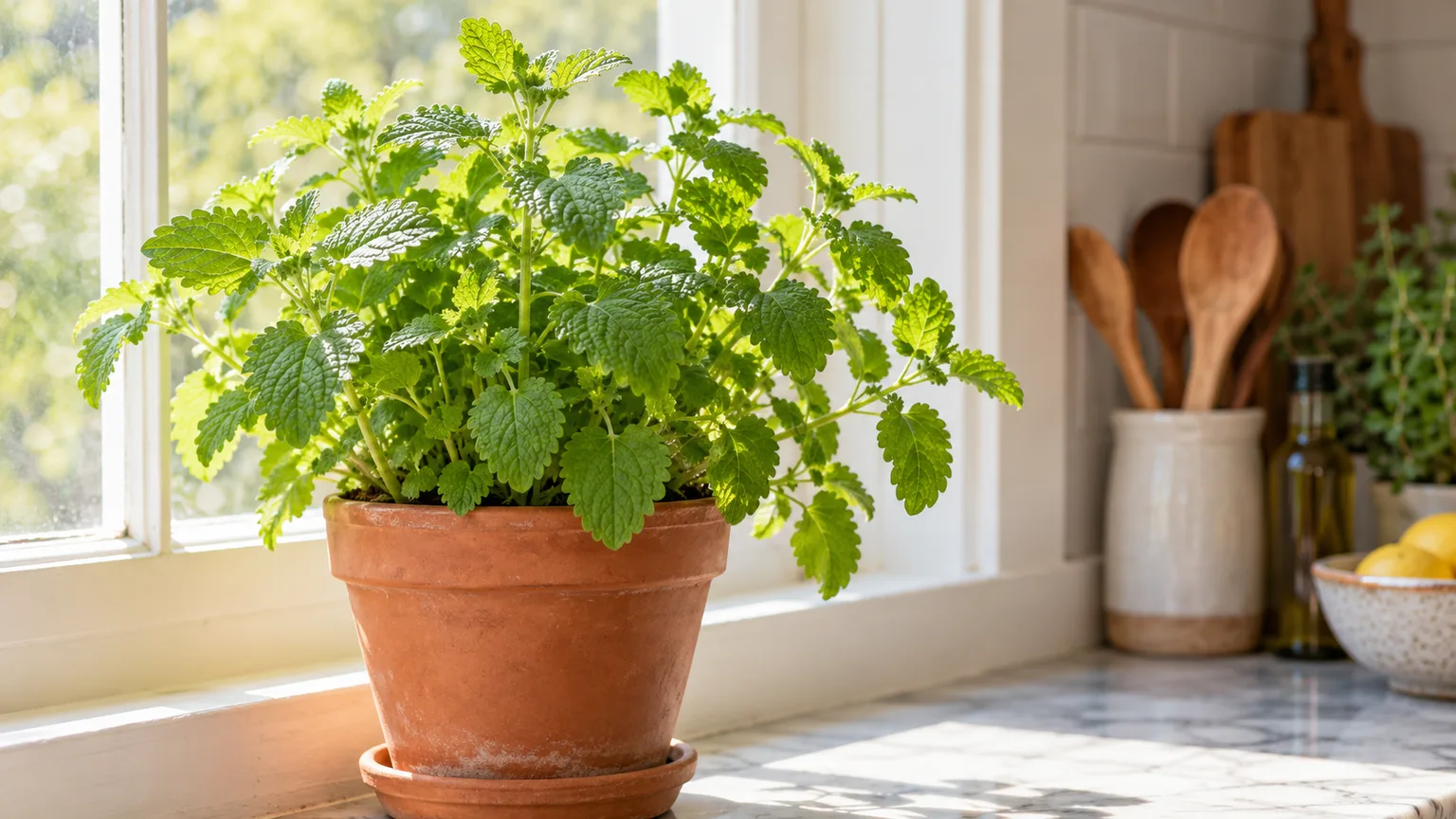
Lemon Balm Light Requirements: Sun, Shade & Windows
Lemon Balm Light Requirements: Sun, Shade & Windows
Lemon balm (Melissa officinalis) is flexible about sun: it grows in full sun and can also manage partial shade. For a leafy plant in a garden, start with a bright position that receives several hours of sun; in a hot balcony or behind warm glass, protect it from the harshest afternoon heat and judge the result by new growth. Its tolerance of some shade does not mean a dim indoor corner will produce a compact, harvestable plant.
Quick answer: how much light does lemon balm need?
Outdoors, give lemon balm full sun or bright partial shade. North Carolina State Extension defines full sun as at least six hours of direct sunlight and partial shade as two to six hours; its plant profile lists lemon balm in both categories. The NC State profile gives a useful range, while Wisconsin Extension recommends full sun for vigorous garden growth. In practice, aim for the brighter end when your climate is mild, and use light shade to temper heat where afternoons are hot.
Indoor lemon balm needs the brightest place available, usually near a sunny window. Homes & Gardens’ indoor-growing guide suggests six to eight hours of light and warns that intense sun heating leaves against glass can scorch them; use that as a practical reference, not a universal measured threshold for every home. If your room is weakly lit, a grow light or an outdoor spot with gentle sun is a practical next step.
Full sun or partial shade?
The sources describe a range rather than a single required exposure. The Royal Horticultural Society says lemon balm is happy in sun or partial shade, while Utah State University Extension says it prefers full sun but tolerates light shade. Utah State also notes that plants grown with some shade may produce larger, more succulent leaves. That is a useful trade-off: the sunniest spot is not automatically the best one if it leaves the plant heat-stressed.
For ordinary green-leaved lemon balm, a bright garden bed with morning sun and some later shade is a practical starting point in a warm climate. In a cooler or less intense setting, more direct sun is likely to support a fuller, more compact clump. Editorial guidance also varies in emphasis: Gardening Know How says the plant tolerates part shade but flourishes best in full sun. Read “tolerates” as a real option, not a promise of equal growth in deep shade.
Some golden-leaved forms need a different balance. The RHS notes that the yellow-leaved cultivar ‘Aurea’ is best grown in light shade, where its foliage is less exposed to harsh sun. If you have a gold cultivar, identify it before moving it into the hottest, brightest part of the garden; cultivar and local heat matter as much as the species-level label.
Choose an outdoor spot that matches your weather
Look at the light the plant actually receives across the day, not just whether a balcony is described as sunny. A position with a few hours of clear morning sun and bright light afterward can work well; a deeply shaded corner under a roof may stay too dim even if the surrounding balcony is bright. For a garden bed, choose a spot where the plant is not crowded by taller herbs or a wall that blocks the useful morning light.
In hot climates, favor morning sun over punishing afternoon heat
In hot Indian locations, a position with morning sun and open shade during the hottest hours is a cautious starting point for a potted lemon balm. A Savvy Gardening container guide says lemon balm can grow in full sun to partial shade and describes successful growth in dappled shade; Epic Gardening’s lemon balm guide likewise recommends some extra afternoon shade in hot climates. These are practical adaptations, not a claim that the species cannot take afternoon sun.
Watch the pot and leaves during the warmest part of the day. If the container becomes very hot to the touch, the plant wilts while its mix is still moist, or leaf patches become pale and papery on the sun-facing side, move it slightly back from the heat or add filtered shade for those hours. If stems keep stretching and leaning, the shade may be too heavy; increase morning exposure a little at a time.
Check a balcony pot through the warmest hours
A sunny garden bed and a balcony pot can experience different conditions, so assess the plant at its own height instead of relying only on a “sunny” label. Check the leaves and pot around midday and later in the afternoon; if they become very warm or the plant wilts while the mix is still damp, reduce the hottest direct exposure and keep bright open light. If the mix is dry, address moisture rather than assuming the light is the only cause.
In a bed, shade from a parapet, roof, or neighboring building can sharply reduce direct light. The goal is not to maximize sun at any cost: it is to provide enough useful light for sturdy growth without leaving a potted plant in punishing afternoon conditions. If growth is poor, check whether the plant is crowded or the soil stays soggy before blaming light alone; the Lemon Balm soil guide covers drainage and mix choices.
How much light does lemon balm need indoors?
Indoor lemon balm is possible, but it can be harder to keep dense than an outdoor plant because the window may provide only a narrow band of strong light. Place it close to the brightest suitable window, rotate the pot occasionally so one side does not lean continuously toward the glass, and leave enough space around it for air movement. The indoor setup should make new stems grow upright and leafy rather than long and weak.
Choose the brightest usable window
An east-facing window is often a forgiving place to start: it gives morning sun before the glass and nearby surfaces get as hot as they can later in the day. A south- or west-facing window may provide more intense direct sun, but in hot weather a pot pressed against that glass can heat quickly. Move the plant a short distance from the pane or filter the strongest afternoon sun if the leaves show stress; do not automatically treat every direct ray as harmful.
A north-facing or heavily shaded window may be too dim for a useful harvest, especially in a room with deep eaves, tinted glass, or buildings blocking the sky. Place the pot where it can see the open sky rather than deep in the room. If it keeps leaning toward the window, rotate it and improve the overall light rather than pruning away the leaning stems as a substitute.
When a grow light helps
Use a grow light when the brightest window still leaves new growth stretched or when overcast weeks reduce the available daylight. Homes & Gardens’ indoor lemon balm guide discusses supplementing winter light with LEDs and advises avoiding intense direct heat on the leaves. An LED grow light is a reasonable supplement; follow its manufacturer’s placement and operating instructions because output and safe distance differ among fixtures.
Position the light so it reaches the plant evenly, and keep the lamp on a regular daytime schedule rather than leaving it on around the clock. The aim is steady growth, not a precise indoor measurement that cannot be inferred from the bulb label alone. If stems remain sparse after you improve light, also check root crowding, watering, and whether the plant is recovering from a recent cutback.
Can lemon balm grow in low light?
Do not treat a plant that is merely surviving in a dim spot as proof the position is good for repeated leaf harvests. There is no need to chase a lux number without a meter; compare new stems and leaf production before and after a brighter placement.
Do not move a plant from deep shade straight into a full day of hot sun to correct weak growth. First give it brighter indirect daylight or a little morning sun; if the new stems are still thin after the plant has had time to respond, add more direct exposure. If you are unsure whether the plant is light-limited or simply stressed, compare the new growth after the change rather than judging older stems alone.
Read the plant before moving it
Light symptoms overlap with heat and water stress, so use a small set of clues together. Notice whether damage is on the side facing the sun, whether the mix is dry or saturated, whether the newest leaves are healthy, and whether stems are reaching in one direction. Change one factor at a time when you can; that makes it easier to tell whether a new position helped.
Clues that light is too weak
Long, widely spaced stems, one-sided leaning, and slow production of leafy shoots suggest the plant needs a brighter position. For indoor plants generally, UMN Extension advises watching for leggy stems reaching toward the light; for lemon balm, treat that as a useful cue rather than a stand-alone diagnosis. This is especially likely when the pot sits several feet from a window or behind a screen that blocks much of the sky. A weak-looking plant is not automatically hungry, so do not add fertilizer before correcting a clearly dim location; use the Lemon Balm fertilizer guide if feeding is the remaining question after light and roots look sound.
Clues that sun or heat is excessive
Sun scorch is more plausible when leaves become damaged after a sudden move into stronger direct sun; Homes & Gardens notes that direct heat can scorch lemon balm leaves. This is a reason to separate the species’ outdoor tolerance of full sun from the hotter exposure a plant may get beside glass. Epic Gardening notes that excess shade, congestion, and moisture can also favor powdery mildew, so avoid solving every problem by adding shade: a crowded, damp, dim position has its own downside.
Midday drooping alone does not prove the plant is getting too much light. Feel the mix and check whether the container is hot; if the soil is dry, address water first using the Lemon Balm watering guide. If it remains wet but the plant wilts repeatedly in sun, reduce the heat exposure and make sure water can drain freely.
Adjust light gradually
When moving a plant outdoors or into stronger sun, acclimate it over several days. Begin in bright shade, add a short period of morning sun, and extend that exposure gradually if leaves remain firm and unmarked. This is especially useful for a plant raised indoors or kept beneath a balcony roof; leaves grown in low light can be less prepared for abrupt, intense sun.
For the reverse move, shift a heat-stressed plant to bright shade or morning sun rather than a dark interior corner. Trim only leaves that are fully damaged; leave healthy foliage to support recovery. After a change, let the plant settle before making another major adjustment so new growth can show whether the placement is better.
Seasonal light changes in India
Sun angle, cloud cover, balcony shade, and nearby buildings all change the amount of light a pot receives. During cloudy monsoon weeks, a position that was bright enough earlier may become persistently dim; move the plant toward a more open view of the sky or use a grow light if it begins stretching. At the same time, heavy rain and humid stagnant air raise separate concerns, so do not leave the pot in a spot that stays waterlogged just because it is brighter.
In hotter pre-monsoon weather, keep the plant’s morning sun but soften the afternoon exposure if the container overheats or leaves scorch. A garden bed may need less intervention than a small pot. In a cooler season, stronger direct sun is usually easier to tolerate, but continue to judge the plant by leaf condition and new growth rather than a calendar alone.
When to use this page vs other Lemon Balm guides
Use this page to choose an outdoor position, window, or grow-light setup and to interpret symptoms that plausibly relate to light. The Lemon Balm overview puts light in the context of the whole routine and spread control, while the watering guide helps separate dry-soil wilt from heat stress. For a crowded or root-bound container, see the repotting guide instead of trying to fix every slow-growing plant by changing its light.
Related Lemon Balm guides
- Overview: the broader growing routine, harvest, and spread management.
- Watering: how to check pot moisture when sun and weather change.
- Soil: drainage and mix decisions for garden beds and containers.
- Fertilizer: feeding an actively growing plant after light is adequate.
- Repotting: what to do when roots have filled the container.
- Propagation: how to start another lemon balm plant from seed, cuttings, or division.
Conclusion
Give lemon balm full sun or bright partial shade outdoors, then adapt the exact spot to your climate and container. In hot Indian conditions, morning sun with protection from the harshest afternoon heat is a sensible first placement; indoors, use the brightest window you have and supplement it if new growth stretches. Adjust exposure slowly, watch the newest leaves and stems, and check moisture or drainage before treating every wilted or damaged leaf as a light problem.