Lemon Balm Soil Guide: Moisture, Drainage & Potting Mix
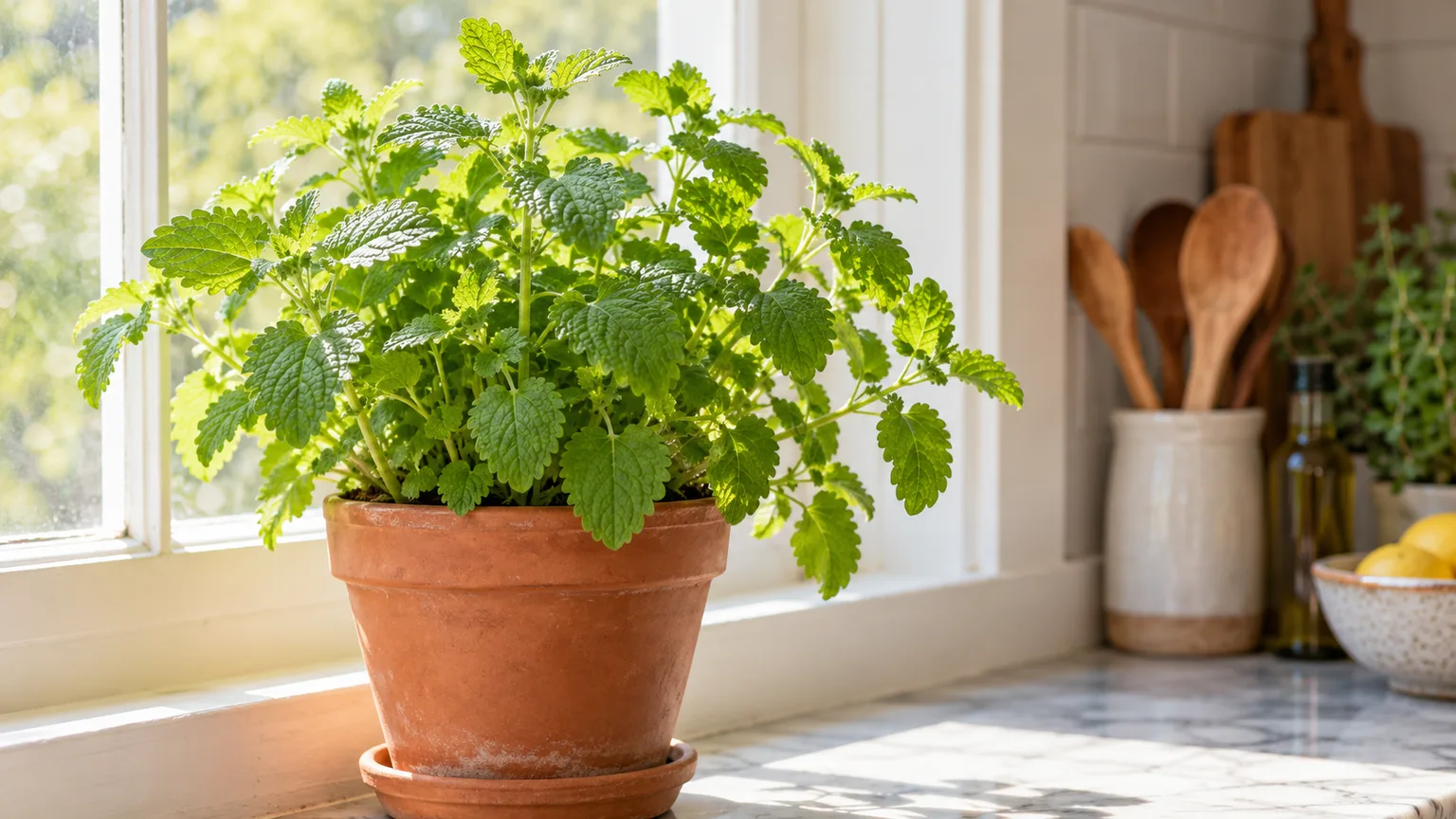
Lemon Balm Soil Guide: Moisture, Drainage & Potting Mix
Lemon Balm Soil Guide: Moisture, Drainage & Potting Mix
Lemon balm (Melissa officinalis) is adaptable about soil texture, but it needs a root zone that gets both water and air. Choose a fertile mix that holds some moisture while allowing excess water to drain. In a container, use potting mix and open drainage holes; in a garden bed, pay attention to pooling, compaction, and how the soil behaves after rain. There is no reason to add lime, sulfur, sand, or fertilizer unless the plant or a soil test points to a specific need.
For the plant’s overall setup, see the Lemon Balm care guide. This page focuses on choosing and managing the soil itself; the watering guide explains how to time drinks once the mix is in place.
Quick answer: choose moisture with drainage
Use a loam-like garden soil or quality potting mix that stays lightly moist after watering but does not remain saturated. Utah State University Extension says lemon balm grows in many soil types when they are rich in humus, moist, and well drained. North Carolina State Extension describes it as preferring moist to dry, well-drained soil and tolerating poor soil or drought once established. Together, those points support a practical target: steady access to moisture without a persistently wet root ball.
If water sits on the surface, drains very slowly, or collects in the bottom of a pot, fix the drainage condition before adding more water or fertilizer. If a bed dries quickly and the plant wilts repeatedly, it may need organic matter or a different position—but make that choice from the soil’s behavior rather than a generic recipe.
What soil lemon balm grows in
Lemon balm is not limited to one ideal texture. Its roots can grow in clay, loam, or sand when the site drains appropriately; North Carolina State lists all of those soil textures for the plant. The more useful questions are whether water enters the root zone, whether it drains after rain, and whether the soil holds enough moisture between watering.
The plant’s tolerance for occasional dryness does not mean it prefers bone-dry soil. A new transplant, a small pot, or a plant in hot weather has less reserve than an established clump in the ground. Utah State Extension recommends keeping lemon balm soil moist but not wet and warns that overwatering can lead to root rot. Let the surface begin to dry between waterings, but do not leave a container’s root ball dry for long periods during active growth.
Soil structure matters as much as the bag label. A crumbly mix with connected pore spaces lets excess water move away and replenishes air around roots. Dense or compacted soil can stay wet for too long; extremely sandy soil may let water run through before the root zone holds enough. Utah State Extension explains that compaction and fine-textured soil can slow drainage, while coarse soil can dry quickly. Lemon balm can tolerate a range, but repeated extremes make watering harder.
Choose a container mix
For a pot, start with a commercial potting mix made for containers. It is lighter and more open than most garden soil, so it can hold moisture while allowing excess water to drain. Check the package for a general-purpose or herb-and-vegetable mix; you do not need a lemon-balm-only formula.
Use a pot with drainage holes and keep them clear. University of Minnesota Extension says containers for herbs need drainage holes. If you keep the growing pot inside a decorative cachepot, empty water from the outer pot after watering so the roots do not sit in a reservoir.
Avoid filling a container with garden soil straight from a bed. Fine garden soil can compact inside a pot and restrict water movement and root aeration. Oregon State University Extension recommends potting or planter mix for containers and cautions against garden soil and gravel layers at the bottom. Adding stones, broken pottery, or a layer of coarse material under the mix does not correct a blocked drainage hole; it can make the water movement through the container less effective.
Lemon balm spreads by seed and rhizomes, so a pot can also help contain it. Choose a container that gives the roots room without leaving a huge volume of unused wet mix around a small root ball. As the clump grows, repot or divide it when roots crowd the container or water begins to run around a tight root mass. Do not upsize simply to make the soil hold more water; correct the mix and watering pattern first.
Prepare a garden bed
Before planting in the ground, observe the bed after rain or irrigation. Avoid a low spot where water stands, a compacted path, or a planting hole that remains full of water. Utah State Extension notes that pooling and compacted layers are signs of drainage problems. A naturally well-drained bed may need only light preparation and a small amount of finished compost if its organic matter is low.
If the bed dries too quickly or feels very sandy, finished compost can improve water-holding capacity over time. If heavy soil stays wet, organic matter may help improve structure when mixed through the planting area, but it is not an instant fix for a site with standing water or a compacted layer. Colorado State University Extension explains that amendments should be chosen for site conditions and soil-test results rather than applied as a universal prescription.
When drainage remains poor, consider a raised bed or another planting location instead of repeatedly changing the soil in place. In a small balcony or patio garden, use a container with a draining potting mix. These choices can be more predictable than trying to alter a deep layer of native soil for one herb.
Do not add a little sand to heavy clay as a shortcut. Small amounts can leave the soil denser rather than more open. Likewise, do not add gravel to the planting hole or the bottom of a pot. Change soil structure only when you know what is limiting it, and use local extension guidance for major drainage work.
Check soil pH without chasing a number
Lemon balm is not a plant that needs an aggressively acidic mix. North Carolina State’s profile lists the species in both acidic and neutral soil categories, rather than giving one narrow pH target. As a broad herb-garden reference, University of Minnesota Extension says most culinary herbs grow well in well-drained soil around pH 6.0 to 7.5. That general range is useful context, not proof of a species-specific lemon balm optimum.
Do not add lime because leaves are pale, or sulfur because the plant looks weak. Similar symptoms can come from waterlogging, drought, poor light, or crowded roots. If a garden-bed pH concern persists, have the soil tested and follow the lab’s recommendation. A University of Minnesota soil test reports pH, texture, organic matter, and nutrients, which is more useful than guessing at an amendment.
Potting mixes are a different case: use a product intended for containers and follow its label. Repeatedly adding garden lime, sulfur, or ash to a pot without a test can create an unsuitable salt or pH condition. If a container plant is struggling, first check drainage, root crowding, and watering history.
Add amendments only for a clear reason
Compost can improve the structure and moisture balance of a garden soil, but it is not automatically needed every time you plant lemon balm. Sandy beds may benefit from organic matter that helps hold water; compacted or clay-heavy soil may need a broader strategy to improve pore space. Colorado State University Extension describes these different roles and stresses that the choice depends on the site.
Use finished compost that smells earthy, not fresh or sour. Mix it through the soil where roots will grow rather than burying a rich pocket beneath the plant. Colorado State notes that an amendment must be mixed into the soil to work as intended. Avoid applying large amounts of manure-based compost without understanding its salt and nutrient content; soil testing can help prevent unnecessary additions.
For containers, do not turn a standard potting mix into a complicated blend unless you have a reason. A mix that dries much too quickly may need a different product with more moisture retention; one that stays soggy may need a more open mix and working drainage holes. Change one factor at a time, then monitor how quickly the pot dries. The Lemon Balm fertilizer guide is for nutrient decisions; fertilizer does not repair compacted or waterlogged soil.
Read the signs that the mix needs attention
Soil symptoms are clues, not a diagnosis by themselves. Check the root zone and the container before changing the recipe.
- Water remains on top or pools in the bed: inspect for compaction, a low planting spot, or blocked drainage. Avoid adding more water until it clears.
- The pot stays heavy and wet for days: check whether drainage holes are open, whether the cachepot holds water, and whether the mix has collapsed into a dense mass.
- The root ball dries unusually fast: check if roots have filled the pot, if the mix has shrunk from the sides, or if heat and wind are drying the container quickly.
- Leaves wilt while the soil is wet: do not assume the plant is thirsty. Wet soil can prevent healthy root function; compare the signs with the root-rot information and correct drainage before watering again.
- Growth is weak despite a reasonable soil mix: review light, watering, and crowding as well. Soil alone may not be the cause.
If a potting mix has compacted or no longer drains, refresh it when you repot or divide the clump. Remove loose, degraded mix from around the roots without tearing healthy roots unnecessarily, then replant in fresh potting mix and a clean pot with holes. Do not bury the stem base in a deep, wet layer.
Common soil mistakes to avoid
- Keeping the mix constantly wet: lemon balm likes access to moisture, but saturated roots can rot.
- Using garden soil alone in a pot: it may be too dense for a container and can hold water poorly.
- Adding a gravel layer beneath the potting mix: drainage holes and a suitable mix matter more than stones in the bottom.
- Mixing a little sand into clay: this does not reliably loosen a bed and can make the texture more difficult.
- Amending without a test: lime, sulfur, ash, or extra fertilizer can create a new imbalance when the actual issue is drainage or compaction.
- Assuming every lemon balm needs the same mix: local soil, container size, rainfall, and climate change how the root zone behaves.
Related Lemon Balm care guides
Use the Lemon Balm overview to plan its full growing setup and the watering guide to decide when the soil needs water. If the soil drains well but growth remains weak, check whether the site also provides suitable light before changing the mix.
Conclusion
Lemon balm does best in soil that balances moisture and air: fertile enough to support leafy growth, but open enough for extra water to drain. Use potting mix in containers and assess the bed before amending it. Treat pH changes and compost as targeted decisions, not routine additions. When the soil stays wet or dries unusually fast, inspect the root zone and drainage first; then adjust one part of the setup at a time.