Lemon Balm Watering: How Dry Should the Soil Get?
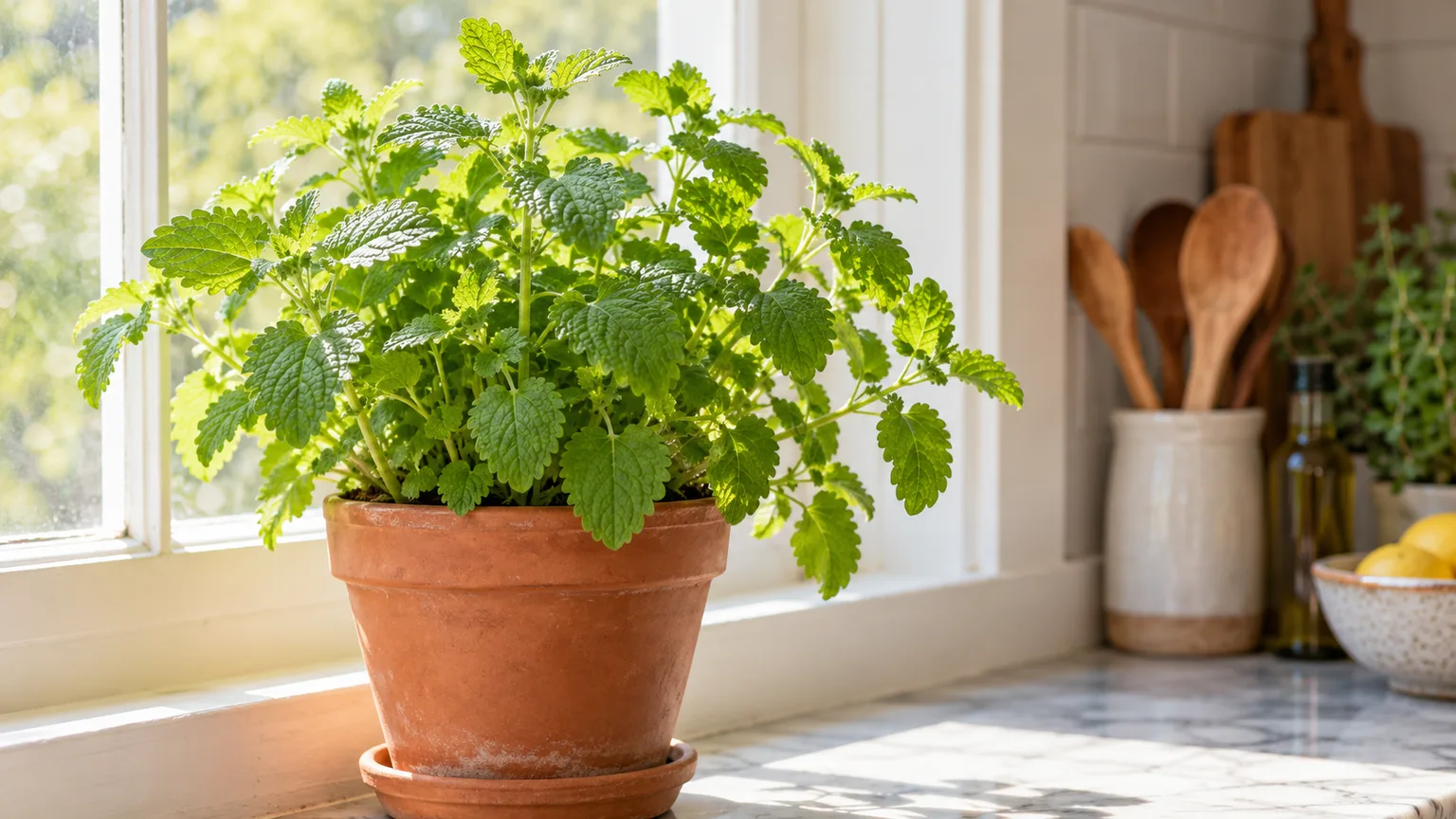
Lemon Balm Watering: How Dry Should the Soil Get?
Lemon Balm Watering: How Dry Should the Soil Get?
Lemon balm (Melissa officinalis) prefers soil that holds some moisture but drains freely. Check the root zone before watering rather than treating a calendar interval as a rule. The North Carolina State Extension profile describes lemon balm’s preferred soil as moist to dry and well-drained, and says established plants tolerate drought.
That range is why a calendar is a poor watering tool. Your pot, mix, recent rain, temperature, and whether the plant is newly planted all change how quickly its roots use available water. The Lemon Balm overview can help you choose a setup first; this page focuses on deciding when and how to water it.
Quick answer: when to water lemon balm
For a potted lemon balm, feel the mix about an inch below the surface. Water when that upper layer is starting to dry, then let the pot drain fully. In a garden bed, water during an extended dry spell or when the plant shows water stress and the soil around its roots is dry. Utah State University Extension advises keeping lemon balm soil moist but not wet, because overwatering can contribute to root rot.
Do not treat “moist” as “constantly damp.” Use soil moisture as the signal, and check a fresh transplant or a small pot sooner than an established garden clump. A calendar cannot account for the mix, recent rain, heat, or container size.
Why lemon balm needs moisture and drainage
Lemon balm needs air around its roots as well as moisture. Saturated soil displaces air from soil spaces, and roots can suffer when the mix stays waterlogged; the Royal Horticultural Society explains why waterlogged roots can drown.
These recommendations can sound different until you account for the setup. A mature clump in open ground is more forgiving of a short dry spell than a new transplant or a confined pot, but neither should sit in waterlogged soil. Wisconsin Extension describes lemon balm as a fast-growing clump that prefers fertile, well-drained soil; Gardening Know How also recommends rich, well-drained soil.
How to check whether lemon balm is ready for water
Start with the soil, not the leaves or a reminder on your phone. Insert a finger into the mix near the root zone; in a bed, check a few centimeters below the surface, and in a pot, check roughly the upper inch, following Growing in the Garden’s container-watering guidance. If the soil at that depth is cool and damp, wait and check again later. If it feels dry and loose, water thoroughly.
Use the surface as a trigger, not a timer
A surface check gives you a repeatable starting point, not a universal threshold for every pot. Adjust it for pot depth, heat, and the plant’s condition rather than copying a number as a strict rule.
For a young plant, check closer to the root ball because nearby soil may dry while the surrounding bed remains moist. Newly planted lemon balm needs closer moisture checks while roots establish. For an established bed plant, use both the soil and the plant: a dry surface alone does not mean the deeper root zone has run out of water. If the root zone is still cool and damp, hold off.
Check the whole container
Pick up the pot occasionally to learn how heavy it feels after watering and as it dries. A noticeably lighter pot can support a finger check, but weight is only a comparison for that particular container; it cannot replace checking the mix. Also make sure drainage holes are open and the pot is not standing in a saucer full of water.
Containers lose moisture faster than garden soil, particularly in warm, windy, sunny positions. Savvy Gardening’s container guide notes that potted lemon balm needs regular checks because a pot dries sooner than the ground; a small balcony pot may therefore need attention sooner than the same plant in a bed.
Water potted lemon balm thoroughly
When the pot needs water, apply it slowly over the full surface so the root ball gets wet throughout. Continue until water begins to leave the drainage holes, then let the pot finish draining before returning it to a saucer or decorative cachepot. If the mix is very dry, pause between passes so it has time to absorb water rather than letting it run quickly down the pot wall.
Do not leave water sitting under the pot after a storm or a routine watering. Lemon balm needs moisture in the mix but should not stay saturated, so empty the saucer after watering. If water runs down the edge without wetting the center, pause briefly and apply another slow pass so the root ball has time to absorb it. The Lemon Balm soil guide explains how mix texture and drainage affect this problem.
Water lemon balm in a garden bed
An established lemon balm clump in a well-prepared bed often needs less intervention than a container plant. Water during a prolonged dry spell, directing water to the soil around the roots rather than repeatedly wetting just the leaves. If the soil is already damp below the surface, skip the extra watering even if the top looks dusty.
If you use mulch, keep it loose and off the stems. In naturally heavy or compacted soil, more water will not fix poor drainage; assess the bed or mix before adding more. Before watering again, review the soil guide or check whether a crowded clump needs dividing as described in the repotting guide.
Newly planted lemon balm needs closer checks
A fresh transplant or division has a smaller working root system than an established clump. Water it in after planting, then keep checking the root ball as it settles rather than assuming the surrounding bed will supply moisture evenly. Epic Gardening recommends checking newly planted lemon balm every few days while roots establish; the goal is steady access to moisture without keeping the planting hole saturated.
Seedlings and cuttings need more careful checks than mature plants because their roots occupy a smaller volume of mix. If you are raising new lemon balm, the propagation guide covers the different starting methods. Once a transplant is producing steady new growth, use the same soil check as for other established lemon balm in its setting.
Adjust watering as growth and weather change
Use the pace at which the mix dries as your guide. During active leafy growth, check more often if the weather is warm or the plant is in a small container. When growth slows in cooler weather, water less often because the mix will usually take longer to dry; do not keep applying the warm-season amount by habit.
In climates where lemon balm dies back during winter, a resting plant does not need the same attention as a pot full of active leaves. The Royal Horticultural Society notes that lemon balm dies back in autumn; in milder parts of India, judge by current growth and soil moisture rather than assuming a fixed winter dormancy. The plant’s light guide covers how strong afternoon sun and shade affect its growing position.
Hot weather and Indian balcony pots
Heat, wind, direct sun, and small containers can make the root ball dry quickly. Check an exposed balcony pot more frequently during hot, dry weather, but water only when the mix is beginning to dry at root level. If the plant droops in the afternoon while the soil is still damp, pause before watering and review heat exposure and drainage.
Move a pot toward morning sun or bright partial shade if it stays hot for hours; use the light guide to judge that change. A shaded position does not eliminate watering checks, but it can slow the sharpest midday drying.
Monsoon rain and cloudy periods
During monsoon weather, count rainfall as watering. Check that the container drains freely, clear debris from the holes, and empty any saucer after rain; if the mix is still moist below the surface, skip the watering can. A pot sheltered under a roof may receive much less rain than the bed next to it, so inspect each position rather than assuming all lemon balm has the same moisture.
In a garden bed with slow drainage, prolonged rain is a reason to stop adding water and address runoff or soil structure. If rain regularly leaves a pot saturated, move it under cover where it still gets suitable light or use a more open mix. The RHS says established lemon balm in the ground generally does not need routine watering, so reduce checks during regular rainfall.
Diagnose wilting before adding water
Wilt is a symptom, not a diagnosis. Check the soil several centimeters down and inspect whether water is draining before deciding what to do; adding water to an already saturated root zone can worsen wet-soil problems.
| What you observe | More likely next step |
|---|---|
| Dry mix and limp leaves | Water slowly and thoroughly, then let the pot drain |
| Damp mix and limp or yellowing leaves | Pause watering and check drainage and roots |
| Dry top layer but damp soil below | Wait and recheck rather than watering automatically |
| Pot stays wet for several days | Clear drainage holes and reassess the mix or location |
Dry mix: rehydrate the root ball
If the root zone is dry, water over the entire surface in a slow pass. If water runs down the edge without wetting the center, pause briefly and apply another pass so the root ball has time to absorb it. Once the pot has drained, avoid giving repeated small splashes throughout the day.
Once moisture is stable, adjust other care factors one at a time. If growth remains slow, the fertilizer guide covers when feeding may be relevant.
Wet mix: pause and fix drainage
If the soil is wet, do not add more water just because the leaves droop. Empty the saucer, move the pot out of standing rain, and let excess moisture drain. If the surface remains soggy or water pools on a bed, improve drainage before returning to the usual routine. Utah State Extension warns that wet soil can lead to root rot in lemon balm.
Yellowing is not enough to diagnose overwatering. Look for a wet mix, slow drainage, and declining growth together; if those signs persist, inspect the roots and consider moving the plant into a freer-draining mix. The soil guide covers the mix itself, while the repotting guide is useful if roots have filled the container or the existing mix has collapsed.
What to do when you are unsure
Wait if the root zone is damp. Check again later, especially after cloudy weather or rain. If it is dry, water thoroughly and let excess drain. This simple pause prevents the common mistake of treating every droop as thirst.
When you are learning a particular pot, note how long it takes for the upper layer to dry after a full watering. That observation can help you plan the next check, but it should not become a fixed weekly schedule: a heatwave, new growth, rain, or a move to shade changes the rate. Use the plant’s condition as context and soil moisture as the deciding test.
When to use this page vs other Lemon Balm guides
Use this watering page to decide whether to add water and how to avoid leaving roots saturated. For the full growing setup, start with the Lemon Balm overview; for a dense or water-retentive potting mix, use the soil guide. If a balcony plant is drying too quickly in harsh afternoon sun, the light guide helps you adjust its position.
Choose the repotting guide when roots fill the container or the mix no longer drains well, and the propagation guide for seedlings, cuttings, or divisions. The fertilizer guide is for feeding decisions; adding fertilizer will not correct either a dry root ball or a saturated one.
Related Lemon Balm guides
- Overview: choose between a container and garden bed and understand the whole growing setup.
- Light: select sun or partial shade and reduce harsh afternoon exposure.
- Soil: choose a mix that holds some moisture while draining.
- Repotting: move a root-filled plant or refresh a collapsed mix.
- Propagation: start new plants from seed, cuttings, or division.
- Fertilizer: decide whether feeding is appropriate after water and light are sound.
Conclusion
Water lemon balm when the soil around its roots is beginning to dry, then let the excess drain away. Give a newly planted division and a small balcony pot closer checks than an established garden clump, and let rain count during wet spells. If the plant wilts, check the mix first: dry soil calls for a thorough drink, while wet soil calls for a pause and better drainage.