Fungus Gnats on Lemongrass: Causes, Checks & Fixes
Quick answer
Fungus gnats on lemongrass mean the top soil stays wet too long-common when summer watering continues after the clump moves indoors. First step: let the top 3–4 cm dry between drinks in active growth, or the top inch in cool winter, and set yellow sticky traps at the soil line.
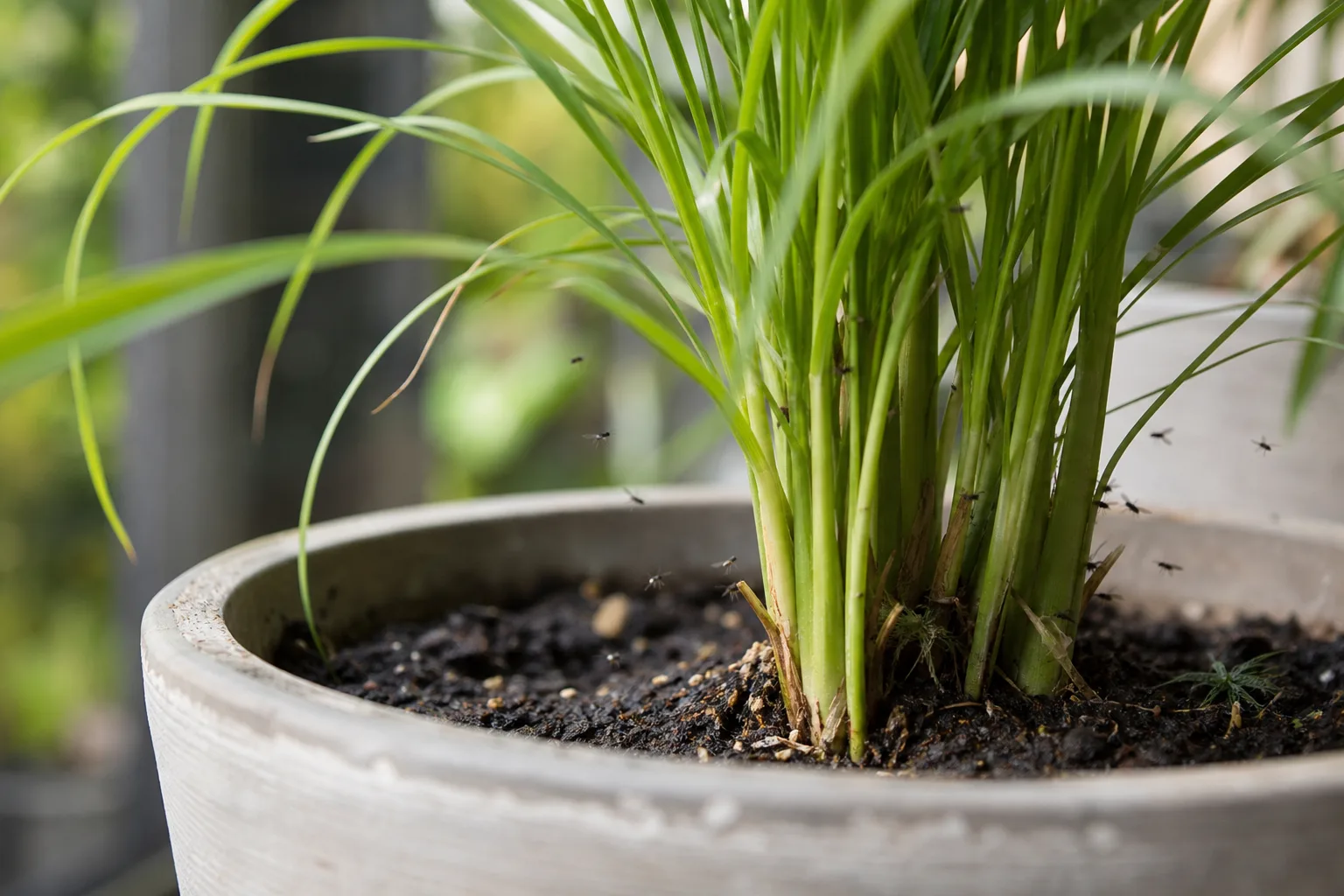
Fungus Gnats on Lemongrass: Causes, Checks & Fixes
This guide covers fungus gnats on Lemongrass. See also the general Fungus Gnats guide, watering, and light pages for this plant.
Fungus Gnats on Lemongrass: Causes, Checks & Fixes
Quick answer
Fungus gnats on lemongrass (Cymbopogon citratus) are a moisture warning, not a random pest attack. The adults are mostly a nuisance around your kitchen herbs, but they lay eggs in moist soil-and lemongrass roots are shallow grass roots that suffer when cool, saturated soil lingers too long.
First step: let the top soil dry before the next drink. In active summer growth that means the top 3–4 cm (1–1.5 inches); indoors in cool slow growth, let the top inch dry-the same winter dry-down rule in the lemongrass watering guide. Set yellow sticky traps at the rim beside the grass clump to catch adults while you fix moisture.
On lemongrass, gnats and overwatering share the same trigger: mix that stays wet at the surface while the plant uses far less water than it did in summer sun. Fixing moisture protects the edible clump; swatting flies does not.
What fungus gnats look like on lemongrass
Above the soil, you will see small, dark, mosquito-like flies-roughly 1/8 inch long-with long legs and narrow wings. On a potted lemongrass clump they tend to:
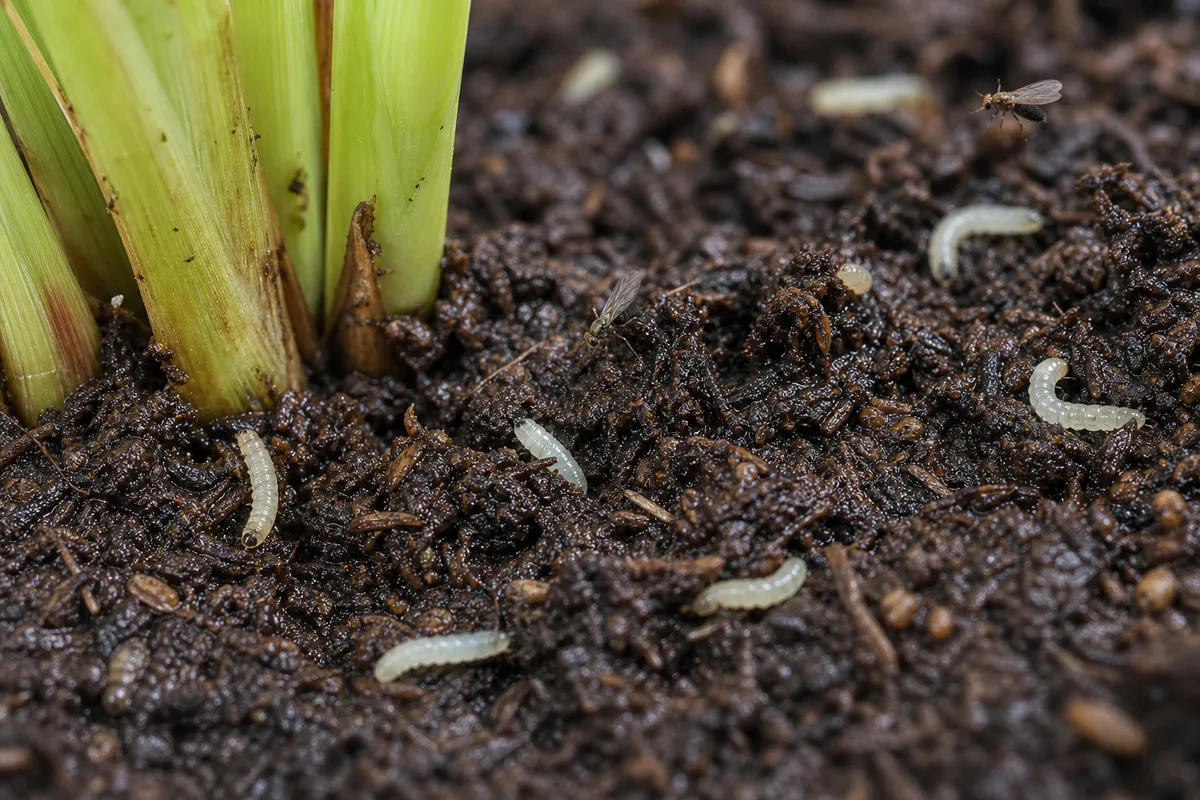
Fungus Gnats symptoms on Lemongrass - compare with healthy tissue on the same plant.
- Hover just above the pot rim or the dense grass shoots at soil level
- Scatter when you water, bump the pot, or harvest outer stalks
- Reappear in bursts after each top-watering if the surface stays damp
- Land on nearby windows, countertops, or other overwintered herbs in the same room
The larvae live in the top 2–3 inches of mix, not on lemongrass blades. They are slender, translucent worms with dark heads-easy to miss unless you scrape back damp soil beside the clump base. You may also notice algae, a thin fungal film, or mold on soil when the surface never dries.
On a healthy lemongrass clump, stalk bases stay firm and green. Gnats alone rarely cause dramatic blade change. If you also see yellowing at the crown, sour-smelling mix, or wilting while soil feels wet, suspect larval root feeding plus chronic overwatering, not gnats in isolation.
Lookalikes worth ruling out:
| Pest | Where you see it | Key difference from fungus gnats |
|---|---|---|
| Fruit flies | Kitchen counters, compost, ripening produce | Cluster around food, not tied to one herb pot’s wet soil |
| Shore flies | Very wet saucers, algae-covered trays | Stouter body; often on standing water, not just mix |
| Whiteflies | Leaf undersides when shaken | Cloud rises from foliage, not soil surface |
| Drain flies | Sink or floor drains | Breeding in plumbing biofilm, not potting mix |
If flies appear only around the lemongrass pot and the surface mix has been wet for days-especially after bringing the pot indoors for winter-fungus gnats fit better than any of the above.
Why lemongrass gets fungus gnats
Fungus gnats need moist organic soil to breed. Larvae feed on fungi, algae, and decaying organic matter in the upper mix-and sometimes on tender feeder roots. Extension services link infestations to overwatered houseplants, not to lemongrass being uniquely “gnat-prone.”
Lemongrass makes the connection painful because growers learn the summer rule first: keep container mix consistently moist in warm sun. UF/IFAS and USU Extension both describe lemongrass as a moisture-loving tropical grass during active growth. That is correct outdoors in July-and dangerous indoors in January if you never change rhythm.
Common lemongrass-specific setups that invite gnats:
- Continuing summer watering after the clump moves indoors when growth slows and evaporation drops
- Low winter light on a windowsill so the plant drinks slowly while you still water every few days-see not enough light when blades stretch and mix stays damp
- Dense grass clumps at the soil line shading the surface, slowing evaporation in oversized pots
- Peat-heavy mix without enough perlite that stays damp on top long after you thought you watered lightly
- Saucers left full or cachepots without drainage, keeping the bottom saturated
- Young divisions with fine roots more vulnerable to larval chewing than mature outdoor clumps
Gnats are the visible symptom. On lemongrass, the underlying issue is almost always seasonal culture: you are treating a cool, slow indoor grass like a summer patio pot.
How to confirm the cause
Work through these checks before reaching for sprays or drenches:
- Surface moisture - Press a finger 3–4 cm deep near the pot edge in summer, or 2.5 cm in winter. If it stays cool and clings after several days without watering, the surface is too wet and ideal for larvae.
- Pot weight - Lift the pot. A lemongrass container should feel noticeably lighter when the top layer is dry. Chronic heaviness means water is lingering.
- Fly behavior - Tap the pot or water lightly. Fungus gnats rise from the soil surface beside stalk bases, not from leaves. A dozen or more per pot confirms active breeding.
- Larval check - Gently scrape aside the top half-inch of damp mix at the clump edge. Look for tiny worms or a webby fungal layer. A potato slice pressed flat on wet soil for 48 hours and lifted can reveal larvae clinging underneath-useful when adults are few but you suspect eggs.
- Stalk and crown firmness - Press outer stalk bases. Firm green tissue with wet soil points to a correctable moisture habit. Soft, yellow, mushy bases with sour-smelling mix suggest root rot has joined the party.
- Season and light - Gnats appearing in fall or winter usually mean the mix is not drying fast enough for current growth, not that the plant is thirsty. Compare your schedule to the watering guide winter dry-down.
Confirmed diagnosis: fungus gnats breeding in persistently moist top soil on a container lemongrass clump. Suspected but unconfirmed: fruit flies from food waste, or gnats arriving on a new nursery division not yet quarantined.
First fix for lemongrass
Let the top soil dry before the next watering-and set yellow sticky traps at the pot rim.
Do not mist the crown. Do not “give it a little drink” because outer blades look slightly limp while the core mix is still wet. Lemongrass can tolerate a short dry spell at the roots far better than continued saturation in cool indoor air.
This single action hits both problems at once:
- Larvae die when the surface layer dries, breaking the life cycle
- Egg-laying females find dry mix less attractive
- Root rot risk drops as oxygen returns to the upper root zone
Place traps beside the dense clump at soil level, not dangling high above the blades. Traps catch adults and track progress-they are not the fix alone.
Wait until the appropriate depth is fully dry-not merely “less damp”-before the next watering. On many indoor lemongrass pots in winter, that may mean one to two weeks between drinks; in active summer sun, a few days is normal. When in doubt, follow the finger check in the watering guide rather than a calendar.
Step-by-step recovery
After the surface has dried once, continue in this order:
Light / moderate / heavy infestation tiers
Light - A few flies when you water, firm stalk bases, no sour smell:
- Maintain correct dry-down (top inch winter / 3–4 cm summer).
- Empty saucers within 30 minutes of every watering.
- Replace sticky traps weekly for two to three weeks.
Moderate - Clouds of flies, surface wet for days, slow growth but firm crowns:
- All light-tier steps.
- Move to the brightest spot you can offer indoors, or add supplemental light if blades are stretching-see not enough light.
- Bottom-water for 15–30 minutes so roots drink from below while the surface stays dry during active regrowth.
- Top-dress with a thin layer of coarse sand or fine gravel if humidity keeps the surface damp longer than expected.
Heavy - Flies steady after three weeks of dry-down, larvae visible, or young division declining:
- All moderate-tier steps.
- Apply BTI (see below) on a harvest-safe schedule.
- If mix stays soggy for weeks despite correct watering and drainage, inspect roots and plan repot into fresh perlite-rich mix in spring-do not repot a wet, stressed clump on day one just for gnats.
BTI drench protocol for edible lemongrass pots
If gnats remain heavy after three to four weeks of proper surface drying, use a product containing Bacillus thuringiensis subsp. israelensis (BTI) labeled for fungus gnat larvae in houseplant soil. BTI targets larvae in moist zones-it works best alongside continued surface drying, not instead of it.
For culinary lemongrass:
- Prioritize cultural fixes (dry surface, traps, bottom-watering) before any soil treatment.
- Follow label rates exactly; do not double-drench because flies are annoying.
- Repeat at five- to seven-day intervals for two to three weeks to catch newly hatched larvae-BTI does not affect eggs, pupae, or adults.
- Pause harvest of stalks that contacted treated soil until you have rinsed outer bases under running water and new growth looks clean. When you resume cutting, peel outer fibrous layers as you normally would for cooking.
- Avoid harsh chemical soil drenches, hydrogen peroxide cocktails, or systemic insecticides on herbs you plan to eat-extension guidance favors drying soil and BTI over broad indoor sprays.
Recovery timeline and signs of progress
Expect adult numbers to drop within several days once the surface stays dry. Full suppression typically takes two to six weeks because eggs and larvae hatch in overlapping waves-consistent dry cycles matter more than a single dry spell.
Signs you are winning:
- Fewer flies on traps each week
- Top layer dries predictably between waterings
- Stalk bases stay firm and green; no new yellowing at the crown
- New shoots emerge at the clump center after winter slowdown
Signs the problem is deepening:
- Flies increase weekly despite traps
- Stalk bases soften or yellow while mix stays damp
- Sour smell from pot; roots brown and mushy when inspected
- Wilting on wet soil the morning after watering
If rot signs appear, stop treating this as a gnat-only issue-unpot, inspect roots, and follow the root rot guide before worrying about flies.
Mistakes to avoid
- Watering more because blades droop while the core mix is still wet-lemongrass wilts from overwatering too; check moisture before pouring
- Keeping summer frequency indoors after the pot moves off the patio in fall
- Spraying insecticide into the air around the herb-this misses larvae in soil and adds unnecessary chemical exposure in a kitchen
- Ignoring gnats on young divisions-fine roots suffer larval feeding faster than mature clumps
- Harvesting stalks immediately after a soil drench without rinsing and waiting for clean new growth
- Stopping after one dry week when adults briefly decline-resume watering too soon and the next larval wave hatches
- Confusing fruit flies around compost with pot-bound gnats-fix the food source or the soil, not both blindly
Lemongrass care cross-check during treatment
Gnats should disappear as a side effect of correct seasonal culture:
| Factor | Gnat-friendly mistake | Lemongrass target (see watering guide) |
|---|---|---|
| Summer containers | Surface always damp | Top 3–4 cm dry between drinks; moist root zone, not soggy crown |
| Winter indoors | Daily or every-few-day watering | Top inch dry; often 7–14 days between drinks |
| Light | Dim windowsill, wet mix | Brightest spot available; more light speeds dry-down |
| Pot | Oversized plastic, no drainage | Well-drained perlite mix; saucers emptied after every soak |
| Harvest | Decaying leaf bits on soil surface | Remove trimmed debris that feeds larvae |
| Escalation | Flies + sour smell + yellow bases | Inspect for root rot, not more traps |
When culture matches the season, the soil surface looks matte and dry most of the week. Gnats have nowhere to breed.
How to prevent fungus gnats next time
- Water on dryness, not dates-use the finger check every time
- Cut water the day the pot moves indoors for winter; do not wait for flies to appear
- Give full sun outdoors in summer so mix cycles predictably between drinks
- Use perlite-enhanced, well-drained mix-not straight peat that holds surface moisture
- Quarantine new divisions two to three weeks; dry their surface before placing near established herbs
- Keep a sticky trap at soil level during fall transition when outdoor pots come inside
- Cross-check mold on soil if you see white fuzz alongside flies-same moisture trigger
When to worry - root rot inspection and escalation
Treat fungus gnats as urgent on lemongrass when:
- Stalk bases go soft or yellow while soil is wet
- The pot smells sour or fermented
- The clump wilts on wet mix the morning after watering
- Multiple herb pots in one room swarm simultaneously-check every plant’s moisture
Gnats alone, with firm stalk tissue and fixable watering, are a low-grade problem you can clear in weeks. Gnats plus soft crowns mean root health is already compromised-unpot, trim decay, and repot into fresh mix before resuming a sparse winter schedule. Contact your local extension office if an edible herb clump collapses despite corrected culture-you may be dealing with rot, not flies.
Related lemongrass problems
- Lemongrass watering guide - summer moisture vs. winter dry-down rules
- Overwatering - chronic saturation that feeds gnats and rot
- Root rot - when yellow bases and sour soil outgrow a fly problem
- Mold on soil - surface fungi from the same wet mix
- Not enough light - winter slow dry-down failure
- Lemongrass overview - full species hub
Conclusion
Fungus gnats on lemongrass tell you the soil has been acting like a summer patio pot in a cool, dim room. The flies are annoying; the moisture habit behind them is what can yellow stalk bases and invite rot from excess moisture on an herb you planned to cook with. Match winter watering to slow growth-not July thirst-dry the surface, trap adults beside the clump, bottom-water if you need root moisture without re-wetting the gnat zone, and reach for harvest-safe BTI only when dryness alone does not stick. Judge success by firm green stalk bases and fewer flies, not by how quickly you can water again.
When to use this page vs other Lemongrass guides
- Lemongrass watering guide - Use for routine moisture checks before assuming fungus gnats is the main issue.
- Lemongrass problems hub - Browse all 52 common issues on this species.
- Overwatering on Lemongrass - Different entry point when symptoms overlap with fungus gnats.
- Mold on Soil on Lemongrass - Different entry point when symptoms overlap with fungus gnats.
- Root Rot on Lemongrass - Different entry point when symptoms overlap with fungus gnats.