Leggy Growth on Lemongrass: Causes, Checks & Fixes
Quick answer
Leggy lemongrass is usually etiolation from low light. First move: restore full sun or strong grow-light exposure, then cut thin stretched outer stalks at the base so thicker new shoots replace them.
Leggy Growth on Lemongrass: Causes, Checks & Fixes
This guide covers leggy growth on Lemongrass. See also the general Leggy Growth guide, watering, and light pages for this plant.
Leggy Growth on Lemongrass: Causes, Checks & Fixes
Quick answer
Leggy growth on lemongrass means etiolated, stretched stalks caused by insufficient light. First fix: move the plant to stronger light right away (outdoor full sun when temperatures allow, or a brighter indoor setup), then remove only the thinnest outer stalks at the base.
Lemongrass is a warm-season tropical grass that is easiest to grow in full sun and well-drained soil. In low light, it spends energy elongating instead of thickening new bases.
Why Lemongrass gets leggy
Indoor “bright light” is often much weaker than outdoor sun, especially in winter. Even healthy divisions can become thin and elongated after weeks of low light. This is consistent with etiolation symptoms such as long, spindly stems and pale leaves in low-light conditions.
Extra fertilizer in shade can make stretch look worse by pushing soft top growth before the plant has enough light to build sturdy bases. Crowded containers can also increase leaning because shoots compete for the brightest side.
What leggy growth looks like on lemongrass
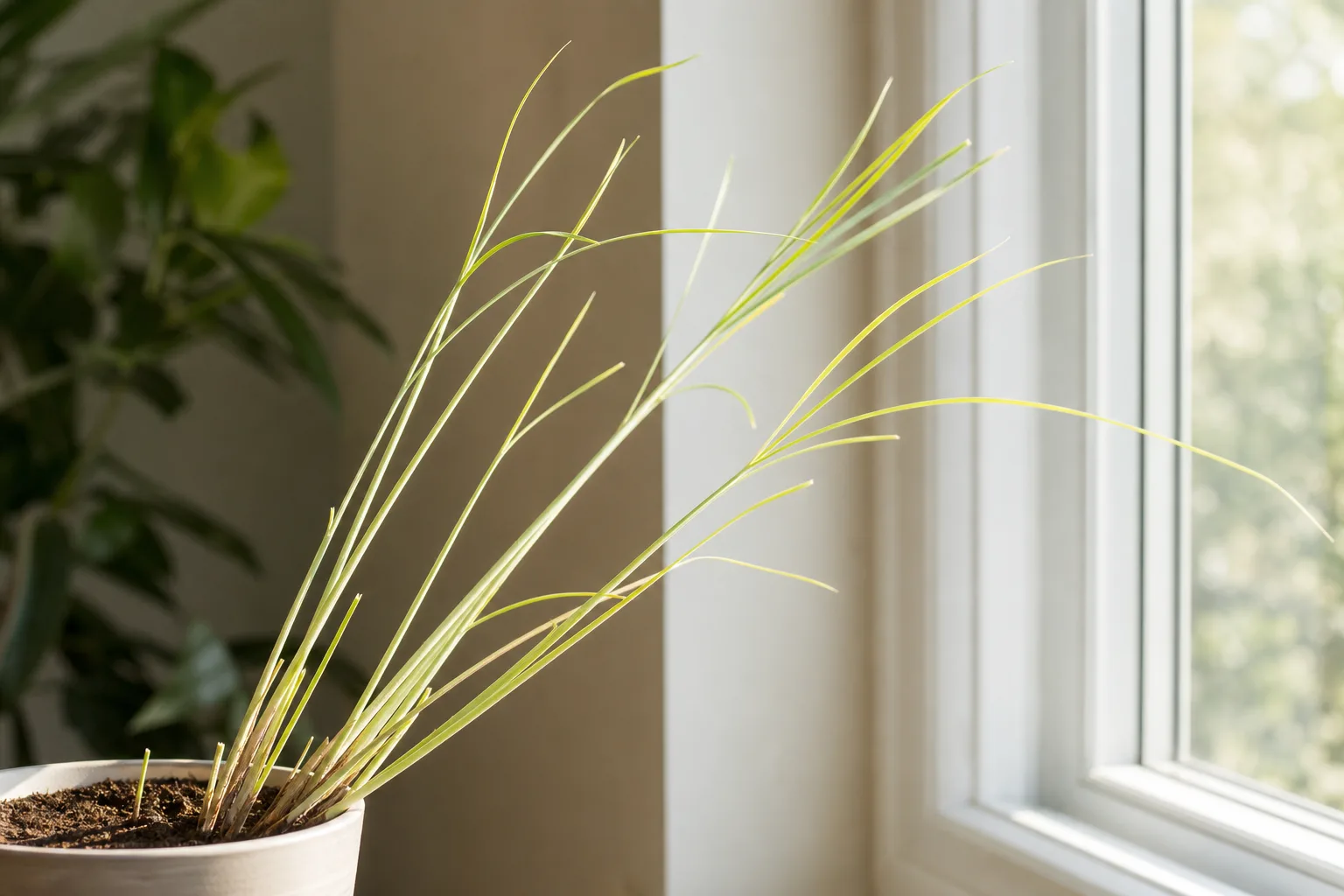
Typical signs include long thin stalks, smaller or paler blades, and a plant that leans toward one side of the window. New shoots may emerge quickly but stay narrow at the base, so harvest quality declines.
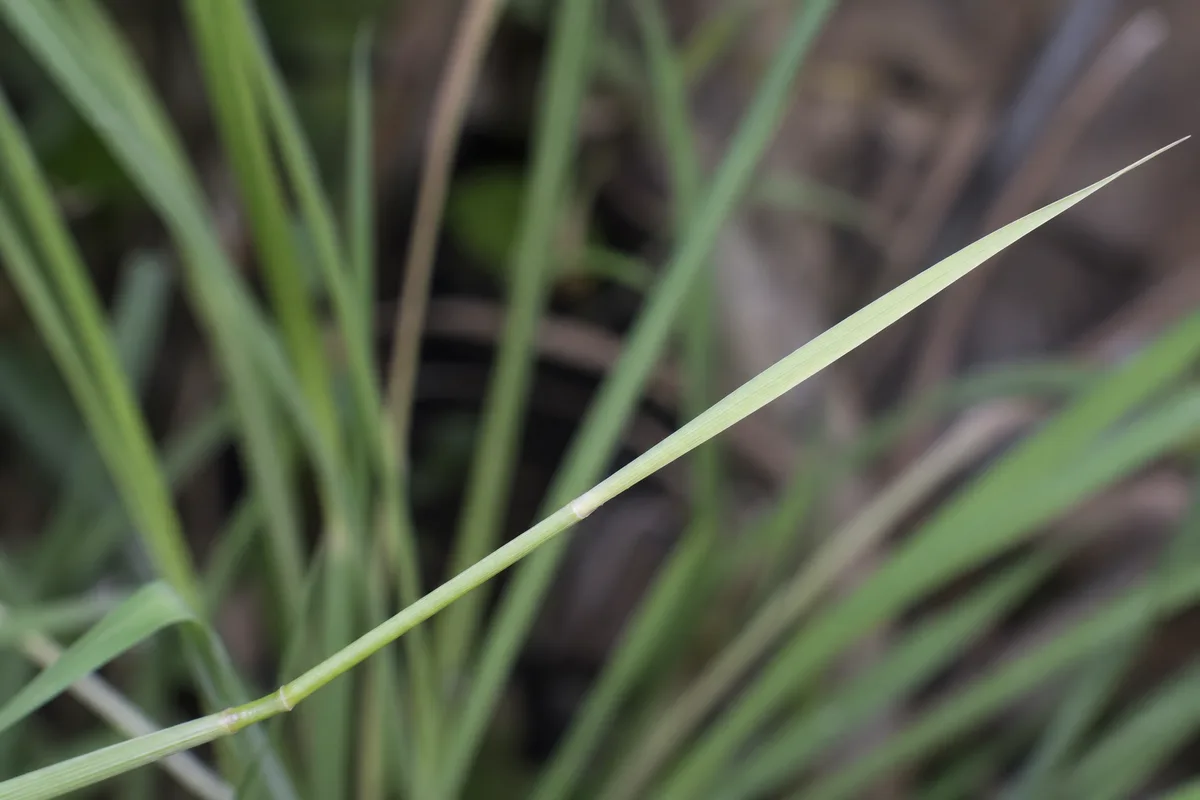
Leggy Growth symptoms on Lemongrass - compare with healthy tissue on the same plant.
Use this page when you see obvious stretch and leaning. If growth is just slow without pronounced stretch, check not enough light on lemongrass. If stems are thin but the light is already strong, check thin stems on lemongrass.
How to confirm the cause
Use this quick check sequence:
- Confirm the plant receives full sun outdoors, or the brightest indoor position possible.
- Rotate the pot and watch new growth for several days; repeated leaning toward one side supports low-light stretch.
- Check the root zone. If roots are firm and the potting mix is not sour, light is still the primary issue.
- Judge diagnosis from new shoots, not old stalks. Old stretched stalks rarely become thick again.
First fix for lemongrass
Move the pot to the strongest light you can provide immediately, then remove only the weakest outer stalks at the base. This redirects growth into new shoots that can thicken under better light.
Step-by-step recovery
- Restore light first: place outdoors in full sun after frost risk, or keep indoors in the brightest window and add supplemental light if needed.
- Cut selectively: remove only the thinnest, most stretched outer stalks at the base; keep sturdy center shoots.
- Reset watering: keep soil moist but not waterlogged. Lemongrass prefers moisture, but waterlogged soils should be avoided because root stress can overlap with weak growth.
- Pause strong feeding: wait until stronger new shoots appear before restarting fertilizer.
- Track only new growth: improvement means thicker new bases, less leaning, and stronger upright growth.
Recovery timeline and expectations
In warm conditions with corrected light, new shoots often improve within about two to three weeks. Old stretched stalks usually do not thicken much, so evaluate success on post-fix growth.
Escalate your check if the plant also shows persistent wilt in wet soil, soft stem bases, or a sour smell from the potting mix. Those signs can indicate root damage rather than simple etiolation; see root rot on lemongrass and overwatering on lemongrass.
Leggy growth vs similar lemongrass problems
Leggy growth overlaps with other issues, but the pattern is different:
| Problem | Typical pattern | First move |
|---|---|---|
| Leggy growth | Long, pale, leaning shoots that stretch toward light | Increase light first, then remove weakest outer stalks |
| Not enough light | Slower overall growth without dramatic stretch pattern | Audit sun hours and placement; see not enough light on lemongrass |
| Thin stems | Narrow stems from mixed causes (light, root space, nutrition, crowding) | Run a broader cause check; see thin stems on lemongrass |
| Root stress/overwatering | Wet mix, softness at base, sour smell, weak anchoring | Correct moisture and inspect roots; see overwatering on lemongrass |
What not to do
Do not treat legginess by adding more fertilizer while the plant is still light-starved. Do not keep soil continuously wet on a weak, shaded clump because decline can accelerate when roots stay oxygen-starved. Do not expect old stretched stalks to transform; plan around new replacement growth.
How to prevent leggy growth on lemongrass
Plant outdoors in full sun after frost danger whenever your climate allows. For overwintering, keep pots in bright indoor light, rotate regularly, and avoid crowding so new shoots do not compete for one narrow light source.