Mold on Soil on Lucky Bamboo: Causes, Checks & Fixes
Quick answer
White mold on Lucky Bamboo soil usually means a wet surface and poor airflow. First step: scrape the mold, let the top inch dry before watering, and improve light and drainage.
Mold on Soil on Lucky Bamboo: Causes, Checks & Fixes
This guide covers mold on soil on Lucky Bamboo. See also the general Mold on Soil guide, watering, and light pages for this plant.
Mold on Soil on Lucky Bamboo: Causes, Checks & Fixes
Quick answer
Mold on soil on Lucky Bamboo (Dracaena sanderiana) appears on soil-grown plants when the surface stays wet with poor airflow. First step: remove surface mold and water when the top inch of soil is dry - not on a calendar.
Lucky Bamboo in water and pebbles does not develop soil mold - if you see fuzz, confirm the plant is potted in mix or that potting soil residue sits on pebbles from an old transition.
What mold on soil looks like on Lucky Bamboo
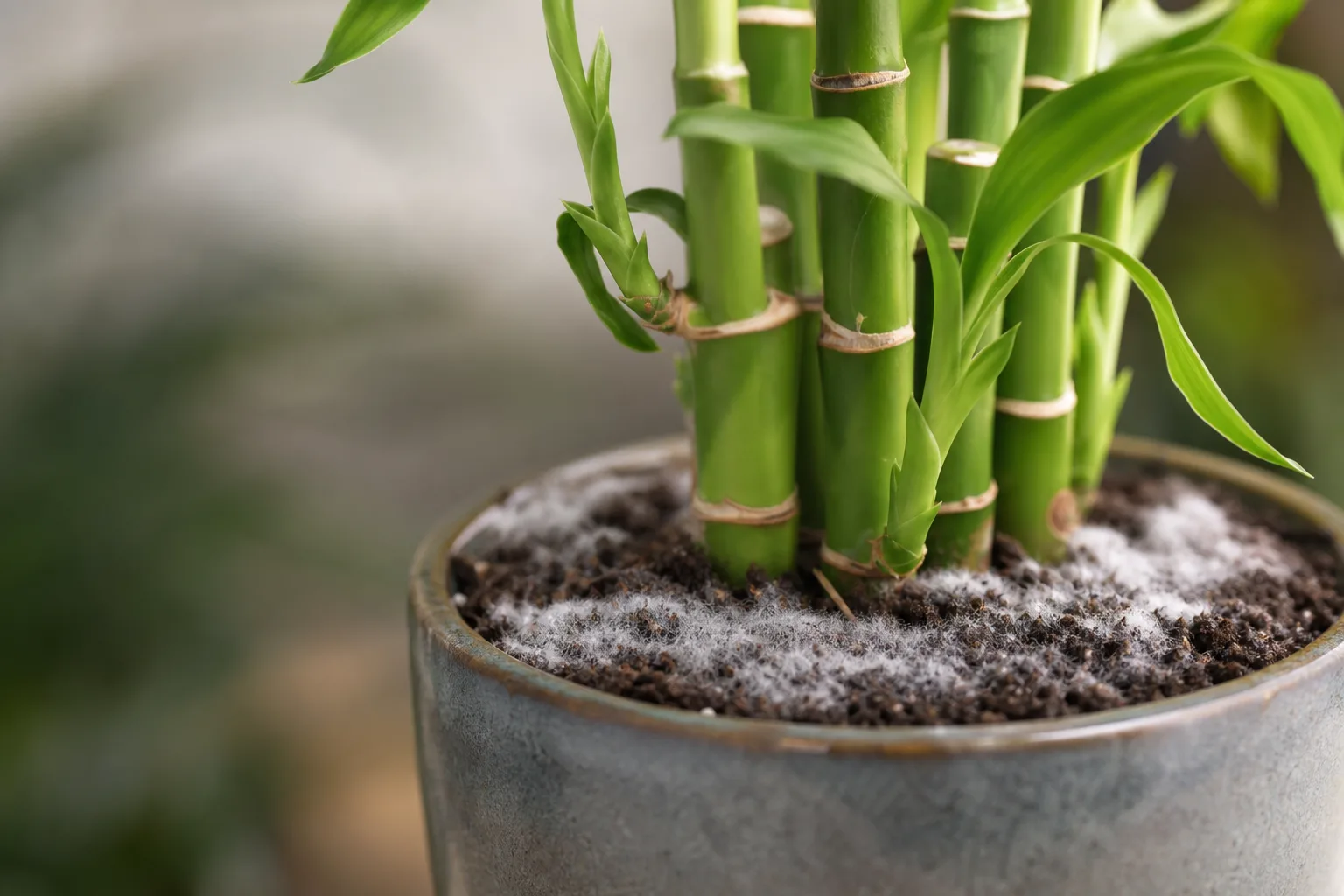
Common surface mold: White, gray, or occasionally green fuzzy growth on the top quarter-inch of soil - often after overwatering on Lucky Bamboo or adding decorative moss that stays damp.
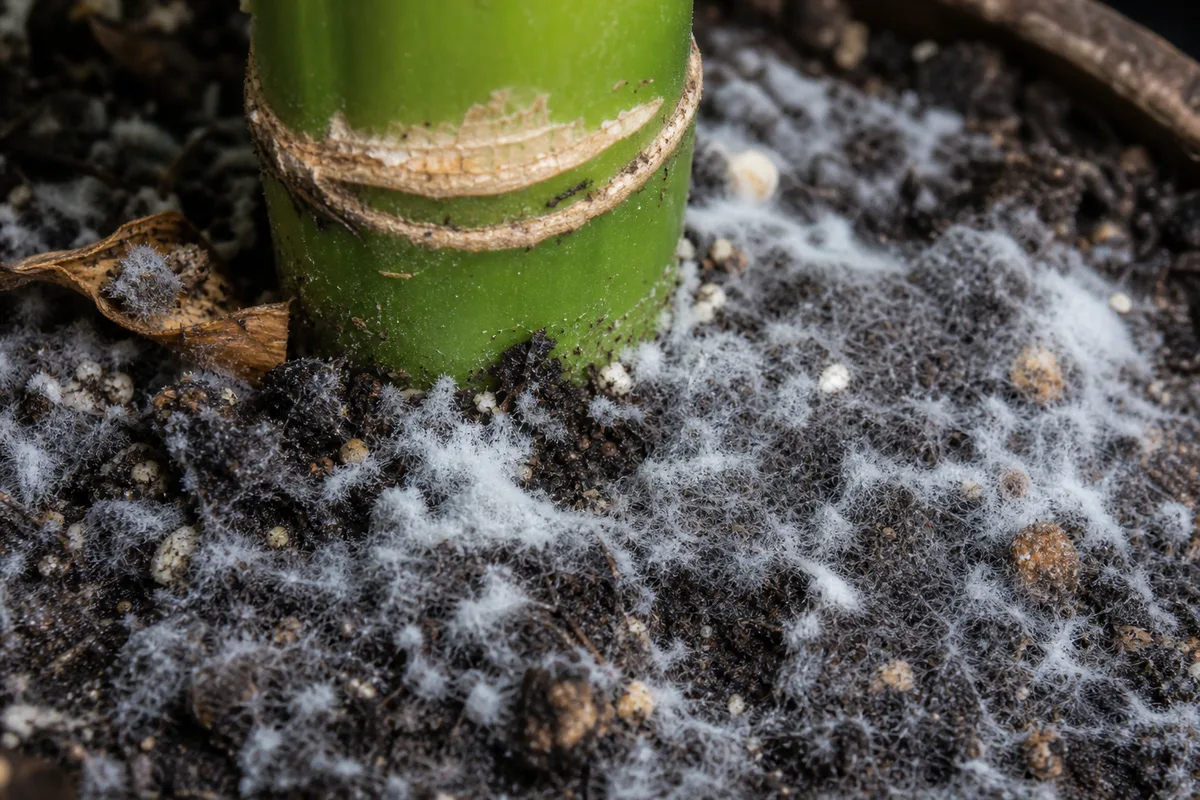
Mold on Soil symptoms on Lucky Bamboo - compare with healthy tissue on the same plant.
Musty smell: Wet organic mix with mold may smell earthy - distinguish from sour rot odor of anaerobic overwatering that rots stems.
Plant response: Firm green canes with only surface mold differ from yellowing, drooping plants with advanced root decay. Lucky Bamboo leaves may stay normal while surface mold persists - still fix moisture before rot follows.
Why Lucky Bamboo soil gets mold
Saprophytic fungi colonize constantly wet organic matter. Overwatering soil-grown Lucky Bamboo - especially in low light - keeps the surface damp long enough for mold spores to grow.
Cachepots, sealed decorative outer pots, and saucers holding runoff maintain wet surface layers. Top dressings of moss, stones over saturated mix, and compacted old substrate worsen airflow.
Easily grown in evenly moist soil requires balanced moisture with drainage - not perpetual surface wetness.
How to confirm the cause
- Depth of wetness - Is only the surface soggy or the whole root ball?
- Stem firmness - Soft bases indicate rot beyond cosmetic mold.
- Drainage - Holes open? Cachepot holding water?
- Light - Dim placement slows drying and favors mold.
- Root check - White firm roots vs. brown mush when sampling below mold layer.
- Culture - Pure vase culture should redirect diagnosis to algae in water, not soil mold.
First fix for Lucky Bamboo
Scrape surface mold and dry the top inch before the next watering.
Remove decorative moss if it never dries. Discard the top quarter-inch of moldy soil if heavily colonized; replace with dry fresh mix on surface only if roots below are firm.
Move to bright, indirect light to speed dry-down. Empty saucers after every watering.
Do not mist soil surface repeatedly - increases mold without helping Dracaena humidity needs meaningfully.
Step-by-step recovery
- Scrape visible mold with a spoon; dispose in trash, not compost indoors.
- Allow top inch to dry fully before watering.
- Water deeply once dry, then drain - do not leave water in saucers.
- Increase airflow around pot - avoid sealing in tight decorative containers.
- If mold returns within days despite dry-down, repot into fresh well-drained potting soil with open drainage.
- Use filtered water to reduce additional stress while roots recover.
Hold fertilizer until mold cycles stop - salts in wet surface layers aggravate stress.
Recovery timeline
Surface mold should not return within one to two weeks once top inch dry-down is consistent. If yellowing or soft stems appear, escalate to root-rot protocol - mold was a warning, not the root cause.
Repotted plants may show clean soil surface within days in improved light.
Causes to rule out
- Algae in vase water - Green water in pebble vases, not soil fuzz.
- Mineral deposits - White crust from hard water on pebbles or pot rim; not fuzzy mold.
- Fungus gnats on Lucky Bamboo - Flies indicate larvae in wet soil; may coexist with mold.
- root rot on Lucky Bamboo - Sour smell and mushy roots; mold may be secondary.
What not to do
Do not cover wet soil with extra dry gravel without fixing watering - mold returns under stones. Avoid fungicide drenches on edible-adjacent desk plants unless label allows houseplants. Do not confuse vase cloudiness with soil mold.
How to prevent mold on soil next time
Water on dryness checks only. Improve light. Remove soggy top dressings. Repot every one to two years before mix breaks down and holds water excessively.
For mold-free simplicity, some owners shift to water culture with weekly water changes and pebbles - grown in water as long as roots have substrate.
Lucky Bamboo care cross-check
Mold signals the same overwatering conditions that cause stem rot on Dracaena sanderiana. Fixing surface mold without changing Lucky Bamboo watering guide fails.
When to worry
Escalate when mold recurs with soft stems or sour mix - unpot and inspect roots. Lucky bamboo is toxic to pets; discard moldy scraped soil safely.
Conclusion
Mold on Lucky Bamboo soil means a wet, poorly aerated surface - fix by scraping fuzz, drying the top inch before watering, improving light and drainage, and Lucky Bamboo repotting guide if moisture discipline alone fails. Vase-grown plants avoid soil mold entirely with weekly filtered water care.
When to use this page vs other Lucky Bamboo guides
- Lucky Bamboo watering guide - Use for routine moisture checks before assuming mold on soil is the main issue.
- Lucky Bamboo problems hub - Browse all 41 common issues on this species.
- Fungus Gnats on Lucky Bamboo - Different entry point when symptoms overlap with mold on soil.
- Overwatering on Lucky Bamboo - Different entry point when symptoms overlap with mold on soil.
- Root Rot on Lucky Bamboo - Different entry point when symptoms overlap with mold on soil.