Not Enough Light on Lucky Bamboo: Causes, Checks & Fixes
Quick answer
Lucky Bamboo in too little light grows pale, leggy, and slow. First step: move to bright indirect light away from deep shade - not direct sun.
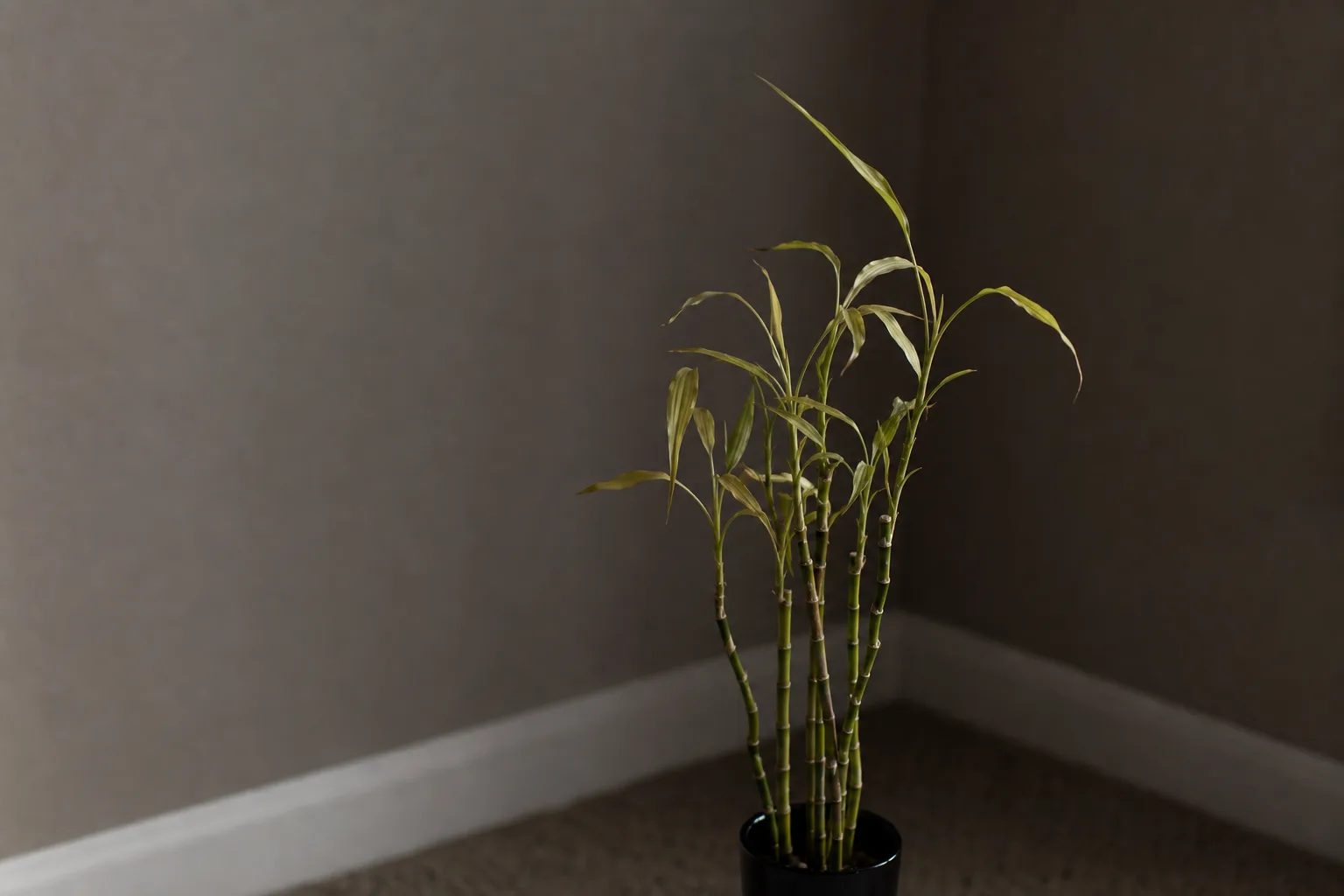
Not Enough Light on Lucky Bamboo: Causes, Checks & Fixes
This guide covers not enough light on Lucky Bamboo. See also the general Not Enough Light guide, watering, and light pages for this plant.
Not Enough Light on Lucky Bamboo: Causes, Checks & Fixes
Quick answer
Not enough light on Lucky Bamboo (Dracaena sanderiana) causes pale, sparse, leggy growth and slow water use that can lead to rot in dim wet soil. First step: move to bright, indirect light - bright, indirect light is best, not direct sun.
Lucky Bamboo tolerates lower light with slower growth but cannot thrive in deep shade indefinitely. Too much direct sun will scorch the foliage - the goal is brighter indirect exposure.
What insufficient light looks like on Lucky Bamboo
Early signs: New leaves smaller and lighter green, canes lean toward brightest direction, internodes lengthen between leaf pairs.
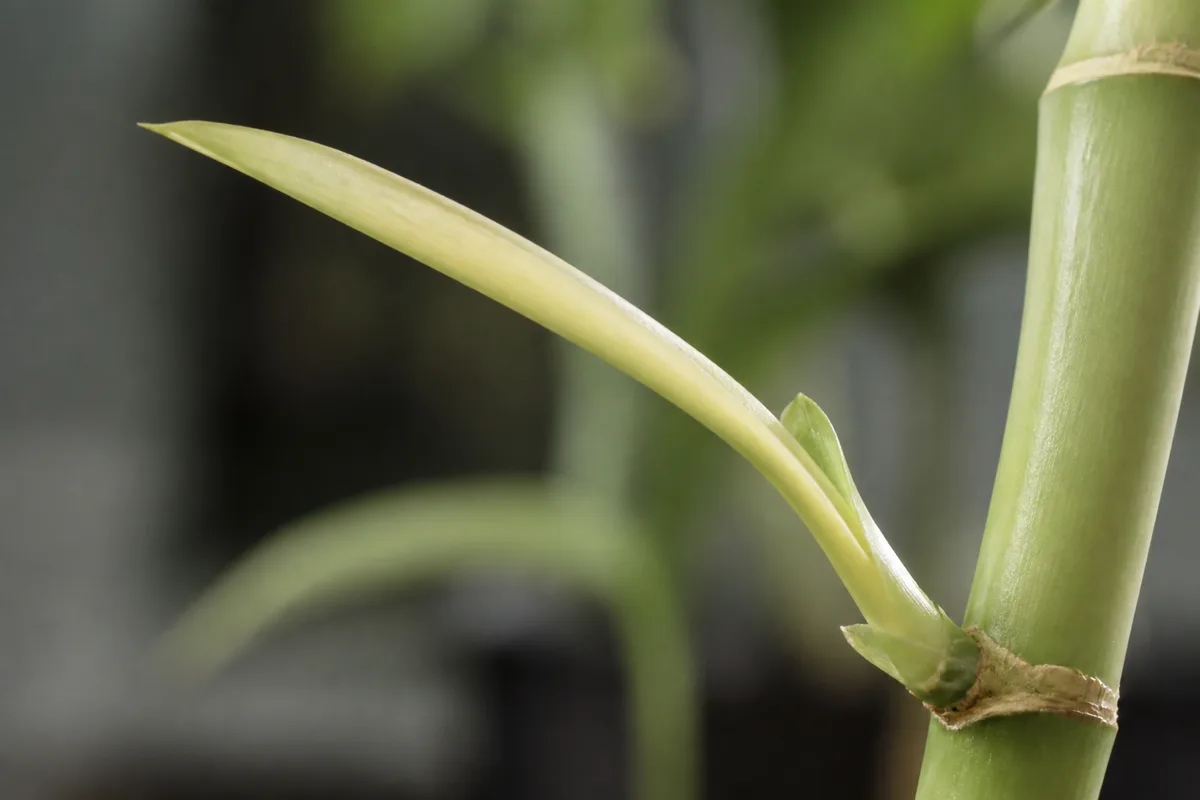
Not Enough Light symptoms on Lucky Bamboo - compare with healthy tissue on the same plant.
Advanced low light: Long bare cane sections, minimal new shoots for months, lower leaves yellow and drop slowly. Soil or vase water stays wet longer because the plant uses little water - raising overwatering and stem rot risk.
Versus normal slowness: Slow-growing species still produce periodic new leaves in adequate light; true deficiency shows lean, pale stretch, and wet-root problems together.
Why Lucky Bamboo gets too little light
Marketing as a desk and “feng shui” plant places arrangements in interior rooms, bathroom counters, and lobby corners far from windows. Ambient room brightness misleads owners - the plant needs plant-facing window light, not reflected ceiling glow.
Blocked light from taller objects, tinted windows, and neighboring cubicle walls reduces effective exposure. Braided forms may shade inner canes while outer stems reach for light unevenly.
Owners sometimes move plants away from windows after sun scorch - correct for direct sun, but stopping at deep shade overshoots. Filtered bright light is the target.
How to confirm the cause
- Reading test - Cannot read without artificial light at plant location all day? Likely insufficient.
- Lean direction - Canes point toward window or lamp.
- Growth rate - No new leaves for many warm months.
- Water use - Pot stays wet; vase algae grows slowly in dim cool spots.
- Color - New growth paler than when purchased from a bright garden center.
- Rule out fluoride - Tip burn with compact nodes may be water, not light.
First fix for Lucky Bamboo
Move to brighter indirect light incrementally.
Relocate to an east-facing room or filtered bright window per Clemson guidance. Increase exposure over one to two weeks if coming from deep shade.
Cut back older, lanky stems to the base to encourage new growth once light improves - optional but helps reset shape.
Adjust watering upward slightly in brighter spots; maintain weekly vase changes with filtered water.
Step-by-step recovery
- Identify brightest indirect spot available - no direct afternoon sun beams.
- Move plant; rotate weekly for even exposure on braids.
- Reduce watering frequency until you learn new dry-down speed in brighter light - paradoxically, better light helps prevent rot from stale wet soil.
- Prune one leggy cane to a node if stretch is severe.
- Apply dilute fertilizer only after four weeks of improved growth.
- Track new leaf size and color monthly.
Recovery timeline
Improved leaf color on new growth may appear within three to six weeks. Filling bare cane sections requires pruning and side shoots - months on slow-growing Lucky Bamboo.
Causes to rule out
- Fluoride damage - Tip-focused browning; nodes may stay compact.
- root rot on Lucky Bamboo from wet dim soil - Secondary to low light; fix light and drainage.
- Nutrient lack in vase water - Pale but not necessarily leaning; light still primary if dim.
- Pests - Weak plants attract mites; inspect stippling.
What not to do
Do not jump to direct south-window sun. Avoid heavy fertilizer in shade - soft weak growth follows. Do not keep calendar watering from dim-corner era after moving brighter without adjusting.
How to prevent insufficient light
Default placement: bright, indirect light such as east or filtered north/ west exposures. Rotate arrangements weekly.
When buying, reject stock with extreme stretch unless you plan to prune and relight immediately.
Lucky Bamboo care cross-check
Light drives Lucky Bamboo watering guide. Brighter Lucky Bamboo needs more frequent checks; dim plants need less water but more light - not the same dim corner with weekly soil soaking.
When to worry
Insufficient light is chronic, not acute. Escalate when wet soil in shade causes rot - combine light increase with dry-down. Lucky bamboo is toxic to pets.
Conclusion
Not enough light makes Lucky Bamboo pale, leggy, and prone to wet-root problems in soil. Move to bright indirect exposure, adjust watering to match, prune stretched canes if needed, and judge success by compact new leaves - not instant height gains.
When to use this page vs other Lucky Bamboo guides
- Lucky Bamboo watering guide - Use for routine moisture checks before assuming not enough light is the main issue.
- Lucky Bamboo problems hub - Browse all 41 common issues on this species.
- Slow Growth on Lucky Bamboo - Different entry point when symptoms overlap with not enough light.
- Yellow Leaves on Lucky Bamboo - Different entry point when symptoms overlap with not enough light.
- Leaf Drop on Lucky Bamboo - Different entry point when symptoms overlap with not enough light.