Fungus Gnats on Maidenhair Fern: Causes, Checks & Fixes
Quick answer
Fungus gnats on Maidenhair Fern mean the soil surface stays wet too long - common when growers keep a moisture-loving fern constantly topped up. First step: set yellow sticky traps at soil level, apply BTI to moist mix, and let the top centimeter (~½ inch) dry slightly while the root ball stays evenly damp.
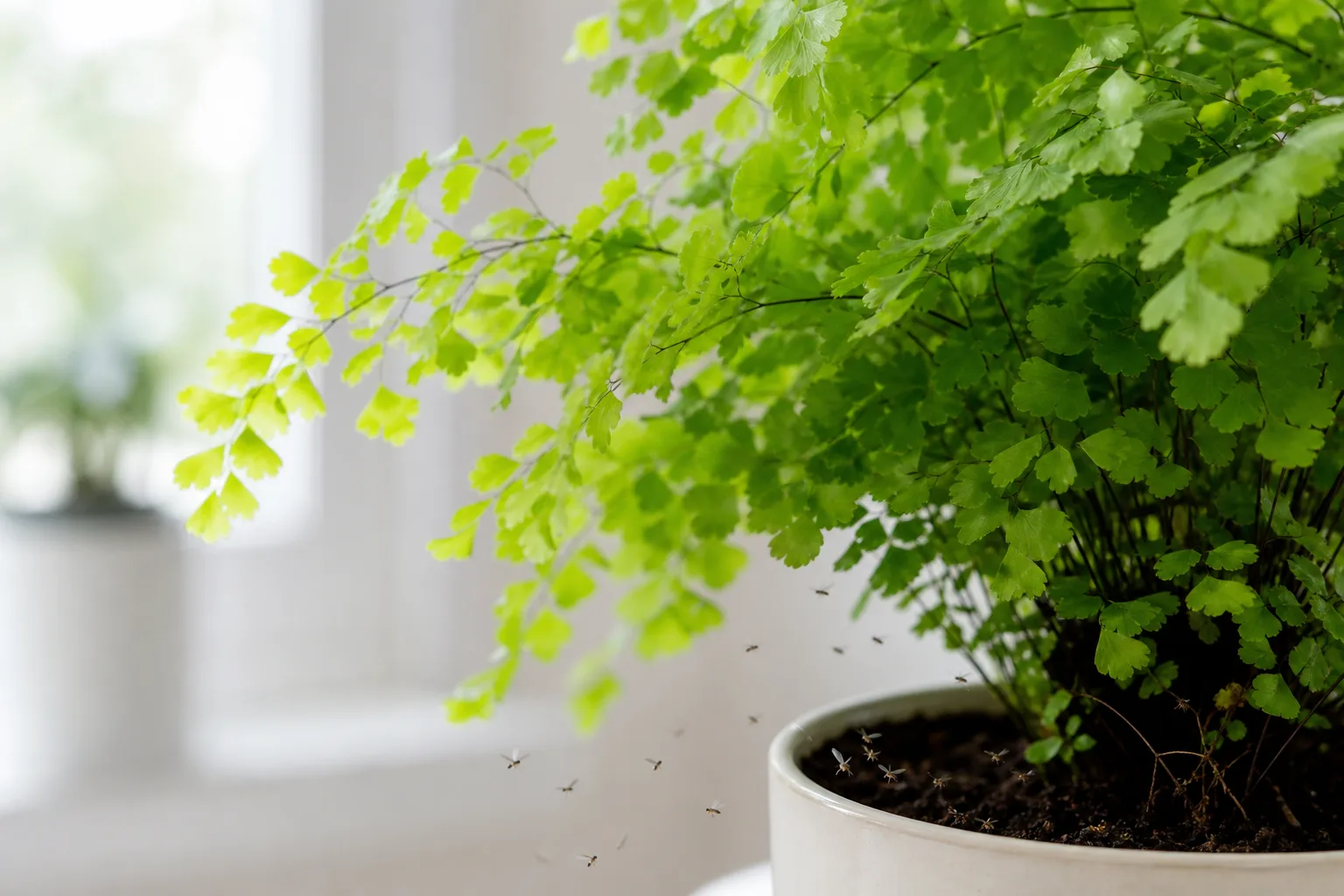
Fungus Gnats on Maidenhair Fern: Causes, Checks & Fixes
This guide covers fungus gnats on Maidenhair Fern. See also the general Fungus Gnats guide, watering, and light pages for this plant.
Fungus Gnats on Maidenhair Fern: Causes, Checks & Fixes
Quick answer
Fungus gnats on Maidenhair Fern (Adiantum raddianum) almost always mean the soil surface stays wet too long - not that the fern should go dry. Growers water generously to satisfy a moisture-loving fern, but a permanently soggy top layer is exactly where fungus gnat larvae develop in houseplant growing medium.
First step: set yellow sticky traps at soil level, drench moist mix with BTI (Bacillus thuringiensis israelensis), and adjust watering so the top centimeter (~½ inch) dries slightly while the root ball stays evenly damp. That surface dry-down breaks the gnat cycle without the drought shock that collapses delicate maidenhair fronds within hours.
For the full moisture rhythm this fern needs - pot-weight checks, seasonal intervals, and terrarium nuance - see the Maidenhair Fern watering guide.
What fungus gnats look like on Maidenhair Fern
Adult flies:
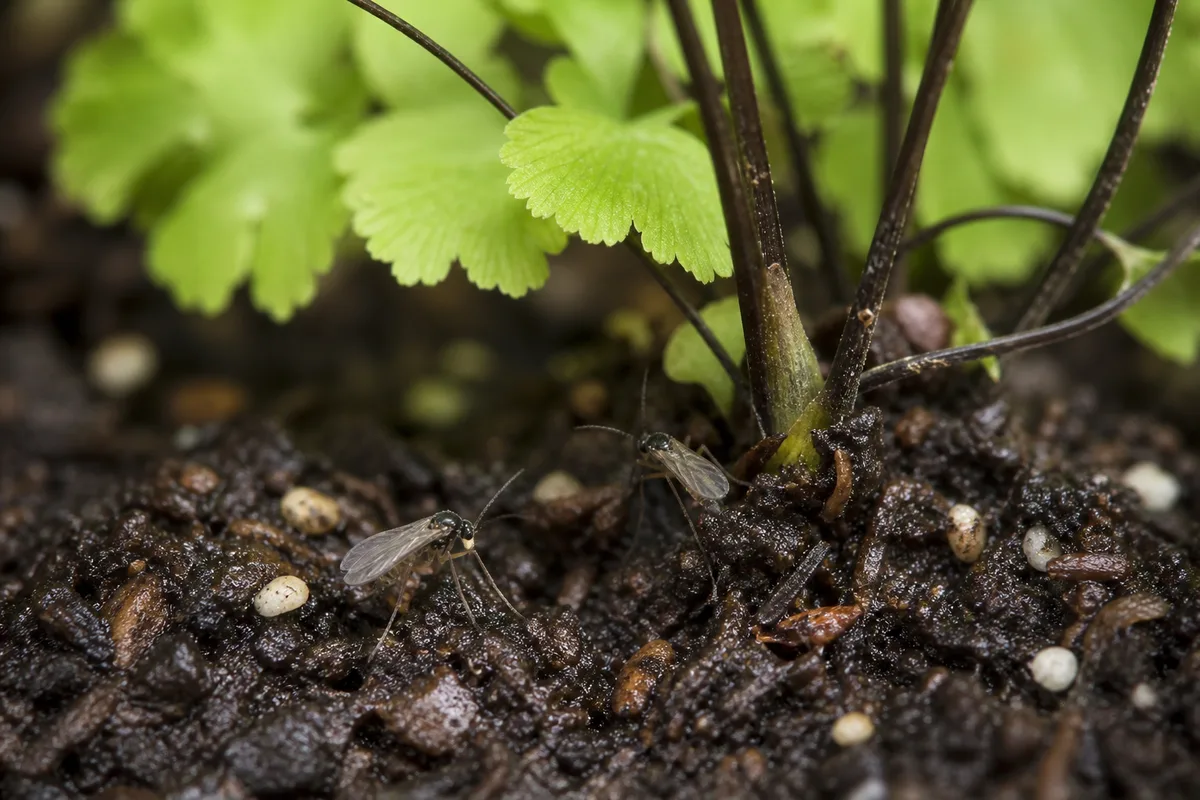
Fungus Gnats symptoms on Maidenhair Fern - compare with healthy tissue on the same plant.
- Small dark flies, about 1/8 inch long, with long legs - distinct from fruit flies
- Running on the soil surface or hovering near the pot rim and delicate black stipes
- Rising in a small cloud when you water or disturb the mix
- Most noticeable in fall and winter when indoor heating and slower fern growth leave surface mix wet longer
Larval signs:
- Translucent wormlike larvae with dark head capsules in the top 2 to 3 inches of wet mix
- Soil surface that stays dark and cool for days after watering
- More flies after each drink even when fronds look otherwise healthy
What is not a gnat problem:
- Crispy brown leaflet edges from drought - maidenhair collapses fast when the root ball dries, without flying insects
- White fuzzy mold on soil alone - often co-occurs with gnats but is a separate surface-moisture issue; see mold on soil
- Scale or mealybug residue on fronds - stationary pests, not darting flies at soil level
Maidenhair Fern rarely shows obvious leaf damage from gnats alone. The visible problem is usually the flies plus mix that never quite dries on top.
Why Maidenhair Fern gets fungus gnats
Maidenhair fern has hair-fine roots on a creeping rhizome that need evenly moist, oxygenated mix - NC State Extension is explicit that roots should not be allowed to dry out. That biology pushes growers toward frequent watering. When the surface never dries, fungus gnat adults lay eggs in the cracks of damp organic mix and larvae feed on fungi, algae, and decaying matter in the upper layers.
Several maidenhair-specific habits invite gnats:
Watering before the top centimeter dries. The Missouri Botanical Garden notes that A. raddianum needs consistently moist soil and can be difficult outside humid conditions. Interpreting “moist” as “wet surface every day” keeps the top layer gnat-friendly while you think you are helping the fern.
Peat-heavy or degraded mix. Fungus gnat females are particularly attracted to moist media high in peat moss. As mix ages, it retains more water and becomes more attractive to egg-laying adults - common in shallow display pots that maidenhair is often grown in.
Terrarium, bathroom, or cachepot placement. NC State recommends bathrooms and terrariums for humidity - good for fronds, but enclosed glass or a cachepot without drainage can slow surface dry-down. High air humidity does not replace root-zone oxygen; stagnant wet topsoil still breeds gnats.
Oversized or deep pots. A small rhizome in a large volume of wet mix means the surface stays damp longer than the fern can use water - especially in dim winter light when cooler temperatures slow growth and water uptake.
Decay from prior overwatering. Mushy roots and organic debris in the top layer feed larvae. If gnats appeared after weeks of heavy watering, cross-check overwatering signs and inspect roots before assuming gnats are the only issue.
The gnats are a symptom. On maidenhair, the underlying issue is almost always surface moisture management - not a pest that arrived independent of your watering rhythm.
Fungus gnats vs. other small flies
| Sign | Fungus gnats | Fruit flies | Drain flies |
|---|---|---|---|
| Where they cluster | Soil surface, pot rim, near fern base | Kitchen fruit, compost bins, trash | Sinks, showers, floor drains |
| Trigger when you… | Water or disturb the pot | Open garbage or leave ripe produce out | Run water in a drain |
| Larvae location | Top 2–3 inches of potting mix | Fermenting organic matter | Slimy film inside plumbing |
| Risk to maidenhair roots | Low alone; higher if mix stays anaerobic | None from the fern pot | None from the fern pot |
If flies rise only when you water the maidenhair and yellow traps at soil level catch insects within 48 hours, fungus gnats are the working diagnosis.
How to confirm the cause
Work through these checks in order:
- Fly behavior - Small dark flies run on soil and rise when you water. Fruit flies hover near food; drain flies stay near plumbing.
- Surface moisture test - Press a finger into the top centimeter (~½ inch). If it stays cool and wet for three or more days between drinks, you have gnat habitat.
- Yellow sticky trap count - Place a trap at soil level beside the fronds (avoid sticking delicate leaflets). Check after 48 hours; several catches confirm active adults breeding nearby.
- Potato slice test - Insert a ¼-inch slice of raw potato into the upper mix. Check the underside after two to three days. Larvae migrate to potato and appear as translucent worms - this confirms larvae in the medium, not stray adults from another room.
- Pot weight - Lift the pot. A heavy feel days after watering plus persistent gnats suggests you are watering before the fern has used the last drink - the same pot-weight logic used for healthy maidenhair watering applies here in reverse.
- Root health cross-check - Sniff the mix and gently tease the surface. Sour smell or mushy rhizome tips mean root rot may be advancing alongside gnats - treat rot as primary.
First fix for Maidenhair Fern
Set yellow sticky traps at soil level and apply BTI to moist mix - then adjust watering so only the top centimeter (~½ inch) dries slightly before the next drink.
Traps catch egg-laying females and show whether fly counts are falling. BTI kills fungus gnat larvae when applied as a soil drench and is safe for plants when used per label - consumer forms include Mosquito Bits soaked in water and poured through moist soil.
Do not let the entire root ball dry to kill gnats. Maidenhair fronds often collapse within hours when fine roots desiccate - a common mistake when treating a “moisture fern” like a succulent.
Empty saucers and cachepots after every watering. If the surface has green algae or white mold, scrape the top centimeter of degraded mix and replace with fresh airy blend from the soil guide - both signal chronic surface wetness.
Step-by-step recovery
- Deploy traps - Set yellow sticky cards at soil level; replace when full. Keep them running the full treatment cycle.
- Apply BTI - Drench moist (not bone-dry) mix per product label. Repeat applications are required because overlapping generations hatch over several weeks - typically every five to seven days for two to three weeks.
- Surface dry-down - Water only when the top centimeter (~½ inch) is barely dry; the root ball below should still feel cool and slightly springy, not dusty or shrunken from the pot walls.
- Drainage audit - Confirm holes are open; discard standing saucer water within 30 minutes. Never let a cachepot hold runoff.
- Seasonal adjustment - In winter, extend intervals per the watering guide - shorter days slow water use and wet mix lingers longer if you keep summer frequency.
- Repot threshold - If traps stay full after three weeks of corrected watering and BTI, or mix smells sour with mushy roots, repot into fresh coco coir–bark blend after rinsing firm roots. See repotting for rhizome-safe handling.
- Optional sand top-dress - Some growers add a thin layer of horticultural sand to discourage surface egg laying; water must still penetrate freely. Extension sources emphasize dry-down over top dressings - skip this if it blocks drainage on fine roots.
- Isolate neighbors - Check other houseplants with wet soil; gnats travel short distances between pots.
Avoid systemic insecticides not labeled for indoor ferns until cultural fixes and BTI have had a full three-week cycle.
Recovery timeline
Adult gnats live roughly seven to ten days; trap counts often drop within one to two weeks as surface moisture improves.
Full larval suppression usually takes three to four weeks because the complete life cycle can finish in three to four weeks at room temperature with continuous reproduction indoors. Judge progress by declining trap catches and stable fern health - not by whether a single fly appears.
Maidenhair fronds do not regenerate from gnat damage; improvement means fewer flies, no new yellowing from rot, and steady new croziers at the crown.
Causes to rule out
- Fruit flies - Kitchen source; not tied to watering the fern.
- Drain flies - Plumbing source; treat the drain, not the pot.
- Root rot without flies - Sour smell and mushy roots still need repotting even if no gnats are present.
- Drought collapse - Light pot, crispy leaflets, no insects - the plant needs water, not dry-down.
- Mold on soil - Often co-occurs; both mean surface stays too wet. See mold on soil for surface treatment.
What not to do
Do not desiccate the root ball to kill gnats - maidenhair fronds collapse within hours when rhizome roots dry.
Do not water more often because you see flies - extra surface moisture feeds larvae.
Do not spray pyrethrin or neem on adults alone while ignoring wet mix. Short-persisting contact sprays on flying adults require repeat applications and do not control larvae in the medium.
Do not repot into peat-only bagged indoor soil - it stays wet on top and invites the next generation.
Do not stop treatment after one dry week - eggs already in deeper mix can hatch for several weeks.
How to prevent fungus gnats next time
Water when the top centimeter (~½ inch) is barely dry, using pot weight from the watering guide rather than a rigid calendar. Use the site’s coco coir–bark blend from the soil guide instead of dense peat-only mix.
Allow the growing medium to dry between waterings, especially the top 1 to 2 inches - on maidenhair, interpret that as surface-only dry-down, not whole-pot drought.
Empty saucers after every drink. In terrariums, vent briefly after watering so the surface can exchange air. Replace degraded mix annually or when it holds water like a sponge.
Keep one yellow trap near maidenhair ferns as an early-warning monitor when bringing home new plants - nursery pots often arrive slightly damp.
Maidenhair Fern care cross-check
| Checkpoint | Healthy pattern | Gnat-friendly mistake |
|---|---|---|
| Top centimeter (~½ in) | Barely dry before next drink | Stays cool and wet for days |
| Pot weight | Lightens slightly before you water | Heavy for a week on calendar schedule |
| Root ball | Evenly moist, not swampy | Waterlogged with sour smell |
| Mix | Airy coco coir–bark blend | Peat-heavy, degraded, compacted |
| Placement | Humidity for fronds + drainage | Closed terrarium with stagnant surface |
| Saucer/cachepot | Emptied after watering | Standing water 24+ hours |
Moist root ball plus slightly dry surface is the gnat-prevention sweet spot - achievable with airy mix and disciplined drainage, not constant top soaking.
When to worry
Act urgently when gnats coincide with yellow limp fronds, sour soil, and mushy roots - root rot is the primary threat, not the flies. Trim only clearly mushy tissue; repot firm rhizome sections into small fresh pots; accept that a fully blackened crown may not recover.
Routine gnats on an otherwise firm rhizome with healthy new croziers are a moisture-habit problem - fix surface dry-down and BTI first.
Maidenhair fern is listed as non-toxic to cats and dogs by the ASPCA, but keep sticky traps and BTI products out of pet reach per label directions.
Related Maidenhair Fern problems
- Maidenhair Fern watering guide - pot-weight checks and seasonal intervals
- Overwatering on Maidenhair Fern - early wet-soil intervention before rot
- Mold on soil - shared surface-moisture cause
- Root rot on Maidenhair Fern - when gnats signal deeper failure
- Maidenhair Fern overview - full care hub
How this guide was verified
Author: sai-ananth · Reviewer: LeafyPixels Review Board · Reviewed: June 2026
Recommendations were checked against NC State Extension Adiantum raddianum, Colorado State University Extension fungus gnat guidance, Missouri Botanical Garden Plant Finder, University of Minnesota Extension houseplant pest resources, the ASPCA maidenhair fern listing, and LeafyPixels maidenhair fern care data. Inline citations sit next to the claims they support; unresolved contradictions are flagged for review rather than silently rewritten.
Conclusion
Fungus gnats on Maidenhair Fern tell you the soil surface stays wet too long - often from generous top watering on a moisture-loving fern - not that the plant should go dry. Confirm flies with traps and a potato test, drench moist mix with BTI on a two-to-three-week schedule, and let only the top centimeter (~½ inch) dry while the root ball stays evenly damp. Prevent recurrence with airy mix, saucer discipline, and the pot-weight rhythm from your watering routine - the same balance that keeps Adiantum raddianum healthy also breaks the gnat cycle.
When to use this page vs other Maidenhair Fern guides
- Maidenhair Fern watering guide - Use for routine moisture checks before assuming fungus gnats is the main issue.
- Maidenhair Fern problems hub - Browse all 55 common issues on this species.
- Overwatering on Maidenhair Fern - Different entry point when symptoms overlap with fungus gnats.
- Mold on Soil on Maidenhair Fern - Different entry point when symptoms overlap with fungus gnats.
- Root Rot on Maidenhair Fern - Different entry point when symptoms overlap with fungus gnats.