Wilting on Maidenhair Fern: Causes, Checks & Fixes
Quick answer
Wilting Maidenhair Fern (*Adiantum raddianum*) is acute frond collapse - not gradual droop. First step: lift the pot. Light and dry means soak now; heavy and wet means inspect roots before any drink.
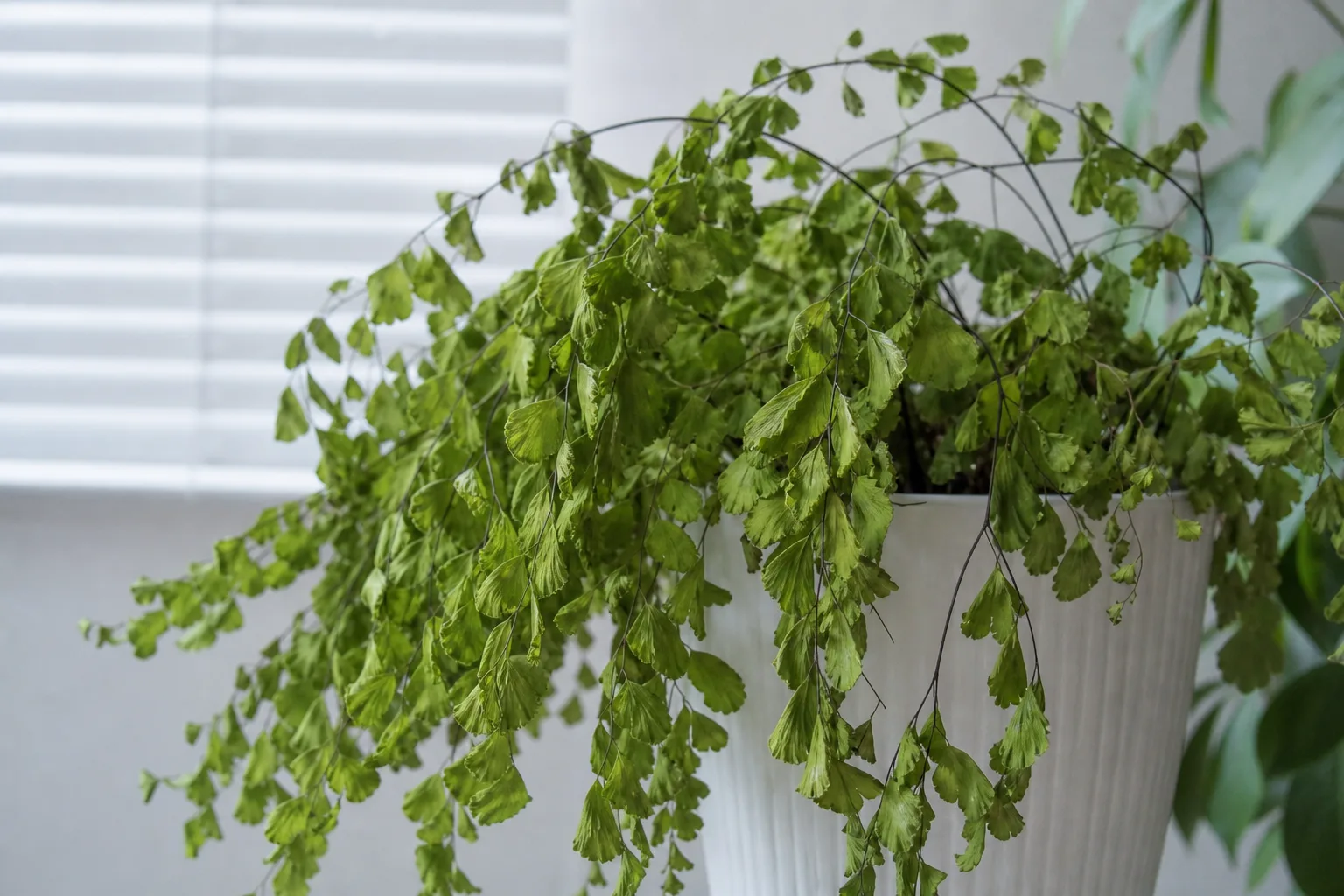
Wilting on Maidenhair Fern: Causes, Checks & Fixes
This guide covers wilting on Maidenhair Fern. See also the general Wilting guide, watering, and light pages for this plant.
Wilting on Maidenhair Fern: Causes, Checks & Fixes
Quick answer
Wilting on Maidenhair Fern (Adiantum raddianum) is acute frond collapse - thin leaflets lose turgor within hours, not the gradual sag you see on tougher ferns. The two emergencies look identical from across the room but need opposite fixes: drought wants a soak; root failure on wet soil wants inspection, not another drink.
First step: lift the pot before you touch the watering can.
| What you find | Likely cause | First action |
|---|---|---|
| Light pot, dry mix 2 cm down, limp fronds | Underwatering | Soak thoroughly; drain; humidify 60–80% |
| Heavy pot, wet surface for days, yellow limp fronds | Root rot / overwatering | Stop watering; unpot; inspect roots |
| Moist appropriate soil, wilt after heat spike or AC blast | Draft / heat shock | Relocate to stable 16–24°C; wait 24 hours |
| Wilt 1–3 days after repotting, firm roots on check | Repotting stress | Maintain even moisture; avoid moving again |
| Surface moist but core dry, water runs off edges | Hydrophobic dry-down | Bottom-soak or slow top water until mix rewets |
Use this page when fronds collapsed quickly and you need same-day triage. For gradual limpness over many days, see drooping leaves on Maidenhair Fern. For soak rhythm and seasonal intervals, see the Maidenhair Fern watering guide.
What acute wilting looks like on Maidenhair Fern
Healthy Adiantum raddianum fronds arch with firm, glossy leaflets on wiry black stipes. Acute wilt shows:
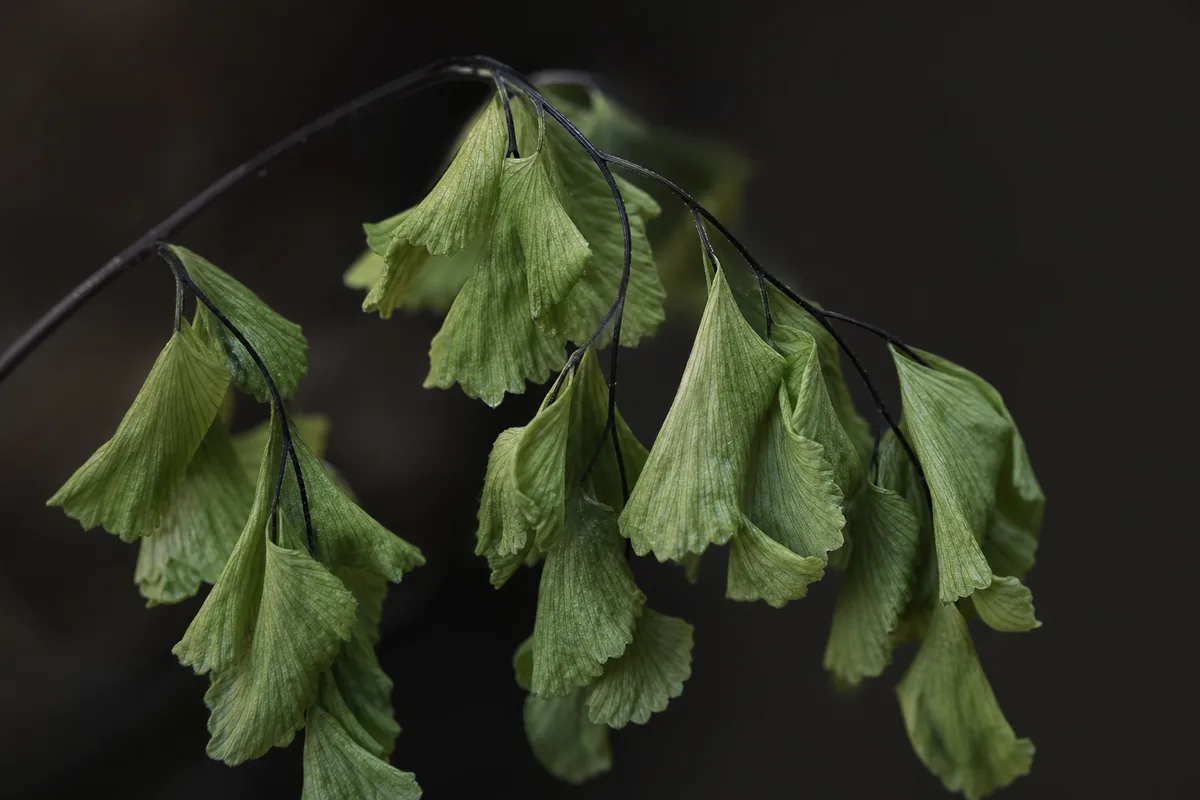
Wilting symptoms on Maidenhair Fern - compare with healthy tissue on the same plant.
- Limp, drooping fronds - leaflets hang flat instead of fanning outward
- Dull gray-green color replacing bright green within hours
- Fronds touching pot rim or soil from weakness, not natural trail
- Progression to crisp brown or black within 12–24 hours if drought continues unchecked
- Yellow-green limp fronds with wet, heavy soil when roots are failing
Distinguish from normal evening relaxation - healthy fronds may soften slightly at night but leaflets stay glossy and recover by morning. True wilt does not perk overnight without a cause correction.
Why Maidenhair Fern collapses fast
Dry root ball - NC State Extension is explicit: roots should not be allowed to dry out. Maidenhair stores little water in its rhizome; fronds die back quickly if soils are allowed to dry out. A missed watering window that a pothos survives can collapse this fern by afternoon.
Root rot from overwatering - Damaged roots cannot transport water; classic wilt-with-wet-soil pattern. Over-watering and poor drainage can cause root rot. Fine maidenhair roots suffocate in stagnant mix faster than thick-rooted houseplants.
Low humidity plus marginal moisture - This fern needs a very humid atmosphere. Dry air accelerates transpiration from membranous leaflets; fronds flag even when a surface probe reads moist. See low humidity on Maidenhair Fern when wilt pairs with crisp leaflet edges but soil weight looks normal.
Hydrophobic dry-down after drought - Repeated dry cycles can repel water at the surface while the core stays bone dry. You water, fronds stay limp, and the pot still feels light - a trap that mimics rot but needs rewetting, not root surgery.
Cold or hot drafts - Avoid placing the plant in drafty areas or near heat registers. Rapid transpiration stress causes temporary wilt when soil moisture is otherwise adequate.
Recent repotting - Root disturbance pauses uptake briefly; wilt 1–3 days after repotting with firm roots on inspection usually resolves with stable moisture and humidity.
How to confirm the cause
Work through these checks in order:
- Pot weight - Light and dry: underwatering likely. Heavy and wet for days: inspect roots before any drink.
- Soil probe at 2 cm - Dry confirms drought. Wet surface for days with limp yellow fronds suggests rot.
- Core moisture - If surface feels moist but pot is light and water beads off, probe deeper or bottom-soak to test hydrophobic dry-down.
- Smell - Sour odor at the crown supports rot over drought.
- Humidity estimate - Below 50% with moist soil and limp fronds points to air dryness, not thirst.
- Recent events - Missed watering, heat spike, repot, move near AC vent, or watering while mix was already saturated?
Wet-soil vs. dry-soil vs. draft-shock decision matrix
| Signal | Dry-soil wilt | Wet-soil wilt | Draft / heat shock |
|---|---|---|---|
| Pot weight | Light | Heavy | Moderate - may feel normal |
| Top 2 cm moisture | Dry | Wet for days | Often appropriate |
| Frond color | Gray-green → crisp brown | Yellow-green limp | Dull limp, may recover overnight |
| Smell | Neutral | Sour possible | Neutral |
| Timeline | Hours after missed water | Days of heavy watering | After move or heat spike |
| First fix | Soak + humidify | Stop water; inspect roots | Relocate; maintain humidity |
First fix for Maidenhair Fern
Match action to pot weight - never water blindly.
If dry and light: Soak thoroughly until mix is evenly moist; drain completely; raise humidity to 60–80% with a humidifier or pebble tray. Trim fronds that fully collapsed and blackened - they will not rehydrate.
If wet and heavy: Stop watering. Unpot, trim mushy roots, repot in fresh airy mix from the soil guide. Do not add water until the top centimeter dries slightly. Escalate to root rot rescue if crown tissue softens or smell is sour.
If moisture normal but wilt after draft: Move to stable 16–24°C (60–75°F) with humidity support; wait 24 hours before further intervention.
If hydrophobic dry-down suspected: Bottom-soak the pot for 20–30 minutes or water very slowly in stages until the core rewets and weight increases - then resume the barely-dry top-centimeter rhythm.
Step-by-step recovery
Dry path:
- Lift pot; confirm light weight and dry mix at 2 cm depth.
- Soak at the sink until water runs freely from drainage holes; drain 15 minutes.
- Set humidifier targeting 60–80% or place on wet pebbles - pots may be set in a tray of wet pebbles.
- Trim fully blackened or crisped fronds at soil line.
- Check weight daily; water when top centimeter is barely dry.
Wet path:
- Stop all watering; empty saucers and cachepots.
- Unpot; rinse roots; trim brown mushy tissue with clean scissors.
- Repot into fresh airy mix; firm rhizome at prior depth.
- Hold water until top centimeter dries slightly, then resume light drinks.
- Expect new croziers in 2–4 weeks if sufficient firm root mass remains.
Humidity-only path:
- Confirm moist appropriate soil with pot-weight check.
- Run humidifier or move to bathroom with bright indirect light.
- Avoid misting as a substitute - water beads off maidenhair leaflets.
- Reassess in 24–48 hours; fronds should show firmness if air was the limiter.
Draft / repot path:
Relocate away from vents and registers; maintain even moisture without saturation; avoid moving the plant again for one week.
Recovery timeline
Underwatering caught within a day often produces new croziers in 2–4 weeks after thorough soak and humidity support. Fronds that turned fully black within 12–24 hours of drought do not recover - judge success by new fiddlehead growth, not old tissue.
Root rot recovery depends on remaining firm root mass - severe cases fail within days when the crown softens. Temporary heat wilt may recover overnight if soil moisture and humidity are adequate.
Humidity correction shows improvement on new growth in 3–7 days; existing limp tissue may not fully firm.
Causes to rule out
- Normal nighttime droop - Slight evening relaxation with glossy leaflets differs from all-day collapse.
- Gradual droop - Slow limpness over many days fits drooping leaves rather than acute wilt.
- Pests - Spider mite stippling before wilt; inspect undersides.
- Direct sun scorch - Crisp fronds on exposed side; soil may be moist. See not enough light for the opposite placement issue.
Wilting vs. drooping on Maidenhair Fern
Both symptoms trace to moisture failure on Adiantum raddianum, and pot-weight triage is the same first step. The difference is speed and urgency.
| Wilting (this page) | Drooping | |
|---|---|---|
| Onset | Hours to one day | Days to weeks |
| Leaflet feel | Flat, limp, may crisp fast | Soft, dull, may still arch |
| Owner urgency | Same-day action | Adjust rhythm over days |
| Best guide | This page | Drooping leaves |
If collapse felt sudden - you watered Tuesday and every frond was flat by Wednesday morning - start here. If fronds have been gradually losing shine for two weeks, switch to the drooping guide.
What not to do
Do not water every wilt without checking soil - rot worsens on a heavy wet pot. Do not withhold water from a clearly dry collapsed fern hoping it revives. Avoid repotting dry plants into dry mix without soaking first. Do not place wilted ferns in direct sun to “dry them out.” Do not mist once and assume humidity is fixed - a humidifier or pebble tray sustains what a spray bottle cannot.
How to prevent wilting next time
Check soil daily; water when the top centimeter is barely dry using pot weight from the watering guide, not a calendar. Use consistently moist but well-drained potting soil - RHS notes moist but well-drained conditions for this species. Maintain 60–80% humidity. Be sure the plant’s pot drains well and empty saucers after every drink.
Terrarium and bathroom growers: closed glass raises humidity around fronds but can trap stagnant moisture at the soil surface - open briefly after watering so the top centimeter can breathe while the root ball stays damp.
Maidenhair Fern care cross-check
Wilting is a triage signal, not a diagnosis. Align these four factors as one system:
| Factor | Check | Guide |
|---|---|---|
| Water rhythm | Top 1 cm barely dry; pot weight | Watering |
| Humidity | 60–80%; humidifier in dry rooms | Low humidity |
| Drainage | Holes open; saucers emptied | Soil |
| Placement | Bright indirect; no heat registers | Overview |
When to worry
All wilt on Maidenhair Fern is time-sensitive. Wet-soil wilt with soft crown or sour smell is especially grave - treat as root rot same day. Dry wilt needs water within hours, not the next scheduled check.
Escalate when repeated soaks on a light pot no longer perk fronds - roots may be damaged even if rot signs are subtle. A fully blackened, foul-smelling crown rarely recovers.
Related Maidenhair Fern guides
- Maidenhair Fern overview - species basics and placement
- Watering - pot-weight checks, seasonal intervals, terrarium nuance
- Drooping leaves - gradual limpness and arch distinction
- Underwatering - dry root ball failure patterns
- Overwatering - wet-soil intervention before rot
- Root rot - crown rescue and repot steps
- Low humidity - dry air wilt with moist soil
- Dry hydrophobic soil - water-repellent mix after drought