Mealybugs on Manjula Pothos: Causes, Checks & Fixes
Quick answer
Mealybugs on Manjula Pothos show up as white cottony clusters in leaf axils and stem nodes on trailing variegated vines. First step: isolate the plant and dab every visible insect with 70% isopropyl alcohol on a cotton swab before spraying.
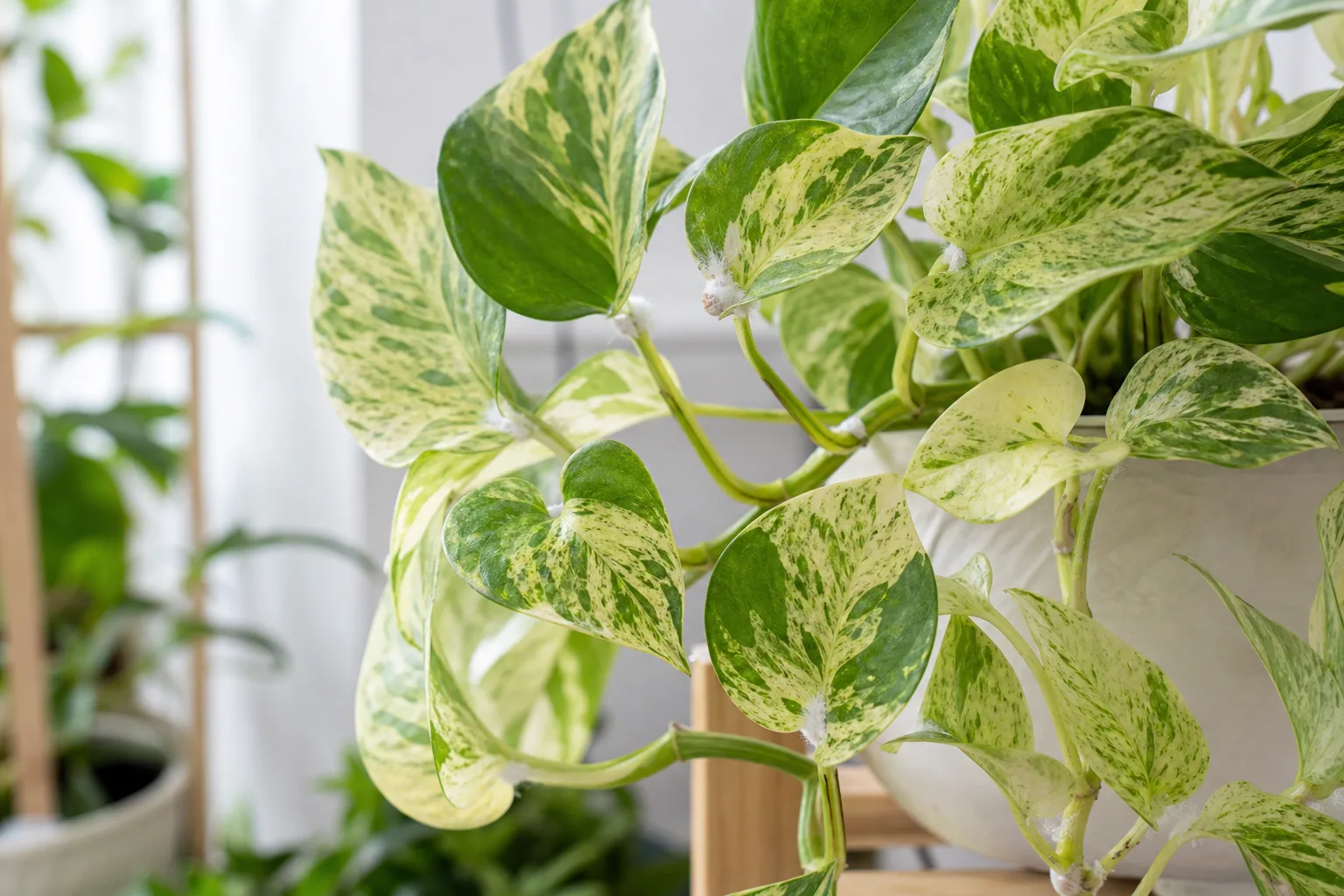
Mealybugs on Manjula Pothos: Causes, Checks & Fixes
This guide covers mealybugs on Manjula Pothos. See also the general Mealybugs guide, watering, and light pages for this plant.
Mealybugs on Manjula Pothos: Causes, Checks & Fixes
Quick answer
Mealybugs on Manjula Pothos (Epipremnum aureum ‘Manjula’, HANSOTI14) show up as white cottony clusters tucked into leaf axils where heart-shaped variegated leaves meet stems, along trailing nodes, and sometimes at the soil line or drainage holes. They suck sap from plant tissue and excrete sticky honeydew that can weaken vines, dull cream-and-white marbling, and attract black sooty mold on pale leaf sections.
First step: isolate the plant the same day you spot cottony wax. Move it away from other pothos, houseplants, and shared propagation stations before you dab, rinse, or spray anything. Once isolated, dab every visible wax cluster with a cotton swab dipped in 70% isopropyl alcohol, touching the pest directly-not pooling liquid on tender unfurling leaves or cream variegation.
Manjula is a slower-growing, heavily variegated pothos cultivar with broad wavy leaves splashed in white, cream, and green. Judge recovery by firm new shoots without fresh wax and clean variegated leaves unfurling normally, not by expecting old sticky blades to look perfect again. Full species context: Manjula Pothos overview. For the same pest on solid-green pothos, see mealybugs on Golden Pothos.
Why Manjula Pothos gets mealybugs
Mealybugs are common sap-sucking pests on houseplants that usually arrive on new nursery stock, shared tools, or nearby infested plants-not because Manjula is uniquely prone, but because its growth form gives pests protected hiding spots year-round indoors.
Manjula grows as a trailing aroid vine with heart-shaped leaves marbled in white, cream, and green along flexible stems. Leaf axils where petioles meet vines, overlapping trailing foliage, and the crown center are mazes of tight folds where mealybugs live in protected crevices. A quick glance at upper leaf surfaces misses wax buried in axils, behind hanging vines, or against the inside rim of a plastic pot.
Warm indoor rooms suit mealybugs year-round. Indoor ornamentals are especially vulnerable because mild temperatures keep all life stages active and natural enemies are absent. Manjula grows continuously in heated homes, so colonies spread along vines without the seasonal slowdown outdoor plants get.
Trailing architecture multiplies hiding sites. One mature Manjula vine can carry dozens of leaf joints-each axil is a sheltered feeding site. Citrus mealybug, the species most common on indoor ornamentals, favors these branch-crotch shelters on pothos and related Araceae houseplants.
Variegation camouflages early clusters. White and cream leaf sections make cottony wax harder to spot than on solid green golden pothos. Inspect axils from below when vines hang downward, and use bright side light on pale marbling where honeydew dulls the pattern before you see the insects.
Tender new growth attracts crawlers. Manjula’s slower flush concentrates soft unfurling leaves at vine tips. Over-fertilizing with nitrogen during spring growth pushes lush tissue where mealybugs prefer to lay eggs-that does not cause the infestation, but it explains why a recently fed specimen in a bright window can show wax before a neglected one in a dim corner.
Chronic overwatering or weak light does not cause mealybugs directly, but weak shoots in soggy mix are easier to overrun. Rule out overwatering if vines wilt while stems above soil look clean.
What mealybugs look like on Manjula Pothos
Early infestations hide in axils and nodes, so check these patterns together-not just the leaves facing your window:
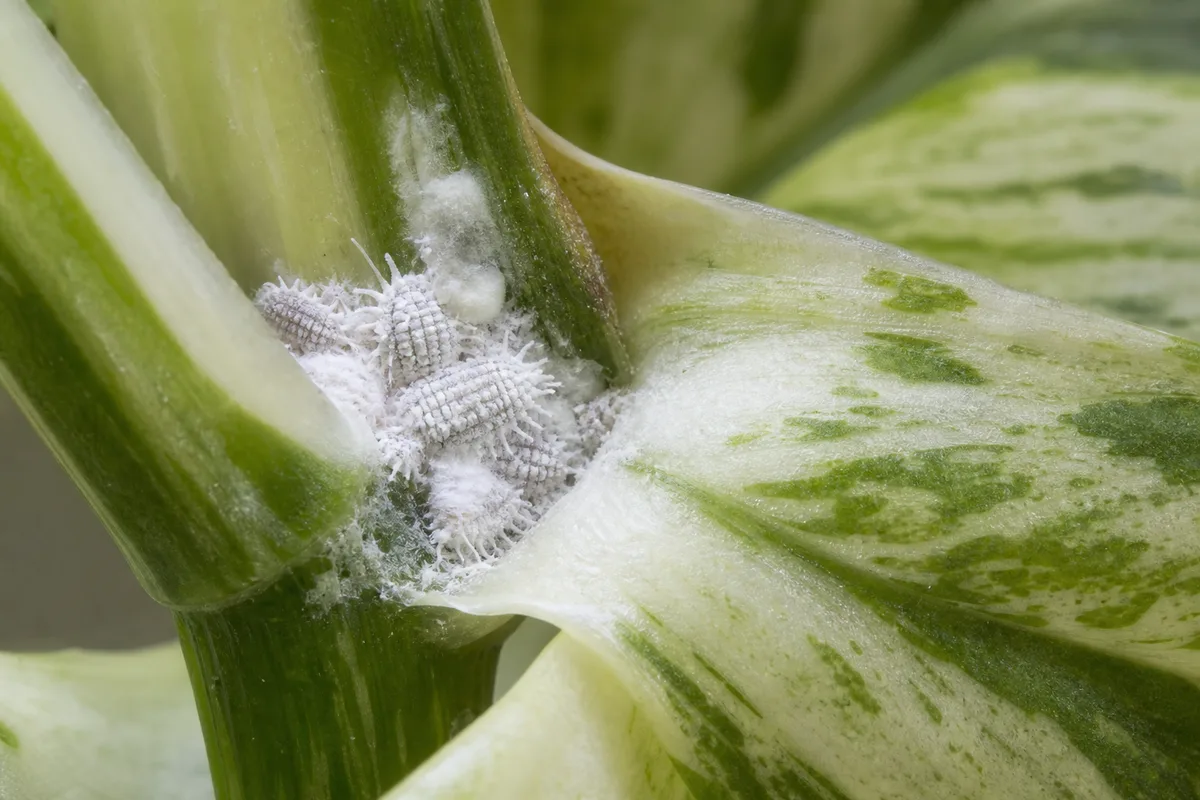
Mealybugs symptoms on Manjula Pothos - compare with healthy tissue on the same plant.
- White fluffy tufts in leaf axils where variegated petioles meet stems-not chalk dust on leaf surfaces
- Cottony patches along trailing nodes, aerial root bumps, and the crown center
- Flattened waxy insects under the fluff; slow movement when you part the cotton with a swab
- Sticky, shiny honeydew on cream or white leaf sections, pot rims, and shelves below hanging baskets-often the first visible clue on Manjula
- Black sooty mold on honeydew-coated pale leaves once mold spores colonize the sugar residue
- Yellowing or stunted unfurling leaves when shoot tips are heavily colonized
- White cottony material at drainage holes or just below the soil line-possible root-zone mealybugs
- Ant trails on stems or pot rims-ants protect mealybugs from predators while farming honeydew
Do not mistake normal aging for pest damage. Manjula naturally sheds older lower leaves in dim corners or after a growth flush. Mealybug stress shows cottony wax at multiple axil points, stickiness, and stalled clean new growth-not one yellow leaf on an otherwise wax-free vine.
How to confirm the cause
Do not treat from one white speck on a leaf. Use this inspection order:
- Isolate first - Move Manjula away from other plants before handling so crawlers do not walk to neighboring pots on a shared shelf.
- Leaf axils - Gently lift trailing vines with bright light and inspect every fold where petioles meet stems. Most Manjula mealybugs concentrate here before they spread to growing tips.
- Vine undersides and interior - Follow each stem through overlapping foliage and check both sides, including vines pressed against walls or furniture.
- Growing tips - Inspect unfurling variegated leaves at shoot ends; crawlers settle in soft tissue before leaves harden.
- Soil line and drainage - Lift the pot edge and check where mix meets stems, the inside rim of plastic pots, and drainage holes. Some mealybug species feed on roots as well as shoots.
- Disturbance test - Touch a white patch with a dry cotton swab. Live mealybugs smear pinkish or orangish body fluid when crushed-mineral deposits or dried sap do not.
- Neighbor check - Inspect every pothos, philodendron, and houseplant that shared a shelf, plant wall, or nursery shipment for axil wax or honeydew.
If stems feel firm, soil smells neutral, and the only issue is cottony wax with stickiness, mealybugs fit. If stems are soft at the base while soil stays saturated, rule out root rot before aggressive rinsing.
Lookalike symptoms to rule out
| What you see | Likely cause | Key difference |
|---|---|---|
| White cottony tufts in leaf axils | Mealybugs | Waxy filaments; pink smear when crushed; honeydew |
| Soft green/black pear-shaped insects on new shoots | Aphids | No fluffy wax coat; clusters on upright tender shoots (aphids on Manjula) |
| Fine webbing and yellow stippling in dry heat | Spider mites | No cotton clusters; webbing on leaf undersides in low humidity |
| Tiny flies over wet soil surface | Fungus gnats | Adults fly when disturbed; larvae in wet mix-not waxy axil tufts |
| Hard tan/brown bumps on stems | Scale | Smooth armored shells, not fluffy wax |
| Flat white film across leaf blades | Powdery mildew | Powder on surface; no insects in axils when disturbed |
| White crust on pot rim from hard water | Mineral buildup | Wipes dry; no live insects beneath |
First fix for Manjula Pothos
Isolate the plant and dab every visible cottony cluster with a cotton swab dipped in 70% isopropyl alcohol.
That single action removes adults you can reach, dissolves the wax coating, and confirms the pest is alive-not dust or dried sap-before you commit to sprays. UC IPM recommends dabbing small houseplant infestations with 70% or less isopropyl alcohol; Maryland Extension advises dabbing individual mealybugs with household alcohol on a cotton swab for light infestations. Touch only the pest-do not pool alcohol on cream variegation or let it run into saturated soil. Test on one leaf 24 hours before treating the whole plant-alcohol can burn foliage in hot direct sun, and pale Manjula sections are more sensitive than solid green pothos leaves.
Once isolated and dabbed:
- Work axil by axil along each trailing vine rather than spraying the whole canopy on day one
- Wipe honeydew from variegated surfaces with a cloth lightly moistened with plain water
- Check neighboring pothos and shelf companions you have not yet isolated
Do not apply systemic pesticides or heavy fertilizer on day one-excess nitrogen stimulates soft new growth where mealybugs prefer to lay eggs. Do not repot unless root-zone mealybugs are confirmed at drainage holes. Do not shower undiluted alcohol on the entire plant day one.
Step-by-step recovery
Week 1 - Isolate and alcohol dab
Move Manjula to a quarantine spot with its normal light level-do not simultaneously relocate to harsh new sun. Dab every visible cluster with alcohol swabs. Inspect axils and vine nodes daily. Empty saucers; follow normal watering rhythm without keeping soil soggy. Wear gloves when handling cut vines-pothos sap contains calcium oxalate crystals toxic to pets.
Weeks 2–4 - Repeat weekly and scout crawlers
Newly hatched crawlers are mobile and less waxy-weekly passes catch generations alcohol missed. Supplement with insecticidal soap sprayed into axils if colonies persist, avoiding direct soak on tender unfurling tips. Prune only heavily infested vine sections you can bag and discard-not the entire plant.
Week 4+ - Confirm clearance before returning
Call the plant clear when no fresh wax appears for two full weeks after the last dab session. Return to display placement gradually. Resume normal care rhythm-do not compensate with extra fertilizer while recovery finishes.
Recovery timeline
Visible insects should decline within two weeks of consistent alcohol dabbing. Expect three to four weekly passes before calling the plant clear-mealybug eggs hatch on staggered schedules. New variegated leaves may take two to six weeks in warm active growth to appear clean after axils clear. Old leaves with honeydew staining or sooty mold may not fully green again; judge success on wax-free new shoots and normal vine extension.
What not to do
- Do not spray the whole plant with undiluted alcohol or harsh household cleaners
- Do not move Manjula into harsh afternoon sun immediately after treatment-stressed cream sections burn easily
- Do not compost infested vine cuttings where crawlers can spread to outdoor pots
- Do not ignore ants-they protect mealybugs and farm honeydew across shelves
- Do not treat mealybugs and repot for root rot the same day unless both are confirmed
- Do not assume one alcohol pass cleared root-zone mealybugs-unpot only when drainage holes show wax
How to prevent mealybugs on Manjula Pothos
- Quarantine new nursery Manjula for two weeks on a separate shelf before placing near other pothos
- Inspect weekly during watering-axils and vine nodes first, not just leaves facing the window
- Match watering to dry-down: wet soil in dim corners produces soft growth pests prefer
- Provide bright indirect light so the plant grows firm, not etiolated and tender
- Avoid excess nitrogen from heavy fertilizer during pest pressure-lush shoots attract crawlers
- Keep hanging baskets spaced so you can see stem bases and drainage holes during routine care
- Clemson HGIC notes pothos may be affected by mealybugs indoors-scout any new Epipremnum cultivar on the same display
When to use this page vs other Manjula Pothos guides
- Manjula Pothos watering guide - Use for routine moisture checks before assuming mealybugs is the main issue.
- Manjula Pothos problems hub - Browse all 40 common issues on this species.
- Sticky Leaves on Manjula Pothos - Different entry point when symptoms overlap with mealybugs.
- Yellow Leaves on Manjula Pothos - Different entry point when symptoms overlap with mealybugs.
- Slow Growth on Manjula Pothos - Different entry point when symptoms overlap with mealybugs.
Related Manjula Pothos guides
- Manjula Pothos overview
- Manjula Pothos watering
- Manjula Pothos light
- Manjula Pothos soil
- Sticky Leaves on Manjula Pothos
- Yellow Leaves on Manjula Pothos
- Slow Growth on Manjula Pothos
- Spider Mites on Manjula Pothos
- White Spots on Manjula Pothos
- Manjula Pothos problems
Related tool
Use the Pest Identifier Tool to narrow causes for mealybugs on this plant before changing multiple variables at once.