Overwatering on Manjula Pothos: Causes, Checks & Fixes
Quick answer
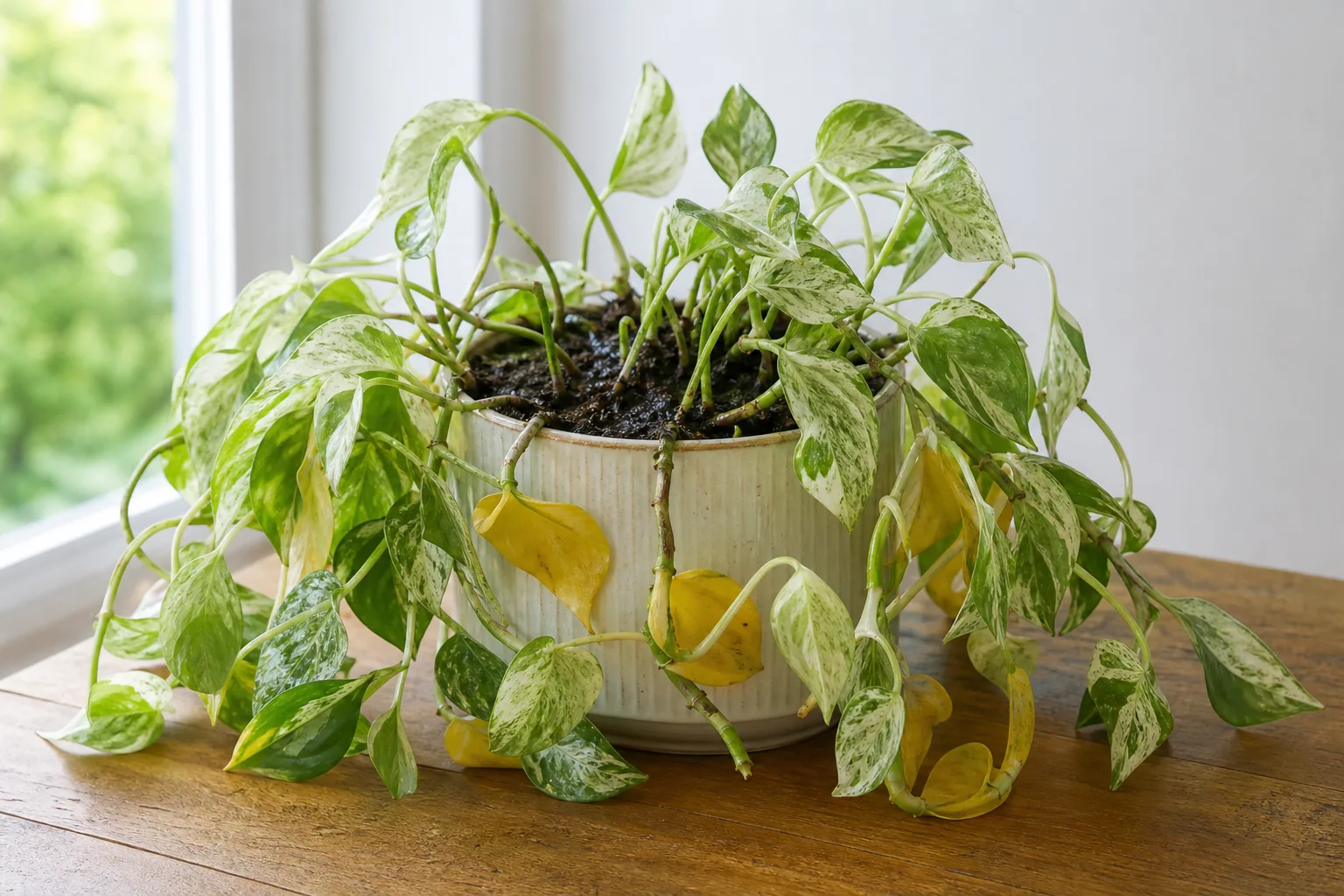
Overwatering on Manjula Pothos shows as limp vines on wet mix, yellow lower leaves, and fading cream variegation on new growth. First step: stop watering until the top 4–5 cm dries, move to brighter indirect light, and inspect roots if soil has stayed wet for a week or more.
Overwatering on Manjula Pothos: Causes, Checks & Fixes
This guide covers overwatering on Manjula Pothos. See also the general Overwatering guide, watering, and light pages for this plant.
Overwatering on Manjula Pothos: Causes, Checks & Fixes
Quick answer
Overwatering on Manjula Pothos (Epipremnum aureum ‘Manjula’, PP27,117) is not one heavy drink-it is repeated watering before the root zone dries. This patented, slow-growing cultivar carries heavy cream and white variegation with less chlorophyll than solid-green pothos, so it uses water more slowly in typical indoor light. When mix stays wet, roots lose oxygen and fail to absorb moisture. The result is the wilt paradox: limp trailing vines on soggy soil that look thirsty but worsen if you add more water.
First step: stop watering until the top 4–5 cm of mix feels dry and the pot is noticeably lighter. Move the plant to brighter indirect light so it metabolizes moisture at a realistic pace, empty any saucer water, and inspect roots if soil has stayed wet for a week or more.
What overwatering looks like on Manjula Pothos
Manjula’s wavy, painterly leaves make water stress easy to misread. Overwatering and underwatering both cause limp vines-but the soil check tells them apart.
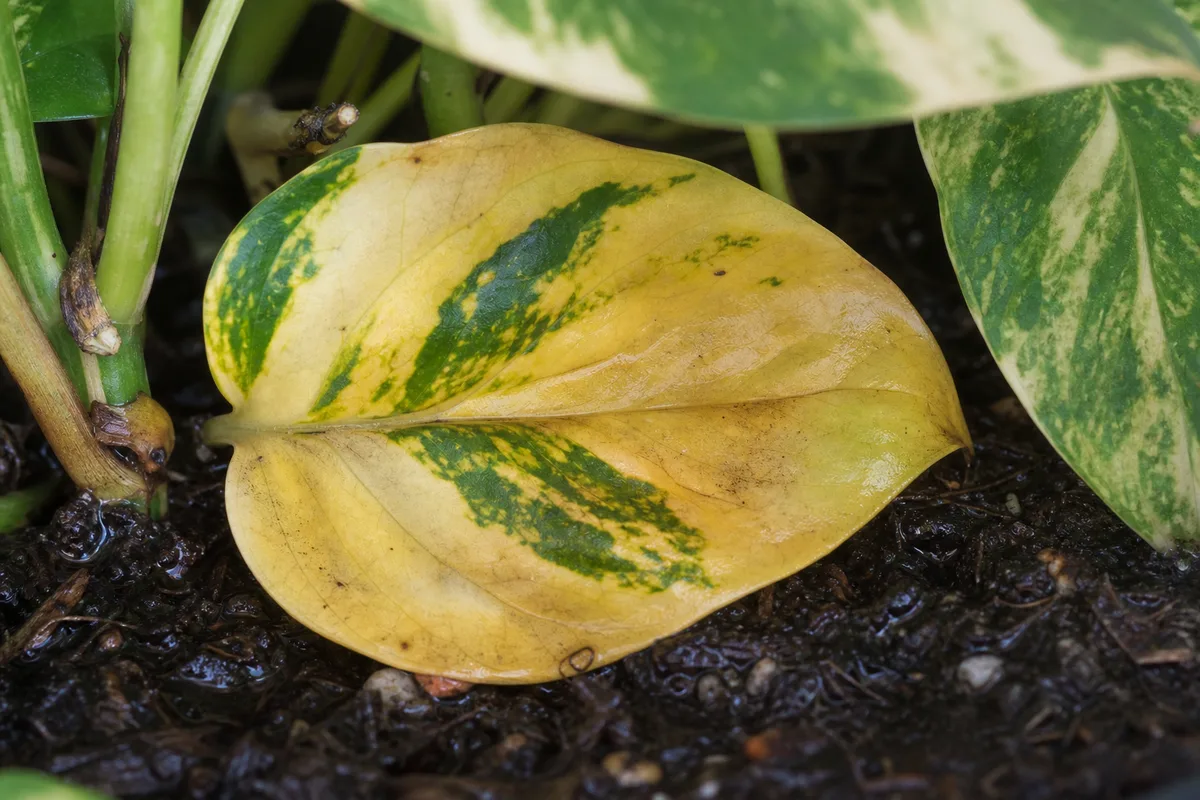
Overwatering symptoms on Manjula Pothos - compare with healthy tissue on the same plant.
Early signs
- Limp vines with wet mix - The pot feels heavy days after watering while leaves hang instead of holding their gentle arch
- Yellow lower leaves - Older leaves near the soil line yellow first, often along long bare stems
- Cream sectors dull first - White and cream patches on new or stressed leaves look washed out or translucent before solid green tissue changes
- Slow new growth - Leaves stall mid-unfurl or emerge smaller than usual while soil stays damp
- Heavy pot weight - Lifting the container feels noticeably heavier than a properly watered plant at the same size
Advanced signs
- Sour smell from drain holes - Anaerobic, oxygen-starved mix
- Surface mold or fungus gnats hovering near the pot - Chronic moisture warning, not a separate pest crisis
- Variegation collapse on new leaves while mix stays wet - Pale tissue fails before green sectors
- Soft stems at nodes - Rot advancing up the vine; escalate to root rot protocol
A single yellow leaf at the base of an otherwise firm long vine can be normal aging. The overwatering pattern is spreading yellowing plus persistent wetness, not one dropped leaf on a healthy trailing stem.
Why Manjula Pothos is vulnerable
Slower patented growth and the low-light water trap
Manjula is a slower-growing patented cultivar than Golden Pothos. Heavy variegation means less photosynthetic tissue per leaf, so the plant transpires more slowly in the same window. That is an advantage when you tend to overwater-but it also means Manjula in a dim corner can hold moisture so long that roots suffocate while you still follow a weekly schedule written for a brighter-room Golden Pothos.
Manjula needs bright indirect light to hold its variegation. In weak light the plant drinks even less while soil stays damp, and low light can push pothos toward greener growth as variegation fades. Calendar watering in shade is one of the most common routes to chronic wet mix on this cultivar.
Setup mistakes that extend wet cycles
- Oversized pots holding excess wet mix around a small root ball
- Peaty soil without perlite that stays spongy for days
- Saucers left full or decorative cachepots with no drainage
- Hanging baskets in cool dim rooms that dry slowly compared with warm window placements
- Fresh repot into heavy wet mix plus an immediate deep soak - pothos tolerates many stresses, but excess water right after repotting adds unnecessary strain when roots are already adjusting
Cool winter rooms below about 18°C (65°F) slow growth further, yet many owners keep summer watering frequency through dormancy.
How to confirm the cause
Work through these checks in order before changing several variables at once:
- Moisture at 4–5 cm - Stick your finger or a chopstick into the mix. Persistent dampness at that depth while leaves yellow confirms overwatering. Bone-dry at depth points to underwatering instead.
- Pot weight - Compare to how the pot felt after your last thorough watering. A chronically heavy container supports wet roots even when the surface looks merely moist.
- Wilt paradox check - Limp vines with wet soil mean root uptake failure, not thirst. Wilting with saturated mix indicates damaged roots, not drought.
- Light level - Fading variegation plus wet soil suggests low light is slowing water use. See our light guide before blaming humidity alone.
- Drainage - Standing water in saucers or sealed outer pots keeps roots anaerobic. Empty saucers within thirty minutes of every drink.
- Root spot-check - Unpot if smell, node softness, or rapid yellowing appears. Firm pale roots with partially dry soil mean underwatering; brown mushy roots mean root rot.
Lookalike symptoms
| What you see | Soil at 4–5 cm | Pot weight | Likely cause |
|---|---|---|---|
| Limp vines, yellow lower leaves | Stays damp days | Heavy | Overwatering |
| Limp vines, crispy edges | Bone dry | Light | Underwatering |
| Limp vines, sour smell, soft nodes | Wet throughout | Heavy | Root rot (advanced overwatering) |
| Leggy sparse vines, pale variegation | Moist or dry | Normal | Low light |
| One yellow leaf at vine base | Moist, firm stems | Normal | Normal aging |
| Limp vines, fungus gnats | Surface stays wet | Heavy | Chronic overwatering |
If symptoms overlap-limp vines that could be thirst or wet roots-always pair leaf posture with moisture at depth, as our drooping leaves guide explains for the earlier stage of the same root-zone logic.
First fix for Manjula Pothos
Stop watering and let the top 4–5 cm of mix dry before the next drink.
Move the plant to brighter indirect light so Manjula uses moisture steadily and holds cream variegation-do not jump to direct sun, which scorches pale sectors. Empty saucer water immediately. If soil has smelled sour for days or stems feel soft at nodes, unpot, trim mushy roots with sterilized scissors, and repot into fresh airy mix sized to the remaining root mass.
Do not fertilize, mist heavily, or move into a larger pot on day one unless roots are clearly rotting.
Mild, moderate, and severe recovery paths
Mild - Wet soil but firm roots, no sour smell, stems firm at nodes:
- Pause watering until the top 4–5 cm dries.
- Improve light and airflow so dry-down is predictable.
- Resume watering only when weight and depth checks pass-follow our watering guide rhythm.
Moderate - Spreading yellow lower leaves, heavy pot for a week+, limp vines on wet mix, but nodes still firm:
- Complete the mild steps above.
- After seven to ten days of corrected dry-down, if yellowing continues, unpot and rinse old mix from roots.
- Trim any brown or translucent roots; keep firm white or tan tissue.
- Repot into a clean pot matched to root size with well-draining mix containing 20–30% perlite. Water once lightly to settle, then wait for partial dryness again.
Severe - Sour smell, soft nodes, collapsing variegation on new growth, or more than half the root mass mushy:
- Unpot immediately and trim all rotted tissue.
- Repot only the firm root mass-or discard the root ball and restart from firm vine cuttings with visible variegation.
- Follow our propagation guide for water or perlite rooting as insurance.
- Escalate fully to root rot steps if stems blacken from the soil line upward.
Hold fertilizer until new variegated leaves appear for two weeks without further decline.
Step-by-step recovery
After the first dry-down pause:
- Wait for stability - Do not water again until the top 4–5 cm is dry. For badly saturated mix, tip the pot briefly to drain excess, then wait.
- Improve light - Shift to bright filtered light. Manjula in dim corners holds moisture dangerously long.
- Inspect roots if symptoms persist - Continued yellowing after a week of dry-down means unpotting, not another dry spell alone.
- Repot only when needed - Use a pot one size up at most, with fresh perlite-amended mix. See repotting for timing after recovery stabilizes.
- Remove dead foliage - Pull fully yellow leaves to redirect energy. They will not re-green. Pothos is toxic to cats and dogs-wear gloves when handling damaged tissue if pets may contact trimmings.
- Save backup cuttings - If stem bases soften, take firm nodes with cream variegation and root in water. Epipremnum vines root easily in water once tissue is healthy.
Recovery timeline
Week 1–2 (mild): Heavy pot lightens, yellowing slows, and vines regain slight stiffness once dry-down rhythm and light improve. Old yellow leaves stay yellow.
Week 3–4: New leaves may emerge smaller or slower on this slow cultivar. Steady variegation on fresh growth means the schedule is working.
Month 2+: Normal leaf size and stable cream-and-green pattern on new tips signal full recovery. Persistent limpness on moist soil means re-inspect roots-not more water.
If more than half the root mass was mushy, recovery may take a full growing season. Cool dim rooms extend timelines; warm bright indirect light speeds dry-down and new tip growth. Judge success by new variegated leaves, not old yellow tissue turning green again.
What not to do
- Do not water because vines look sad when soil is already wet - That deepens root stress and worsens the wilt paradox.
- Do not move into harsh direct sun to “dry it out” faster - Variegated Manjula leaves scorch quickly.
- Do not repot into a much larger container - Extra wet mix around a small root ball prolongs saturation.
- Do not leave runoff sitting in saucers - Roots need oxygen between drinks.
- Do not fertilize a stressed plant - Salts on failing roots add injury without fixing moisture rhythm.
- Do not stack repotting, heavy pruning, and feeding the same week on a vine still recovering from wet roots.
How to prevent overwatering next time
Build prevention around reading the pot, not the calendar:
- Check dryness at 4–5 cm before every major watering-the same standard in our watering guide. Clemson HGIC recommends allowing soil to dry between waterings for pothos; on Manjula that means partial dry-down at depth, not bone-dry peat that becomes hard to rewet.
- In bright summer placement, expect roughly every 7–10 days; in cooler winter rooms, stretch toward 10–14 days-always confirm with finger and weight checks.
- Use well-draining mix with 20–30% perlite and pots with open drain holes.
- Empty saucers within thirty minutes of watering.
- Treat fungus gnats or mold on soil as moisture warnings-lengthen the dry-down interval before reaching for pesticides.
- Refresh compacted mix every one to two years before it holds water like a sponge.
A trailing Manjula in a hanging basket near a warm window dries faster than one in a deep cachepot on a dim shelf. Adjust checks to your setup, not a generic weekly habit.
Manjula care cross-check
Overwatering prevention depends on the rest of the care stack:
- Light - Bright indirect light strong enough to maintain variegation also helps the plant use water predictably.
- Soil - Chunky, perlite-rich mix drains between drinks instead of staying spongy.
- Watering - Dry-check rhythm is the primary prevention tool; this problem page owns rescue when that rhythm fails.
- Pot sizing - Match container to root mass, not vine length. Oversized pots are a common hidden trigger.
When to worry
Escalate immediately if:
- Stems soften at nodes while mix stays wet
- Soil smells rotten from drain holes
- Several leaves yellow within a week despite a dry-down pause
- New growth turns mostly green while the whole plant declines in low light with wet soil
- Vines collapse from the base and the root ball feels mushy throughout
At that stage, mild dry-down alone is not enough-unpot, assess roots, and follow root rot recovery. If the original pot cannot rebound, salvage variegated node cuttings before the last firm tissue fails.
For overlapping yellow leaves or early wilting before full collapse, use those guides for symptom-specific escalation while keeping the wet-soil root-zone logic from this page.
Conclusion
On Manjula Pothos, overwatering is a volume-and-timing error on a slow variegated vine-not a death sentence if caught while roots are still firm. Confirm moisture at 4–5 cm, recognize limp vines on wet mix as root failure rather than thirst, stop watering until partial dry-down, and pair drainage with enough light that the plant actually uses water. Recovery shows up in new cream-and-green leaves at vine tips, not old yellow ones turning green again.
Related Manjula Pothos guides
- Manjula Pothos overview - species context, variegation, and full care map
- Watering - dry-check rhythm and prevention
- Underwatering - dry pot cycles and lookalike triage
- Root rot - mushy roots and sour smell escalation
- Drooping leaves - early limp vines before full collapse
- Wilting - full vine collapse and soft nodes
- Yellow leaves - color change with wet-soil patterns
- Fungus gnats - chronic moisture warning
- Mold on soil - surface growth on wet mix
- Soil - perlite mix and drainage
- Repotting - when and how after root rescue
- Propagation - salvage cuttings from failing plants
- Light - variegation and water-use coupling
- Pothos overwatering (genus guide) - Epipremnum-wide context
Related tool
Use the Root Rot Risk Checker to narrow causes for overwatering on this plant before changing multiple variables at once.