Mold on Soil on Manjula Pothos: Causes, Checks & Fixes
Quick answer
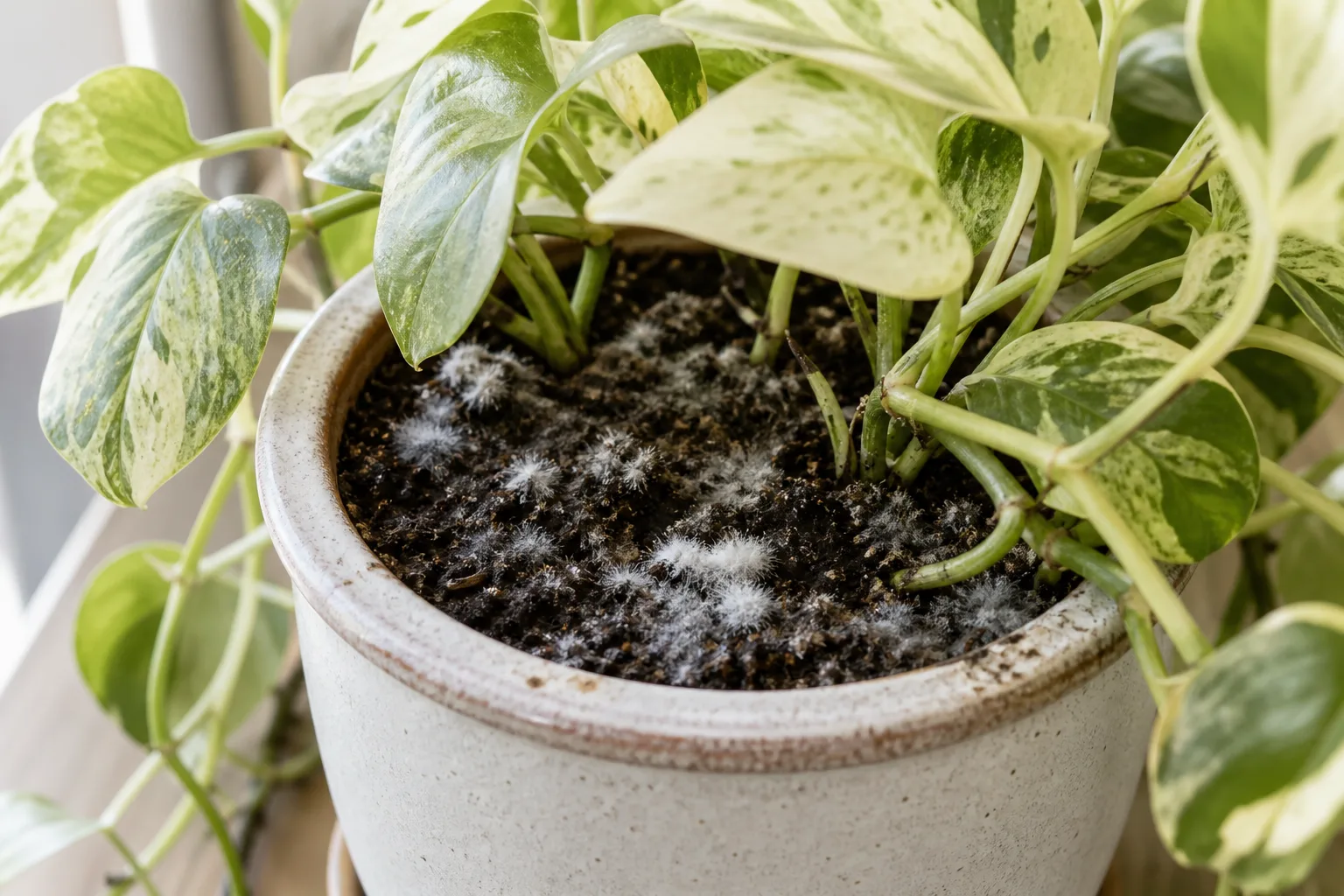
Mold on soil surface on Manjula Pothos is usually harmless white or gray fungus on chronically damp mix-not a leaf disease. First step: scrape the surface, stop watering until the top 4–5 cm feel dry, and move to brighter indirect light.
Mold on Soil on Manjula Pothos: Causes, Checks & Fixes
This guide covers mold on soil on Manjula Pothos. See also the general Mold on Soil guide, watering, and light pages for this plant.
Mold on Soil on Manjula Pothos: Causes, Checks & Fixes
Quick answer
White or gray fuzz on the soil surface of a Manjula Pothos pot is almost always saprophytic mold-a fungus breaking down dead organic matter in the mix, not a disease attacking the variegated heart-shaped leaves or trailing vines above. Epipremnum aureum ‘Manjula’ (PP27,117) can look perfectly healthy while the top layer stays damp enough for spores to bloom.
First step: scrape off the top 1–2 cm of moldy soil and stop watering until the top 4–5 cm of mix feel dry. That single action removes active growth and breaks the wet cycle that keeps mold-and often fungus gnats-coming back. Do not reach for fungicide on day one; fix moisture and airflow first.
Mold on soil vs. overwatering on Manjula Pothos
Surface mold and overwatering share a root cause-soil that stays wet too long-but they are not the same diagnosis.
| Signal | Surface mold alone | Overwatering / root stress |
|---|---|---|
| Soil surface | White/gray fuzz | May also show mold |
| Stems and nodes | Firm along trailing vines | Soft, mushy, or collapsing at nodes |
| Leaves | Variegated blades firm; cream sectors intact | Widespread yellowing on lower leaves, limp vines on wet mix |
| Smell | Musty, earthy | Sour, rotten from drain holes |
| Fungus gnats | Common | Very common |
| Recovery after scraping + dry-down | Mold gone in 1–2 weeks | Leaves keep declining |
Mold on houseplant soil often appears when organic potting mix stays constantly moist on the surface. Manjula Pothos is a slower-growing, heavily variegated cultivar with less chlorophyll than solid-green pothos, so it uses water more slowly in typical indoor light. Calendar watering keeps the surface soggy while cream-and-white leaves still look fine above. Mold is the early warning; root rot follows if wet feet continue.
What mold on soil looks like on Manjula Pothos
Check for this pattern together-not just one fuzzy spot after a single heavy watering:
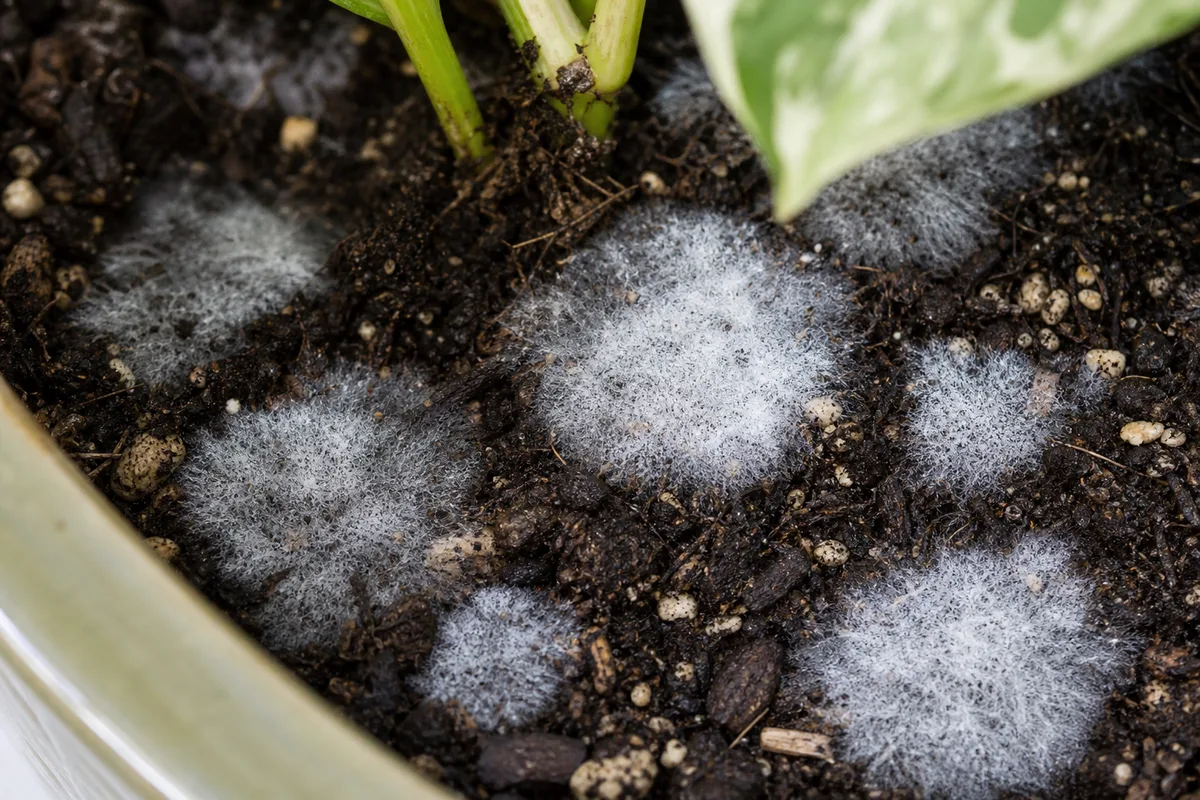
Mold on Soil symptoms on Manjula Pothos - compare with healthy tissue on the same plant.
- White, gray, or occasionally green-tan fuzz on the soil surface, sometimes in circular patches
- Growth concentrated where fallen variegated leaves or peat-rich top dressing decay on the mix
- No powdery coating on leaf blades-mold is on mix, not foliage
- Fungus gnats flying up when you water or disturb the surface
- Musty smell when you scrape the top layer
- Mold returning within days of scraping if the surface never dries
- Later plant stress if wetness persists: yellow lower leaves, limp vines on damp soil while cream sectors dull first
The wavy, painterly variegation on Manjula leaves often stays firm while the pot surface tells the story. That is the hook that makes Manjula owners miss chronic wetness until mold or gnats appear.
Lookalike symptoms on the soil surface
Do not mistake these common pot-surface materials for mold:
- Perlite - White granules that do not spread or return after scraping
- Lime or dolomite - Fine white dust mixed through the blend; static, not fuzzy
- Slow-release fertilizer prills - Uniform beads that do not grow outward
- Mineral crust from hard tap water - Flat, chalky film rather than soft fuzz
Mold spreads across the surface and reappears when moisture stays high. If you scrape and the same fuzzy patch returns within days on still-damp mix, you are dealing with fungus-not inert media.
Why Manjula Pothos soil grows mold
Manjula soil molds when the top layer never dries between waterings. Common triggers on this trailing cultivar:
Calendar watering without a depth check. Pothos prefers moderate moisture with dry-down between drinks. Many growers water weekly year-round while winter light and cool rooms slow evaporation-the surface stays damp for two weeks even when variegated vines look healthy.
Dense, peat-heavy mix without enough perlite. Standard potting soil holds moisture at the surface-the layer where saprophytic fungi and gnat larvae thrive. Manjula’s slower metabolism does not pull water from mix as fast as Golden Pothos in the same pot.
Trailing vines shading the pot. Long Manjula vines in hanging baskets drape over the rim and block airflow to the soil line, slowing evaporation at the exact layer where mold grows.
Low light and poor airflow. Manjula in dim corners or tight shelves dries slowly; bright indirect light helps the vine use moisture faster and keeps variegation crisp. Lower light can also push variegated pothos toward greener growth, which masks stress signals on the leaves while soil stays wet.
Misting the soil or over-misting leaves so water pools on the surface after each session.
Oversized pots. Manjula often carries a modest root system relative to its bushy top growth-excess wet mix around a small root ball stays damp at the top for weeks. This is common when repotting trailing pothos into decorative cachepots one size too large.
Recent repot into wet mix. Fresh peat-heavy soil plus immediate deep watering can leave the surface anaerobic for days. Excess water right after repotting adds stress to pothos.
How to confirm the cause
Work through these checks before treating mold as a leaf disease or reaching for fungicide:
- Location - Fuzz on soil only; leaf blades clean and firm with normal cream-and-green variegation
- Moisture at 4–5 cm depth - Insert your finger or a skewer. Wet days after the last watering confirms chronic moisture, not a one-time splash
- Pot weight - Heavy days after watering; full saucer or cachepot holding runoff
- Drainage holes - Confirm holes are open and not blocked by roots or gravel plugs
- Smell - Earthy surface mold vs sour root-zone odor from drain holes (escalate if sour)
- Stem and node check - Firm nodes along trailing vines mean roots likely still OK; soft sections suggest overwatering
- Scrape test - Remove the top 1–2 cm. If fuzzy growth is only in the top layer and lower mix smells neutral, saprophytic mold is likely
- Gnat correlation - Adult gnats plus persistent surface dampness confirm the wet-soil cycle mold and larvae both exploit
Confirmed surface mold fits when stems are firm, leaves are otherwise normal, fuzz is limited to the top 1–3 cm, and scraping plus dry-down stops regrowth within two weeks.
First fix for Manjula Pothos
Scrape off the top 1–2 cm of moldy soil and stop watering until the top 4–5 cm of mix feel dry.
That removes active fungal growth and breaks the wet surface layer. Let the surface dry before the next watering-for Manjula, that usually means waiting until a finger inserted 4–5 cm deep feels dry throughout, not just the scraped top. The same standard applies in our watering guide.
Once scraped and drying:
- Remove fallen variegated leaves and organic debris from the pot surface
- Empty the saucer after every watering; never let the pot sit in runoff
- Move to brighter indirect light if the vine has been in a dim corner-avoid harsh direct sun the same day
- Improve airflow-lift trailing vines off the pot rim, space hanging baskets, crack a window, or run a fan on low nearby
- Top-dress with a thin layer of dry perlite if you want a faster-drying surface after scraping
Do not flood the pot with fungicide on day one-fix moisture first. Do not repot immediately unless stem softness or sour smell confirms root rot. Do not mist the soil or bottom-water into a full saucer while clearing mold.
If mold returns weekly after four dry-down cycles, repot into fresh perlite-rich mix sized to the root mass-not a larger pot.
Step-by-step recovery
Day 1 - Scrape, discard, and pause water
Scrape moldy top layer into a bag-not the compost pile indoors. Wipe the pot rim. Lift trailing vines off the soil surface so airflow reaches the mix. Move the plant to slightly brighter indirect light if it has been in a dim corner, but avoid harsh direct sun the same day.
Days 2–14 - Dry-down and monitor
Check moisture at 4–5 cm depth every few days. When dry, water thoroughly until runoff exits drainage holes, then empty the saucer within 30 minutes. Watch for fungus gnat decline as the surface stays dry. Judge plant health by firm variegated new growth at vine tips-not by old soil appearance.
Week 2+ - Adjust long-term rhythm
Match watering to season: less in winter when this slow cultivar grows slowly, more in bright summer growth. If mold returns within days, the interval is still too short or drainage needs improvement-see soil and repotting guides.
Recovery timeline
Surface mold should not return within one to two weeks once the top layer stays dry between waterings. Fungus gnats often decline over the same period. Cream-and-green new leaves at vine tips should stay firm; yellowing should not spread on still-wet mix.
If mold reappears within 3–5 days of scraping, the root zone is still too wet-treat as an overwatering problem, not cosmetic mold alone.
When to worry
Escalate beyond scrape-and-dry if you see any of these:
- Mold returns within days after four proper dry-down cycles
- Stems soften at nodes while mix stays wet
- Lower leaves yellow in clusters on heavy, damp soil
- Sour smell from drain holes-not the earthy must of surface mold alone
- New variegation collapses while the pot still feels heavy days after watering
Those signs point to advancing root stress or rot. Pause water, inspect roots, and follow the overwatering and root rot guides rather than scraping again.
What not to do
- Do not spray the soil with vinegar, hydrogen peroxide, or cinnamon and call it fixed-dry-down solves the cause
- Do not cover mold with decorative stones without fixing moisture-the fungus persists underneath
- Do not assume firm variegated leaves mean roots are fine forever-chronic wet soil damages roots before stems soften at nodes
- Do not bottom-water into a saucer that stays full for days
- Do not mist the soil surface while clearing mold-water pools where spores thrive
- Do not repot into a larger decorative pot on day one unless roots are mushy or mix smells sour
How to prevent mold on Manjula Pothos soil
- Water only when the top 4–5 cm are dry-use finger depth, not calendar days
- Use well-draining mix with 20–30% perlite per the soil guide
- Empty saucers within 30 minutes of every watering
- Give bright indirect light so the slow-growing vine uses water faster and variegation stays crisp
- Lift trailing vines off the pot rim in hanging baskets to improve airflow at the soil line
- Remove fallen leaves from the soil surface during routine care
- Reduce watering frequency in winter when growth slows-the most common overwatering season for variegated pothos
- See mold on soil on golden pothos for the same symptom on solid green pothos in faster-draining setups
Related Manjula guides
For overlapping symptoms, use these pages together:
How we verified this guide
Author: sai-ananth · Reviewer: LeafyPixels Review Board · Reviewed: 2026-06-16
Plant problem guidance is reviewed against botanical references, extension resources, and LeafyPixels plant-care data before publication. This guide draws on Ask Extension saprophytic mold guidance, University of Minnesota Extension mold and fungus-gnat resources, NC State Epipremnum aureum, Penn State pothos houseplant care, and Clemson HGIC pothos cultivar guidance. Claims were checked against those sources before publication. Symptom patterns reflect Manjula’s slower patented growth, heavy variegation, and wet-soil dry-down-not generic houseplant templates.