Slow Growth on Money Tree: Causes, Checks & Fixes
Quick answer
Slow growth on Money Tree is often normal in winter or a sign of too little light-not hunger. First, check the season and whether the plant gets bright indirect light most of the day before changing water or fertilizer.
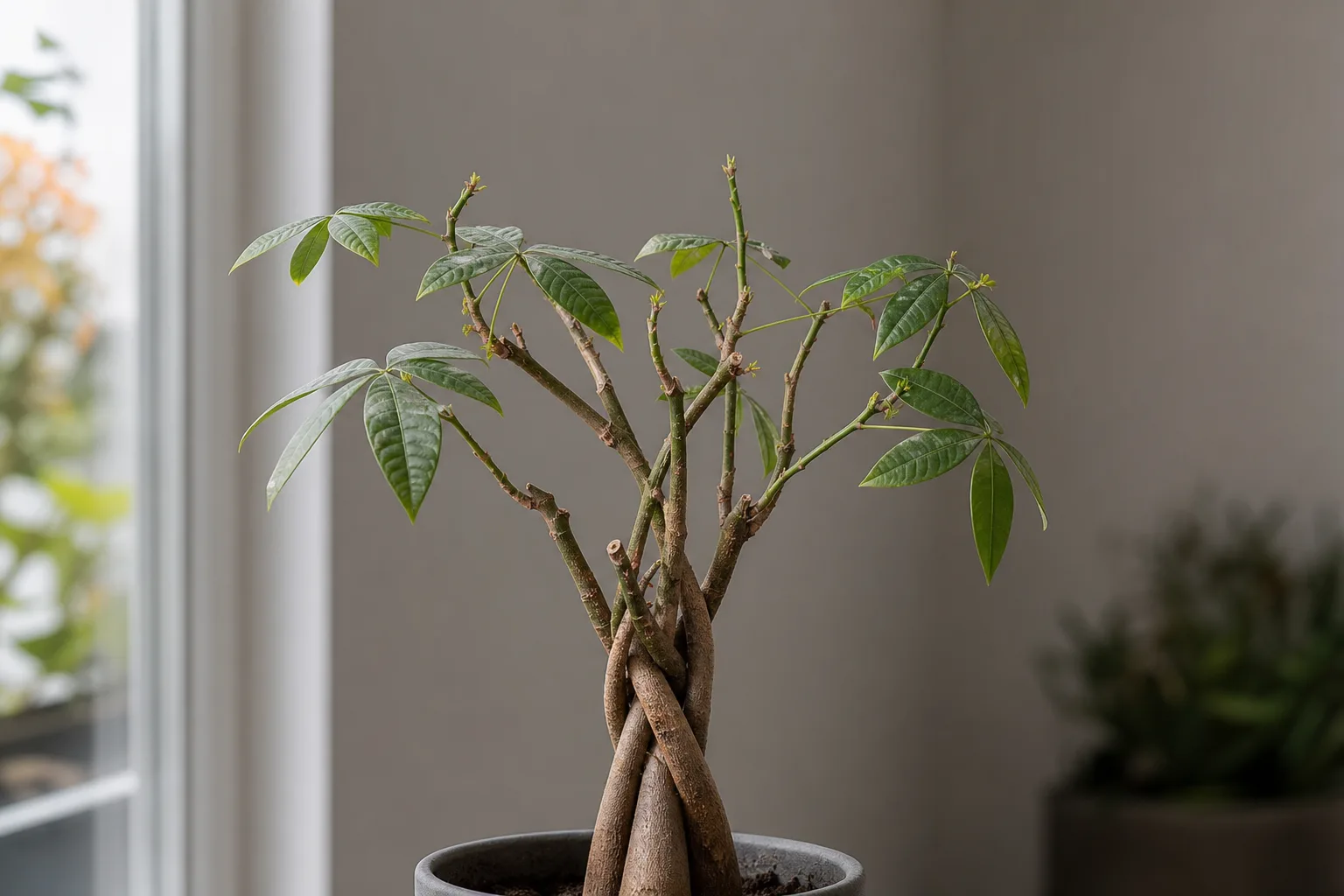
Slow Growth on Money Tree: Causes, Checks & Fixes
This guide covers slow growth on Money Tree. See also the general Slow Growth guide, watering, and light pages for this plant.
Slow Growth on Money Tree: Causes, Checks & Fixes
Quick answer
Slow growth on Money Tree (Pachira aquatica) needs context before you change anything. A healthy tree in Money Tree light guide produces new compound leaves at stem tips through spring and summer; in fall and winter it often rests with little or no new foliage-and that pause is normal, not failure.
First step: confirm the season and your light. If it is the active half of the year and the plant sits more than a few feet from a bright window-or in a north-facing room with no supplement-move it to the strongest indirect-light spot you have and note the date. Do not reach for fertilizer, a bigger pot, or extra water until you know whether the tree is resting for winter or genuinely starved for light.
What slow growth looks like on Money Tree
Money Tree is a moderate indoor grower when conditions are right. Houseplants typically reach 6–8 feet over many years, not inches per week. Slow growth means the canopy stays visually static while the plant otherwise looks alive.
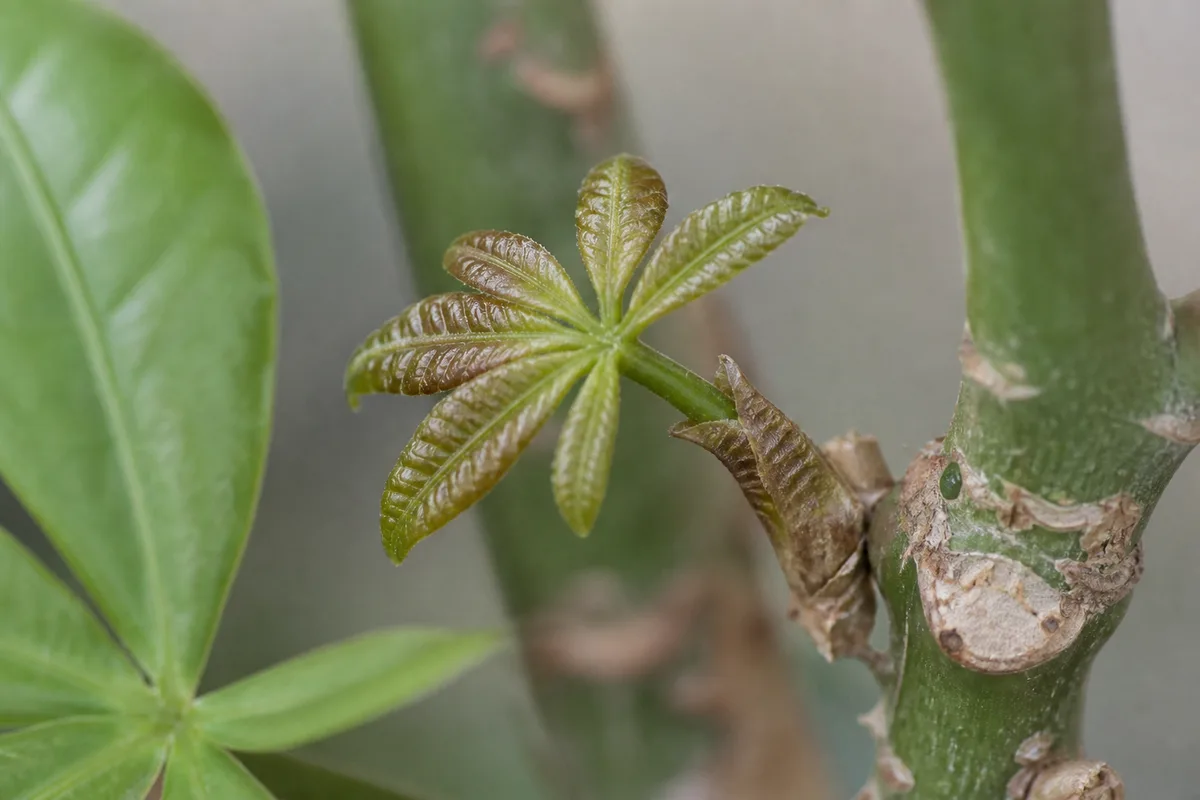
Slow Growth symptoms on Money Tree - compare with healthy tissue on the same plant.
Watch for these patterns:
- No new leaf clusters at branch tips for four to eight weeks during spring or summer
- Smaller new leaflets than older compound leaves on the same stem
- Long gaps between nodes where new shoots should appear
- One-sided lean toward the brightest window without fresh growth on the shaded side
- Static height through an entire warm season despite firm green foliage
What slow growth usually is not: sudden mass leaf drop, a soft or squishy braided trunk, black stems, or sticky residue on leaves. Those point to watering stress, rot, or pests-not a simple growth pause.
Normal winter look: From late fall through early spring, many Money Trees produce few or no new leaves while existing foliage stays green. Lower leaves may yellow and drop occasionally. The braided trunk should remain firm. That seasonal stall is rest, not decline.
Why Money Tree gets slow growth
Insufficient light (most common fixable cause)
Money Tree evolved as a tropical canopy tree but indoors it behaves like a foliage houseplant that runs on light. Missouri Botanical Garden notes houseplants perform best in bright light with moderate, even moisture. In dim corners, far from windows, or behind furniture, photosynthesis drops and new tissue simply does not get built.
Low light reduces photosynthesis and leaf size; plants stretch or stall rather than produce compact new shoots. Money Tree tolerates medium light short term, but months of weak exposure produce a tree that looks healthy yet never adds height or fresh leaf clusters.
Seasonal rest
Shorter days and cooler indoor temperatures signal rest. Growth slows or stops even in heated homes because day length and light intensity fall. Pushing summer watering or monthly fertilizer during this window wastes effort and can keep soil wet when roots are barely active-a common path to yellow leaves and root stress.
Root-bound or exhausted pot
Money Tree prefers snug pots and repots every two to three years, but roots eventually circle the container. When the root mass fills the pot, uptake efficiency drops and new shoots wait for space. Signs overlap with slow growth: the pot dries within a day or two after watering, roots peek from drainage holes, and water runs straight through dry pockets.
Chronic watering stress
Paradoxically for a wetland native, container Money Trees need drying cycles-standing water is not tolerated indoors. Soil that stays wet for days when growth is slow limits oxygen at the roots. The plant may show yellow lower leaves, fungus gnats, or a musty smell while producing almost no new growth. Underwatering causes droop and wrinkled trunk tissue but is less often the sole reason for months of zero new leaves if older foliage stays turgid.
Oversized pot
A pot much larger than the root ball holds a wet outer ring the roots never reach. Energy goes to surviving soggy margins instead of pushing new leaves. Slow growth plus soil that stays damp more than ten days after one watering fits this pattern.
Recent repot or move
Money Tree repotting guide and relocation pause growth for several weeks while roots settle. If you repotted in the last month and light is adequate, waiting is often correct.
Nutrient depletion (after ruling out light and roots)
Old peat-based mix loses nitrogen over time. Pale new leaves that are small and thin-with good light and correct watering-may need mild feeding during active growth. Fertilizer rarely fixes a tree in a dark hallway.
How to confirm the cause
Work through these checks in order:
- Calendar - Is it November through February in the Northern Hemisphere? If yes, expect little growth unless you use strong supplemental light.
- Light test - At midday, hold your hand between the plant and the window. A soft, defined shadow for several hours suggests enough intensity for moderate growth. A faint or absent shadow means light is likely the limiter.
- Newest tissue - Inspect stem tips. Any pin-sized leaf buds? Sticky or webbed undersides? Pests can sap vigor with subtle damage.
- Pot weight and soil - Lift the pot. Light and very dry with drooping leaves suggests underwatering. Heavy and wet for a week or more suggests overwatering or an oversized container.
- Root peek - Slide the plant partly out of the pot. White, firm roots with room to spare point away from binding. A solid root mat circling the edges confirms congestion.
- Trunk feel - The braided base should be firm. Soft spots with wet soil mean rot risk, not slow growth alone.
If winter + firm trunk + stable green leaves + dry soil at depth → rest. If spring/summer + dim spot + no new tips for six weeks → light. If fast dry-down + circling roots → repot candidate.
First fix for Money Tree
Move the plant to bright indirect light and mark today’s date on a tag or phone note.
Place it within a few feet of an east window or filtered south/west exposure-bright light or partial shade indoors-without jumping to harsh direct sun that can scorch leaflets. Rotate the pot a quarter turn weekly so all sides receive similar exposure.
If it is clearly winter and the tree otherwise looks stable, the first fix is different: reduce watering frequency and skip fertilizer until days lengthen. Do not repot or prune heavily during rest.
Do not fertilize, repot, and increase watering on the same day. One variable at a time makes it possible to see what actually worked.
Step-by-step recovery
Once light and season are addressed, add fixes based on what you confirmed:
If light was the limiter
- Relocate as above; acclimate over a week if moving from very low light.
- Wait two to four weeks in active season for new leaf clusters.
- Match watering to the faster dry-down that brighter spots usually create-check 5 cm deep before each drink.
- After new growth appears, feed half-strength balanced liquid fertilizer once monthly through early fall only.
If roots were bound
- Repot in spring or early summer into a container one size up with drainage holes.
- Use standard potting mix with 20–30% perlite; avoid jumping two pot sizes.
- Water once lightly after repot, then return to the deep-water-then-dry cycle when the mix is dry at depth.
- Expect a two- to three-week pause before fresh shoots-normal transplant adjustment.
If overwatering stressed the roots
- Stop scheduled watering until the mix is dry 5 cm down.
- Ensure the pot drains freely and the saucer is empty.
- If soil smells sour or the trunk softens, inspect roots and treat rot before expecting growth.
- Resume watering only when dry at depth; brighter light helps the pot cycle faster.
If underwatering was chronic
- Water deeply until excess drains out; discard saucer water.
- Repeat only when dry at depth-not on a fixed calendar.
- Wrinkled trunk tissue often plumps within days; new leaves follow in weeks if light is adequate.
Recovery timeline
During spring and summer with corrected bright indirect light, many Money Trees push one or more new compound leaves within two to four weeks. Braided trunks do not shrink or expand; recovery is measured at the growing tips, not the old canopy.
After repotting, allow two to three weeks of adjustment before judging success. In winter, even well-lit plants may show no new leaves until March or April-track stability instead of weekly height gains.
Old leaves that are small or pale do not revert to a larger size. Only new foliage tells you the fix worked.
Lookalike symptoms
| What you see | Likely cause | Why it is not just slow growth |
|---|---|---|
| Long stems, wide leaf spacing | Leggy growth from low light | Active stretching-not a full stall |
| Yellow lower leaves + wet soil | Overwatering / root stress | Foliage loss with stagnation |
| Drooping, wrinkled trunk, dry mix | Underwatering | Thirst signal, not dormancy |
| No growth in winter, firm trunk | Seasonal rest | Expected pause |
| Soft braided base, sour smell | root rot on Money Tree | Medical urgency, not patience |
Mistakes to avoid
- Feeding heavily to “force” growth on a plant in low light or winter rest-salt buildup and soft growth follow.
- Repotting into a much larger pot hoping for a growth spurt-wet margins stall roots further.
- Keeping a summer Money Tree watering guide through winter when the pot stays wet for two weeks.
- Judging progress daily-use monthly photos of stem tips instead.
- Assuming slow growth means nutrient hunger before checking light and root space.
How to prevent slow growth next time
- Keep the tree in bright indirect light year-round; add a full-spectrum grow light if natural exposure is weak.
- Water when dry 5 cm deep; expect faster dry-down in summer, slower in winter.
- Repot every two to three years when roots circle or water runs through too quickly.
- Feed half strength monthly only from spring through early fall when new growth is active.
- Rotate the pot weekly for even exposure and compact form.
When to worry
Escalate beyond a light or seasonal fix if:
- The braided trunk softens or darkens at the base
- Multiple yellow leaves on Money Tree drop weekly while soil stays wet
- No new growth continues through an entire warm season after a light move
- Sticky leaves, webbing, or cottony patches appear on stems or undersides
- The plant collapses or smells rotten despite dry surface soil
Those patterns need root inspection, pest treatment, or both-not another month of waiting.
Conclusion
Slow growth on Money Tree is often seasonal rest or too little light, not a mystery deficiency. Confirm the calendar, move to bright indirect exposure during active months, and match watering to how the pot actually dries. Repot and feed only after light and moisture make sense. Track new leaf clusters at the tips-that is where a Money Tree tells you it is growing again.
When to use this page vs other Money Tree guides
- Money Tree watering guide - Use for routine moisture checks before assuming slow growth is the main issue.
- Money Tree problems hub - Browse all 4 common issues on this species.
- Leggy Growth on Money Tree - Different entry point when symptoms overlap with slow growth.
- Yellow Leaves on Money Tree - Different entry point when symptoms overlap with slow growth.