Moringa Propagation: Seeds, Cuttings & Timing
Moringa Propagation: Seeds, Cuttings & Timing
Moringa Propagation: Seeds, Cuttings & Timing
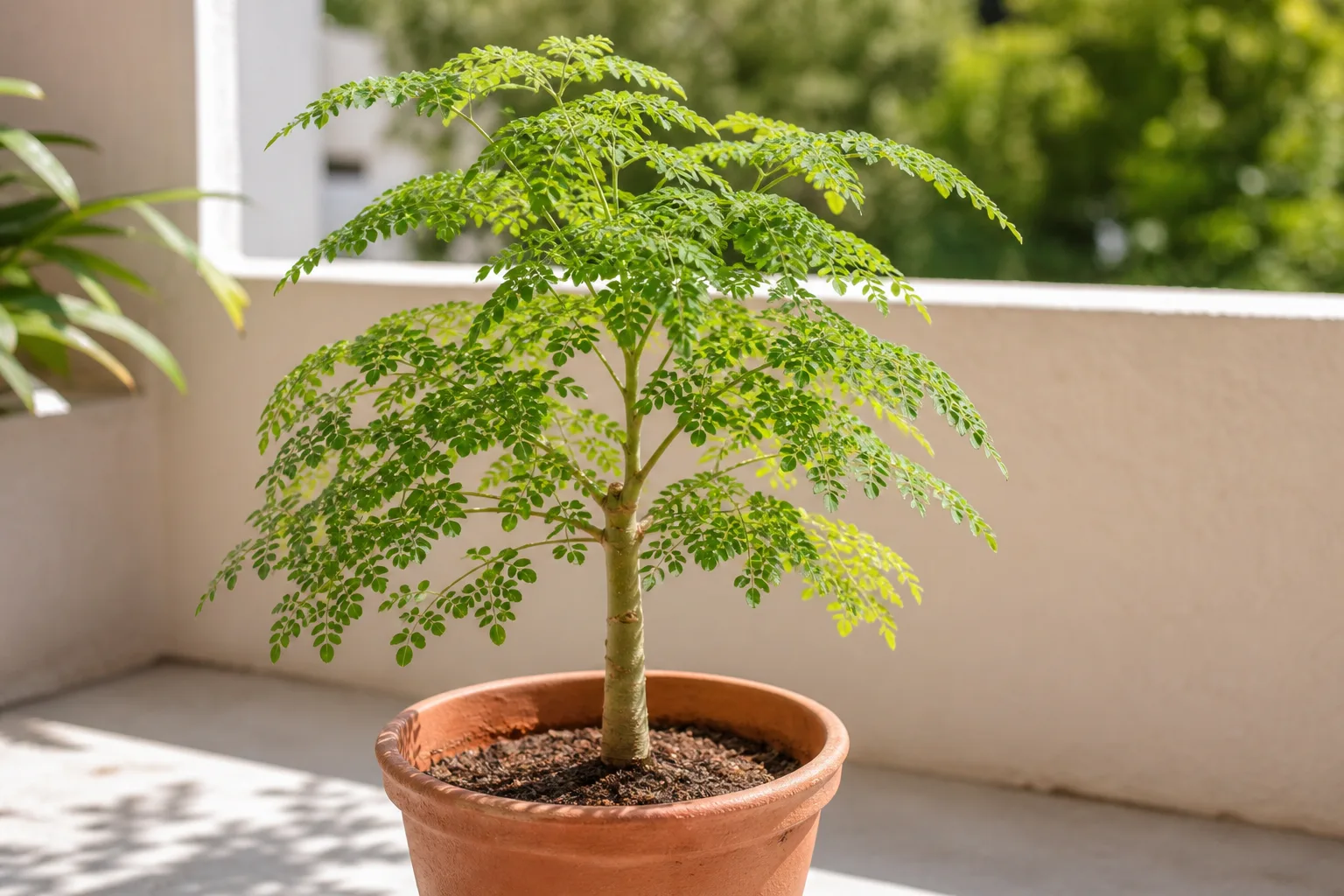
Propagating moringa (Moringa oleifera) is one of the more forgiving tropical-tree starts—if you treat it like a sun-loving drumstick tree, not a soft houseplant cutting in a water jar. This northwest-India native, also sold as Sahjan, horseradish tree, or drumstick tree, multiplies readily from fresh seed or woody limb cuttings. The failures that feel mysterious usually track stale seed, soggy mix, soft green sticks that rot, or cuttings that root quickly but never build the deep taproot seedlings form. (ECHO — The Moringa Tree)
This guide covers seed sowing depth and timing, woody cutting size and curing, the seed-versus-cutting root trade-off, aftercare into full sun, and the mistakes that empty trays. Use it when you want more plants. For everyday watering, light, and soil once a young tree is established, shift to those sibling guides instead of stretching this page into a full care manual.
Why Moringa Propagates Easily—and Where It Still Fails
Moringa is built for rapid recovery. Soft wood snaps in wind, but the plant also roots from branches and races upward from seed in hot weather—Winrock notes rapidly germinating seedlings that can reach about 5 m in one year with water and wind shelter, and prefers roughly 26–40°C. (Winrock — Moringa oleifera) Purdue places the species across subtropical to tropical climates on dry sandy soil, with a reported pH tolerance roughly 4.5–8 and strong drought resistance once established. (Purdue NewCROP)
That biology is why balcony growers in India succeed with a handful of seeds or a pruned branch—and why the same growers fail when they keep nursery mix constantly wet. Winrock is blunt: moringa does best in well-drained loam to clay loam and does not withstand prolonged waterlogging. (Winrock — Moringa oleifera) ECHO also flags root rot when soil stays too wet. (ECHO — Moringa oleifera) Propagation media that stay swampy invite the same collapse you see in crowded vegetable flats: stems pinching at the soil line from damping-off fungi such as Pythium and Rhizoctonia. (NC State Extension)
The other quiet failure is seed age. Germination is usually excellent with viable seed, but ECHO reports rates can fall to 0% after about two years of storage. (ECHO — The Moringa Tree) An empty tray after three weeks is often dead seed, not a mysterious technique miss.
Choose Seed or Cuttings for Your Goal
Pick the method that matches the tree you want, not the method that looks fastest on a video. Both work. They do not produce the same root system.
When seed is the better path
Choose seed when you want a deep taproot, drought resilience in a pot or ground bed, wind anchoring, or many plants from a packet. ECHO recommends seedlings whenever longer roots matter for water access or stability. (ECHO — The Moringa Tree) Seed also preserves genetic diversity—useful if you are filling a kitchen garden rather than cloning one favorite canopy.
Seed is the right default for most Indian terrace starts when you can buy fresh seed or extract it from mature dry pods. Match the finished plant to bright moringa light needs from day one of hardening: this is not a low-light indoor project.
When woody cuttings make sense
Choose woody cuttings when you want a genetic copy of a parent that already produces well, when you need a living fence post quickly, or when seed is unavailable. Purdue notes that in India the plant is commonly propagated by planting limb cuttings 1–2 m long, preferably from June to August, with pods possible in about 6–8 months and more regular bearing after the second year. (Purdue NewCROP) ECHO’s home-scale protocol uses shorter woody pieces and still roots reliably when wood is mature. (ECHO — The Moringa Tree)
Cuttings win on speed to a harvestable shrub form. They lose on root depth. If your balcony pots dry hard in May heat, prefer seed-grown plants for the deeper reserve.
How to Propagate Moringa From Seed
Treat seed work as a short warm-season project: fresh seed, shallow sowing, airy mix, and moisture without swamp.
Seed freshness, depth, and germination timing
Sow seeds about 2 cm deep. ECHO reports germination within 1–2 weeks under normal conditions, with usually high rates when seed is still viable. (ECHO — The Moringa Tree) Planting kernels after de-hulling can shorten germination by up to about three days in some production systems, but whole winged seed sown fresh is enough for home trays.
Use a loose, fast-draining mix that mirrors adult moringa soil—sandy or loamy with compost and coarse sand or perlite, never a dense peat brick that stays wet a week. Keep the surface lightly moist until sprouts appear, then shift toward the adult pattern of deep watering only after the top several centimetres dry. That early moisture control is your main defense against damping-off; NC State stresses sanitation, drainage, sensible seeding density, and avoiding chronically wet flats. (NC State Extension)
If nothing emerges after two weeks with known-fresh seed, check depth and temperature before blaming the species. Cool nights below the plant’s warm comfort range slow everything. Old packets stored through multiple monsoons deserve skepticism first.
Half shade for hot-weather trays
Full sun is the adult goal, but blistering midday heat on a black tray can cook seed and drop germination. Work cited by ECHO from Sudan found half shade optimal for germination; in hot mid-April sowing, M. oleifera germinated at only about 40% in harsher light versus about 94% in half shade, while cool dry-season differences were small. (ECHO — The Moringa Tree)
On an Indian balcony, that means a bright morning spot with afternoon shade cloth or a filtered terrace corner for the first one to two weeks, then a gradual move into the full sun the mature tree demands. Leaving seedlings in permanent shade produces weak, wet-soil-prone plants that never match the species.
How to Root Woody Moringa Stem Cuttings
Skip water jars and soft green tips. Moringa cuttings that work are woody, sized like small stakes, and planted into draining soil—not left swimming in a glass.
Cutting size, curing, and planting
ECHO’s practical standard is cuttings 45–100 cm long with stems about 4–10 cm across, taken from woody, previous-year wood. Cure them about three days in the shade, then plant into a nursery bag or final site. (ECHO — The Moringa Tree) For field-scale Indian plantings, Purdue’s longer 1–2 m limb cuttings planted in the monsoon window remain a classic method. (Purdue NewCROP) Winrock similarly notes easy establishment from seed or cutting, with roughly 1 m cuttings often bearing pods from the second year onward. (Winrock — Moringa oleifera)
For a deep pot on a terrace, a 45–60 cm woody piece is usually enough. Strip lower leaflets if any remain, set the basal end into moist but not wet sandy mix so roughly one-third of the cutting is buried, and stake against wind—soft new shoots snap easily. Rooting hormone is optional; mature woody moringa often roots without it when season and drainage are right. Soft, green, pencil-thin tips are the pieces that rot.
Time balcony cuttings for warm, active growth—roughly late spring through monsoon in much of India—so callus and roots form before cool dry-season stall. Avoid starting cuttings in waterlogged clay or during a cold snap that stalls growth while the buried wood sits wet.
Shallow roots vs deep taproots
ECHO’s warning is the one most blogs skip: trees grown from cuttings are known to have much shorter roots, so seedlings are preferable when deep roots matter. (ECHO — The Moringa Tree) On a windy high-rise terrace or in a pot that dries in a day, that shallow system means more frequent deep watering and less drought insurance than a seed-grown sibling.
If you still prefer cuttings for cloning, compensate with a deeper container, excellent drainage, and the same full-sun placement adult trees need. Do not expect a cutting-grown plant to behave like a field seedling with a thick taproot.
Aftercare for Seedlings and Rooted Cuttings
Once shoots and roots are active, stop treating the plant like a delicate cutting and start treating it like young moringa. Move gradually into 6+ hours of direct sun. Keep young pots evenly moist through the first hot season without leaving the mix sour or heavy—follow the dry-down logic in the moringa watering guide rather than daily misting.
Hold fertilizer until new compound leaves are expanding and roots have claimed the pot; then light feeding matches the fertilizer guide. Tip-prune early so the plant bushes instead of racing into a single lanky leader—unpruned seedlings become tall trunks with leaves out of reach, which is why the pruning guide matters almost as soon as growth is vigorous. Upsize before the taproot binds the container; see repotting when roots circle or the mix dries within a day in heat.
Handle roots with ordinary caution around pets. Leaves and pods are widely eaten by people, but ECHO notes root bark contains alkaloids that should be scraped away before any culinary root use—keep chewing pets away from the root zone of young plants. (ECHO — The Moringa Tree)
Common Propagation Mistakes
Sowing stale seed. ECHO’s two-year viability cliff explains many blank trays. (ECHO — The Moringa Tree) Buy dated seed or harvest from mature dry pods, and do not nurse a dead packet for a month.
Keeping mix wet. Waterlogging fights the species. Drainage and a dry-down rhythm prevent both root rot and damping-off patches. (Winrock — Moringa oleifera) (NC State Extension)
Using soft green cuttings. Previous-year woody wood is the ECHO standard; soft tips rot before they root. (ECHO — The Moringa Tree)
Skipping the cure. Three days of shade curing before planting reduces soft rot risk on large woody pieces. (ECHO — The Moringa Tree)
Expecting cutting roots to match seedlings. Plan water and pot depth for a shallower system if you clone. (ECHO — The Moringa Tree)
Leaving seedlings in permanent shade. Half shade helps hot-weather germination; adult culture is full sun. (ECHO — The Moringa Tree)
When to use this page vs other Moringa guides
Use this page when you are starting new plants from seed or woody cuttings. Use the overview when you need species identity, mature size, and whether moringa fits your space. Use light when placement and sun hours are the question. Use watering when an established plant wilts, yellows, or sits wet. Use soil when drainage or mix recipe is failing. Use fertilizer, repotting, and pruning once young plants are rooted and growing.
Related Moringa guides
- Moringa overview — habit, size, and whether this tree fits a balcony or garden
- Moringa light — full-sun placement for seedlings after hardening
- Moringa watering — dry-down rhythm for young pots
- Moringa soil — sandy, free-draining mixes for seed trays and cuttings
- Moringa fertilizer — when to start feeding after roots establish
- Moringa repotting — deeper pots for taproots
- Moringa pruning — early tip pruning so plants stay harvestable
Conclusion
Moringa propagation rewards simple, species-true choices: fresh seed sown about 2 cm deep, or cured woody cuttings planted in draining mix during warm months. Seedlings build deeper roots; cuttings clone a known parent faster but stay shallower. Keep trays moist without waterlogging, give hot-weather germinating seed brief half shade, then harden everything into full sun. Once new plants are growing, the rest of the cluster—water, soil, light, pruning—keeps drumstick trees productive instead of lanky and wet-footed.