Moringa Care Guide: Light, Water & Growing Tips
Moringa oleifera
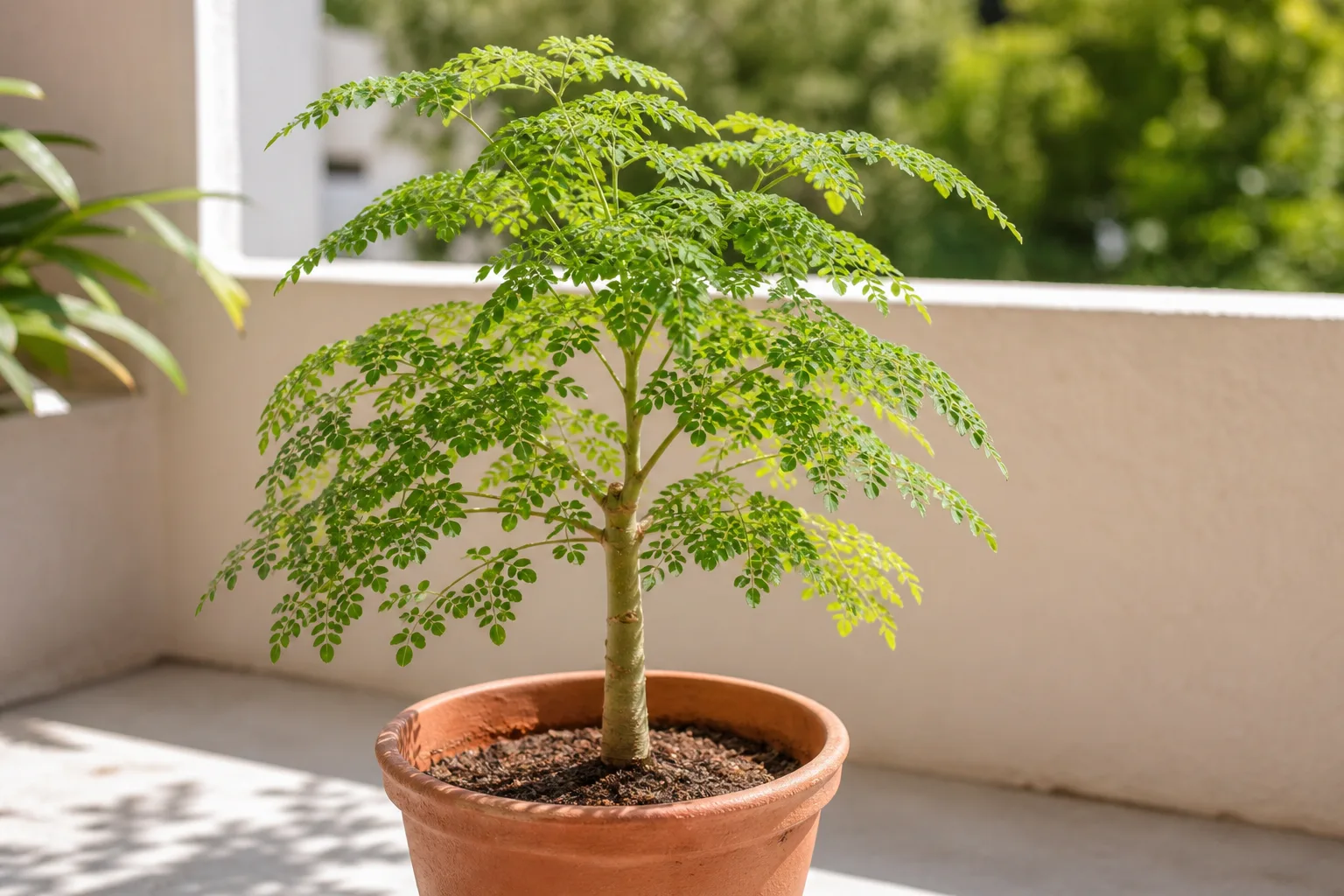
Moringa (Moringa oleifera) needs full sun, fast-draining soil, and deep watering when the top soil dries. Prune hard in containers; protect from frost and never waterlog the roots.
Moringa Care Guide: Light, Water & Growing Tips
Start with wateringThe most common care mistake for MoringaWatering guide →Moringa care essentials
Light
Water
Water deeply when the top 5–7 cm of soil dries. Keep young plants evenly moist through their first hot season; established trees are drought tolerant but produce more leaves with regular deep watering. Never leave the pot waterlogged.
Soil
Loose sandy or loamy mix with sharp drainage — 50% garden soil or potting mix, 30% compost, 20% coarse sand or perlite. Does not tolerate prolonged waterlogging. Preferred pH about 6.0–7.5 (tolerates roughly 5–9).
Humidity
Moderate (40–70%)
Temperature
about 25°C to 35°C (77–95°F); it can take brief hotter spells, but frost can kill top growth and hard freezes kill the plant
Fertilizer
Top-dress with compost each spring, or feed monthly with balanced organic fertilizer during March through October active growth.
About Moringa
Moringa is native to Northwestern India and the Indian subcontinent; widely cultivated across tropical Asia, Africa, and the Americas, typically reaches 1.5–3 m in containers with hard pruning; 6–12 m (20–40 ft) outdoors in frost-free climates indoors, with extremely fast — seedlings can reach 3–5 m in the first year in warm sun with water growth. Moringa has a tree growth habit and part of the Moringaceae family. It is also known as Drumstick Tree, Horseradish Tree, Sahjan, Ben Oil Tree, Miracle Tree, and Malunggay.
| Detail | Information |
|---|---|
| Also known as | Drumstick Tree, Horseradish Tree, Sahjan, Ben Oil Tree, Miracle Tree, Malunggay |
| Native region | Northwestern India and the Indian subcontinent; widely cultivated across tropical Asia, Africa, and the Americas |
| Mature size | 1.5–3 m in containers with hard pruning; 6–12 m (20–40 ft) outdoors in frost-free climates |
| Growth rate | Extremely fast — seedlings can reach 3–5 m in the first year in warm sun with water |
| Growth habit | Tree |
| Scientific name | Moringa oleifera |
| Family | Moringaceae |
Moringa Care Guide: Light, Water & Growing Tips
Moringa care starts with one honest framing: Moringa oleifera is a sun-loving, drought-smart drumstick tree grown for tender leaves and young pods—not a shade houseplant for a dim living room. Get placement right—full sun, free drainage, and deep watering only after the upper mix dries—and leaf flushes stay predictable. Treat it like a thirsty tropical foliage plant that wants constant moisture in low light, and you will see yellowing, soft stem bases, and stalled shoots long before fertilizer helps.
This overview covers identity, mature size, light, water, soil, temperature, feeding, pruning for harvest height, propagation basics, common mistakes, and pet root-bark cautions. Use it as the hub, then open the sibling guides when you need depth on one topic.
What Is Moringa?
Moringa is a fast tropical multipurpose tree grown across India and the wider tropics for edible leaflets, drumstick pods, and soft wood that regenerates after hard cutting. Purdue’s NewCROP profile describes it as a short, slender, deciduous perennial tree to about 10 m with feathery tripinnate leaves, fragrant creamy flowers, and long triangular pods. Winrock calls it a drought-deciduous tree or shrub that can reach about 12 m outdoors with an open, umbrella-shaped crown and a deep root habit.
If you are deciding whether the Moringa plant hub fits your home, match the plant to a sunny balcony, terrace, or kitchen-garden edge first. It is a poor fit for low-light rooms, frost-exposed unprotected pots, and waterlogged containers.
Botanical Identity and Common Names
The accepted botanical name is Moringa oleifera in the family Moringaceae. Common names include drumstick tree, horseradish tree, Sahjan, Ben oil tree, and Malunggay. Those labels usually mean the same species for care purposes, but buyers should still confirm the botanical tag—M. oleifera is the everyday culinary drumstick tree, not every ornamental look-alike sold as “miracle tree.”
Field marks are practical: pale young leaflets that deepen with age, cream flowers in drought or stress periods when leaves thin, and long ribbed pods with winged seeds. Purdue notes the species is native to India, Arabia, and possibly Africa and is widely cultivated across tropical Asia, Africa, and the Americas. Temporary leaf drop in cool weather or prolonged drought is normal for this deciduous habit—it is not automatically a watering emergency.
Mature Size in the Ground vs in Containers
In open ground, ECHO reports extremely fast growth—often up to about 4 m in a year—with eventual heights commonly in the 6–15 m (20–50 ft) range when left unpruned. Winrock’s home-garden note puts mature height near 12 m. That is a real small tree, not a windowsill plant.
In containers with regular hard pruning or coppicing, expect roughly 1.5–3 m of manageable canopy—enough for leaf and young-pod harvests without an unreachable trunk. Young trees fill pots quickly because growth is aggressive in warm sun; plan on Moringa repotting every one to two years while young, and choose a pot deep enough for the taproot (often 45–50 cm or deeper) rather than a wide shallow dish.
Best Growing Conditions for Moringa
Four variables decide almost every outcome: light, temperature, soil drainage, and watering rhythm. Align those four and feeding, pruning, and propagation become routine. Misalign any one—especially light or wet feet—and the plant stalls, yellows, or drops leaves no matter how much compost you add.
Light and Placement
Moringa needs full sun for best performance—aim for 6+ hours of direct light daily on a terrace, roof, or bright south-facing balcony. ECHO frames the species as a tree of the hot, semi-arid tropics; Winrock notes it does best with warm temperatures and enough rainfall or irrigation to keep foliage productive. Weak indoor light produces pale, lanky shoots and soil that stays wet too long, which invites overwatering mistakes.
Indoors, only a very bright sunroom or greenhouse-level exposure works long term. A dim living-room corner will stretch growth and hide moisture problems. For window choice, seasonal intensity, and warning signs of too little sun, use the dedicated Moringa light guide.
Temperature, Frost, and Seasonal Leaf Drop
ECHO’s practical comfort band is about 25–35°C (77–95°F), with brief tolerance of hotter spells up to about 48°C (118°F). Winrock’s home-garden guidance centers productive growth roughly in the 26–40°C range with adequate water. Purdue reports tolerance across a broad subtropical-to-tropical temperature envelope and emphasizes drought resistance on dry sandy soils.
In the subtropics, ECHO notes that light frost may be tolerated while a hard freeze can kill top growth back to the roots—recovery from the crown is possible after light freezes, but hard freezes can kill the plant. In North India, move containers indoors or to a warm, bright room before nights fall near freezing. Soft wood also snaps in high wind, so shelter balcony plants from strong gusts. Seasonal leaf drop in cool or dry stress is expected for this drought-deciduous tree; confirm soil moisture before pouring more water.
Soil, Drainage, and pH
Moringa prefers well-drained sandy or loamy soil and does not tolerate prolonged waterlogging. ECHO states it will tolerate clay but not water logging, and that a high water table near the surface sets plants back. Winrock says it is adapted to many soil types but does best in well-drained loam to clay loam and does not withstand prolonged waterlogging.
For pots, use a loose, fast-draining mix—a practical blend is about 50% garden soil or potting mix, 30% compost, and 20% coarse sand or perlite. Preferred pH for home growing is about 6.0–7.5; ECHO notes a wide tolerance from roughly pH 5–9 including alkaline conditions, while Purdue reports about 4.5–8. Sharp drainage is non-negotiable—if the pot stays heavy for days or smells sour, fix the mix before changing fertilizer. Full recipes and drainage troubleshooting live in the Moringa soil guide.
How to Water Moringa Without Waterlogging It
Water deeply when the top 5–7 cm of soil is dry, then let excess drain freely. Keep young plants more evenly moist through their first hot season while roots build; established trees are drought tolerant but still need deep drinks in Indian summer heat when grown in pots. In peak summer that may mean every 2–4 days for young containers; weekly is common for established pots; cut back sharply when nights cool and growth stalls.
ECHO describes productive growth with rainfalls from roughly 250–1500 mm when drainage is good, and Winrock stresses that foliage yield drops under continuous water stress even though the tree is drought tolerant. Container plants have less reserve than field trees—never leave the pot waterlogged. Overwatering signs include yellowing leaves, a soft stem base, sour-smelling soil, and root rot. Underwatering shows as midday wilt that recovers slowly, crisp leaflet edges, early leaf drop in heat, and stalled new shoots.
When unsure, wait one more day and check depth rather than adding a “little sip.” Step-by-step checks and seasonal cadence are in the Moringa watering guide.
Feeding, Pruning, and Keeping Container Plants Harvestable
Moringa tolerates lean soils outdoors, so light feeding is usually enough in pots. Top-dress with compost each spring, or feed monthly with a balanced organic fertilizer during active growth (roughly March–October in much of India). Pause if the plant is stressed, newly repotted, or not flushing. Fertilizer can support a leaf flush, but it cannot compensate for bad light, damaged roots, or a mix that stays wet too long. Details on dilution and timing belong in the Moringa fertilizer guide.
Pruning is how container growers keep a harvestable tree. Unpruned trunks race skyward with leaves only at the tip. ECHO emphasizes frequent cutting so the plant becomes a multi-branched shrub rather than a lanky pole, and Winrock notes that frequent pruning, lopping, coppicing, or pollarding increases and maintains leaf production. In pots, cut back to roughly 60–90 cm each spring or whenever the leader races upward; harvest young leaves and tender shoots often. Pick drumstick pods while still tender (often around 15–20 cm, before they toughen). Pair hard cuts with the Moringa pruning guide rather than stripping foliage mid-stress.
Propagation Snapshot: Seeds and Cuttings
Moringa establishes easily from seed or woody cuttings. ECHO advises sowing seed about 2 cm deep in warm soil—germination is often within 1–2 weeks—with rates usually good while seed is fresh (viability can collapse after about two years). Woody cuttings 45–100 cm long from previous-year wood root readily; Purdue notes India’s common practice of planting limb cuttings 1–2 m long in the monsoon window. Seedlings develop deeper taproots; cutting-grown trees establish faster but stay shallower—prefer seed when you want drought resilience in a deep pot.
Aftercare for new plants—strong sun, moisture without sogginess, and delayed fertilizer—matters more than the exact cutting length. Full methods and failure modes are covered in the Moringa propagation guide.
Common Mistakes That Stress Moringa
The most expensive mistakes are placement and moisture, not missing a fertilizer week.
Keeping moringa in weak indoor light slows drying and produces pale, sparse canopy. Move to the sunniest outdoor or sunroom spot available before diagnosing “nutrient deficiency.”
Watering on a tropical-herb calendar while the mix is still wet—especially in cool weather—invites root decline. Finger-check 5–7 cm deep; do not obey a reminder app.
Using dense, peat-heavy mix without grit holds water against a species built for sandy drainage. Rebuild the mix when pots stay heavy for days.
Skipping hard pruning so the trunk becomes a bare pole with leaves out of reach. Coppice or tip-prune while the plant is young and actively growing.
Exposing containers to hard frost or sustained near-freezing nights in North India winters. Cover or move pots before cold snaps; wet soil plus cold is especially damaging.
Changing water, pot size, and placement all at once after a stress event. Stabilize light and drainage first, then adjust one variable at a time.
Pet Safety and Root Bark Caution
Young leaves and pods are widely eaten by people, but pet safety data for companion animals is incomplete. ASPCA’s toxic and non-toxic plant listings do not include a dedicated Moringa oleifera entry the way they flag some common ornamentals. Treat that as “unlisted,” not as a guarantee of safety for chewing pets.
ECHO warns that root bark contains alkaloids—including moringinine and related compounds such as spirachin—and advises scraping root bark away before any culinary root use. WebMD notes that roots and root extracts can be toxic to some animals. Keep pots out of chewing range, prevent digging at the root zone, and confirm with a veterinarian if your pet grazes houseplants. This is plant-safety guidance, not veterinary advice.
When to Use This Page vs Other Moringa Guides
Use this overview to confirm you bought the right plant, choose a sunny placement, set a drought-smart watering rhythm, and decide whether hard pruning will keep a container plant harvestable.
Open sibling guides when you need depth:
- Moringa light — terrace vs indoor limits, sun-stress signs
- Moringa watering — dryness checks, seasonal cadence, over- and underwatering
- Moringa soil — mix recipes, drainage failures, pH notes
- Moringa fertilizer — when to feed, dilution, lean-soil feeding
- Moringa repotting — timing, pot depth for taproots, post-repot care
- Moringa propagation — seed freshness, cuttings, aftercare
- Moringa pruning — coppicing height and harvest cuts
Related Moringa Guides
Build out the full cluster as you grow:
- Hub: Moringa
- Care: light, watering, soil, fertilizer, repotting, propagation, pruning
Start with light and watering if the plant is new; add soil and repotting when the pot stays wet or roots circle the drainage holes; open pruning when the trunk races out of reach.
Conclusion
Moringa rewards growers who respect its dry-tropics origins: bright sun, sandy drainage, and deep water only after the upper soil dries. Keep containers above hard frost, prune hard for leaf and drumstick harvests, sow fresh seed or take woody cuttings when you propagate, and keep root bark away from pets that dig or chew. Master those basics on this page, then use the sibling guides when one variable—light, water, soil, feed, pot size, or pruning—needs a deeper fix.
How to care for Moringa?
When should you water Moringa?
Water deeply when the top 5–7 cm of soil dries. Keep young plants evenly moist through their first hot season; established trees are drought tolerant but produce more leaves with regular deep watering. Never leave the pot waterlogged.
- Finger test at 5–7 cm — water only when dry at that depth - Water deeply when the top 5–7 cm of soil dries.
- then soak until water drains freely - Water deeply when the top 5–7 cm of soil dries.
- Drain excess water - Water deeply when the top 5–7 cm of soil dries.
What soil works best for Moringa?
Loose sandy or loamy mix with sharp drainage — 50% garden soil or potting mix, 30% compost, 20% coarse sand or perlite. Does not tolerate prolonged waterlogging. Preferred pH about 6.0–7.5 (tolerates roughly 5–9).
- 50% garden soil or potting mix - Loose sandy or loamy mix with sharp drainage — 50% garden soil or potting mix, 30% compost, 20% coarse sand or perlite.
- 30% compost - Loose sandy or loamy mix with sharp drainage — 50% garden soil or potting mix, 30% compost, 20% coarse sand or perlite.
- 20% coarse sand or perlite - Loose sandy or loamy mix with sharp drainage — 50% garden soil or potting mix, 30% compost, 20% coarse sand or perlite.
Grower notes for Moringa
What matters most with Moringa
Moringa is a sun-loving, drought-smart drumstick tree grown for tender leaves and young pods—not a shade houseplant. Full sun (6+ hours of direct light) plus loose, fast-draining sandy or loamy mix decides whether it thrives. Hard pruning or coppicing keeps container plants bushy and harvestable; unpruned trunks race skyward with leaves only at the tip. Avoid changing water, pot size, and placement all at once.
Best placement in a real home
Moringa belongs on the sunniest balcony, terrace, or south-facing outdoor spot you have—not a dim living-room corner. Water deeply when the top 5–7 cm of soil dries; keep young pots evenly moist in their first summer. If the pot stays wet longer than expected, improve light or drainage before watering again. Humidity target: Moderate (40–70%). Temperature comfort zone: about 25°C to 35°C (77–95°F); it can take brief hotter spells, but frost can kill top growth and hard freezes kill the plant.
Before you buy this plant
Choose Moringa with firm new shoots, clean tripinnate leaflets, and soil that does not smell sour or feel waterlogged. Prefer a deep pot already—this species forms a thick taproot. Be cautious of leggy seedlings with bare lower stems, soft trunks, or nursery mix that stays swampy. Confirm you want Moringa oleifera (drumstick / Sahjan), not a look-alike ornamental tree.
First month after bringing it home
Do not repot Moringa on day one unless the mix is failing or pests are obvious. Quarantine it, learn how fast the pot dries in your sun, and keep care boring while it adjusts. Watch especially for overwatering, yellow leaves, and wind snap on soft new growth. Correct light and drainage first rather than stacking fertilizer, repotting, and hard pruning together.
Pet-aware note for Moringa
Young leaves and pods are widely eaten by people, but ASPCA has no dedicated listing for Moringa oleifera. Root bark contains alkaloids (including moringinine and related compounds) that can be toxic—WebMD also notes roots and root extracts can harm some animals. Keep pots out of chewing range and do not offer bark or roots as pet forage.
How to tell Moringa is settling in
Also sold as Drumstick Tree, Horseradish Tree, Sahjan, and Malunggay, this plant should be judged by steady new compound leaves and firm green shoots rather than label names alone. Propagate from seed (germinate in 1–2 weeks in warm soil) or woody stem cuttings; seed-grown trees develop deeper taproots. Repot when roots circle the pot or the mix dries within a day in heat. Seasonal leaf drop in cool or dry stress is normal for this drought-deciduous tree.
Is moringa safe for pets?
Moringa is not listed on ASPCA toxic/non-toxic plant pages. Leaves are human-edible, but root bark and root extracts can be toxic—keep plants away from pets that chew foliage or dig at roots.
Moringa oleifera has no dedicated ASPCA listing. Young leaves and pods are widely consumed by people. ECHO and related horticultural sources note that root bark contains alkaloids (including moringinine and spirachin/spirochin) that can be physiologically active or toxic; WebMD warns that roots and root extracts can be toxic to some animals. Prevent pet chewing of bark and roots, and confirm with a veterinarian if your pet grazes houseplants.
Watering Moringa
For Moringa, finger test at 5–7 cm — water only when dry at that depth, then soak until water drains freely and water every 2–4 days for young container plants in peak summer; weekly for established pots; minimal in cool dormancy. Increase through Indian summers and monsoon heat; cut back sharply when nights cool and growth stalls below about 17–20°C.
| Detail | Information |
|---|---|
| How often | Every 2–4 days for young container plants in peak summer; weekly for established pots; minimal in cool dormancy |
| How to check | Finger test at 5–7 cm — water only when dry at that depth, then soak until water drains freely |
| Seasonal changes | Increase through Indian summers and monsoon heat; cut back sharply when nights cool and growth stalls below about 17–20°C |
Signs of overwatering
- yellowing leaves
- soft stem base
- sour-smelling soil
- root rot
Signs of underwatering
- midday wilt that recovers slowly
- crisp leaflet edges
- early leaf drop in heat
- stalled new shoots
Soil & potting for Moringa
Use a mix of 50% garden soil or potting mix, 30% compost, 20% coarse sand or perlite for Moringa. Excellent drainage required — intolerant of soggy or compacted pots. Target soil pH around 6.0–7.5. Repot every 1–2 years while young; upsize before the deep taproot binds the pot, ideally in spring, as new growth begins.
| Detail | Information |
|---|---|
| Recommended mix | 50% garden soil or potting mix, 30% compost, 20% coarse sand or perlite |
| Drainage | Excellent drainage required — intolerant of soggy or compacted pots |
| Soil pH | 6.0–7.5 |
| Repotting frequency | Every 1–2 years while young; upsize before the deep taproot binds the pot |
| Best season to repot | Spring, as new growth begins |
Signs it needs repotting
- roots circling or escaping drainage holes
- soil drying within 24 hours of watering
- stunted shoots despite full sun
Humidity & temperature for Moringa
Moringa prefers moderate (40–70%), though normal home humidity is usually fine. Keep temperatures around about 25°C to 35°C (77–95°F); it can take brief hotter spells, but frost can kill top growth and hard freezes kill the plant.
| Detail | Information |
|---|---|
| Humidity | Moderate (40–70%) - normal home humidity is fine. |
| Ideal temperature | about 25°C to 35°C (77–95°F); it can take brief hotter spells, but frost can kill top growth and hard freezes kill the plant |
Fertilizer & pruning for Moringa
Use top-dress with compost each spring, or feed monthly with balanced organic fertilizer during March through October active growth. for Moringa.
| Detail | Information |
|---|---|
| Fertilizer type | Top-dress with compost each spring, or feed monthly with balanced organic fertilizer during March through October active growth. |
Common problems on Moringa
Yellow Leaves
MediumLikely cause: Common on this plant type; confirm with recent watering, light, and root checks.
Quick fix: Inspect the plant and correct the most likely care stressor before stacking treatments.
Full fix guide →Brown Tips
MediumLikely cause: Common on this plant type; confirm with recent watering, light, and root checks.
Quick fix: Inspect the plant and correct the most likely care stressor before stacking treatments.
Full fix guide →Root Rot
MediumLikely cause: Common on this plant type; confirm with recent watering, light, and root checks.
Quick fix: Inspect the plant and correct the most likely care stressor before stacking treatments.
Full fix guide →Overwatering
MediumLikely cause: Common on this plant type; confirm with recent watering, light, and root checks.
Quick fix: Inspect the plant and correct the most likely care stressor before stacking treatments.
Full fix guide →Underwatering
MediumLikely cause: Common on this plant type; confirm with recent watering, light, and root checks.
Quick fix: Inspect the plant and correct the most likely care stressor before stacking treatments.
Full fix guide →Spider Mites
MediumLikely cause: Common on this plant type; confirm with recent watering, light, and root checks.
Quick fix: Inspect the plant and correct the most likely care stressor before stacking treatments.
Full fix guide →Mealybugs
MediumLikely cause: Common on this plant type; confirm with recent watering, light, and root checks.
Quick fix: Inspect the plant and correct the most likely care stressor before stacking treatments.
Full fix guide →Aphids
MediumLikely cause: Common on this plant type; confirm with recent watering, light, and root checks.
Quick fix: Inspect the plant and correct the most likely care stressor before stacking treatments.
Full fix guide →Leggy Growth
MediumLikely cause: Common on this plant type; confirm with recent watering, light, and root checks.
Quick fix: Inspect the plant and correct the most likely care stressor before stacking treatments.
Full fix guide →Slow Growth
MediumLikely cause: Common on this plant type; confirm with recent watering, light, and root checks.
Quick fix: Inspect the plant and correct the most likely care stressor before stacking treatments.
Full fix guide →Wilting
MediumLikely cause: Common on this plant type; confirm with recent watering, light, and root checks.
Quick fix: Inspect the plant and correct the most likely care stressor before stacking treatments.
Full fix guide →Drooping Leaves
MediumLikely cause: Common on this plant type; confirm with recent watering, light, and root checks.
Quick fix: Inspect the plant and correct the most likely care stressor before stacking treatments.
Full fix guide →Low Humidity
MediumLikely cause: Common on this plant type; confirm with recent watering, light, and root checks.
Quick fix: Inspect the plant and correct the most likely care stressor before stacking treatments.
Full fix guide →Not Enough Light
MediumLikely cause: Common on this plant type; confirm with recent watering, light, and root checks.
Quick fix: Inspect the plant and correct the most likely care stressor before stacking treatments.
Full fix guide →Fungus Gnats
MediumLikely cause: Common on this plant type; confirm with recent watering, light, and root checks.
Quick fix: Inspect the plant and correct the most likely care stressor before stacking treatments.
Full fix guide →Mold on Soil
MediumLikely cause: Common on this plant type; confirm with recent watering, light, and root checks.
Quick fix: Inspect the plant and correct the most likely care stressor before stacking treatments.
Full fix guide →