Aphids on Moringa: Shoot-Tip Checks & Food-Safe Fixes
Quick answer
Aphids on Moringa oleifera colonize the succulent apical shoots, flower racemes, and delicate tripinnate leaflets—causing leaflet curl, premature leaf drop, and sticky honeydew. Because moringa is widely grown for culinary greens and pods, prioritize food-safe IPM: dislodge colonies with a focused jet of water, prune heavily infested tips, and apply insecticidal soap or cold-pressed neem oil during low light.
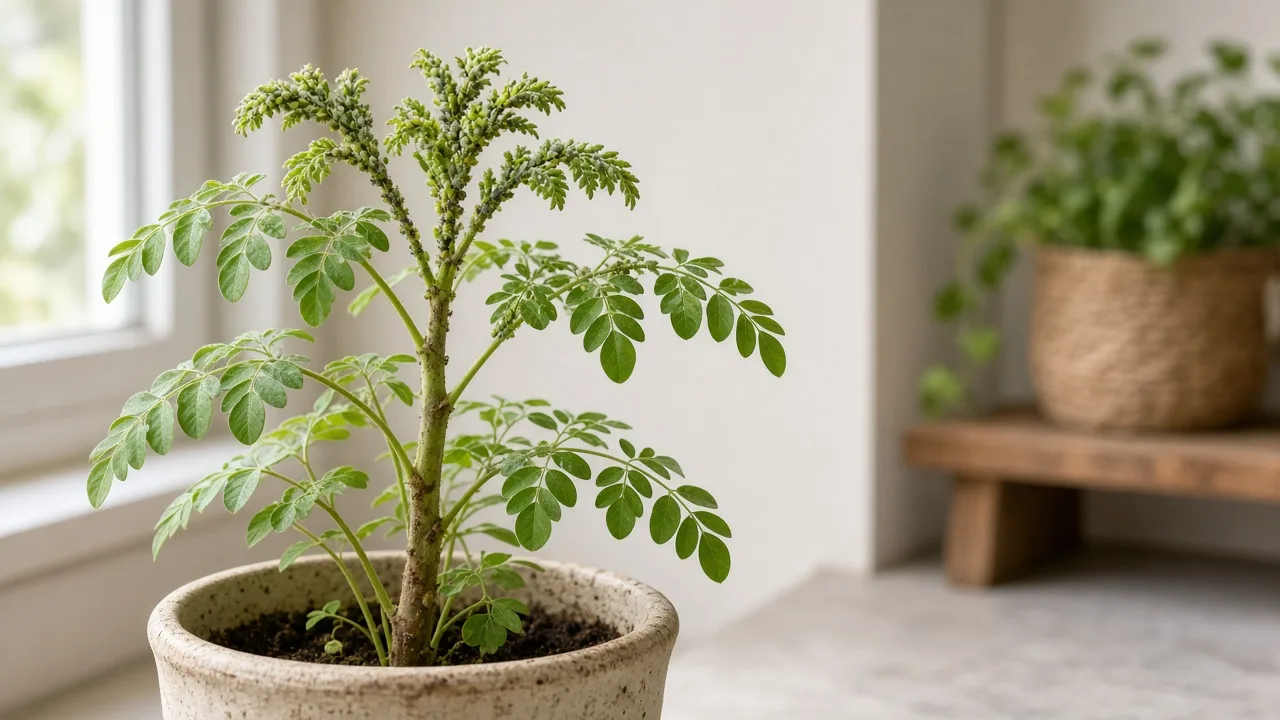
Aphids on Moringa: Causes, Checks & Fixes
This guide covers aphids on Moringa. See also the general Aphids guide, watering, and light pages for this plant.
Aphids on Moringa: Causes, Checks & Fixes
Quick answer
On Moringa oleifera (drumstick tree or miracle tree), aphids congregate primarily on the tender apical growing tips, young flower panicles, and delicate tripinnate compound leaflets. As soft-bodied sap-suckers—most notably the cowpea aphid (Aphis craccivora) and the green peach aphid (Myzus persicae)—they pierce tender plant tissue with needle-like stylets, draining nutrient-rich phloem sap. This feeding distorts new flushes, curls delicate leaflets, causes widespread premature leaflet shedding, and covers foliage in sticky honeydew that fosters black sooty mold.
For general aphid lifecycles, asexual reproduction mechanics, and predatory insect biology, consult our comprehensive aphids pest guide. On Moringa, the critical practical reality is that this plant is frequently cultivated for edible, highly nutritious leaves and tender seed pods. Therefore, conventional synthetic systemic insecticides must be avoided in favor of food-safe Integrated Pest Management (IPM).
First step: isolate container specimens from neighboring plants, inspect the terminal growing tips, and use a forceful, narrow jet of water to physically dislodge aphid colonies from the shoots—taking care to shield the pot so you do not saturate the root zone.
When to use this page vs other Moringa problem guides
Before treating for aphids, verify whether you are dealing with sap-feeding insects or environmental stress. Moringa’s feathery, compound leaves shed rapidly under various stresses.
| Symptom pattern | Primary cause | What to check next |
|---|---|---|
| Clustered pear-shaped bugs on shoot tips, sticky leaves, curled leaflets | Aphids | Stay on this page |
| Fine webbing on leaflet undersides, dusty bronzing, microscopic speckling | Spider mites | Moringa spider mites |
| Lower compound leaves turning pale yellow without insects or stickiness | Watering or nitrogen imbalance | Moringa yellow leaves |
| Wilting or soft lower trunk, yellowing canopy on wet, poorly drained soil | Overwatering / root rot | Moringa watering guide |
| Stretched internodes, pale spindly shoots, weak leaflet attachment | Low sunlight | Moringa light guide |
| Sudden whole-branch droop during intense summer heat with bone-dry potting mix | Underwatering / root restriction | Moringa drooping leaves |
What aphids look like on Moringa
Aphids are small (1 to 3 mm), soft-bodied, pear-shaped insects equipped with a pair of abdominal tube structures called cornicles. Because Moringa oleifera produces an abundance of succulent, fast-growing vegetative tissue, aphid populations can multiply with astonishing speed.
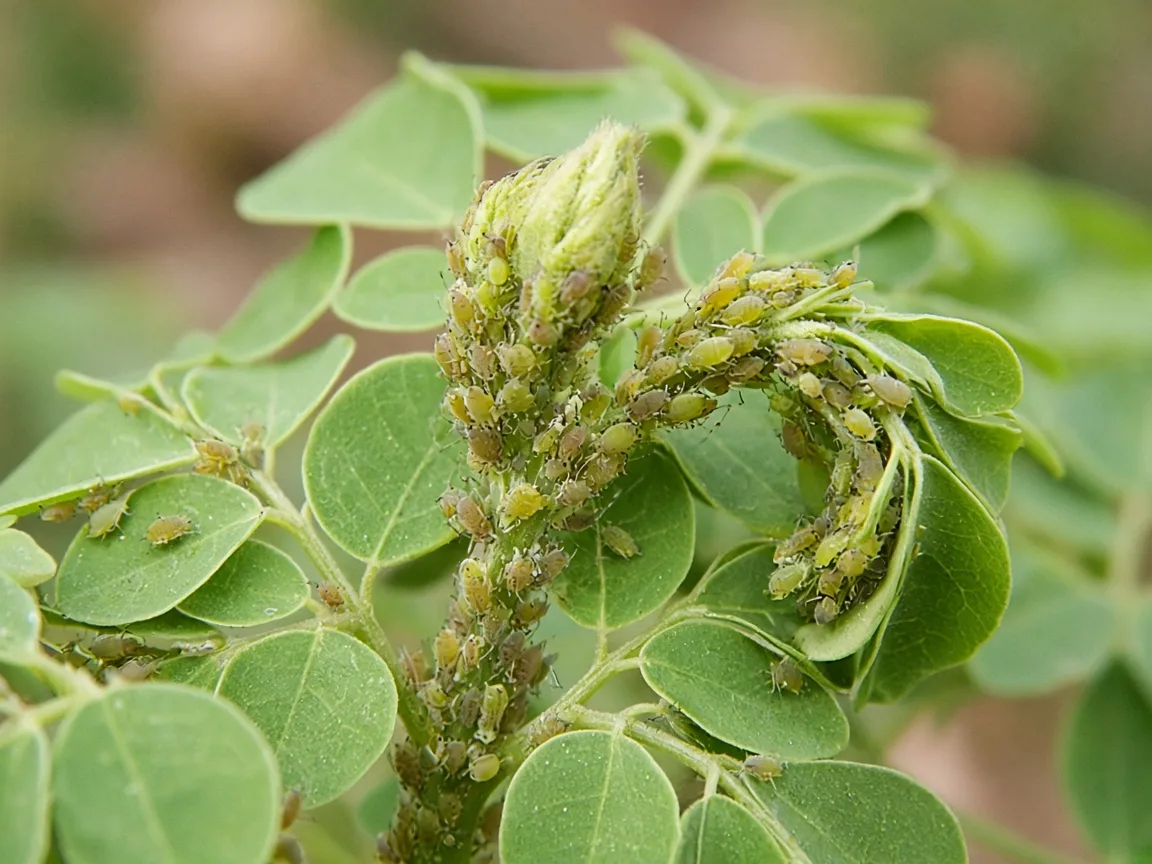
Close-up view of an aphid colony encrusting the succulent apical meristem and petioles of a young Moringa tree.
When scouting your tree, look for these distinctive botanical markers:
- Dense clusters along terminal shoots: Dark brown to shiny black cowpea aphids (Aphis craccivora) or pale greenish-yellow peach aphids (Myzus persicae) massing tightly along the green main rachis, secondary branchlets, and nascent leaf buds.
- Leaflet crinkling and inward curling: As nymphs and adults withdraw sap, emerging tripinnate leaflets cup inward, twist sideways, and fail to expand to their full obovate shape.
- Rapid leaflet drop (rachis skeletonization): Unlike plants with thick, leathery leaves, moringa leaflets are feather-light and attached by hair-thin petiolules. Sap starvation causes leaflets to yellow and drop in showers, leaving bare, green midribs projecting from the stem.
- Glistening, sticky honeydew deposits: Aphids ingest vast volumes of phloem sap, extracting protein and excreting excess water and liquid carbohydrates. This forms a glossy, tacky film across foliage, container rims, and ground surfaces.
- Black sooty mold film: Airborne fungal spores of Capnodium germinate on honeydew deposits, creating a dark, velvety crust over the leaves that blocks sunlight and diminishes photosynthetic efficiency.
- Ant trails marching up the trunk: Common garden ants actively herd, defend, and transport aphids in exchange for honeydew, driving off natural predatory beetles and parasitoids.
Where aphids hide on Moringa’s compound foliage
According to field cultivation research from Winrock International, Moringa oleifera has unique tripinnately compound leaves—often measuring 30 to 60 cm in length—bearing dozens of delicate, rounded pinnae and pinnules. This complex, layered architecture provides hundreds of secluded microhabitats:
- Apical meristems and growing tips: The topmost 2 to 4 inches of the main stem and side branches represent the softest, most nitrogen-dense growth. Aphids nestle between tightly folded nascent leaves.
- Leaflet undersides and rachis joints: Aphids line up along the undersides of individual leaflets and gather at the nodal junctions where secondary rachises branch off the primary petiole.
- Inflorescences and floral racemes: When mature moringa trees bloom, creamy white flowers and tender floral buds become prime targets. Heavy feeding leads to flower drying and premature blossom drop, preventing drumstick pod development.
- Pruning wound resprouts: Moringa is famed for vigorous shoot production following coppicing or pollarding. Fresh, tender water sprouts bursting from pruning stumps are exceptionally soft and draw winged colonizers from across the garden.
Why Moringa gets aphids: triggers and vulnerability
Understanding why aphids target Moringa oleifera enables long-term cultural prevention rather than endless reactive spraying.
Ferocious growth and thin cellular cuticles
According to botanical profiles from Purdue University NewCROP, moringa is an exceptionally fast-growing tropical tree capable of adding 3 to 4 meters of vertical growth in a single season. This rapid cell division yields tender shoot tips with thin epidermal cell walls and high moisture content, allowing aphid stylets to penetrate vascular bundles with minimal resistance.
High free amino acid and nitrogen content
Moringa leaves are celebrated for their exceptional protein and nutrient density. Unfortunately, this high concentration of free amino acids makes the phloem sap an irresistible, high-value food source for sap-feeding pests. Over-applying high-nitrogen chemical fertilizers further inflates amino acid levels and produces soft, watery tissue. Always calibrate nutrition with our Moringa fertilizer guide.
Dry heat combined with sheltered conditions
While moringa thrives in hot, sunny climates, prolonged warm dry spells accelerate the aphid reproductive cycle. As documented by Wisconsin Horticulture Extension, female aphids reproduce parthenogenetically indoors and in warm climates (giving live birth to pregnant female clones without mating), yielding explosive population surges in just 5 to 7 days. Balconies, covered patios, and greenhouses shelter aphids from heavy wind and rainstorms that naturally scour foliage outdoors.
Absence of natural predatory insects
In indoor overwintering setups or sheltered urban balconies, natural biocontrol agents like lady beetles (Hippodamia convergens), green lacewing larvae (Chrysoperla carnea), and hoverfly maggots (Syrphidae) are often completely absent. Without predatory pressure, a single pioneering winged aphid can found an overwhelming colony within two weeks.
Step-by-step confirmation checks
Before reaching for sprays, carry out a structured 5-point botanical inspection:
- Magnifier check on apical nodes: Use a 10× hand lens or your phone camera’s macro mode to inspect the junction between young leaflets and petioles. Confirm the presence of pear-shaped bodies and twin cornicles (tailpipe structures) at the rear of the abdomen.
- The white paper tap test: Hold a sheet of plain white paper underneath an infested compound branch and tap the rachis firmly. Aphids will tumble down as sluggish, crawling oval specks. If minute specks scurry rapidly, compare with spider mites; if slender, elongated insects flick away, suspect thrips.
- Check for mummified aphids: Inspect the colony for swollen, golden-brown or papery-bronze aphid shells with tiny exit holes. These “aphid mummies” prove beneficial parasitoid wasps (such as Lysiphlebus testaceipes) are already actively working to suppress the outbreak.
- Honeydew touch test: Gently stroke the upper surface of foliage beneath the terminal shoots. A tacky, sweet residue indicates active piercing-sucking insect activity.
- Trace ant traffic: Check the base of the trunk or pot rim. If ants are streaming upward in deliberate lines, they are actively protecting the colony from beneficial predators.
First fix for Moringa: food-safe knockdown protocol
Isolate container trees immediately, shield the root zone, and blast the colonies off the terminal shoots with a focused, forceful spray of clean, lukewarm water.
Water jet knockdown is the most effective immediate triage for Moringa oleifera. As emphasized by the University of California IPM Program, a forceful jet of water dislodges aphids and breaks their delicate mouthparts, providing effective non-chemical control:
- Protect the root ball: Moringa has a fleshy, tuberous taproot that is highly vulnerable to rot if potting soil is repeatedly drenched. Tilt the pot sideways or wrap the container top with a plastic sheet or towel to prevent excess runoff from saturating the soil mix. Align your moisture checks with our Moringa watering guide.
- Apply focused spray: Direct a sharp stream of water specifically at the apical growing tips, leaflet undersides, and rachis axils.
- Physical destruction: Aphids are delicate, soft-bodied insects. The mechanical impact of high-pressure water dislodges them and breaks their delicate mouthparts. Wingless nymphs knocked to the ground cannot climb back into the canopy and perish quickly.
- Allow rapid foliage drying: Ensure the tree is kept in an area with warm, active air circulation so wet foliage dries within 1 to 2 hours.
Repeat this water knockdown every 2 to 3 days. For minor infestations, mechanical blasting alone can bring the population below damaging thresholds without chemical sprays.
Step-by-step recovery and treatment plan
If aphids persist after physical rinsing, proceed through this food-safe, integrated management plan.
1. Strategic tip pruning
Because moringa responds enthusiastically to cutting back—a regenerative habit documented by Plants For A Future—pruning is your greatest ally against stubborn colonies. If an aphid cluster is heavily concentrated on 2 or 3 terminal growing tips, simply take clean pruning shears or use your fingers to pinch off the top 3 to 5 inches of infested shoot.
- Seal the clipped cuttings immediately in a plastic bag and discard them in the trash.
- Do not add infested cuttings to your home compost bin.
- Tip pruning not only eliminates thousands of aphids in seconds, but it also triggers the dormant nodes below to branch out, creating a bushier, more productive canopy. Master proper cutting techniques in our Moringa pruning guide.
2. Apply horticultural insecticidal soap
For widespread colonies across compound foliage, spray with a commercial potassium salts of fatty acids solution (1% to 2% dilution).
- Mechanism: Insecticidal soaps dissolve the protective waxy outer cuticle of the aphids, causing rapid dehydration and death within hours.
- Coverage: Soaps work purely on contact. You must thoroughly coat the undersides of all leaflets, the main rachis, and the terminal buds.
- Timing: Spray strictly in the early morning or evening. Applying soaps in direct sun or high heat (above 85°F / 29°C) will cause phytotoxic foliage burn on delicate moringa leaflets.
3. Apply cold-pressed neem oil spray
If colonies continue to rebound, utilize cold-pressed neem oil (clarified hydrophobic extract of neem oil or raw cold-pressed seed oil).
- Emulsion recipe: Mix 1 teaspoon (5 ml) of pure cold-pressed neem oil and 1/2 teaspoon of mild organic liquid castile soap into 1 quart (1 liter) of warm water. Shake vigorously to create an even, milky emulsion.
- Mode of action: Neem delivers azadirachtin, which disrupts insect hormonal balance, inhibits feeding, and prevents molting, while the oil film suffocates adult aphids.
- Food harvest interval: Maintain a 48-hour pre-harvest interval (PHI) between neem spraying and culinary leaf picking. Wash all harvested greens thoroughly before eating.
4. Break the ant-aphid alliance
Predators cannot control aphids if aggressive ants drive them away.
- Apply a band of horticultural paper or tape around the base of the lower woody trunk and smear a thin ring of sticky barrier (such as Tanglefoot) over the paper. Never apply sticky resin directly onto young green bark.
- Ensure branches do not touch nearby walls, railings, or neighboring plants that provide secondary ant bridges.
- Set enclosed borax-based ant baits near the base of the pot to eradicate ant colonies without contaminating your edible moringa foliage.
5. Encourage and conserve biological predators
Once ant trails are halted and chemical residues are absent, beneficial predators will rapidly clean up residual pests:
- Lady beetles (Coccinellidae): Both adult beetles and their alligator-like larvae consume dozens of aphids daily.
- Green lacewings (Chrysoperla spp.): Voracious “aphid lions” that pierce aphids and suck them dry.
- Hoverfly larvae (Syrphidae): Pale green maggots that hunt along leaflet undersides.
- If you spot golden-brown aphid mummies, cease all spray applications to allow emerging parasitic mini-wasps to complete their lifecycles.
Recovery timeline and what to expect
Moringa tree recovery follows a predictable, highly resilient trajectory when treatment is applied promptly:
- Days 1–3: Water knockdown and contact soap sprays eliminate 80% to 90% of active aphids. Feeding stops immediately, halting fresh honeydew deposition.
- Week 1: Surviving nymphs and newly hatched crawlers are targeted with a second soap or neem application. Curled, yellowed leaflets may continue to drop—this is normal shedding of damaged tissue, not treatment failure.
- Weeks 2–3: The terminal growing tips resume active elongation. Dormant lateral buds below pinched tips swell and burst with pristine, uncurled, lime-green leaflets.
- Week 4 and beyond: A clean, vigorous canopy of tripinnate foliage is fully established. Natural predatory populations stabilize, and culinary leaf harvesting can safely resume.
Lookalike symptoms and misdiagnosis table
Moringa’s feathery foliage can exhibit confusing lookalike symptoms. Use this field guide to avoid treating the wrong condition:
| What you see | Most likely cause | Diagnostic confirmation | Action |
|---|---|---|---|
| Clustered black or green insects on shoot tips with sticky honeydew | Aphids | Visible soft-bodied insects under 10× lens; ants present | Water jet knockdown; insecticidal soap (this page) |
| Minute pale yellow stippling, fine silken webs at rachis joints | Spider mites | Microscopic mites on leaflet undersides; tap test yields tiny scurrying dots | Boost humidity, rinse foliage, see Moringa spider mites |
| Lower compound leaves turning yellow, then shedding cleanly from bottom up | Natural maturity or slight nitrogen deficit | Upper terminal growth is perfectly green, vigorous, and pest-free | Check fertility; consult Moringa yellow leaves |
| Whole branches drooping, soft yellow leaves, soggy soil, sour pot odor | Overwatering / root rot | Roots brown and mushy; soil remains wet for days | Stop watering, improve drainage per Moringa watering guide |
| Crispy, brown leaflet edges, dry soil, limp green shoots | Severe underwatering | Pot feels featherweight; foliage perks up within hours of deep soaking | Deep bottom-watering soak; check Moringa drooping leaves |
| Spindly, weak stems with pale, sparse leaflets and wide leaf spacing | Low light etiolation | Stems stretching toward window; lack of direct sun | Move into 6+ hours direct sun per Moringa light guide |
Mistakes to avoid
- Applying synthetic systemic insecticides: Never treat edible moringa with systemic chemical insecticides like imidacloprid, acephate, or dimethoate. These compounds move systemically into plant tissues and persist for months, rendering leaves, flowers, and drumstick pods unsafe for human consumption.
- Drenching the potting soil while spraying: Inexperienced growers frequently wash aphids off using a hose while pointing straight down into the pot, soaking the potting soil every couple of days. Moringa roots demand rapid drainage; continuous waterlogging invites catastrophic Pythium or Phytophthora root rot. Always angle the pot or shield the substrate.
- Spraying oils or soaps during peak midday sunlight: Applying horticultural soap or neem oil under intense direct ultraviolet rays and heat causes instantaneous leaf scorch (phytotoxicity), burning fragile leaflets black. Always apply sprays at dusk or on overcast mornings.
- Ignoring ant colonies: Spraying aphids without addressing ants is futile. Ants will aggressively harvest the remaining aphids, relocate them to clean flushes, and attack beneficial ladybug larvae.
- Over-fertilizing stressed trees with nitrogen: Seeing damaged, curled leaves often prompts growers to pour synthetic fertilizer into the pot to “boost” growth. High nitrogen feeds produce a surge of soft, watery sap that supercharges aphid reproduction.
- Failing to perform follow-up applications: One single spray will rarely eradicate an aphid population. Eggs or sheltered nymphs in tight buds survive and rebuild colonies within 5 to 7 days. Always perform 2 to 3 consecutive treatments spaced 5 days apart.
How to prevent aphids next time
Long-term cultural care creates a robust moringa tree that naturally repels or tolerates minor pest pressure:
- Maximize direct sun exposure: Grow Moringa oleifera where it receives at least 6 to 8 hours of unfiltered direct sunlight daily. Full sun thickens the cellular cuticle of the foliage and stiffens shoot tips, making sap extraction difficult for aphids. Reference our Moringa light guide for ideal placement.
- Adopt balanced, slow-release organic feeding: Avoid quick-release high-nitrogen chemical salts. Instead, top-dress container soil with organic well-rotted compost, worm castings, or a balanced organic fertilizer with adequate potassium and phosphorus. Strong cell wall integrity is supported by balanced nutrition; review schedules in the Moringa fertilizer guide.
- Perform routine foliage rinsing: Make it a weekly habit during warm weather to rinse your moringa tree’s canopy with a garden hose or shower wand during normal watering cycles. Regular rinsing cleans dust, knocks down solitary colonizers, and prevents pest establishment.
- Companion planting for beneficials: Plant flowering nectar sources nearby—such as sweet alyssum, dill, cilantro, fennel, and marigolds. These flowers attract adult hoverflies, parasitoid mini-wasps, and lacewings that hunt aphids.
- Prune regularly for canopy air circulation: Regularly pinch back leggy shoots and prune interior crossing branches to maintain open, airy branch architecture. Good air circulation discourages aphid clustering and speeds foliar drying after rain. See our Moringa pruning guide.
When to worry
On a healthy, vigorously growing moringa tree, a small cluster of aphids on a single growing tip is an aesthetic nuisance rather than a fatal crisis. Because moringa produces hundreds of compound leaves every month, it easily outgrows mild insect damage.
However, escalate your intervention immediately if you observe:
- Apical dieback: The terminal shoot blackens, rots, and dies back several inches due to secondary pathogens entering feeding wounds.
- Complete blossom drop: Inflorescences turn brown and fall off en masse, eliminating any chance of drumstick pod harvest.
- Severe canopy defoliation: More than 30% of the tree’s compound leaflets drop within a single week, leaving the tree stripped of photosynthetic power.
- Canopy-wide sooty mold: Black fungal coating blankets more than half of the leaves, preventing light absorption.
If dieback coincides with soft, discolored stems at the soil line, transition immediately from pest management to root health evaluation using our Moringa watering guide.
Related Moringa guides
Explore our full Moringa care and problem-solving library:
- Moringa care overview — Comprehensive botanical cultivation, soil preferences, and harvesting practices
- Moringa watering guide — Proper soak-and-dry cycles to safeguard sensitive tuberous roots
- Moringa light guide — Full sun requirements and dealing with indoor light deficits
- Moringa pruning guide — Mastering pinching, pollarding, and coppicing for bushier growth
- Moringa fertilizer guide — Organic feeding schedules that avoid pushing soft, pest-prone foliage
- Moringa spider mites — Differentiating microscopic web-spinners from aphid infestations
- Moringa yellow leaves — Diagnosing compound leaflet chlorosis and nutrient imbalances
Conclusion
Aphids on Moringa oleifera target the plant at its most vulnerable and vital point: the succulent, protein-rich apical shoots and nascent tripinnate leaflets. Left unchecked, their rapid sap extraction leads to curled leaflets, widespread defoliation, and sticky honeydew covered in black sooty mold.
Fortunately, because moringa possesses unmatched vegetative resilience and coppicing vigour, managing an outbreak is straightforward and rewarding. By rejecting synthetic systemic chemicals in favor of food-safe IPM—utilizing forceful water knockdowns, strategic tip pinching, insecticidal soap, and neem oil emulsions—you preserve the culinary purity of your harvest while restoring clean, vibrant green growth to your miracle tree.
Related tool
Use the Plant Problem Diagnosis Tool to narrow causes for aphids on this plant before changing multiple variables at once.