Moringa Pruning Guide: When, Where, and How Much to Cut
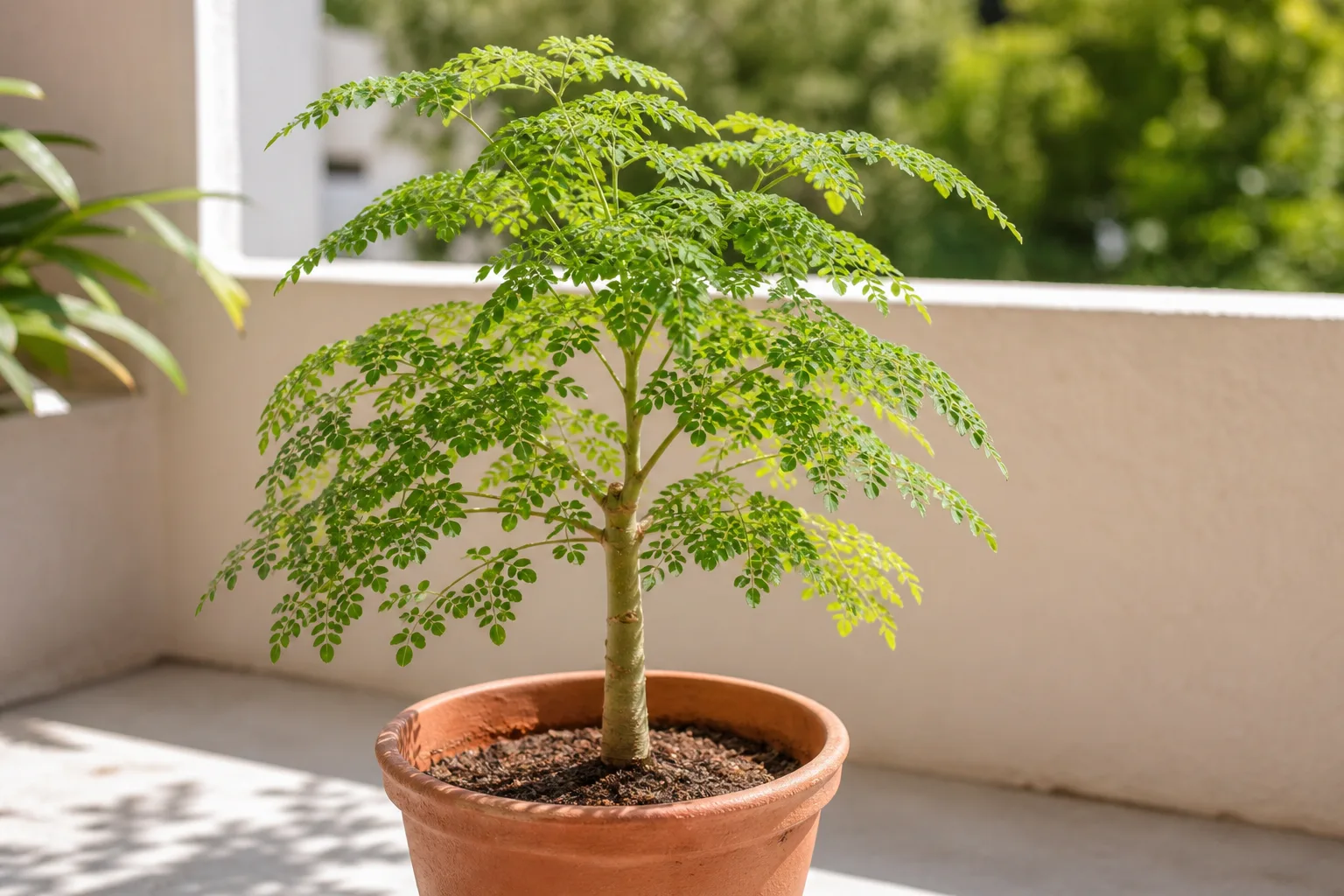
Moringa Pruning Guide: When, Where, and How Much to Cut
Moringa Pruning Guide: When, Where, and How Much to Cut
First action: Walk the plant and remove only dead, wind-snapped, crossing, or clearly diseased wood with clean bypass pruners—finish that cleanup before you top the leader or cut healthy canopy for height. Soft moringa wood breaks easily, so cleanup often reveals which shoots are still worth keeping.
For whole-plant context—sun needs, watering rhythm, and container limits—see the Moringa overview.
Reviewed by LeafyPixels Review Board · Author: sai-ananth
Quick answer
Prune moringa (Moringa oleifera) to keep leaves and tender shoots within reach, build a bushy multistem habit, and stop the plant from racing into a lanky pole—not to “fix” weak light or wet soil. Winrock notes that frequent pruning, lopping, coppicing, or pollarding increases and maintains leaf production, and that drumstick trees sprout back repeatedly after those cuts. (Winrock International)
ECHO advises pruning frequently into a shrub form, or the tree becomes lanky and hard to harvest; one practical annual approach is cutting back to about 1.2 m (4 ft) so sprouts stay within easy reach. (ECHOcommunity) On balcony pots, many growers hold plants closer to 60–90 cm after spring cutbacks. Make cuts just above a live bud or outward lateral, keep major reshaping for warm active growth, and return the plant to full sun afterward—see the Moringa light guide and watering guide before you expect dense regrowth.
What pruning does for moringa
Moringa is an extremely fast tropical tree. ECHO records plants reaching about 4 m (15 ft) in a year and eventual heights of roughly 6–15 m (20–50 ft) when left alone. (ECHOcommunity) Purdue describes a short deciduous tree to about 10 m with rather slender, brittle branches and corky bark. (Purdue University)
Left unpruned on a terrace, that growth habit becomes a single soft trunk with leaves out of reach. Pruning redirects apical dominance, keeps harvest height useful, thickens the canopy with side shoots, and lets you take woody cuttings when you want new plants.
Four jobs show up repeatedly:
- Cleanup removes dead twigs, wind breaks, and rubbing shoots whenever you spot them.
- Tip harvest / tip pinching shortens soft growing points for cooking and forces bushier branching while the plant is young.
- Size control shortens leaders and long laterals so a container plant stays roughly 1–2 m instead of becoming a miniature street tree.
- Hard reduction (annual cutback, pollard-style stubs, or low coppice) is biologically well tolerated and is the main leaf-production tool in field systems.
Pruning cannot replace full sun or fix chronic wet feet. If the canopy is sparse because the pot stays dark and soggy, fix placement and soil drainage first.
Why moringa responds so strongly
Useful Tropical Plants records that moringa coppices and pollards well, and that constant pruning of up to about 1.5 m per year helps produce a thick-limbed, multibranched shrub. (Useful Tropical Plants) Winrock likewise stresses keeping trees at a height that makes leaf harvesting easy. That resilience is why balcony growers can hold drumstick trees small with regular cuts. It is also why a careless hard scalp on a shaded, cold, or waterlogged pot can still set the plant back: the biology allows recovery, but remaining leaves and roots still have to rebuild the canopy.
What to check before you cut
Before any structural session, inspect in good light:
- Live vs dead wood — scratch lightly; green cambium means live; brittle brown pith means remove to healthy tissue.
- Soft, wind-snapped tips — Purdue notes brittle branches; mark broken stubs for cleanup first. (Purdue University)
- Leader status — one racing upright versus several competing soft stems.
- Bud placement — outward-facing buds or side shoots where you want new growth to go.
- Stress signs — sour wet soil, recent frost injury, or a plant still settling after repotting. Delay hard cuts until the plant is stable.
- Tools — sharp bypass pruners for stems under about 2 cm; loppers or a pruning saw for thicker wood. Wipe and sterilize blades between plants if disease is present. (Clemson HGIC)
Plan the goal before the first cut: cleanup only, tip harvest for bushiness, or intentional height reduction for leaf production.
When to prune moringa
Best window for structural cuts
Time major cutbacks for active growth in warm weather. In most Indian climates that means spring into the hot season—just as new compound leaves flush—so buds below a cut break quickly. Light tip work and leaf harvest can continue through the growing season while the plant is drinking and pushing shoots.
Avoid hard canopy removal during cold snaps. ECHO notes light frost may be tolerated in the subtropics, but a freeze can kill top growth back to the roots; the plant often recovers by sprouting from the trunk or crown when warmth returns. (ECHOcommunity) A hard prune followed by chill leaves fewer leaves to buffer stress and slows bud break.
Cleanup and tip harvest anytime
Dead, broken, or diseased wood can come off whenever you find it. Pinching or cooking-harvest of tender tips is fine whenever soft growth is present—ECHO notes that regularly breaking growing tips once trees are about 1.3 m (4–5 ft) tall makes them much bushier. (ECHOcommunity)
Young-plant timing
Start formative tip work in the first season while wood is still soft. Do not wait until the leader is out of reach. Early tip harvest is both the kitchen crop and the training method.
The first cut to make
Remove only dead, damaged, crossing, or diseased growth first. Work from the top downward so cut pieces do not snag on wood you still need to evaluate. Cut each failed shoot back to a healthy lateral or to just outside the branch collar on thicker wood—never flush into the trunk swelling, and never leave a long stub.
After cleanup, step back. If height and branching already look usable for leaf harvest, stop. If the leader still races skyward, move to size-control cuts next—not fertilizer, not repotting, and not a second aggressive pass the same afternoon.
How to prune moringa step by step
- Sanitize and stage tools. Sharp bypass pruners, loppers for mid-size wood, pruning saw for thick limbs. Clear a path around the pot so you can see the full silhouette.
- Cleanup pass. Dead, broken, rubbing, and diseased wood only.
- Decide the target height. For leaf harvest on pots, many growers aim for roughly 60–120 cm of permanent framework; ECHO’s classic annual cutback is about 1.2 m (4 ft). (ECHOcommunity)
- Size-control cuts. Shorten the main leader and long laterals to just above an outward-facing bud or to a side shoot that can take over as the new tip. Aim for a multibranched shrub, not a single skinny pole.
- Tip-train soft growth. On young plants, after a shoot has grown about 60 cm (2 ft), cutting it back by roughly 30 cm (1 ft) helps build a bushy scaffold—an approach ECHO reports using with success. (ECHOcommunity)
- Stop and leave recovery foliage. On pots, do not strip every leaf. Bag debris; keep root bark and woody waste out of pet reach.
Where exactly to cut
On woody laterals, cut just outside the branch collar—the slightly swollen junction where the branch meets the trunk or parent stem. Clemson notes that this collar region helps the tree wall off decay, so cuts should begin outside the branch bark ridge and finish just outside the collar swelling, not flush and not with a leftover stub. (Clemson HGIC)
On green pencil-thick shoots, cut about 5–10 mm above a visible bud, angled slightly so water does not sit on the bud face. Moringa pushes new shoots from buds and remaining wood below the cut; leave a live bud or lateral below every structural cut.
How much you can safely remove
Field moringa can take severe pollarding and low coppice cycles—BIOMASA-style forage systems even cut dense plantings back to short stubs repeatedly. Container moringa cannot match that reserve. As a practical home rule:
- Light maintenance: tip harvest and a few laterals anytime during active growth.
- Moderate reshape: up to about one-third of live leafy canopy in one session when you are only balancing shape.
- Planned annual hard cutback: reducing to roughly 60–120 cm on a vigorous, sunny plant is a standard leaf-production tactic—leave healthy buds on the remaining stubs and give the plant strong sun afterward.
If the plant is newly moved, recovering from frost, or sitting in wet sour mix, stick to cleanup only.
Pruning for shape, leaf harvest, and size control
Winrock’s home-garden profile frames the goal clearly: keep the tree short enough that leaf harvesting stays easy, using frequent pruning rather than waiting for a tall lanky trunk. (Winrock International)
First growing season
- Tip-pick soft shoots for cooking once the plant is about chest height.
- Shorten racing leaders before they lignify out of reach.
- Encourage several well-spaced scaffold shoots rather than one bare pole.
Established balcony or terrace plants
- Cut back to a harvestable height at least once a year in warm weather—often about 60–90 cm in pots, or closer to 1.2 m if you want a larger framework.
- Thin crowded laterals so sun and air reach the center.
- Avoid shearing into a perfect ball; selective cuts to buds and laterals recover cleaner.
Hard field-style coppicing—cutting almost to the ground—is biologically tolerated, but it is a biomass tool. On pots, prefer repeated moderate cutbacks that leave a short woody framework and enough leaves to feed the taproot.
Healthy tip wood from a warm-season prune can become cuttings—Purdue notes propagation from limb cuttings, and ECHO likewise describes establishing plants from branches. Use the Moringa propagation guide if you want to root them rather than composting everything.
Aftercare and recovery
After pruning:
- Return the pot to full sun as soon as the plant is stable—weak light after a hard cut produces soft, stretchy regrowth. Follow the Moringa light guide.
- Water only when the top few centimetres of mix are dry; do not keep the pot constantly wet “to help it recover.” Follow the Moringa watering guide.
- Skip heavy fertilizer for a week or two after a major cut; resume light feeding only when new leaves are expanding and roots are active. See the fertilizer guide for seasonal timing.
- Do not repot on pruning day unless roots are failing.
Recovery timeline
In warm sun, expect buds below cuts to swell within one to three weeks and a noticeable flush within a few weeks of active growth. Cooler weather, low light, or wet soil stretches that timeline. Signs pruning worked: firm new shoots from buds you intended to keep, a bushier silhouette, and no progressive dieback past the cut.
Signs you cut too hard or at a bad time: extensive leaf drop on remaining shoots, soft blackened tips after cold nights, or no bud break for many weeks while the mix stays wet and cold. Pause further cuts and stabilize light and watering first.
Mistakes to avoid
- Skipping cleanup and topping first — you lose orientation and may remove the only good scaffold wood.
- Leaving the plant unpruned — ECHO stresses that unpruned trees become tall and lanky and hard to harvest. (ECHOcommunity)
- Flush cuts into the trunk — remove the branch collar’s natural barrier.
- Long stubs — stubs die back and invite decay.
- Hard pruning before frost or during a cold snap — top growth can die back to the roots after a freeze.
- Scalping a shaded, wet pot — regrowth will be weak; fix light and drainage first.
- Waiting years between cuts — moringa grows extremely fast; small regular sessions beat emergency topping.
- Offering root bark as forage — ECHO warns root bark contains toxic alkaloids (including moringinine); keep woody root waste away from pets. (ECHOcommunity)
When not to prune
Skip structural pruning when nights are near freezing, when the plant is wilted from root failure, within a week of a stressful move or hard repot, or when you cannot give strong sun afterward. Cleanup of dead wood is still fine. If caterpillars or other pests are heavy on soft tips, remove only the worst damaged shoots until the plant is feeding again.
Related Moringa guides
- Moringa overview — identity, size expectations, and placement for Indian climates
- Moringa light — full-sun needs before you expect dense regrowth
- Moringa watering — dry-down rhythm after canopy loss
- Moringa soil — drainage that prevents post-prune stress
- Moringa propagation — using healthy pruning wood as cuttings
- Moringa repotting — when a top-heavy canopy needs a larger pot, not just more cuts
- Moringa fertilizer — light feeding only after new growth resumes