Slow Growth on Neon Pothos: Causes, Checks & Fixes
Quick answer
Slow growth on Neon Pothos usually means the plant is surviving-not thriving. First step: check whether leaves are dulling and internodes are stretching, then move to brighter indirect light before changing fertilizer or pot size.
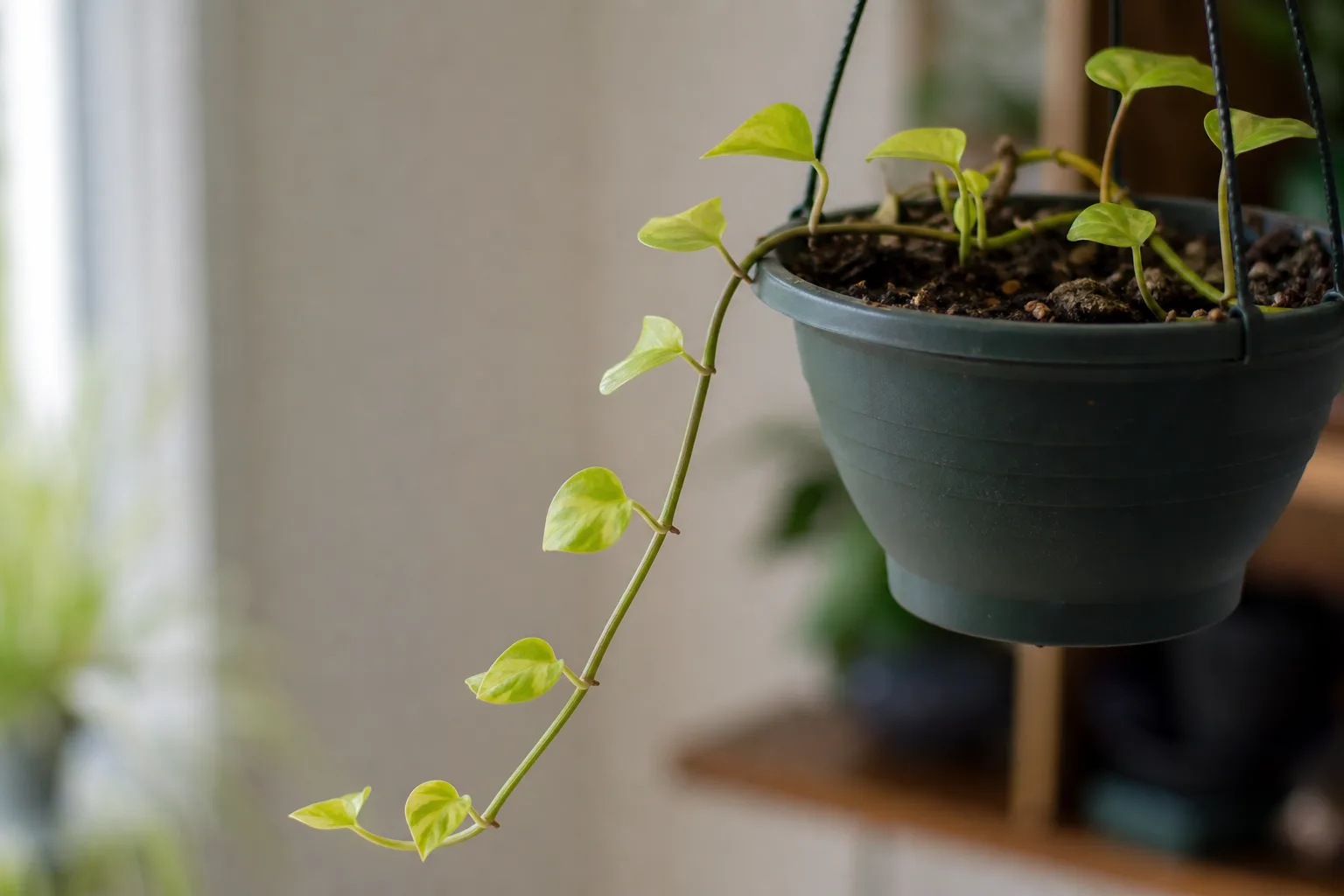
Slow Growth on Neon Pothos: Causes, Checks & Fixes
This guide covers slow growth on Neon Pothos. See also the general Slow Growth guide, watering, and light pages for this plant.
Slow Growth on Neon Pothos: Causes, Checks & Fixes
Quick answer
Neon Pothos (Epipremnum aureum ‘Neon’) is normally a fast trailing vine. When growth stalls for weeks during spring or summer, the plant is telling you a basic need is missing-almost always light, sometimes root space, cool temperatures, or damaged roots from overwatering.
First step: evaluate light before touching fertilizer or Neon Pothos repotting guide. Move the plant closer to a bright east- or west-facing window, or within a few feet of filtered south light, and watch new leaf nodes for two weeks. Neon Pothos dulls toward olive-green in weak light long before it dies, so leaf color is an early clue.
Winter slowdown is normal. Short days and cooler rooms reduce new leaves even when care is otherwise fine-do not panic if growth pauses from late fall through early spring.
What slow growth looks like on Neon Pothos
Slow growth is not one dramatic symptom. It is a pattern over time:
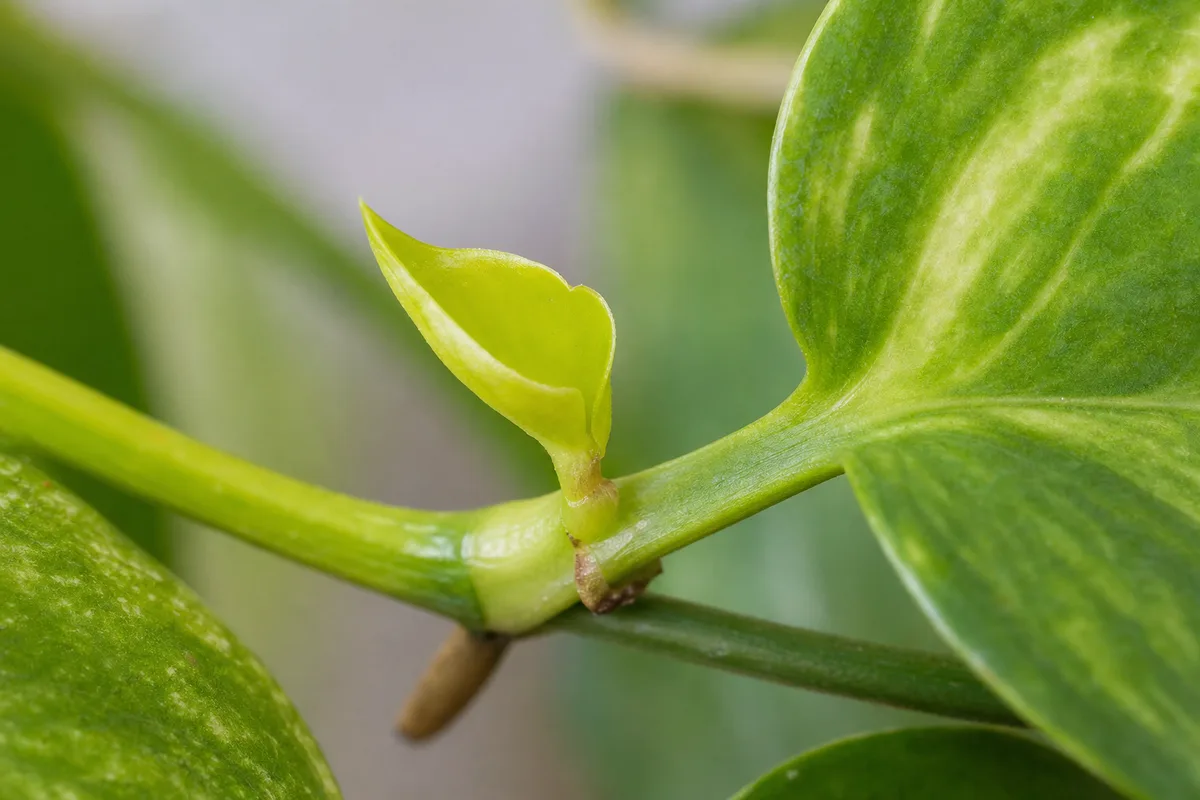
Slow Growth symptoms on Neon Pothos - compare with healthy tissue on the same plant.
- Few or no new leaves for a month or more during the active growing season
- Smaller new leaves than older ones on the same vine
- Long gaps between leaves (internodes stretching) while stems lean toward the brightest spot
- Dulled chartreuse color-vivid yellow-green fading toward pale green or olive
- Static vine length despite months of stable watering
- Pot dries very fast after each drink, suggesting crowded roots
Healthy Neon Pothos in good light produces regular leaf pairs along trailing stems. In strong spring growth, a new leaf every one to two weeks is realistic indoors. One leaf every four to six weeks in winter is common and not a problem by itself.
What slow growth is not: a single yellow leaf, one skipped watering cycle, or a plant that was recently repotted and is pausing for two weeks. Those are separate issues unless the pattern repeats.
Why Neon Pothos grows slowly
Insufficient light (most common)
Pothos tolerates dim corners but does not grow vigorously there. UF/IFAS notes pothos survives at about 50 foot-candles but produces small leaves and loses color in variegated cultivars below that level; 150 foot-candles or more maintains leaf size and color. Neon Pothos-solid chartreuse rather than green-often needs the brighter end of that range to keep its signature glow.
North Carolina Extension lists low light as a cause of variegation loss on pothos cultivars. When photosynthesis drops, the plant has less energy for new tissue. Vines may stay alive while adding almost no length.
Winter and short-day slowdown
Even well-cared-for pothos slows when day length and indoor temperatures drop. Growth that feels “stalled” from November through February is often seasonal, not broken care. Resume expectations in March when light increases.
Root-bound pot
Neon Pothos roots aggressively. When the root ball fills the container, uptake efficiency drops and growth plateaus even if you water on schedule. Signs include roots circling the pot edge, soil that dries within a day or two, and a top-heavy plant that tips easily.
Chronic overwatering or poor drainage
Saturated mix reduces root oxygen. Damaged roots move less water and nutrients, so the plant looks stable above soil while growth stalls below. Yellow lower leaves plus wet mix point here-not pure slow growth.
Cool room temperatures
Pothos quality declines when night temperatures drop below 65°F. Drafty windowsills, unheated rooms, and air-conditioning vents can keep metabolism low even in bright light. Neon Pothos prefers roughly 18–29°C (65–85°F) for steady vine extension.
Nutrient depletion (after other causes are ruled out)
Years in the same pot without feeding can leave nitrogen and micronutrients depleted. Maryland Extension links nutrient deficiency to yellow leaves and poor growth. On Neon Pothos, watch for pale new leaves that stay small-not just seasonal winter paleness.
Low-level pests
Spider mites, mealybugs, and scale drain sap without always causing obvious collapse. Stippled leaves, fine webbing, or sticky residue on chartreuse foliage can explain stalled vines even when light looks acceptable.
How to confirm the cause
Work through these checks in order:
- Season - Is it late fall or winter? If yes, compare growth to last spring before treating it as a problem.
- Leaf color and spacing - Are new leaves smaller and duller than older ones? Are internodes lengthening? That cluster fits low light.
- Light test - Move the pot to the brightest safe indirect spot for two weeks. Light intensity strongly influences leaf size and overall growth. At midday, a soft hand shadow on the foliage suggests enough brightness for active growth.
- Soil moisture rhythm - Stick a finger 4–5 cm into the mix. Does it stay wet for many days after watering? That suggests overwatering stress. Does it dry within 24 hours in a small pot? Consider root crowding.
- Root inspection - Slide the plant partly out of the pot. White or tan firm roots support slow-growth fixes; brown mushy roots need rot treatment first.
- Temperature - Note placement near AC vents, single-pane windows, or rooms below 18°C at night.
- Pest scan - Check leaf undersides and stem joints with a magnifying glass or phone camera.
If light improves and new nodes swell within two weeks, you have your answer. If yellowing spreads with wet soil, pivot to root health-not more fertilizer.
First fix for Neon Pothos
Move the plant to brighter indirect light and leave everything else alone for two weeks.
Place it within about one metre of an east- or west-facing window, or three to four feet back from a filtered south window. Avoid jumping straight into hot afternoon sun-Neon leaves can scorch. If natural light is weak, add a full-spectrum LED grow light 15–30 cm above the canopy for 12–14 hours daily.
Do not repot, fertilize, or prune heavily on day one. Each of those adds stress while the real limiter may simply be photons. Once new chartreuse leaves emerge at normal size, address root crowding or feeding if signs remain.
Step-by-step recovery
After the light move, continue in this order based on what you find:
- Stabilize watering - Water when the top 3–5 cm of mix is dry, not on a fixed calendar. In brighter light the pot dries faster; adjust accordingly.
- Repot if root-bound - In spring or early summer, move up one pot size with standard potting mix plus 20–25% perlite. Tease circling roots gently; do not jump to an oversized container.
- Feed lightly during active growth - After the plant produces two healthy new leaves, apply balanced liquid fertilizer at half strength monthly through summer. Skip feeding in winter and for four weeks after repotting.
- Warm the placement - Move off cold window sills at night or away from direct AC drafts.
- Treat pests if confirmed - Isolate, rinse leaf undersides, and use insecticidal soap on soft-bodied pests before boosting fertilizer.
- Prune to stimulate branching - Once light is adequate, trim leggy tips just above a node. New side shoots often follow within weeks.
Recovery timeline
In spring and summer, first visible improvement often appears within two to four weeks of better light-swollen nodes and slightly brighter leaf color come before full-size leaves.
Expect normal leaf production rhythm (roughly one leaf every one to three weeks on each active vine) within four to eight weeks if roots are healthy. Recovery started in late winter may take until March light increases.
Old small or dull leaves do not enlarge or re-brighten. Success means new chartreuse foliage at the tips. Winter may still bring a slower pace even after fixes-that is normal.
Worsening signs: yellow leaves spreading with soggy mix, soft stems at the soil line, shrinking leaves despite bright light and feeding, or no new nodes by mid-spring-those warrant root inspection or pest treatment, not more fertilizer.
Lookalike symptoms
- Leggy growth on Neon Pothos - Long internodes with slow overall length gain; same light fix, often the step before full stall.
- Not enough light - Overlapping diagnosis; dull color and stretch are the Neon-specific tells.
- Normal winter rest - Few leaves for months with firm stems and no yellowing wave; wait for spring.
- root rot on Neon Pothos - Yellow leaves, sour smell, mushy roots, wet mix; urgent, not a growth tweak.
- Underwatering - Crisp leaf edges, very light pot, wilt between long dry spells; deep soak once, then resume dry-down checks.
- Recent repotting - Two to four week pause after disturbance is normal; do not stack fixes.
What not to do
Do not double fertilizer to force growth in dim light-salts build up while the plant still cannot use them. Avoid repotting into a much larger pot “to help it grow”; extra wet soil volume stresses roots. Do not move directly into harsh south sun without acclimating chartreuse leaves.
Skip watering on a rigid schedule regardless of light changes; brighter placement dries mix faster. Do not ignore pests because the plant “looks fine” apart from slow vines.
How to prevent slow growth next time
Match placement to Neon Pothos needs: medium to Neon Pothos light guide year-round, not a dark hallway shelf. Rotate the pot weekly so all sides receive similar intensity.
Repot every one to two years when roots emerge from drainage holes. Feed lightly only during active growth. Keep temperatures in the comfort zone and expect slower vines in winter. Clean windows seasonally-dust cuts light more than people expect.
When to worry
Escalate if yellow leaves cluster with wet soil, stems soften at the base, or pests spread despite treatment. Slow growth alone in winter near a bright window rarely needs emergency action.
If the plant produces no new nodes by April after a light and repot adjustment, inspect roots for rot or severe binding before assuming the vine is permanently stunted.
Conclusion
Slow growth on Neon Pothos is usually a resources problem, not a mystery disease. The chartreuse color and spacing between leaves tell you whether light is adequate before you repot or feed. Move to brighter indirect light first, confirm roots and Neon Pothos watering guide, then adjust pot size or fertilizer only if signs persist through the active season. Patience through winter-and action in spring-matches how this fast vine actually grows indoors.
When to use this page vs other Neon Pothos guides
- Neon Pothos watering guide - Use for routine moisture checks before assuming slow growth is the main issue.
- Neon Pothos problems hub - Browse all 5 common issues on this species.
- Leggy Growth on Neon Pothos - Different entry point when symptoms overlap with slow growth.
- Yellow Leaves on Neon Pothos - Different entry point when symptoms overlap with slow growth.