Papaya Fertilizer Guide for Pots and Warm Climates
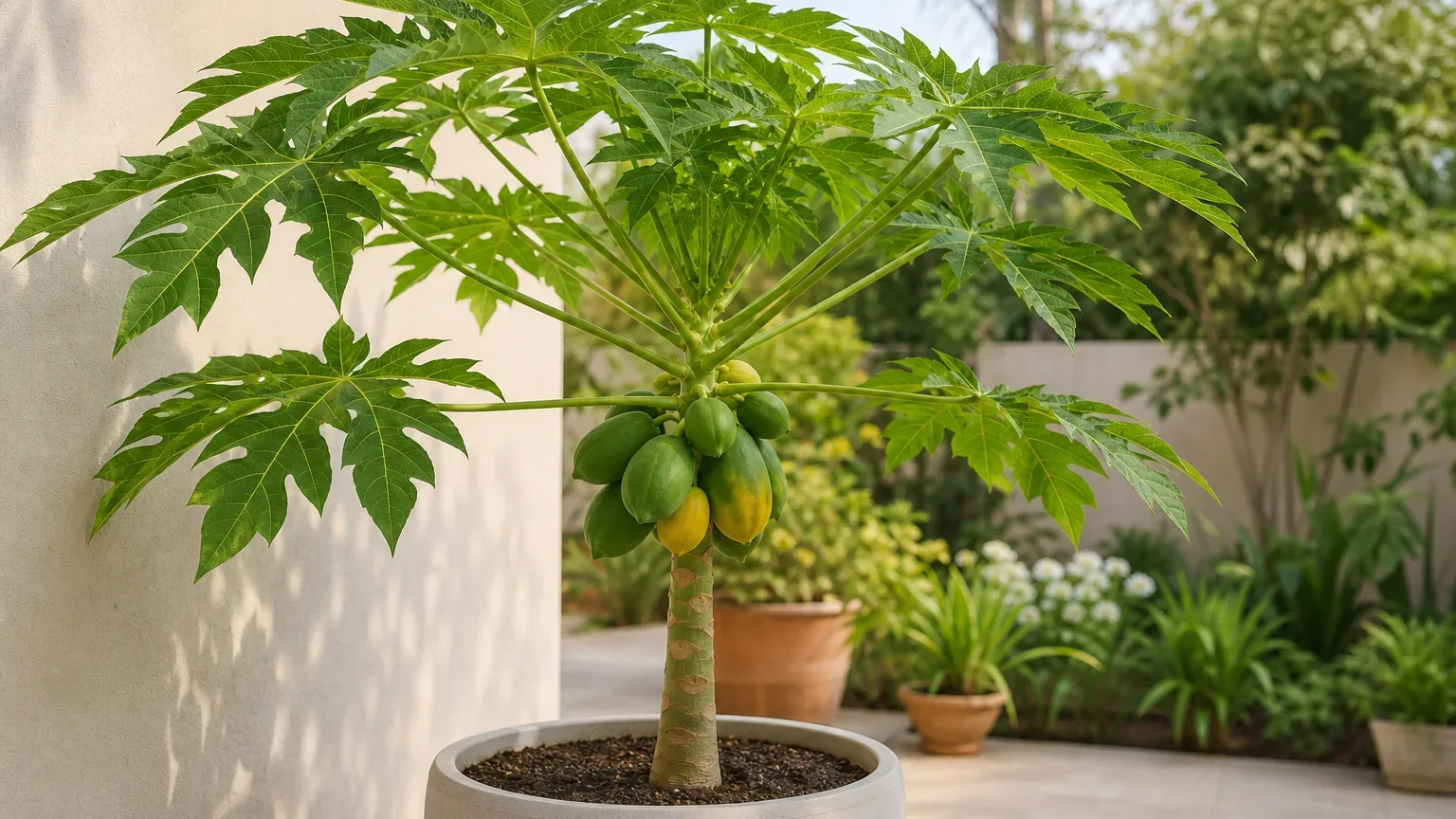
Papaya Fertilizer Guide for Pots and Warm Climates
Papaya Fertilizer Guide for Pots and Warm Climates
Papaya grows so quickly in heat that it can look hungry even when fertilizer is not the limiting factor. A pale or stalled Carica papaya may actually have wet roots, too little sun, a cramped pot, cool weather, or damaged roots. Feed only after those basics are sound, because extra nutrients cannot compensate for poor Papaya light, incorrect Papaya watering, or a dense root zone.
This distinction matters especially on Indian terraces and balconies. A field-grown plant can explore a large soil volume, while a papaya in a 50–100 litre container holds all added salts in a confined root zone. The same plant is a fast-growing, tropical, herbaceous species—the NParks species profile records fast growth, full-sun preference, and fertile, well-drained soil—but its safe fertilizer dose changes sharply with root volume.
The quick answer: what to feed papaya
Use a complete fertilizer containing nitrogen, phosphorus, potassium, magnesium, and micronutrients, applied in small, regular amounts while the plant is visibly growing. For a container, a complete liquid fruit-and-vegetable or general-purpose fertilizer is easiest to control: start at one-quarter of the label rate, apply to already-moist mix, and reassess the newest leaves before the next feed. If growth remains strong and there is no crusting or tip burn, the dose can remain conservative rather than being increased automatically.
In the ground, base the product and amount on a soil test where possible. Papaya-specific UF/IFAS guidance favors frequent small applications of a complete fertilizer and identifies N, phosphate, potash, and magnesium as core components. That principle transfers to pots; the large landscape quantities in its table do not.
Why papaya needs small, regular feeds
Papaya can produce new leaves weekly in warm weather and may flower within months of planting. That pace creates continuing nutrient demand, but its shallow, oxygen-demanding roots also make a single concentrated dose risky. Small feeds align nutrient supply with new growth and make it easier to stop when rain, cold, transplant stress, or poor drainage slows uptake.
Papaya is not a woody fruit tree that stores a large fertilizer dose in an extensive root system. Its roots perform best in warm, aerated soil, and growth declines when conditions become unfavorable. Read fertilizer as support for active growth, not as a trigger that can force a cold, shaded, waterlogged, or diseased plant to grow.
Best fertilizer type for papaya
Choose a product with all three primary nutrients and a broader guaranteed analysis. A balanced formula can work, but equal N-P-K numbers are not a biological requirement. A complete fruiting-plant formula with moderate nitrogen, useful potassium, magnesium, and trace elements is also suitable when the label permits container use.
Avoid routine “bloom booster” feeding with a very high middle number. Phosphorus does not create flowers by itself, and repeated excess can accumulate where soil already contains enough. Clemson Extension advises choosing nutrients according to actual need and explains that plants in otherwise favorable soil may require less fertilizer than expected in its fertilizer selection guide.
How to read the NPK and micronutrient label
The three large numbers are percentages by weight of nitrogen, phosphate expressed as P2O5, and potash expressed as K2O—not a direct feeding instruction. Clemson’s fertilizer-label explanation also notes that soilless container mixes benefit from all three major nutrients, though not necessarily in equal proportions. Check the application directions for containers, then dilute from that rate rather than copying a farm recommendation.
Look below the NPK line for magnesium and micronutrients such as iron, manganese, zinc, and boron. These are needed in much smaller quantities, so “more” is not safer. If repeated feeding does not correct pale new leaves, investigate pH, root condition, and water quality before adding a separate trace-element product.
Compost, manure, and organic feeds
Finished compost can improve a potting mix and supply background nutrition, but it is difficult to calculate its release rate. Keep it as a minority component of an airy Papaya soil mix rather than top-dressing thick layers that hold monsoon water against the stem. Never use fresh manure in a container; it can be too salty, chemically hot, and physically dense.
Indian field guidance from Tamil Nadu Agricultural University combines farmyard manure with scheduled N, P, and K and gives separate fertigation rates for commercial planting. This confirms that organic matter and mineral nutrition can complement each other, but those field rates assume open soil, crop spacing, irrigation engineering, and a much larger root zone. They should not be scaled by guesswork into a terrace pot.
A warm-climate papaya fertilizer schedule
In frost-free tropical conditions, follow visible growth rather than four temperate seasons. Feed when the crown is regularly opening full-sized leaves and the pot is using water normally. Pause or extend the interval whenever new-leaf production slows, even if the calendar says it is the growing season.
A practical starting rhythm for a healthy container is a quarter-label liquid feed every two to four weeks during vigorous growth. Choose the longer interval for a recently purchased plant, a shaded balcony, a moisture-retentive mix, or a pot with controlled-release fertilizer already blended in. This is a starting framework, not a universal crop prescription.
Seedlings and newly planted papaya
Do not feed a just-germinated seedling until it has established true leaves and is growing steadily. Then use a dilute complete feed rather than granules touching the tender stem. UF/IFAS suggests dilute complete fertilizer every 10–14 days for nursery seedlings, but home containers vary greatly; starting weaker and watching growth is safer than matching commercial strength without knowing the product.
After transplanting, let the root ball settle and resume feeding only when a new leaf is expanding normally. If the seedling wilts, the stem base darkens, or the mix stays wet, troubleshoot establishment through the Papaya repotting guide instead of feeding.
Established and fruiting plants
An established papaya in full sun may use nutrients continuously through warm months, particularly while carrying flowers and fruit. Continue small complete feeds rather than switching abruptly to a highly concentrated high-potassium product. Fruit load increases demand, but light, pollination, temperature, root health, and steady moisture still control whether the plant can use the fertilizer.
For an in-ground plant, use a local soil test and regional horticultural recommendation. UF/IFAS’s home-landscape schedule increases the amount as plants age while reducing frequency later, illustrating why plant size matters. A pot-grown papaya should remain on a lower, label-based container dose because its roots cannot disperse salts through open ground.
Monsoon, extreme heat, and cooler months
During monsoon spells, skip a planned feed if the mix is already saturated or heavy rain will immediately flush the pot. Apply once drainage and active growth return, and never allow fertilizer-rich runoff to remain in a tray. Clemson Extension recommends applying fertilizer when plants can absorb it and postponing before heavy rain to reduce leaching and runoff in its 4R nutrient guidance.
During extreme dry heat, water first and delay feeding until the plant is hydrated and no longer wilted. During cool or cloudy periods, lengthen the interval or pause because papaya leaf production and root activity slow. A warm-climate plant does not need a fixed “winter ban,” but it does need fertilizer matched to actual growth.
How to fertilize papaya in containers
Container fertilizer should be measured, diluted, and recorded. Check whether the potting mix already includes controlled-release granules; stacking those with routine liquid feeding is a common source of excess. Use a measuring spoon or syringe dedicated to garden products, and follow the exact dilution units on that product’s label.
Large pots need enough solution to wet the root zone evenly, not a stronger solution. Apply around the mix rather than pouring concentrate at the stem, allow a little drainage, and discard runoff. Keep fertilizer, measuring tools, and runoff inaccessible to children and animals.
A safe dose-and-water method
- Confirm that the papaya is opening new leaves and is not wilted, chilled, waterlogged, or newly transplanted.
- Feel the mix; if it is dry, water normally first and feed at a later watering.
- Mix a complete liquid fertilizer at one-quarter of the label’s container rate for the first application.
- Distribute it across the already-moist root zone until a small amount drains.
- Empty the saucer, note the date and dose, and watch the newest leaves for two weeks.
This method deliberately starts below many labels because papaya containers vary from small nursery bags to permanent tubs. University of Georgia Extension explains that smaller soil volumes require less fertilizer and that active growth and light level should guide feeding in its container nutrition guidance. Increase only if the plant remains vigorous, the mix drains freely, and the label allows it.
After repotting or changing the potting mix
Fresh commercial mix may contain starter fertilizer or controlled-release pellets. Check the bag before adding anything else, then wait for resumed growth rather than feeding immediately. Papaya dislikes repeated root disturbance, so a pause also prevents salts from contacting injured root tips.
If you moved the plant into an unamended, inert mix, feeding may resume sooner once new growth confirms establishment. If the mix contains compost or fertilizer charge, wait longer. The Papaya propagation guide covers seedling establishment; this page resumes once roots are functioning and the plant is ready for routine nutrition.
Diagnose the plant before adding fertilizer
Assess the newest leaves, older leaves, soil moisture, stem base, drainage, recent weather, and feeding history together. Yellow lower leaves in wet mix point first to root stress; pale new leaves in alkaline media can reflect iron availability; small leaves in shade can reflect insufficient light. A nutrient diagnosis based on one leaf is unreliable.
For an in-ground papaya, a laboratory soil test is more useful than adding a broad mix repeatedly. The UF/IFAS soil test service measures pH and nutrients including P, K, Ca, Mg, S, B, Cu, Mn, and Zn. Container media may require a specialist media or irrigation-water test rather than a standard garden-soil test.
Possible nutrient-deficiency patterns
Uniformly pale growth and smaller successive leaves can suggest inadequate nitrogen after light, roots, and watering are corrected. Interveinal yellowing on the newest leaves can suggest iron or manganese availability problems, especially at high pH. Marginal yellowing or weak fruit development may involve potassium, but none of these patterns proves a deficiency by itself.
Do not spray zinc, boron, or iron “just in case.” TNAU publishes specific zinc and boron foliar concentrations for managed field crops, while UF/IFAS distinguishes soil and foliar micronutrient approaches by pH. These are diagnostic, crop-system recommendations—not a reason to improvise foliar mixes on a balcony.
Overfertilization and soluble-salt damage
Suspect excess when brown leaf edges or tips appear soon after feeding, a white crust forms on the mix or pot rim, roots brown, or the plant wilts although the mix is moist. Stop feeding, remove any visible granules, and leach only if the pot drains freely. Run plain water through the mix, discard every bit of runoff, then let the pot return to its normal moisture cycle.
Fertilizer salts can draw water away from roots; Clemson Extension describes this mechanism and the resulting scorch in its fertilizer-burn guidance. If the stem base is soft, the mix smells sour, or the pot has no open drainage, do not keep flushing a waterlogged plant. Repotting and a root inspection may be safer than adding more water.
Common papaya fertilizer mistakes
The most damaging errors are copying field rates into pots, feeding bone-dry roots, stacking liquid and controlled-release products, treating every yellow leaf as hunger, and applying more during prolonged rain. Another mistake is using the same schedule after the crown has stopped producing leaves. Fertilizer should follow growth, not try to manufacture it.
Avoid letting runoff enter storm drains or neighboring balconies. Nitrogen can leach through soil and phosphorus can move with eroded particles, so measured application protects both the plant and water quality. If you spill granules on paving, sweep them up rather than washing them away.
When to use this page vs other Papaya guides
- Use the Papaya overview for whole-plant requirements and growth habit.
- Use Papaya watering when wilting, wet mix, or changing weather makes moisture the first concern.
- Use Papaya soil when drainage, pH, compaction, or the potting blend may be limiting nutrient uptake.
- Use Papaya repotting for root-bound plants, unstable pots, or damaged container media.
- Use Papaya light when leaves are small, growth is stretched, or a balcony receives limited direct sun.
Related Papaya guides
- Papaya plant care overview
- Papaya light guide
- Papaya watering guide
- Papaya soil guide
- Papaya repotting guide
- Papaya propagation guide
- Papaya pruning guide
Conclusion
Papaya responds best to complete nutrition in small, regular doses during visible active growth. In warm Indian and tropical conditions, that may mean feeding across much of the year, but monsoon saturation, extreme drought stress, cool cloudy periods, repotting, or stalled growth all call for a pause. For containers, begin with a complete liquid fertilizer at one-quarter of the label’s container rate, apply to moist mix, discard runoff, and adjust only from the plant’s response.
Keep the priorities in order: sun, warmth, drainage, steady moisture, functioning roots, then fertilizer. That sequence produces stronger growth than chasing every pale leaf with another dose and gives a fast-growing papaya the nutrition it can actually use.