Papaya Watering Guide for Pots and Warm Climates
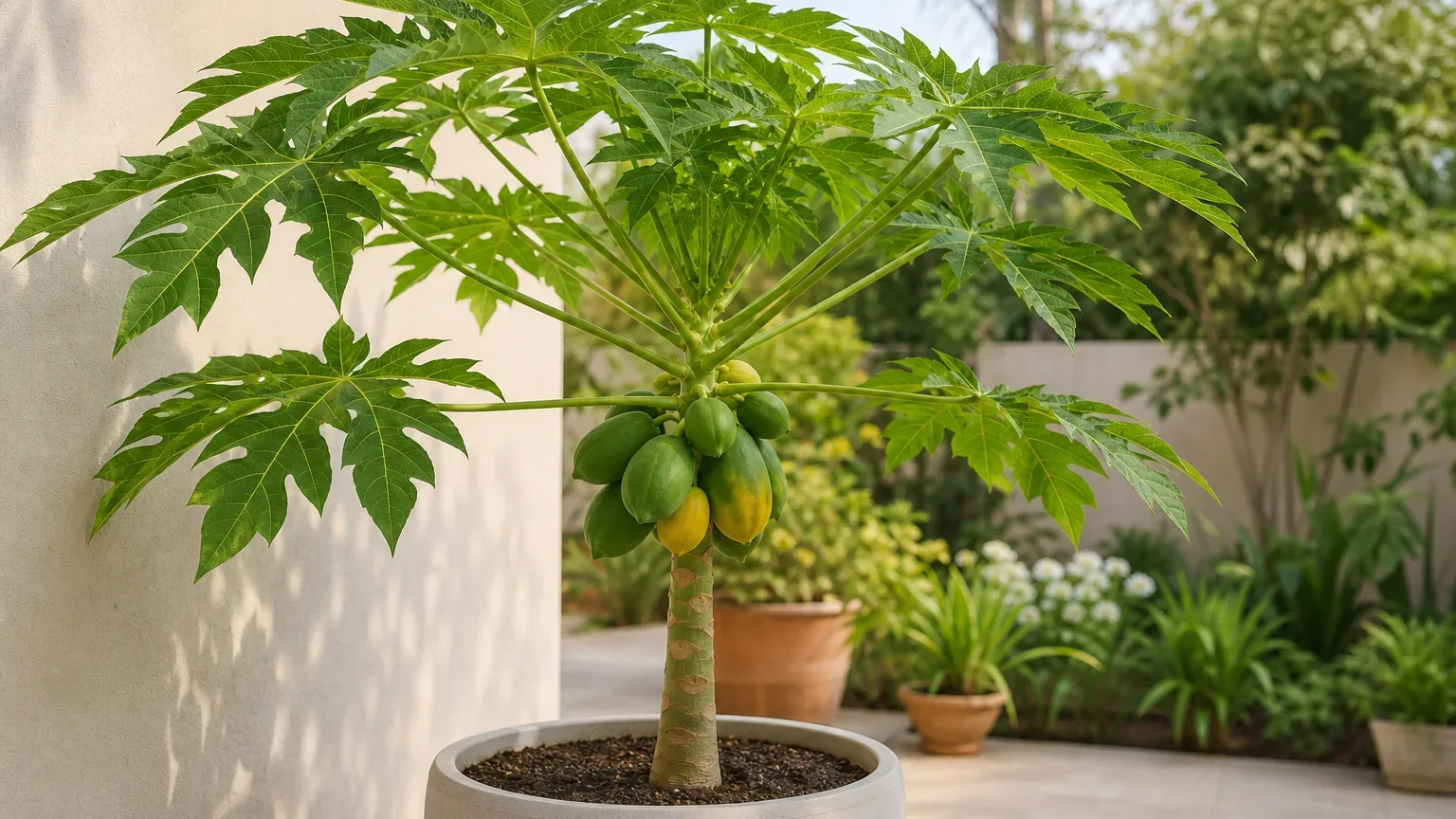
Papaya Watering Guide for Pots and Warm Climates
Papaya Watering Guide for Pots and Warm Climates
A papaya can look thirsty only hours after a hot terrace wind, yet the same plant can wilt because its roots are sitting in wet, airless mix. That is why papaya watering should be based on the root zone, not on a fixed daily calendar. For Carica papaya in a container, check the upper 2–4 cm of mix and the pot’s weight; water deeply when that layer is dry and the pot is noticeably lighter, then let every drop of excess water escape.
In India’s hottest, brightest weather, a large leafy papaya may pass that test every day or two. During humid monsoon spells or a cool, cloudy week, the pot may remain wet far longer. The useful routine is therefore check, water fully, drain, and check again—not “give one mug every morning.”
The quick answer: moist, never waterlogged
Papaya performs best when the root ball stays evenly moist but well aerated. UF/IFAS describes papaya as poorly adapted to flooded soils and recommends planting where drainage is excellent, while also noting that drought can cause flower, leaf, and young-fruit drop (UF/IFAS Extension). Those two risks define the target: avoid a long bone-dry spell, but never keep the pot saturated.
For a container plant, insert a finger 2–4 cm into the mix. If it feels dry there and the pot is lighter than after watering, soak the full root ball. If it feels cool or clings to your finger, wait and check again later. This test matters more than whether one, two, or four days have passed.
Why papaya reacts quickly to watering mistakes
Papaya is a fast-growing tropical herb, not a woody orchard tree with a deep, resilient framework of roots. Its large leaves can lose water quickly in sun and wind, while roots require oxygen as well as moisture. The University of Georgia explains the container principle clearly: roots need a balance of air and water, and excess water that fills pore spaces restricts oxygen (UGA Cooperative Extension).
The plant’s speed amplifies both sides of the mistake. A warm, fruiting specimen in a relatively small pot can use water quickly; an oversized pot filled with dense mix can remain saturated around a smaller root system. Papaya irrigation research also treats water demand as variable with weather and crop development rather than as one permanent amount (UF/IFAS ET-based irrigation guidance). For a home grower, the practical equivalent is to read the pot and plant each time.
When to water papaya
Water when the upper 2–4 cm is dry, moisture lower in the pot is no longer excessive, and the container feels lighter. Do not wait for repeated severe wilting as your normal signal; drought stress can cost leaves, flowers, or young fruit before the plant visibly collapses. Do not water merely because the surface looks pale either, because the centre and bottom of a deep pot can still be wet.
A frequency range can help you decide when to inspect, but it cannot decide when to irrigate. In hot full sun, check a container every morning and again late afternoon during extreme heat. In moderate warm weather, checking every one to three days may be enough. The Royal Horticultural Society likewise advises checking container moisture frequently in warm weather and watering according to need rather than applying small, ineffective amounts (RHS watering guidance).
Use three checks before reaching for the hose
First, use the finger test in several places, avoiding the soft stem base. Second, lift or gently tilt the pot; a recently watered large container feels substantially heavier than one approaching irrigation. Third, push a dry wooden skewer well into the root zone for several minutes. Damp, darkened wood with adhering mix means there is still moisture below the surface.
Combine the checks instead of trusting a cheap moisture meter as a verdict. Meters can respond differently in compost-rich, salty, or very coarse media. If the top is dry but the skewer is wet and the pot heavy, wait; if all three indicate drying, water before the crown becomes limp.
How to water a papaya deeply
Apply water slowly across the mix, not against the stem, until runoff emerges freely from every drainage hole. Pause for a minute, then make a second pass if the mix had become so dry that water initially escaped down the sides. This re-wets the root ball more evenly than repeated small cups, which can leave dry pockets and encourage roots near the surface.
Let the pot drain completely and empty the saucer or decorative outer pot. Never leave the base standing in runoff. Indian papaya guidance from Tamil Nadu Agricultural University recommends irrigation according to need while explicitly warning that water should not contact the stem because it can promote collar-rot disease (TNAU Agritech). In a pot, keep mulch and wet mix slightly away from the stem collar for the same reason.
Water in the morning when practical. Foliage and spilled water then dry faster, and the plant has moisture available before afternoon heat. Aim the water at the mix rather than routinely showering the crown; root-zone irrigation is what hydrates the plant.
Watering papaya in containers
Container papaya needs closer observation than an in-ground plant because its available root volume is limited. A sunny black plastic pot can heat and dry rapidly, while a glazed or oversized pot may hold moisture for days. A top-heavy plant also needs a stable container, but stability should come from width and weight—not a sealed base.
Choose a pot with several unobstructed holes and raise it slightly if a flat terrace prevents runoff from leaving. A drip tray can protect the floor, but it must be emptied. If monsoon rain repeatedly fills the tray, remove it or shelter the pot rather than expecting the root ball to absorb the excess.
Pot size, mix, and drainage change the interval
A young papaya in a very large volume of dense mix is easy to overwater because roots occupy only part of the wet soil. Conversely, an established plant packed with roots may dry within a day in May heat. This difference is why two papayas on the same balcony can need water on different days.
Use a fertile mix that holds some moisture but drains immediately—quality potting mix plus finished compost and coarse aeration material such as perlite, pumice, or fine bark. Do not put gravel at the bottom as a substitute for a well-structured mix and open holes. If water sits on the surface, drains through only one channel, or the pot remains heavy for many days, solve the Papaya soil problem rather than merely reducing each watering to a token splash.
Papaya watering through India’s seasons
India does not offer one universal papaya schedule. A terrace in hot, dry Nagpur, a humid Kochi courtyard, and a Bengaluru balcony during a cool cloudy spell have different evaporation and rain exposure. Treat season as a reason to change how often you check, then let actual moisture decide.
Field studies in India show why irrigation must respond to local water loss: drip treatments scheduled against cumulative pan evaporation changed both water use and papaya yield (Journal of Agricultural Sciences). Those field rates should not be copied into pots, but the principle transfers—heat, wind, canopy size, and rainfall alter demand.
Hot, dry summer weather
During intense pre-monsoon heat, inspect pots daily. Water early in the morning whenever the 2–4 cm dryness and pot-weight checks agree; a large fruiting plant in a root-filled container may genuinely need daily watering during a heat wave. Afternoon droop alone is not proof of drought, however. Check the mix first, because leaves can temporarily hang in extreme heat even while roots remain moist.
Reduce stress by shading the pot itself, not the sun-loving crown, and by using a thin organic mulch that does not touch the stem. Windbreaks also slow water loss from the broad leaves. If the pot goes from soaked to severely wilted within hours, the root volume is probably too small or the mix has become water-repellent; review the Papaya repotting guide instead of trying to keep up with constant sips.
Monsoon and prolonged rain
Monsoon care is primarily a drainage problem. Stop routine irrigation while rain is wetting the root ball, remove standing saucer water, and check whether runoff can leave from all holes. If the plant sits under an eave, remember that wind-blown rain may wet only one side; test several points before deciding the whole pot is watered.
Move a portable container under a bright rain shelter when days of heavy rain are forecast, particularly if the mix already drains slowly. Papaya research from ICAR-affiliated authors has examined how much soil volume drip irrigation wets, reinforcing that distribution through the root zone—not simply total water applied—matters (Journal of Horticultural Sciences). Do not compensate for monsoon saturation with fertiliser; restore aeration first.
Cooler or cloudy slow-growth periods
Papaya does not need a temperate winter dormancy, but water use drops when light and temperature fall. Check less often through cool, cloudy weather and irrigate only after the root-zone tests pass. A calendar carried over from hot April weather can leave the same pot continuously wet in December or during a week of monsoon cloud.
Keep the plant in the brightest warm position available and protect it from cold rain. The Papaya light guide helps with placement, while the watering response is simple: slower growth and slower evaporation mean a longer interval, not a smaller daily dose.
Signs a papaya needs water
Early drought signs include a lighter pot, dry mix at depth, leaves that lose firmness, and slight downward drooping during the cooler morning hours. With more severe or repeated stress, lower leaves can yellow or dry, leaf edges can scorch, growth slows, and flowers or young fruit may drop. The key combination is dry root zone plus loss of leaf turgor.
Rehydrate a dry but otherwise firm plant with one slow, complete watering. If water races around a shrunken root ball, apply it in two or three passes several minutes apart. Do not leave the pot soaking for hours, and do not follow the rescue with daily watering unless the mix actually dries again.
Signs of excess water and root trouble
Suspect excess moisture when leaves yellow while the pot remains heavy, the crown wilts despite wet mix, growth stalls in warm bright conditions, or the lower stem becomes dark or soft. Sour-smelling mix, persistent algae, and water that remains in a saucer strengthen the diagnosis. Wet-root wilt is dangerous because adding more water treats the appearance but worsens the cause.
Papaya is especially vulnerable where drainage is poor; UF/IFAS lists prolonged flooding and continuously wet soil among conditions that can severely injure or kill plants (UF/IFAS Extension). If the stem collar softens, treat it as urgent. Keep irrigation away from that tissue and inspect the root environment rather than waiting for the next scheduled watering.
What to do when watering has gone wrong
For a dry plant, water thoroughly, drain, and shelter it from fierce afternoon wind for the rest of the day. Keep healthy green leaves; they help recovery. Reassess the pot size and mix if drought returns exceptionally fast, and avoid a large fertiliser dose until the plant resumes steady growth.
For a wet, wilting plant, stop watering and empty all standing runoff. Move it to bright warmth with airflow, check blocked holes, and allow the mix to lose excess moisture. If the smell is sour, the stem base is soft, or wetness persists for many days, slide the root ball out carefully and inspect it; papaya dislikes rough root disturbance, so do this only when evidence points to root decline.
Trim only clearly dead, mushy roots with a clean tool and repot at the same depth in fresh, freely draining mix. Do not bury the stem. The Papaya overview provides whole-plant context, while the Papaya fertilizer guide should wait until healthy new growth confirms that roots are functioning.
When to use this page vs other Papaya guides
- Use this watering page to decide when and how deeply to irrigate, interpret wet-versus-dry wilt, and adjust through heat or monsoon.
- Start with the Papaya overview for placement, growth habit, pollination, and a complete care summary.
- Use the Papaya soil guide when the mix drains slowly, compacts, or dries unevenly.
- Use the Papaya repotting guide when a root-filled pot dries within hours or the plant has become unstable.
- Use the Papaya light guide when low light is slowing water use or a sudden move into harsh sun is increasing stress.
Related Papaya guides
- Papaya plant care overview — identity, climate, growth, pollination, and whole-plant priorities.
- Papaya soil — an airy, moisture-retentive mix that drains promptly.
- Papaya repotting — pot size, root disturbance, and post-move watering.
- Papaya light — sun exposure and its effect on water use.
- Papaya fertilizer — feeding only when roots and growth are healthy.
- Papaya propagation — moisture management for seedlings.
Conclusion
Successful papaya watering is a balance between steady moisture and immediate drainage. Check the top 2–4 cm, confirm with pot weight or a skewer, then water the entire root ball and discard all runoff. Expect to check much more often in hot, windy summer weather and to irrigate far less during heavy monsoon rain or cool cloudy periods.
When leaves droop, test before acting: dry mix calls for a deep drink, while wet mix calls for drainage and root-zone assessment. Keep water away from the stem collar, never let the container stand in a full saucer, and fix a poor mix or unsuitable pot instead of trying to solve structural problems with a clever schedule.