Wilting on Parlor Palm: Causes, Checks & Fixes
Quick answer
Wilting on Parlor Palm almost always comes down to water-either the mix is too dry or too wet for roots to work. Before watering, stick your finger 3–5 cm into the soil and lift the pot. Dry and light means soak and drain; wet and heavy means stop watering and inspect roots.
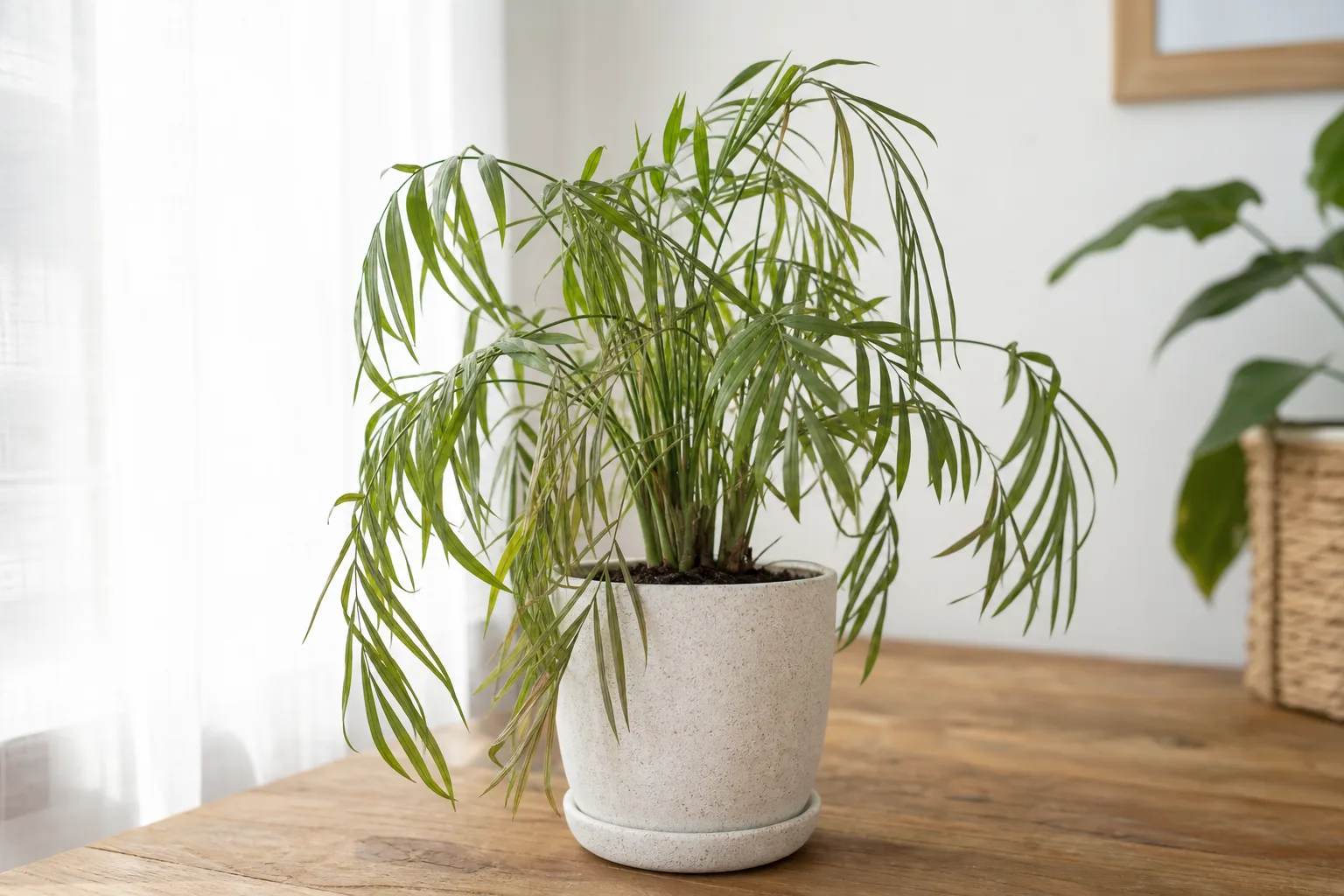
Wilting on Parlor Palm: Causes, Checks & Fixes
This guide covers wilting on Parlor Palm. See also the general Wilting guide, watering, and light pages for this plant.
Wilting on Parlor Palm: Causes, Checks & Fixes
Quick answer
Wilting on Parlor Palm (Chamaedorea elegans) means the plant has lost turgor-the internal water pressure that keeps fronds upright. That can happen when roots are too dry to pull water up or too damaged to absorb water even though the mix feels wet. The two look similar from across the room, but the fixes are opposite.
First step: check soil moisture 3–5 cm deep and lift the pot. A light, dry pot with limp fronds usually needs a deep soak and full drain. A heavy, wet pot with limp fronds needs watering paused and a root inspection-not another drink.
Parlor Palm declines slowly compared with faster-draining succulents, so wilt can appear a few days after the real problem started. Do not assume thirst and pour water without checking depth first.
What wilting looks like on Parlor Palm
On this palm, wilt shows as limp, drooping pinnae (the small leaflets along each frond) and arching fronds that hang lower than usual. Thin stems may look soft but should not feel mushy. Because Parlor Palm grows from a clustered base rather than a single thick trunk, several fronds often wilt together instead of just one leaf.
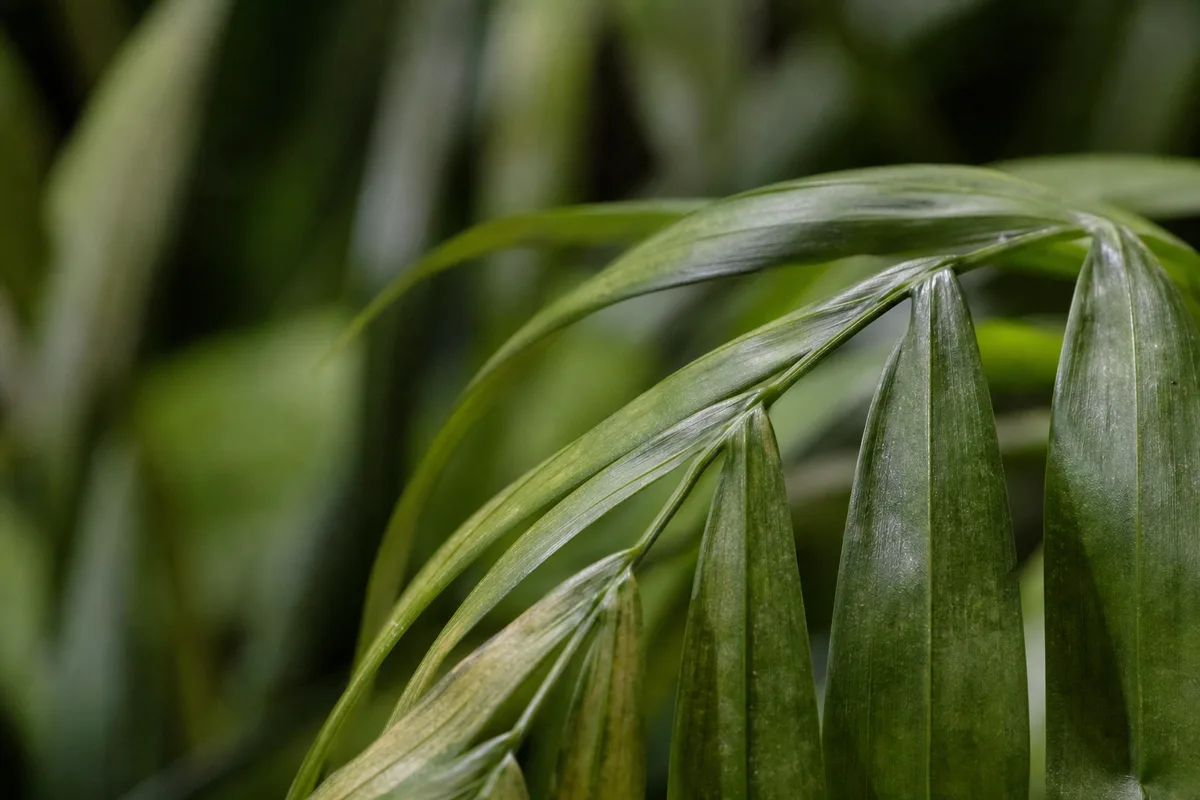
Wilting symptoms on Parlor Palm - compare with healthy tissue on the same plant.
Common patterns:
- Thirst wilt - Mix is dry several centimeters down, pot feels light, fronds droop but stems stay firm. Leaf edges may feel papery; brown tips can appear if drought lasted a while.
- Wet-soil wilt - Mix stays damp for days, pot feels heavy, fronds stay limp despite moisture-rotting roots cannot take up water. Lower fronds may yellow first. A sour or swampy smell from the pot is a rot clue.
- Heat-stress wilt - Fronds droop in afternoon sun or near a hot window, then partially recover overnight when temperatures drop. Soil moisture is usually even-not bone dry.
- Draft or cold wilt - Sudden limpness after the plant sits near an AC vent, open winter window, or cold door. Often paired with darkening or browning frond tips.
Fully collapsed, brown fronds will not re-green. Recovery is measured by new firm growth from the center, not by old lower fronds standing tall again.
Why Parlor Palm wilts
Parlor Palm evolved in filtered understory light with steady humidity and soil that drains well but never bakes dry for weeks. Indoors, wilt usually traces to culture-not random bad luck.
Underwatering
Missouri Botanical Garden notes that indoor Parlor Palm likes uniformly moist soil-not desert-dry pots. When the root ball dries too far, fine roots lose function and fronds lose turgor. This palm tolerates missed water better than chronic soggy soil, but repeated drought cycles leave fronds limp and tips crispy.
Triggers at home:
- Watering on a calendar instead of checking dry-down
- Very low humidity plus warm air that pulls moisture from leaflets faster than roots replace it
- A root-bound pot where water runs down the sides without rewetting the core
- Hydrophobic, pulled-away mix after long dryness
Overwatering and root failure
Parlor Palm is more sensitive to overwatering than underwatering-overwatering kills more houseplants than any other mistake. When mix stays saturated, roots lose oxygen and decay. Damaged roots cannot transport water, so the plant wilts even though the soil is wet-the classic “wet wilt” trap.
Common setup mistakes:
- Heavy peat mix with no perlite in a pot without drainage
- Saucers left full after watering
- Oversized decorative cache pots trapping runoff
- Watering on the same summer schedule through winter when growth slows
- Low light plus frequent watering-the plant uses less water, so the same schedule keeps roots wet longer
Heat, light, and airflow stress
Parlor Palm prefers bright filtered light and struggles in hot direct sun, which raises transpiration faster than roots can supply water on a warm afternoon. Clemson HGIC groups most foliage houseplants in the bright-indirect range; too much sun scorches fronds and can worsen midday droop.
Cold drafts and dry heater air have the opposite effect-roots slow in cool soil while leaflets still lose moisture, producing limp fronds without obvious rot.
Recent repot or root disturbance
Parlor Palm does not like having its roots disturbed often. After Parlor Palm repotting guide, trimmed roots may under-supply water for one to two weeks, especially if the plant was watered heavily right after the move or placed in strong sun while recovering.
How to confirm the cause
Work through these checks in order before changing anything else:
- Soil moisture at depth - Stick a finger or skewer 3–5 cm into the mix. Dry throughout with a light pot suggests thirst. Wet deep down with a heavy pot suggests oversaturation or rot.
- Overnight recovery - Heat-stress wilt often improves by morning; wet-soil wilt does not.
- Pot weight and drainage - Lift the pot. Water should exit drainage holes within minutes of watering; standing water in saucers keeps the root zone saturated.
- Frond pattern - All fronds limp on dry soil fits drought. Lower yellowing plus limp fronds on wet soil fits root stress.
- Smell and stem base - Sour odor or soft tissue at the soil line means unpot and inspect roots.
- Environment scan - Note hot windows, heater vents, recent repot, and whether winter growth has slowed (less water use).
If soil is dry and stems are firm, underwatering is the working diagnosis. If soil has stayed wet for days and fronds remain limp, treat root failure as confirmed until inspection proves otherwise.
First fix for Parlor Palm
Check soil moisture at depth, then act on what you find-nothing else first.
If the mix is dry
Water thoroughly until excess runs from drainage holes, then empty the saucer. If water races through dry channels without wetting the core, bottom-soak the pot in a basin for 20–30 minutes, then drain fully. Recheck in 12–24 hours; fronds should begin stiffening if thirst was the only issue.
If the mix is wet
Stop watering immediately. Move the plant to Parlor Palm light guide with good airflow-not hot direct sun. If wilt persists more than 48 hours on wet mix, or you smell sour soil, unpot gently, rinse roots, and trim brown mushy tissue with clean shears. Repot only into fresh, well-drained mix (standard potting mix plus about 20% perlite) in a pot with open drainage. Do not fertilize until new growth looks stable.
Do not repot a mildly wilted, dry plant on day one-soak first and reassess.
Step-by-step recovery
After the first fix, support recovery in this order:
- Stabilize placement - Bright filtered light, 18–27°C (65–80°F), away from drafts and radiator heat.
- Match watering to dry-down - Water when the top 3–5 cm feels dry; roughly every 7–10 days in active growth and about every 14 days in winter when growth slows.
- Humidity if air is dry - Target 40–60% if leaf tips crisp while soil moisture is correct. Grouping plants or a pebble tray helps; misting is optional and not a substitute for correct watering.
- Trim only dead tissue - Remove fronds that stay fully brown or mushy after the plant stabilizes. Keep any green tissue unless it is clearly necrotic.
- Reassess at 72 hours - Firm new spears or less droop on upper fronds means the pathway is working. Continued collapse on wet mix after corrective drying means rot may be advanced.
Recovery timeline
Mild thirst wilt often improves within hours to one day after a proper soak. Heat-stress droop may cycle daily until light or placement is adjusted.
Root-related wilt takes longer: two to four weeks of stable, slightly dry conditions before you can trust new growth. Parlor Palm is slow-growing, so patience matters. Old wilted fronds may never fully re-stiffen even when the plant is healthy again.
Lookalike symptoms
- Drooping leaves without full wilt - Often low humidity or slight underwatering; fronds hang but leaflets stay green and pliable.
- Yellow leaves on Parlor Palm - Frequently overwatering on Parlor Palm; can overlap with wet-soil wilt. Fix water rhythm before fertilizing.
- Brown tips only on Parlor Palm - Usually low humidity or fluoride in tap water, not full-plant collapse.
- Leggy, pale fronds - Low light stress; plant may look weak but not uniformly limp.
Mistakes to avoid
- Watering because fronds look limp without checking soil - Adds water to an already rotting root zone.
- Moving a wilted palm into direct sun - Increases water loss and can scorch fronds.
- Fertilizing a stressed palm - Salt in fertilizer can burn compromised roots.
- Repotting before diagnosing - Unnecessary shock when the issue was a single missed watering.
- Leaving the pot in a full saucer - Recreates the wet conditions that cause wet wilt.
How to prevent wilting
- Allow the soil surface to dry before watering again-when the top 3–5 cm of mix is dry, not on a fixed calendar.
- Use well-drained mix with perlite and a pot with drainage holes.
- Empty saucers after every watering.
- Keep the palm in bright indirect light; avoid hot direct sun on windowsills.
- Reduce watering in winter when growth slows and the pot dries more slowly.
- Learn your pot’s dry-down speed after bringing a new plant home-Parlor Palm hides mistakes for days.
When recovery is unlikely
Consider the plant may not fully recover if the crown softens, most roots are mushy on inspection, stems blacken from the base upward, or fronds keep collapsing after two weeks of corrected care and trimmed rot. Salvage healthy divisions only if firm offsets remain; a single stem with no firm roots rarely rebounds.
When to use this page vs other Parlor Palm guides
- Parlor Palm watering guide - Use for routine moisture checks before assuming wilting is the main issue.
- Parlor Palm problems hub - Browse all 4 common issues on this species.
- Root Rot on Parlor Palm - Different entry point when symptoms overlap with wilting.
- Yellow Leaves on Parlor Palm - Different entry point when symptoms overlap with wilting.