Drooping Leaves on Parlor Palm: Causes, Checks & Fixes
Quick answer
Drooping on Parlor Palm starts with a soil moisture check at 3–5 cm depth-dry soil with a light pot means thirst; wet soil with limp fronds often means root stress. Do not water until you know which.
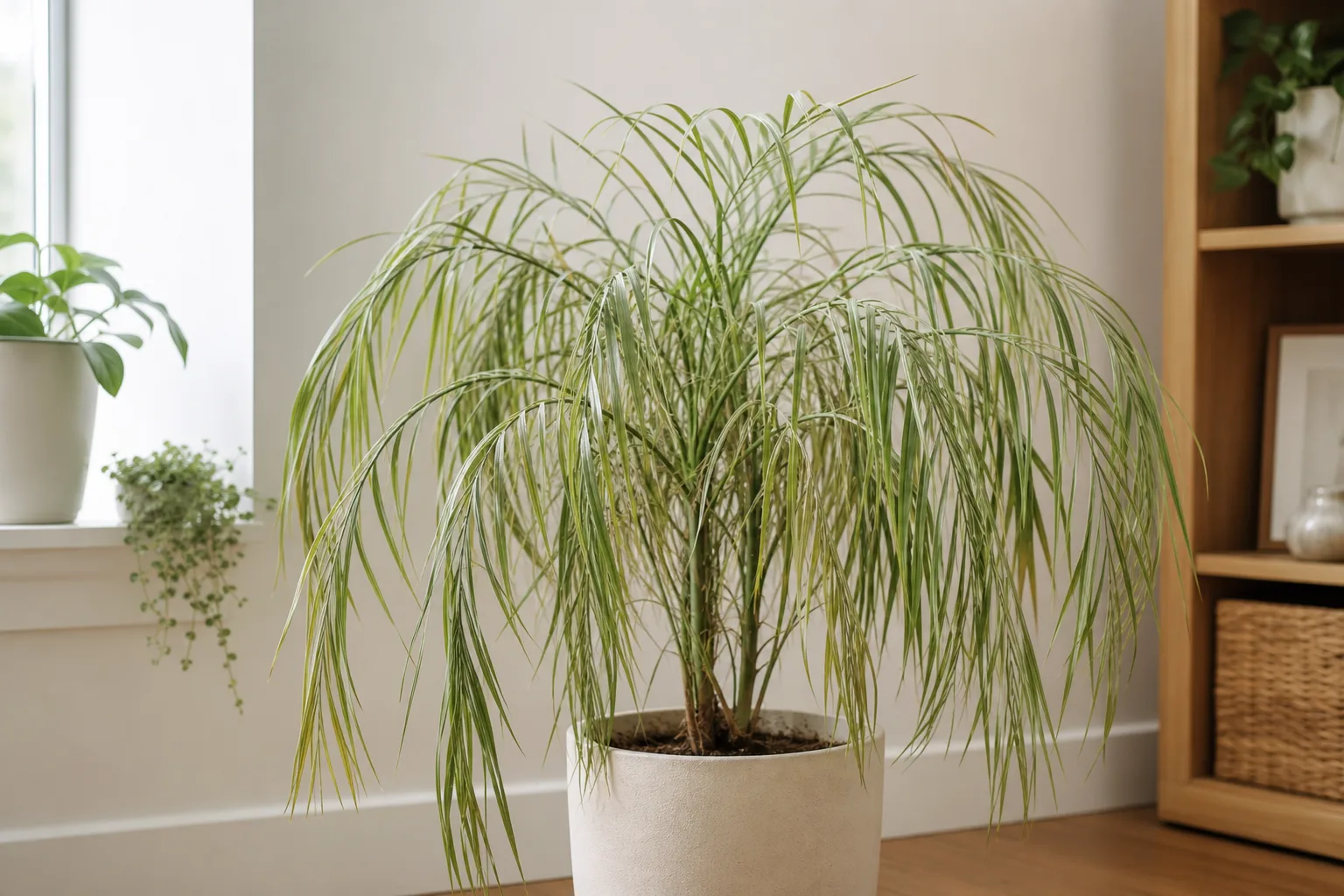
Drooping Leaves on Parlor Palm: Causes, Checks & Fixes
This guide covers drooping leaves on Parlor Palm. See also the general Drooping Leaves guide, watering, and light pages for this plant.
Drooping Leaves on Parlor Palm: Causes, Checks & Fixes
Quick answer
Drooping leaves on Parlor Palm (Chamaedorea elegans) almost always mean the plant is losing turgor-internal water pressure that keeps leaflets stiff. That can happen from thirst, damaged roots in wet soil, low humidity, or a recent move. It is not automatically fixed by watering.
First step: check soil moisture at 3–5 cm depth before you add or withhold water. Lift the pot. A light pot with dusty dry mix and limp fronds points to underwatering. A heavy pot with wet mix that has not dried for days, especially with yellow lower leaflets, points to overwatering or root stress. Those two situations need opposite fixes, and guessing wrong is the fastest way to lose the plant.
How this page differs from wilting
This guide focuses on gradual or persistent limp fronds-including the normal graceful arch that owners mistake for a problem. Use wilting on Parlor Palm when fronds collapse quickly, wet-soil wilt will not perk overnight, or you need the acute wet-versus-dry rescue path. Drooping here means ongoing softness or sag; wilting there means sudden turgor failure that may need same-day intervention.
Parlor Palm also has a naturally arching habit-graceful, downward-curving fronds are normal. Stress droop looks different: the whole frond hangs limp, leaflets may curl or fold, and the plant loses its upright presence.
What drooping leaves look like on Parlor Palm
Parlor Palm grows pinnate fronds with many narrow leaflets on thin stems. Healthy plants hold leaflets firm even when the frond arches outward and downward-that gentle curve is part of the species’ look, not a problem.
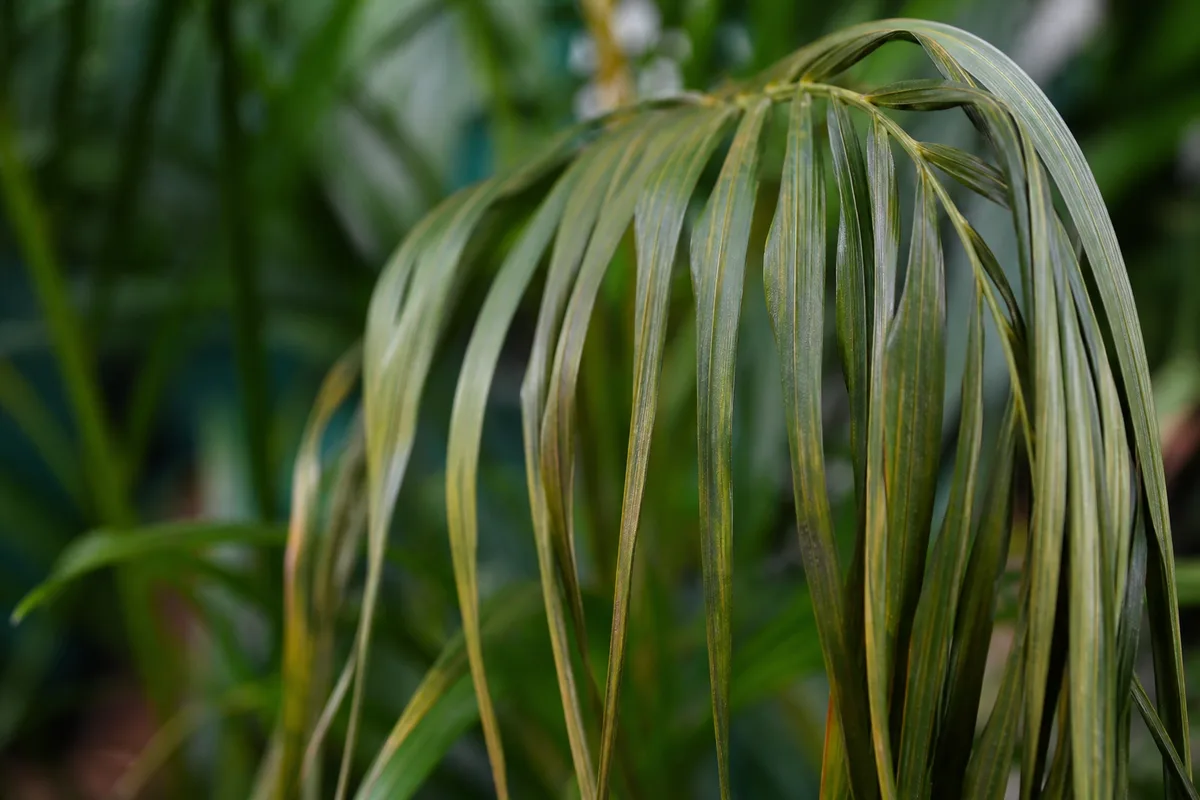
Drooping Leaves symptoms on Parlor Palm - compare with healthy tissue on the same plant.
Stress droop shows up as:
- Limp, floppy fronds that feel soft when you lift them, not just curved
- Leaflets folding or drooping along the entire frond, not only the tips
- Sudden change after you skipped watering, moved the pot, or repotted
- Lower fronds drooping first while the center still looks upright (common with underwatering)
- Widespread limpness with wet soil-fronds collapse even though the mix feels damp (classic root-uptake failure)
- Pale or dull green color with droop, sometimes paired with brown crispy edges (dry air or drought)
Compare with lookalikes:
- Normal arch: Fronds curve down but leaflets are springy and green; soil moisture cycles normally.
- Yellow leaves: Color change without full collapse-often overwatering; may overlap with droop.
- Brown tips only: Margins crisp while the frond stays mostly firm-humidity, fluoride, or salt stress, not full turgor loss.
- Acute wilt: Sudden collapse across many fronds-see the wilting guide for wet-soil rescue timing.
Why Parlor Palm gets drooping leaves
Parlor Palm evolved as an understory rainforest palm in southern Mexico and northern Central America. It wants evenly moist, well-drained soil, bright filtered light, and stable humidity-not desert dryness and not soggy peat. Drooping happens when roots cannot deliver water fast enough to match what the leaves lose.
Underwatering
This is the most straightforward cause. When the top 3–5 cm of mix goes dry for too long, fine roots lose contact with moisture and fronds lose turgor. Parlor Palm can tolerate brief drought but does not store water like a succulent; it needs regular-but not constant-drinks. Skipping several waterings, letting the pot go bone dry in winter heat, or having hydrophobic dry pockets in old mix all produce limp fronds. Crispy brown leaflet edges often appear alongside droop. Full drought protocol lives on underwatering on Parlor Palm.
Overwatering and root stress
Ironically, wet soil can cause the same limp look as dry soil. When roots sit in saturated mix, they lose oxygen and begin to decay. Damaged roots cannot absorb water, so fronds droop despite damp soil. Parlor Palm is sensitive to chronic overwatering-especially in low light, oversized pots, or mix without enough perlite. Yellow lower leaflets, sour smell from the pot, and fungus gnats are common companions. Advance to root rot when stems soften or roots turn mushy.
Low humidity and dry air
Parlor Palm tolerates average home humidity but benefits from moderate humidity indoors. Near heating vents, running AC, or winter dry air, transpiration can outpace root uptake even when soil moisture is adequate. The plant may look slightly limp with brown leaflet tips rather than fully collapsed fronds. See low humidity on Parlor Palm when tips crisp while soil moisture looks correct.
Environmental shock
Any sudden stress-repotting, moving from a bright porch to a dim corner, cold drafts below about 18°C (65°F), or hot dry air blasting the fronds-can trigger temporary droop. Relocating or changing light can cause leaf drop even when watering is correct. Parlor Palm adapts to low indoor light but reacts poorly to rapid changes.
Pests
Spider mites and mealybugs are the main indoor threats on Parlor Palm. Mite damage shows stippling, webbing, and progressive frond dullness that can end in limp, drying leaflets. Sticky residue or white cottony clusters point to sap-feeding pests reducing vigor. Treat per spider mites or mealybugs once soil moisture is ruled out.
Root-bound or compacted pots
A severely crowded root ball may dry out unevenly-wet on the surface, dry in the center-or fail to absorb water after a quick top-water. Either pattern can leave fronds limp until the root zone is corrected. Repotting guidance helps when roots circle the pot and water runs straight through.
How to confirm the cause
Work through these checks in order. You are separating dry thirst from wet root failure before touching the watering can.
- Pot weight - Lift the container. Light and dry versus heavy and waterlogged is your first clue.
- Soil moisture at depth - Insert a finger or wooden skewer 3–5 cm deep, near the stem-not just at the rim. Dry at depth confirms thirst. Wet or muddy at depth with limp fronds suggests root stress.
- Recent watering history - Have you watered on schedule while the pot stayed wet? That fits overwatering. Has the mix been dry for a week or more? That fits underwatering.
- Leaflet texture and color - Crispy edges with dry soil = drought. Yellow lower leaflets with wet soil = rot risk. Stippling or webbing = pests.
- Smell and drainage - Sour odor, blocked drainage holes, or standing water in the saucer support overwatering. No smell and light dry mix support thirst.
- Placement - New heater, AC vent, recent repot, or move from outdoors? Environmental shock is likely if soil moisture is normal.
- Root inspection (if wet + limp) - Gently slide the plant from its pot. Firm pale roots are healthy; brown, mushy, or hollow roots confirm damage. Only unpot when soil is wet and droop persists after you stop watering.
Wet-vs-dry decision table
| What you find | Likely cause | First action |
|---|---|---|
| Light pot, dry 3–5 cm down, firm cane bases | Underwatering | Deep soak and drain once |
| Heavy pot, wet 3–5 cm down, yellow lower fronds | Overwatering / root stress | Stop watering; improve airflow and light |
| Wet soil, sour smell, soft stem bases | Advanced root rot | Unpot, trim mushy roots, repot smaller |
| Normal moisture, stippling, fine webbing | Spider mites | Rinse and treat; see pest guide |
| Moist soil, crisp tips only, no full collapse | Low humidity / salts | Humidity and water quality-not more water |
If the pot is dry throughout, the fronds are limp, and roots look firm when you peek through the drainage hole, underwatering is confirmed. If soil is wet, fronds are limp, and roots are soft, overwatering or root rot is confirmed-do not add more water.
First fix for Parlor Palm
Determine wet versus dry, then act once.
- If soil is dry at 3–5 cm: Water thoroughly until water runs from the drainage holes. Empty the saucer after 15–20 minutes so the plant never sits in runoff. For severely dry mix that repels water, bottom-soak the pot in a basin for 30–45 minutes, then drain fully. Full soak technique is on the Parlor Palm watering guide.
- If soil is wet and fronds are limp: Stop watering. Move the plant to bright filtered light (not direct sun), improve airflow, and let the top half of the mix dry before the next drink. If droop continues beyond 48–72 hours or the mix smells sour, unpot and trim mushy roots before repotting into fresh well-drained mix.
Do not fertilize, mist heavily, or repot on the same day unless roots are actively rotting. One correction at a time lets you see what worked.
Step-by-step recovery
After underwatering
- Soak and drain once, as above.
- Wait 24 hours-fronds often stiffen overnight.
- Resume watering when the top 3–5 cm dries again (roughly every 7–10 days in active growth, less in winter).
- Trim only leaflets that stay fully brown and crispy after the plant perks up.
After overwatering
- Stop watering and empty standing saucer water.
- Confirm drainage holes are open and the mix is not pure heavy peat.
- If fronds keep drooping after the surface dries, unpot, rinse roots gently, cut brown mushy tissue with clean scissors, and let cuts air-dry for a few hours.
- Repot into standard potting mix with about 20% perlite, same size or slightly smaller pot-never jump to a much larger container.
- Wait until new growth looks firm before resuming light fertilizer.
After environmental shock
- Stabilize placement: bright filtered light per the light guide, away from vents and cold glass.
- Keep soil evenly moist but not wet while the plant adjusts-usually one to two weeks.
- Remove fronds that stay fully limp and brown; keep any that re-stiffen.
If pests are involved
- Rinse fronds with lukewarm water, especially undersides.
- Isolate the plant and confirm mites (stippling, webbing) or mealybugs (white cottony patches).
- Treat with insecticidal soap or horticultural oil on a test leaf first, following label directions for indoor use.
Recovery timeline
| Cause | What to expect |
|---|---|
| Mild underwatering | Fronds perk within 24–48 hours after a proper soak |
| Severe drought | Partial recovery in days; some leaflet tips may stay brown permanently |
| Overwatering (early) | Stabilizes once soil dries and roots regain oxygen; 1–2 weeks |
| Root rot (advanced) | Weeks to months; judge by firm new center fronds, not old leaflets |
| Repotting shock | 1–2 weeks of mild droop is common if moisture stays consistent |
| Low humidity | Slow improvement over 2–4 weeks with better humidity and watering rhythm |
Damaged leaflets rarely return to perfect form. Success means new fronds emerge firm and green and droop does not return after each watering cycle.
Mistakes to avoid
- Watering without checking moisture - The number-one error on Parlor Palm. Wet-soil droop gets worse with more water.
- Assuming all droop means thirst - Limp fronds plus soggy mix is root failure until proven otherwise.
- Misting as a fix - Surface moisture does not rehydrate roots and can encourage fungal issues on crowded fronds.
- Repotting into a much bigger pot - Extra wet soil volume keeps roots oxygen-starved.
- Moving the plant repeatedly - Each relocation adds stress while you are trying to diagnose.
- Fertilizing a limp plant - Salt stress on stressed roots can yellow and wilt fronds further.
- Pruning all drooping fronds immediately - Wait 48 hours after correcting water; some fronds recover.
Parlor Palm care cross-check
Match recovery to how Parlor Palm overview actually grows indoors:
- Water trigger: Water when the surface of the compost feels dry-for most homes that means the top 3–5 cm has dried. NC State lists moist, occasionally dry soil with good drainage-not perpetual sogginess. Full rhythm is on the watering guide.
- Light: Bright filtered indirect light helps the plant use water predictably; very dim corners slow dry-down and worsen wet-soil droop.
- Mix and pot: Well-drained houseplant mix with perlite; drainage holes required. See soil and overview for baseline culture.
- Humidity: 40–60% supports steady transpiration; see low humidity when tips crisp on otherwise moist soil.
- Season: Reduce watering frequency in winter when growth slows.
How to prevent drooping leaves
- Water on dry-down, not calendar dates - When the top 3–5 cm is dry, water fully and drain. Stretch to about every 14 days in winter when growth slows.
- Use well-drained mix - Standard potting soil with 20% perlite; pots must have drainage holes.
- Keep bright filtered light - Enough light helps the plant use water predictably; avoid direct sun that scorches leaflets.
- Maintain 40–60% humidity - Humidifier, pebble tray, or grouping plants beats occasional misting.
- Protect from drafts and heat blasts - Stable 18–27°C (65–80°F) supports steady root function.
- Repot in spring when roots are crowded, not during a drought or active droop episode.
- Watch for spider mites in dry winter air-early rinsing prevents frond collapse.
When to worry
Seek deeper intervention if:
- Fronds collapse while soil stays wet and smells sour
- Multiple fronds yellow and droop within a few days
- Stem tissue at soil line feels soft or dark
- More than half the roots are mushy on inspection
- Drooping persists more than 72 hours after correct watering for a dry pot, or more than two weeks after correcting overwatering
Parlor Palm is slow to show decline and slow to recover. A plant with firm new center growth and stable watering rhythm can outgrow old limp fronds. One with a rotting crown and no new spears may not be saveable-focus effort on plants that still push healthy growth from the center.
Related problems on Parlor Palm
| Symptom focus | Guide |
|---|---|
| Sudden collapse, wet-soil wilt | Wilting |
| Chronic soggy mix, yellow lower fronds | Overwatering |
| Dry pot, crispy edges | Underwatering |
| Mushy roots, sour smell | Root rot |
| Stippling, webbing | Spider mites |
| Crisp tips on firm fronds | Brown tips or low humidity |
| Baseline care | Overview and watering |
When to use this page vs other Parlor Palm guides
- Parlor Palm watering guide - Use for routine moisture checks before assuming drooping leaves is the main issue.
- Parlor Palm problems hub - Browse all 4 common issues on this species.
- Root Rot on Parlor Palm - Different entry point when symptoms overlap with drooping leaves.