Overwatering on Parlor Palm: Causes, Checks & Fixes
Quick answer
Overwatering on parlor palm shows as yellowing lower fronds on persistently wet mix, brown leaf tips, fungus gnats, and a sour smell from soil. First step: stop watering and check whether the top 3–5 cm of mix are still wet days after the last drink.
Overwatering on Parlor Palm: Causes, Checks & Fixes
This guide covers overwatering on Parlor Palm. See also the general Overwatering guide, watering, and light pages for this plant.
Overwatering on Parlor Palm: Causes, Checks & Fixes
Quick answer
Overwatering on Parlor Palm (Chamaedorea elegans) kills more indoor specimens than drought. This is a multi-stem understory palm with slender cane-like stems and arching pinnate fronds emerging from several crowns in one nursery pot-not a succulent and not a plant that wants constantly soggy soil. Yellow lower fronds on wet mix, brown leaflet tips, fungus gnats, and a heavy pot days after watering signal fine roots drowning in airless soil.
First step: stop watering until the top 3–5 cm (1–2 inches) of mix are dry and the container feels noticeably lighter. In cool winter rooms, let the top half of the mix dry before the next soak. Do not add water because fronds droop-that deepens root damage when the mix is already damp.
If stems feel soft at the soil line or the mix smells sour, inspect roots before you wait out a full dry-down. See root rot on Parlor Palm when mushy roots are confirmed, and wilting when fronds collapse on wet soil but you are unsure whether thirst or rot is the cause.
What overwatering looks like on Parlor Palm
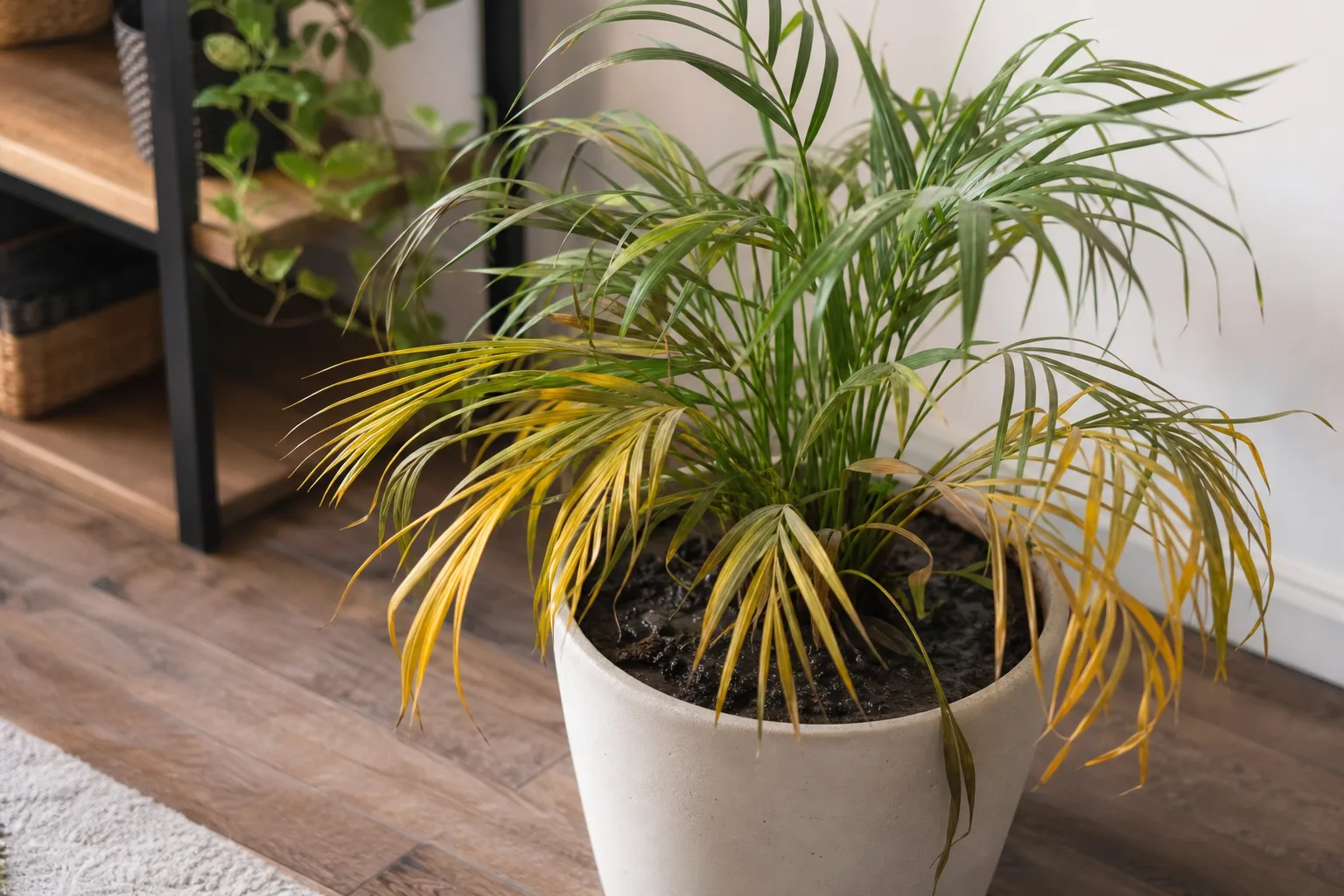
On Chamaedorea elegans, overwatering damage follows palm anatomy. Each cane (slender green stem) carries its own crown of pinnate fronds. Nursery pots usually hold three or more canes planted together, so one outer cane can show stress while inner stems still look green-or the whole clump can yellow at once when the shared root mass sits wet.
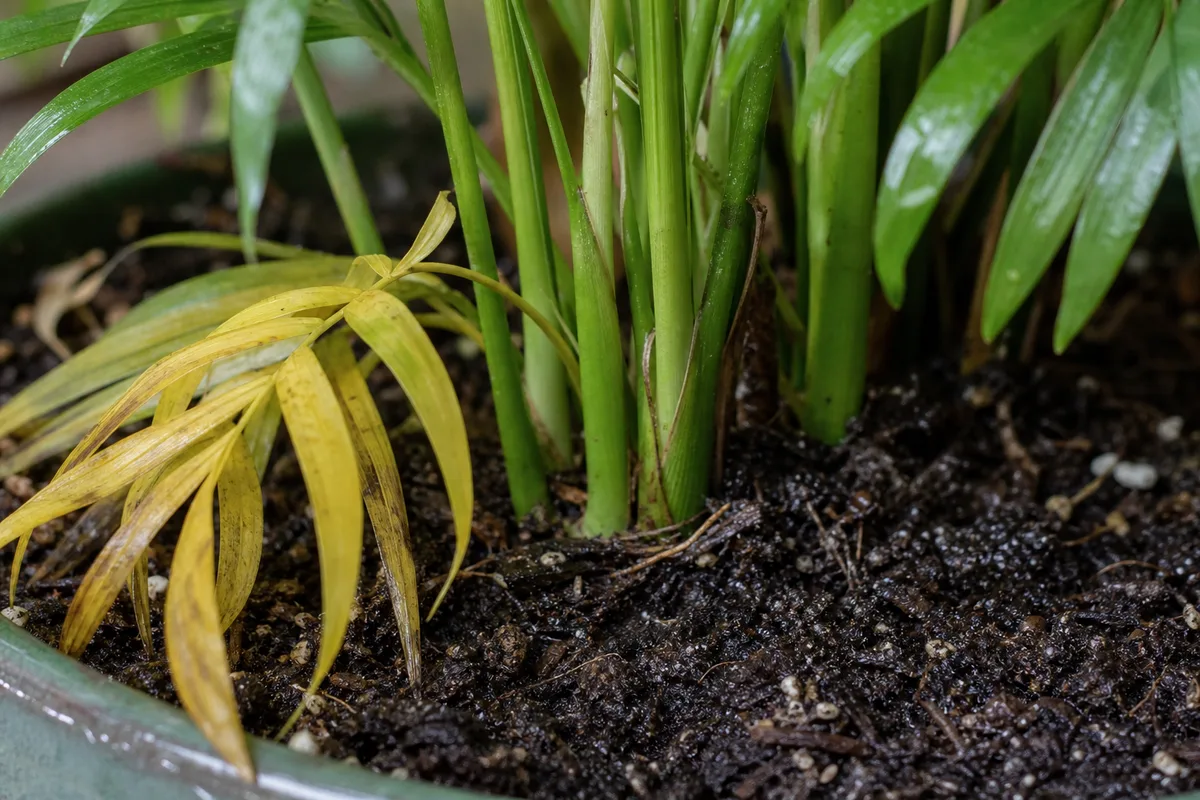
Overwatering symptoms on Parlor Palm - compare with healthy tissue on the same plant.
Watch for these patterns:
- Yellow lower fronds on damp mix - Oldest arching fronds yellow from the base upward while soil near the pot edge stays cool and wet. Multiple fronds yellowing across several canes within days is stress, not normal aging. One slow-fading lowest frond on a single firm cane may be senescence-see yellow leaves to separate aging from wet-soil damage.
- Brown leaflet tips on wet soil - Tips brown on both old and newer fronds when damaged roots cannot move water and salts build in soggy mix. Tip burn alone on firm canes with correct moisture often traces to fluoride-this page covers the overlap in lookalikes below.
- Heavy pot and slow dry-down - Container still feels waterlogged 5–7 days after the last drink in a dim office. Soil at 3–5 cm depth stays dark and clings to a skewer.
- Fungus gnats - Small flies hovering over constantly damp surface soil. Larvae feed in wet organic mix; persistent gnats almost always mean the root zone stays too wet. See fungus gnats on Parlor Palm when insects are the main concern.
- Stalled spear fronds - New central spears stop unfurling or emerge pale and stunted while lower fronds yellow. The crown is where new growth forms; wet roots starve every cane at once.
- Droop despite moisture - Fronds hang limp while mix is wet because damaged roots cannot transport water-classic “wet wilt,” not thirst.
- Sour smell from drain holes - Anaerobic breakdown in saturated peat signals advancing root decline.
- Advanced: soft cane bases or crown collapse - Press stems at the soil line. Firm green tissue is reassuring; mushy, dark, or hollow bases mean escalate today-see When to worry.
Fully yellow pinnate fronds will not re-green. Judge recovery by firm cane stems and clean new spear fronds, not by old leaflets recovering color.
Why Parlor Palm gets overwatered
Parlor palm evolved on the rainforest floor of southern Mexico and Guatemala, where filtered light, organic litter, and steady humidity keep fine roots moist but never waterlogged. Indoors, slow transpiration in low light collides with kindness watering and dense peat mix.
Kindness watering in dim rooms is the most common trigger. NC State Extension notes that overwatering can be a problem and recommends letting soil dry slightly between waterings while maintaining good drainage. In a north-facing office, the same drink that dries in a week near an east window can keep soil soggy for two weeks. Fine Arecaceae roots suffocate; overwatering deprives roots of oxygen and invites decay.
The evenly-moist misunderstanding confuses many growers. Missouri Botanical Garden recommends uniformly moist soil for container parlor palms-but uniformly moist means the root zone breathes between drinks, not that the surface stays dark every day. Daily light sips without a dry top inch produce yellow fronds and fungus gnats together.
Oversized decorative pots hold excess wet soil around a small root ball. Multi-stem clumps-growers often plant three or more stems in a single pot-already retain moisture longer than single-caned plants. Dropping that clump into a cachepot twice the nursery size extends dry-down time dangerously.
Poor drainage and full saucers keep the bottom of the root zone anaerobic. Water sitting in saucers or cachepots for hours re-wets mix from below.
Winter frequency matching summer - When new spear growth pauses in cool, dim months, watering on a summer rhythm keeps roots cold and wet. The RHS growing guide recommends watering when the surface of the compost feels dry-in winter that interval stretches far longer than in active growth.
Dense peat without perlite compacts in old gift pots, shedding water down the sides while the core stays saturated.
Parlor palms are more vulnerable to root rot in waterlogged mix than to occasional dryness. Their slow reaction time means much root damage can occur before fronds show obvious decline-especially in low light.
How to confirm the cause
Work through this inspection order before fertilizing, misting, or Parlor Palm repotting guide:
- Top 3–5 cm moisture - Insert your finger or a dry skewer 3–5 cm deep near the pot edge. Cool, clinging dampness several days after watering supports overwatering. Dusty dry top inch with a light pot points to underwatering instead.
- Pot weight - Lift the container. A heavy pot days after the last drink means the root zone is still saturated.
- Frond pattern - Multiple yellow fronds across several canes on wet mix, or one slow-aging lower frond on a firm single cane? Widespread yellow on damp soil is wet-soil stress.
- Stem firmness at soil line - Gently press each cane base. Firm green tissue fits early overwatering recoverable by dry-down. Soft, dark, or collapsed bases suggest advancing root rot-unpot before waiting.
- Wet-wilt check - Do fronds droop while mix is damp? Limp foliage on wet soil means damaged roots, not thirst. Do not add water.
- Smell and gnats - Sour odor from drain holes or fungus gnats over constantly damp surface soil reinforce overwatering.
- New spear status - Stalled or pale central spears on wet mix point to root stress. Clean green unfurling spears on mildly damp soil may mean you caught the problem early.
- Light and season context - Dim interior placement plus winter slowdown explains why a “weekly” schedule keeps soil wet too long.
Overwatering vs. underwatering quick reference
| Pattern | Pot weight | Soil at 3–5 cm | Fronds | Meaning |
|---|---|---|---|---|
| Overwatering | Heavy days after watering | Wet, dark, clings to skewer | Yellow lower, brown tips, wet-wilt | Root stress on soggy mix |
| Underwatering | Light | Dry, dusty | Crisp wilt, dry tips | Drought-see underwatering guide |
If soil is wet several centimeters down, stems are mushy, or the pot smells sour, treat as root failure-not a simple dry-down case.
First fix for Parlor Palm
Stop watering until the top 3–5 cm of mix are dry and the pot feels noticeably lighter. Empty saucers and cachepots immediately. Move the plant out of any decorative outer pot that traps runoff.
That single pause is the correct first response when mix is damp, multiple fronds are yellowing, and cane bases are still firm. Parlor palm does not need emergency repotting on day one if roots are intact-you need air back in the root zone first.
After the dry-down:
- Resume soaking only when the top inch is dry - Water thoroughly until excess drains, then discard saucer water within 30 minutes. Full technique lives on the Parlor Palm watering guide.
- Hold fertilizer until you see firm new spear growth for at least two weeks. Feeding stressed roots in soggy mix worsens salt injury.
- Unpot only when stems soften, smell is sour, or dry-down fails - Slide the plant out gently. Firm, pale roots may recover in place. Mushy dark roots need trim-and-repot per root rot protocol into well-draining mix sized to the remaining root mass.
Do not mist fronds instead of fixing soil moisture. Do not move a stressed palm into hot direct sun to “dry it out”-that raises water loss on roots that already cannot supply the crown.
Step-by-step recovery
Once watering has stopped and the top inch has dried, layer actions by severity:
- Maintain dry-top rhythm for two weeks - Water only when the shallow layer is dry, then soak and drain fully. In medium indirect light that is often every 7–10 days in summer; in dim winter rooms, every 14–21 days or longer-always verify by touch, not calendar.
- Remove fully yellow fronds - Cut spent pinnate fronds at the base with clean scissors. They will not re-green; removal reduces pest hiding spots and lets you watch new spears clearly.
- Improve drainage without upsizing - If mix is dense peat, plan a repot into airy houseplant mix with perlite when roots are firm enough to handle-same pot or one size up only. Oversized pots extend wet soil volume.
- Raise light modestly if placement is very dim - Move to bright filtered light so transpiration and dry-down normalize. Low light slows water use and is a hidden driver of chronic wet soil-see light guide for safe placement.
- Address water quality if tips stay brown on corrected moisture - Chamaedorea elegans is moderately fluoride-sensitive; dark pinpoint tip necrosis on firm canes may need rainwater or distilled water per brown tips-but fix wet soil first when yellow fronds and soggy mix dominate.
- Inspect roots when recovery stalls - If fronds stay limp on damp soil after a proper dry-down cycle, unpot and check roots. Firm pale roots mean keep adjusting water timing. Mushy roots mean surgical repot-not more dry-down alone.
Recovery timeline
Days 1–7: Pot weight should drop as the top half of mix dries. Fungus gnat activity often eases when the surface stays dry. Do not water because a few fronds still look sad.
Days 7–14: On mild cases with firm cane bases, yellowing should stop spreading. Wet-wilt may partially lift once roots breathe again. Brown leaflet tips remain brown.
Weeks 2–4: New spear fronds should begin unfurling during spring and summer active growth. Stalled spears after four weeks in warm bright conditions suggest root damage beyond dry-down-inspect roots.
Weeks 4–8: Sparse sections fill in with fresh fronds if light, drainage, and watering stay consistent. Old lower fronds may drop; palms shed from the bottom up after stress.
When improvement stalls: Yellowing spreads to upper fronds while soil re-wets quickly after each drink, cane bases soften, or central spears collapse-these point to root rot or crown failure, not a timing tweak alone.
Lookalike symptoms
- Underwatering - Very light pot, dusty dry mix throughout, crisp wilt with firm cane bases. Recovery follows one deep soak-see underwatering on Parlor Palm.
- Normal lower-frond aging - One oldest frond on a single cane yellows slowly over months while new spears stay green and soil moisture is reasonable. See yellow leaves when unsure.
- Low light with chronically wet soil - Pale yellow-green fronds, weak spears, and mix that stays wet for weeks because transpiration dropped in a dim corner. Fix light and watering together per not enough light.
- Fluoride and salt stress - Dark brown tip necrosis on otherwise firm canes with moist but not sour soil. White crust on the surface suggests salts. Widespread yellow fronds on heavy wet mix is overwatering first; tip-only burn with correct moisture is water chemistry-see brown tips.
- Wilting with wet soil - Damaged roots cannot move water despite damp mix. Use the wilting guide wet-versus-dry branch before pouring again.
- Spider mites - Stippling and webbing on leaflet undersides with soil moisture that may look normal. Tap a frond over white paper-moving specks confirm mites per spider mites.
Fluoride vs. overwatering tip burn
| What you see | Likely cause | Quick check |
|---|---|---|
| Dark pinpoint necrosis at leaflet tips only; firm canes; moist but not sour soil | Fluoride / salts | Switch water source; no widespread yellow fronds |
| Yellow lower fronds + brown tips + heavy wet pot + gnats | Overwatering / root stress | Top 3–5 cm wet days after watering |
| Both patterns together | Wet soil plus fluoride or salt buildup | Fix drainage and dry-down first, then water quality |
What not to do
Do not add water because fronds droop when mix is already damp-that deepens wet wilt and root decay.
Do not water on a fixed calendar without checking the top inch. Summer weekly drinks become winter overwatering in the same dim office.
Do not leave saucers or cachepots full - Standing water re-saturates mix from below within hours.
Do not repot into a much larger container “to help it recover.” Excess soil volume stays wet around fine parlor palm roots.
Do not fertilize a yellowing stressed palm to green it up. Salts in soggy mix burn tender roots on fluoride-sensitive palms.
Do not mist instead of fixing soil moisture - Misting does not drain a waterlogged root ball.
Do not assume brown tips always mean dry air - On wet mix with yellow lower fronds, roots are the primary problem.
Parlor Palm care cross-check
Match recovery to how Parlor Palm overview actually grows in your home:
- Light: Bright filtered indirect light; very dim placement slows dry-down and worsens wet-soil damage.
- Water trigger: Top 3–5 cm dry in active growth; deeper dry-down in cool winter rooms. NC State lists moist, occasionally dry soil with good drainage-not perpetual sogginess.
- Container: Drainage holes required; decorative cachepots must be emptied after every soak.
- Mix: Humus-rich, well-drained houseplant mix with perlite per soil guide; refresh dense peat that never dries between drinks.
- Multi-cane clumps: Water as one shared root mass, but inspect each cane base-one rotting stem can be trimmed if others stay firm.
- Humidity: Tolerates average indoor air; humidity does not replace drainage.
Brief drought tolerance is not permission to ignore chronic wet feet-the leading indoor killer for this palm.
How to prevent overwatering next time
- Weigh the pot after watering and again when the top inch is dry; muscle memory beats a calendar.
- Adjust for season and light - Reduce frequency in winter and in dim corners; increase only when new spears push in bright spring rooms.
- Right-size pots - Repot into containers only slightly larger than the root ball; avoid “room to grow” oversized cachepots.
- Empty saucers within 30 minutes of every soak.
- Watch fungus gnats - Persistent gnats mean the surface stays too wet; see fungus gnats if insects linger after you fix timing.
- Pair watering with light changes - Moving a palm farther from a window lengthens dry-down immediately; moving it brighter shortens it.
Track one clump through a full month in your actual conditions. Once you know how many days your pot takes to go from soaked to top-inch dry, overwatering becomes easy to spot before crowns fail.
When to worry
Treat as same-day escalation when:
- Central spear fronds feel soft or collapse - Crown tissue is failing; root rescue cannot wait for a slow dry-down alone.
- Most cane bases are mushy at the soil line - Advance to root rot rescue or assess salvage per cane.
- Yellowing spreads to upper fronds while mix stays wet despite a full dry-down cycle.
- Sour smell intensifies or roots slough off as black mush when you tip the plant out.
Act within 24–48 hours when:
- Wet-wilt persists after top inch has been dry for a week and firm roots have not been checked.
- Repeated fungus gnat treatments fail because soil never dries.
- Every frond droops on damp mix and no new spears have emerged for six weeks in warm bright conditions.
Mild cases with firm green cane bases, stopping spread of yellowing, and new spears after dry-down are realistic saves. When the terminal spear and most roots are gone, focus on whether any firm offshoots remain worth repotting-not on saving every yellow frond.
When to use this page vs other Parlor Palm guides
- Parlor Palm watering guide - Use for routine moisture checks before assuming overwatering is the main issue.
- Parlor Palm problems hub - Browse all 4 common issues on this species.
- Root Rot on Parlor Palm - Different entry point when symptoms overlap with overwatering.
- Yellow Leaves on Parlor Palm - Different entry point when symptoms overlap with overwatering.