Not Enough Light on Parlor Palm: Causes, Checks & Fixes
Quick answer
Parlor Palm tolerates dim rooms but needs bright indirect light for compact fronds. First step: run a placement audit-if new spears stay pale, the clump leans toward glass, or soil dries very slowly, move to a north or east window or add a grow light before changing fertilizer or pot size.
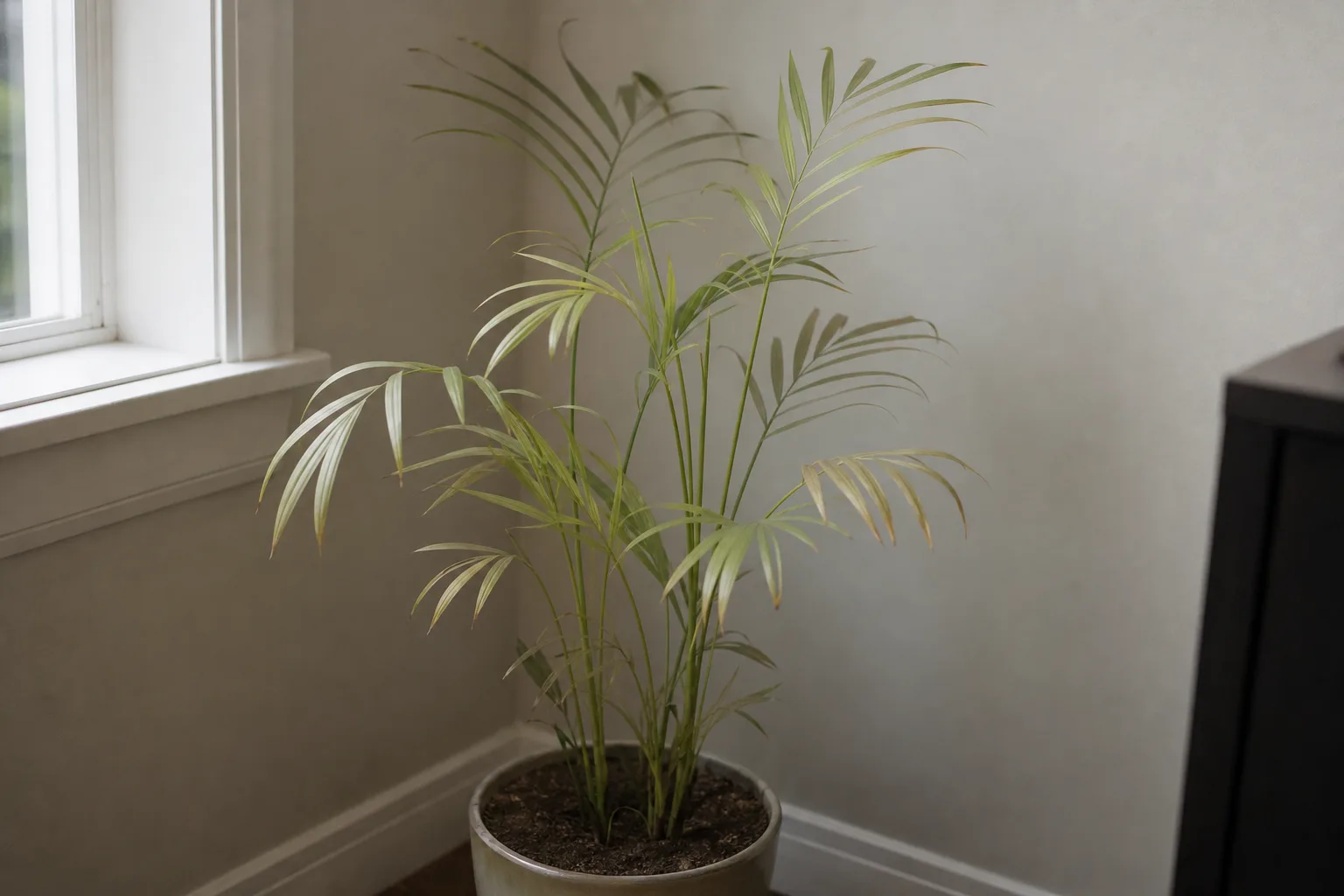
Not Enough Light on Parlor Palm: Causes, Checks & Fixes
This guide covers not enough light on Parlor Palm. See also the general Not Enough Light guide, watering, and light pages for this plant.
Not Enough Light on Parlor Palm: Causes, Checks & Fixes
Quick answer
Not enough light on Parlor Palm (Chamaedorea elegans) is a placement problem, not a fertilizer shortage. This clumping understory palm survives offices and north rooms better than most palms-but survival in low light is not compact form. In dim corners, new spears emerge pale or stall for months, petioles lengthen, the whole clump leans toward the brightest vector, and soil dries slowly because photosynthesis cannot drive water use.
First step: audit where the fronds actually sit relative to usable daylight. Move the pot to the brightest indirect location available-near a north- or east-facing window, or three to six feet back from south or west glass behind sheer curtains-before repotting, feeding, or stacking other fixes.
Scope note: This page covers placement audit and insufficient-light diagnosis when you are not sure your window is bright enough. For obvious stretch morphology-long petioles, sparse new leaflets, pronounced clump lean-see leggy growth. For full window-by-window placement guidance, see the Parlor Palm light guide.
What insufficient light looks like on Parlor Palm
Low light on this species shows up as growth habit and energy changes more often than dramatic yellow collapse. Unlike sun scorch, which bleaches sun-facing leaflets, insufficient light often keeps older fronds green while new tissue suffers.
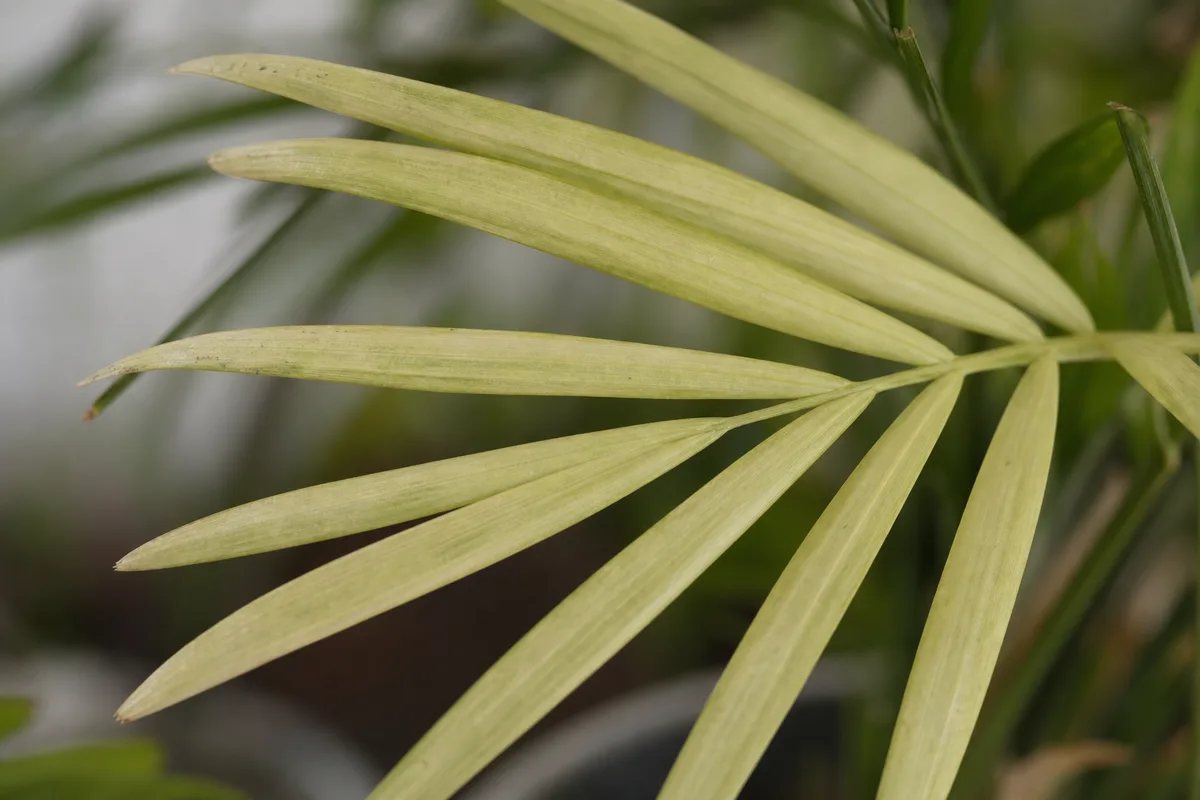
Not Enough Light symptoms on Parlor Palm - compare with healthy tissue on the same plant.
Typical signs on a multi-stem clump:
- Pale or dull new spears - the central shoot emerging from the crown looks lighter green or thin before it unfurls
- Smaller new leaflets on elongated petioles compared with fronds from six to twelve months ago
- Whole-clump lean - several stems angle toward one window, desk lamp, or hallway opening
- Stalled spear emergence - no new frond through an entire spring or summer despite firm older foliage
- Slow soil dry-down - mix stays moist for two weeks or more because metabolism is low
- Deeper green on old fronds while new growth looks washed out-a shade-tolerant palm can hold color on established leaflets while struggling to build new tissue
What acceptable dim placement can look like:
- One or two new fronds per year with modest arch, not extreme reach
- Firm green leaflets without progressive pale spears
- Predictable dry-down even if intervals are long in winter
- Slight lean correctable with weekly rotation
Parlor palm is sold as several individual stems in one pot. Judge the whole clump’s light response, not a single cane that may naturally lag its neighbors.
Indoor flowering is rare on Chamaedorea elegans and is not a practical low-light symptom to watch for-fruits appear only occasionally indoors. Focus on spear color, spacing, and lean instead.
Why Parlor Palm struggles in dim rooms
Understory tolerance does not mean any corner will do
Parlor palm evolved beneath rainforest canopy in southern Mexico and Guatemala, where light arrives as diffuse patches rather than hours of direct beams. That biology makes it one of the best palms for north rooms and fluorescent offices-but RHS notes that bright but indirect light produces the best growth and greenest foliage, while partial shade is acceptable with slower, weaker development.
The label “low-light plant” encourages placement in interior shelves, windowless hallways, and deeply curtained rooms where photon supply falls below what supports steady frond production. When photosynthesis drops, the palm budgets energy for maintenance, not new spears-and may stretch petioles to intercept more light.
Short winter days compound the problem
Even a reasonable summer window delivers fewer hours from November through February. Parlor palm’s already slow metabolism stalls further in dim winter rooms. A palm that looked acceptable in July may show pale spears by January without you moving the pot-seasonal light drop, not sudden failure.
Dim light slows dry-down and raises overwatering risk
Light sets the pace for the entire care system. In low light the palm drinks slowly, so soil stays wet longer. Owners who keep a summer watering schedule in a dark corner invite root stress-pale stalled growth and overwatering damage often share the same dim placement. Wet soil plus stretch is a warning to reduce watering frequency, not to add fertilizer.
Direct sun is the wrong fix
Thin rainforest leaflets scorch in unfiltered south or west glass, especially afternoon summer rays. Missouri Botanical Garden recommends bright filtered light indoors and warns to avoid direct sun. Jumping from a dark corner to a hot windowsill trades one stress for another.
Not enough light vs. leggy growth vs. slow growth
These three pages overlap because light drives all of them-but each has a distinct job:
| Pattern | What you see | Best page |
|---|---|---|
| Uncertain placement | You are not sure whether your window is bright enough; mixed pale spears, slow dry-down, general dim-corner decline | This page - placement audit |
| Leggy etiolation | Long petioles, sparse new leaflets, obvious whole-clump lean toward glass | Leggy growth |
| Normal slow pace | One or two fronds per year, no dramatic stretch or lean, firm clump | Slow growth |
If you already see clear internode stretch on new fronds, read the leggy guide for morphology-focused recovery. If growth is merely unhurried without reach, check slow-growth benchmarks first.
How to confirm the cause
Work through this six-step placement audit before repotting, fertilizing, or heavy pruning:
- Light at the fronds, not the room - Stand where the pot sits at midday. If you cannot read comfortably without artificial light, the palm is in very low light. Bright indirect usually means clearly window-lit without sunbeams hitting leaflets for hours.
- Window exposure and distance - Note compass direction and how many feet the canopy sits from glass. NC State Extension recommends bright indirect light near north- or east-facing windows for optimal indoor growth. South or west placements need sheer curtains or three to six feet of setback.
- Obstruction check - Dirty glass, heavy sheers, porch roofs, and tall furniture between window and pot cut intensity more than growers expect.
- New spear color - Compare the emerging central shoot to older fronds. Persistent pale or thin spears in a dim spot confirm insufficient energy for compact new tissue.
- Rotate test - Turn the pot a quarter turn weekly for two weeks. If lean worsens on the shaded side while the bright side stays shorter, phototropism confirms weak light on one face of the clump.
- Shadow sharpness test - Hold your hand above the fronds at midday. A fuzzy faint shadow suggests low light; a sharper shadow suggests brighter indirect exposure. University of Maryland Extension uses this quick field test when meters are unavailable.
Two-week relight trial: Move the pot one step closer to brighter indirect light. If a new spear emerges greener and firmer within two to four weeks during active months, light was the limiter.
Confirmed patterns:
| What you see | Likely cause | What confirms it |
|---|---|---|
| Pale thin spears, slow dry-down, clump lean, firm green older fronds | Insufficient light | Greener new spear after relight trial |
| Long petioles, sparse new leaflets, obvious stretch | Etiolation (overlapping) | See leggy growth recovery steps |
| No new spears all winter; firm plant; gradual dry soil | Seasonal rest | New spear in spring when days lengthen |
| Wet soil, yellow lower fronds, sour smell, soft stem bases | Root stress in dim corner | Firm roots and new growth only after dry-down fix-see root rot |
| One frond per year; no lean; compact older growth | Normal slow biology | Slow growth benchmarks |
If soil is chronically wet, check root firmness before assuming light alone will solve the stall.
First fix for Parlor Palm
Move the pot to the brightest indirect location available in your home.
Practical targets that work for Chamaedorea elegans:
- Near a north- or east-facing window, where NC State Extension notes optimal indoor light levels
- Three to six feet back from south or west glass behind sheer curtains-bright ambient light without direct sun on thin leaflets
- Under a full-spectrum LED grow light 30–60 cm (12–24 inches) above the canopy for 10–12 hours daily on a timer if natural light is weak
Do not place the pot in direct afternoon sun to fix dim stress quickly. Thin leaflets scald on hot glass. Brighter indirect exposure is the goal.
After moving:
- Acclimate over five to seven days if the jump is large-shift one step closer to the window daily and watch for bleach on leaflets facing glass
- Rotate the pot weekly so all sides of the clump see similar brightness
- Reduce watering frequency until you learn dry-down in the new spot-water when the top 3–5 cm of mix dries
- Hold fertilizer until new growth looks healthy; feeding a stressed palm in a still-dim corner does not fix insufficient light
Leave repotting and pruning unchanged for three to four weeks after the light move. You want to test whether placement alone unlocks the next spear.
Step-by-step recovery
Once the pot is in brighter indirect light:
- Stabilize watering - Match drinks to pot weight and dry-down, not a calendar. Brighter light usually speeds dry-down; dim corners need longer intervals. Never let the palm sit in a full saucer.
- Hold fertilizer - Do not feed hoping to force compact growth in inadequate light. Resume monthly half-strength balanced liquid feed in spring only after a healthy new spear appears.
- Add supplemental light if windows fail - Position a full-spectrum LED above the canopy for 10–12 hours daily. Raise the lamp if new spears bleach; lower it if stretch continues.
- Wipe dust from leaflets - A damp cloth on arching fronds removes film that blocks light absorption in already dim rooms.
- Prune only after improvement - Stretched petioles do not shorten. Remove the worst offenders at the base only once a tighter new spear proves light is adequate.
- Reassess monthly - As seasons change, the same window delivers different intensity. Re-run the shadow test in winter.
Recovery timeline
Parlor palm is inherently slow-growing. Expect four to eight weeks before the first new spear after a modest light increase during spring or summer, and several months before the clump looks fuller if you pruned stretched fronds. Corrections made in late fall may wait until longer days return.
Signs recovery is working:
- New spears emerge greener and firmer than the previous frond
- Lean stops worsening with weekly rotation
- Soil dry-down speeds up slightly in the brighter spot-a normal shift; adjust watering accordingly
- Spear spacing on new growth looks tighter than the last stretched frond
Signs the problem is worsening or misdiagnosed:
- Yellowing lower fronds with wet soil and soft stem bases-switch to a rot protocol
- New spears still pale after eight weeks in clearly brighter indirect light-verify true light levels or add a grow lamp
- Leaflets bleach or crisp after a sudden sun move-pull back from direct glass and acclimate slower
Old elongated petioles remain long permanently. Judge success by new tissue, not by reshaping existing arching fronds.
Lookalike symptoms to rule out
Overwatering stall in a dim corner - Yellow lower fronds, sour wet mix, and soft crown tissue. Low light contributes by slowing dry-down, but mushy roots mean drainage and watering correction take priority over light alone.
Normal winter rest - Little to no new growth from November through February with firm tissue and gradual dry soil. Not the same as a summer stall in a dark room.
Leggy etiolation - Overlaps heavily with insufficient light when stretch is advanced. Use the leggy growth page when long petioles and sparse new leaflets are the main complaint.
Sun scorch - Bleached or crisp patches on leaflets facing the window after a sudden move into direct sun. Distinct from low-light pale spears, which usually stay soft green while thin.
Nutrient depletion - Pale uniform new growth in a bright window with no feeding in twelve or more months. Unlikely to be the first suspect in a dim corner.
Mistakes to avoid
- Treating “low-light tolerant” as “prefers darkness” - Parlor palm survives dim rooms; compact arching fronds need brighter indirect exposure.
- Watering on the same schedule after moving to a darker room - Slow dry-down means less frequent drinks. Match watering to pot weight.
- Moving straight to direct south or west sun - Thin leaflets scald quickly. Acclimate to indirect brightness first.
- Fertilizing heavily in dim light - Extra nitrogen without matching light produces soft weak shoots.
- Expecting old stretched fronds to compact - Only new spears carry the fix; prune or live with older architecture.
- Ignoring wet soil in dim corners - Low light plus moisture is a classic setup for root stress on this palm.
- Chasing humidity before light - Average indoor air is usually adequate; placement is the common limiter.
Parlor Palm care cross-check
Light and water move together on Chamaedorea elegans:
- Light: Tolerates low light for survival; compact form needs bright indirect exposure
- Water: Top 3–5 cm dry between drinks; less in winter and in dim rooms
- Soil: Well-draining peaty mix; avoid oversize pots that stay wet in shade
- Temperature: Protect from cold drafts near windows; stable room temperatures support steady spear emergence
When baseline care aligns with brighter indirect light, the palm still grows slowly-but it should produce periodic new fronds rather than years of pale stalled spears.
How to prevent low light next time
- Place new purchases in your brightest indirect spot, not the darkest shelf that merely keeps leaves green
- Rotate the clump weekly near single windows to prevent permanent lean
- Clean windows seasonally and trim obstructions that steal intensity at the fronds
- Adjust watering when seasons change - winter short days reduce light even in the same window
- Use grow lights in windowless offices if you want compact growth rather than bare survival
- Re-audit placement after furniture moves or new curtains
When to worry
Low light alone is rarely an emergency on parlor palm. Escalate when:
- Soil stays wet for weeks and lower fronds yellow in clusters-inspect for root rot
- New spears brown and abort repeatedly before unfurling
- Stem bases soften or the mix smells sour on inspection
- No new growth appears after four months in verified bright indirect light-confirm true light levels and root health
A sparse but firm green palm in a dark office that you water sparingly may survive for years. Worry when pale spears persist, wet soil does not dry, or tissue turns mushy.
Related Parlor Palm guides
- Parlor Palm light guide - full window placement, grow lights, and warning signs
- Leggy growth - etiolation morphology and frond recovery
- Slow growth - when stalled spears are normal biology
- Watering - dry-down rhythm in dim vs. bright rooms
- Overview - species basics and clump habit
Conclusion
Not enough light on Parlor Palm shows up as pale new spears, clump lean, stalled fronds, and slow soil dry-down-not always as yellow collapse. This shade-tolerant clumping palm survives dim interiors better than most palms, but thriving means brighter indirect exposure and watering matched to slower metabolism in shade. Run the placement audit, move to the best indirect spot you have, acclimate carefully, cut water until the mix truly dries, and judge recovery by greener firm new spears-not by old stretched petioles that will never shorten.
Related tool
Use the Plant Problem Diagnosis Tool to narrow causes for not enough light on this plant before changing multiple variables at once.