Leggy Growth on Parlor Palm: Causes, Checks & Fixes
Quick answer
Leggy growth on Parlor Palm means elongated petioles and sparse new leaflets stretching toward light. This clumping palm is not a vine-first step: move gradually to brighter indirect light near a north or east window, then judge recovery by tighter spear spacing on new fronds.
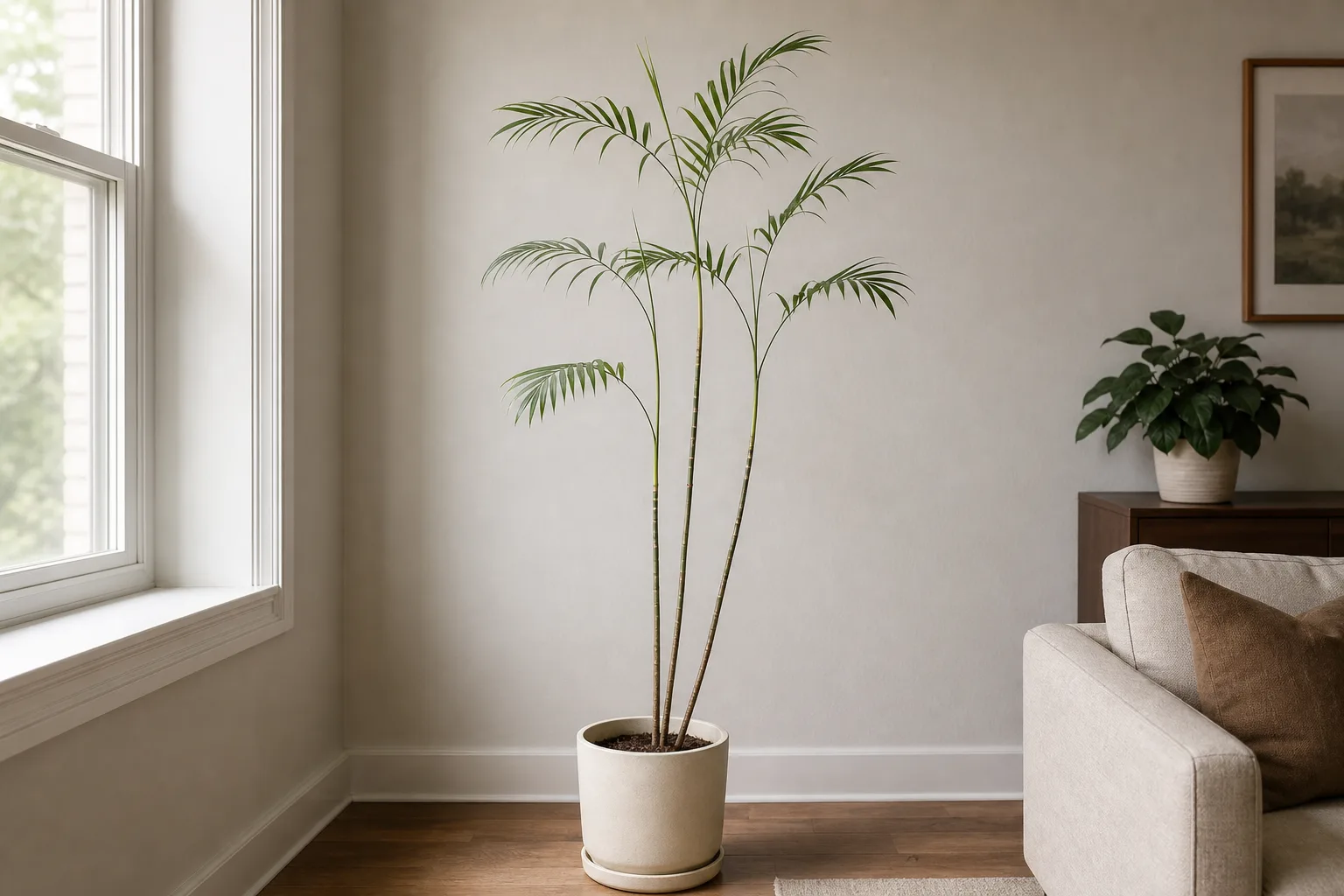
Leggy Growth on Parlor Palm: Causes, Checks & Fixes
This guide covers leggy growth on Parlor Palm. See also the general Leggy Growth guide, watering, and light pages for this plant.
Leggy Growth on Parlor Palm: Causes, Checks & Fixes
Quick answer
Leggy growth on Parlor Palm (Chamaedorea elegans) is almost always etiolation from too little usable light, not a fertilizer shortage or missing support. This species is a slow-growing clumping palm that tolerates dim offices better than most palms-but survival in low light is not compact form. In shade, petioles lengthen and new leaflets emerge smaller and farther apart as the crown reaches toward photons.
First step: move the pot gradually to brighter indirect light-near a north- or east-facing window, or three to six feet back from south or west glass behind sheer curtains. Parlor palm is not a vine; moss poles and trellis staking do not apply. Judge recovery by tighter spacing on the next emerging spear, not by old stretched fronds shrinking back.
Scope note: This page covers stretch morphology and recovery. For a full window-placement audit, see the Parlor Palm light guide. For broader low-light symptoms including stalled growth, see not enough light.
What leggy growth looks like on Parlor Palm
Healthy parlor palms carry arching pinnate fronds with evenly spaced leaflets along each petiole. Leggy etiolation looks different on this multi-stem clump:
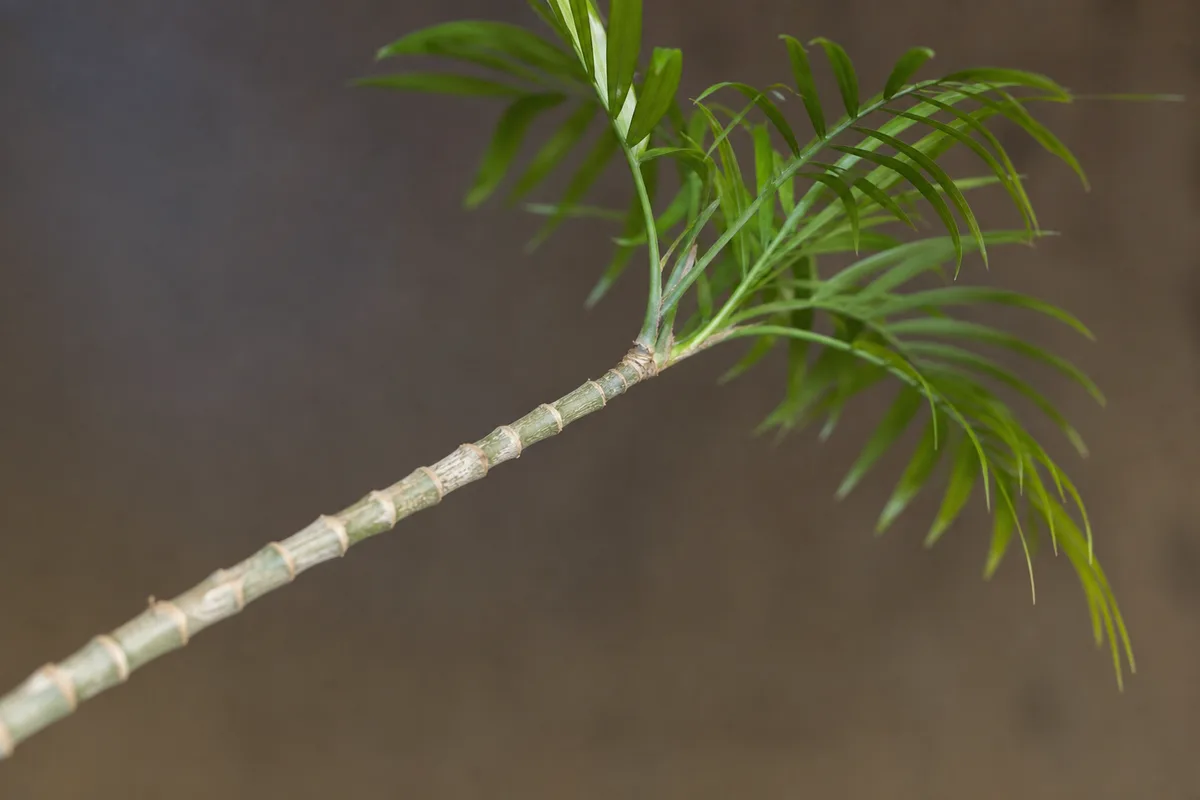
Leggy Growth symptoms on Parlor Palm - compare with healthy tissue on the same plant.
- Long petioles - visible gaps between leaflets along the rachis, wider than on older compact fronds
- Smaller new leaflets - the newest spear opens with thinner, more widely spaced leaflets than fronds from the previous year
- Whole-clump lean - several stems angle toward the brightest window or lamp, not just one stray frond
- Sparse crown - fewer active fronds relative to pot size, with bare lower sections on stretched petioles
- Thin new spears - emerging central shoots look wiry before they unfurl
Unlike some houseplants that turn pale when etiolating, parlor palm often keeps green color while stretching. Shade tolerance can mask the problem-you may think the plant is simply “growing tall” when it is reaching for light.
Leggy parlor palm is not the same as crown collapse. Rot-related decline usually brings yellowing lower fronds, sour wet soil, or soft stem bases. Leggy etiolation pairs with firm tissue and soil that may stay damp longer because the palm uses water slowly in dim light-a co-stress worth watching.
Shop pots often contain several individual stems planted together. Judge the whole clump’s stretch pattern, not a single cane. One older stem may lean while neighbors stay upright; widespread lean confirms placement, not random weakness.
Why Parlor Palm gets leggy
Low light tolerance does not mean compact growth
Parlor palm evolved as an understory species in southern Mexico and Guatemala, where diffuse light filters through rainforest canopy. Indoors, that biology makes it one of the best palms for north rooms and offices-but RHS notes that bright but indirect light produces the best growth and greenest foliage, while partial shade is acceptable with slower, weaker development.
The marketing label “low-light plant” encourages corners that deliver only ambient room light-often below what supports compact architecture. When photosynthesis drops, the palm elongates petioles to intercept more photons.
Short winter days worsen stretch
Even a reasonable summer window delivers fewer hours in December. Parlor palm’s already slow metabolism stalls further before stretching resumes toward glass. Legginess that worsens through winter and eases slightly in summer often reflects seasonal light drop.
One-sided exposure creates directional lean
Fronds on the shaded side of the clump grow longer trying to reach the window. Without weekly rotation, the crown permanently angles toward one direction.
Dim light slows dry-down and raises overwatering risk
In low light the palm drinks slowly, so soil stays wet longer. Owners who keep a summer watering schedule in a dim corner invite root stress-legginess and overwatering damage often share the same dark placement. Wet soil plus stretch is a warning to reduce watering frequency, not to add fertilizer.
Overfertilizing in dim light pushes weak shoots
Parlor palm is a light feeder. Heavy nitrogen without matching light produces soft elongated growth that cannot support itself. Do not chase stretch with feed.
Leggy growth vs. not enough light vs. slow growth
These three pages overlap because light drives all of them-but each has a distinct job:
| Pattern | What you see | Best page |
|---|---|---|
| Leggy etiolation | Long petioles, sparse new leaflets, clump lean toward glass | This page - morphology and recovery |
| Uncertain placement | You are not sure whether your window is bright enough; no obvious stretch yet | Parlor Palm light guide |
| Broad low-light stress | Pale color, stalled spears, poor flowering, general dim-corner decline | Not enough light |
| Normal slow pace | One or two fronds per year, no dramatic stretch, firm clump | Slow growth |
If fronds are reaching and internode gaps on new growth clearly exceed older fronds, you are in leggy-etiolation territory regardless of whether you also have slow overall growth.
How to confirm the cause
Work through these checks before pruning, repotting, or fertilizing:
- Light level at the fronds - Can you read comfortably without a lamp at the plant’s position at midday? If not, light is likely too low for compact growth. North- and east-facing windows close to the glass usually qualify as bright indirect; interior shelves and windowless offices often do not.
- Growth direction - Stems leaning strongly toward one window confirm phototropism from low light, not random weakness.
- Spear spacing comparison - Compare the newest emerging spear to one from six to twelve months ago. Increasing gaps between leaflets on new growth confirm ongoing stretch.
- Soil moisture rhythm - Soil wet for a week or more in a cool dim room fits low-light metabolism. If soil stays sour and wet while lower fronds yellow, inspect roots before relighting-see root rot.
- Shadow sharpness test - At midday, hold your hand above the fronds. A fuzzy, faint shadow suggests low light; a sharper shadow suggests brighter indirect exposure. Extension guides use this quick field test when meters are unavailable.
- Two-week relight trial - Move the pot one step closer to a brighter indirect window. If the next spear emerges with tighter leaflet spacing within two to four weeks during active months, light was the limiter.
Confirmed patterns:
| What you see | Likely cause | What confirms it |
|---|---|---|
| Long petioles, green fronds, firm stems, lean toward window | Etiolation | Tighter spear spacing after relight trial |
| Long petioles plus wet soil, yellow lower fronds, sour smell | Overwatering in dim placement | Dry-down cycle and firm roots restore growth |
| No stretch; no new spears all summer; dim room | Low light stall (broader) | New spear within 4–8 weeks after brighter placement |
| One frond per year; no lean; compact older growth | Normal slow biology | See slow growth benchmarks |
If fronds are firm, the clump leans toward light, and roots are not mushy, you have confirmed etiolation. Proceed with a light upgrade-not fertilizer, not repotting.
First fix for Parlor Palm
Move the pot to the brightest indirect location available, acclimating over five to seven days.
Each day, shift the plant one step closer to a north- or east-facing window, or farther from unfiltered south or west glass until leaflets receive bright reflected light without direct midday sun on the fronds. NC State Extension recommends bright indirect light near north- or east-facing windows for optimal indoor growth. Missouri Botanical Garden warns that direct sun scorches this palm-brighter indirect exposure is the goal, not a hot windowsill.
This single step addresses the root cause. After relocation:
- Rotate the pot a quarter turn weekly so all sides of the clump see similar brightness and lean stops worsening.
- Reduce watering frequency to match slower uptake in the brighter spot-water when the top 3–5 cm of mix dries, per NC State watering guidance.
- Wait for new growth before heavy pruning. Parlor palm is slow; a new spear may take several weeks to appear.
If natural light is inadequate, add a full-spectrum LED 30–60 cm (12–24 inches) above the canopy for 10–12 hours daily on a timer. Raise the lamp if new spears bleach; lower it if stretch continues.
Step-by-step recovery
Week 1: Relocate gradually. Stop fertilizing until new growth looks healthy. Note which fronds lean most and which spears look thinnest.
Weeks 2–8: Rotate weekly. Water only when the top of the mix is dry. Watch for a central spear emerging with leaflets closer together than the previous frond-that is your proof light is sufficient.
After new compact growth appears: Remove one or two of the leggiest fronds at the base with clean shears if you want a tidier silhouette. Cut at soil level where the petiole meets the crown. Stagger removal on small clumps; the palm needs foliage to photosynthesize. Old elongated petioles will not compact on their own.
Months 3–12: Continue bright indirect light and patient watering. The clump fills in as new arching fronds replace pruned ones. Expect only a handful of new fronds per year even in good light-do not expect instant density.
Recovery timeline
Parlor palm is inherently slow-growing. Expect four to eight weeks before the first new spear after a light upgrade during spring or summer, and several months before pruned areas look filled in. Corrections made in late fall may wait until longer days return.
Signs recovery is working:
- New spears emerge with smaller gaps between leaflets
- Existing leaflets stay firm and green
- Lean stops worsening once rotation and brighter light are consistent
- Soil dry-down speeds up slightly in the brighter spot-a normal shift; adjust watering accordingly
Signs the problem is worsening or misdiagnosed:
- Yellowing lower fronds with wet soil and soft stem bases-switch to a rot protocol
- New growth still sparse after eight weeks in clearly brighter light-verify placement or add a grow light
- Leaflets bleaching or crisping after a sudden sun move-pull back from direct glass and acclimate slower
Lookalike symptoms
Leggy etiolation vs. overwatering stall: Both can involve weak arching fronds in dim corners. Rot adds yellow lower fronds, sour-smelling wet mix, and soft crown tissue. Leggy etiolation keeps green firm fronds and often slow-drying soil.
Leggy growth vs. normal slow growth: A healthy parlor palm in acceptable office light may add few new fronds per year without dramatic stretch. Worry when internode gaps on new growth clearly exceed older fronds or the whole clump leans heavily.
Leggy growth vs. crown collapse: Collapse brings wilting spears, brown emerging fronds, and rapid decline-not gradual reach toward a window over months.
Lean vs. mechanical tilt: A pot knocked sideways leans the whole container uniformly. Phototropism lean affects frond angle while the pot sits level.
Mistakes to avoid
- Assuming stretch equals healthy vigor - Fast upward reach in dim light is etiolation, not strength.
- Installing a moss pole or trellis - Parlor palm does not climb; supports solve nothing here.
- Pruning before improving light - Cut fronds regrow just as leggy if brightness stays low.
- Moving straight to direct south or west sun - Thin leaflets scald quickly on hot glass. Acclimate to indirect brightness first.
- Watering on a calendar in dim corners - Slow dry-down means less frequent drinks. Match the watering guide to actual pot weight.
- Heavy fertilizing to “wake up” the plant - Extra nitrogen without light produces soft weak shoots.
- Pruning all stretched fronds at once - Leaves the clump unable to recover; stagger removal.
Parlor Palm care cross-check
Leggy growth often signals a placement mismatch with how this species actually grows indoors:
- Light: Tolerates low light for survival; compact form needs bright indirect exposure.
- Water: Allow the top of the mix to dry slightly between waterings-especially in dim rooms where uptake is slow.
- Soil: Well-draining peaty mix; avoid oversize pots that stay wet in shade.
- Temperature: Protect from cold drafts near windows in winter; stable room temperatures support steady spear emergence.
- Feeding: Light balanced fertilizer monthly spring through summer only-after light and watering are stable.
How to prevent leggy growth next time
- Place new purchases in your brightest indirect spot, not the darkest corner that merely keeps leaves green
- Rotate the clump weekly so all stems share exposure
- Supplement winter light with a full-spectrum LED when days shorten at higher latitudes
- Clean windows seasonally-dust and grime cut usable photons more than owners expect
- Accept that a parlor palm in a deliberately dim design spot will look sparser than one near an east window-that is biology, not failure
- Re-check placement after moving furniture or seasonal curtain changes
When to worry
Legginess alone is cosmetic. Escalate when:
- Weak fronds sit in soil that stays wet for weeks-inspect roots for rot
- Yellowing spreads up the crown while soil remains damp
- New spears brown and die repeatedly before unfurling
- Stem bases soften or the pot smells sour on inspection
For most owners, leggy parlor palm is a reversible placement problem. Firm tissue, a brighter indirect location, patient optional pruning, and realistic expectations for this slow species will produce a tighter clump over time.
Related Parlor Palm guides
- Light - window placement, grow lights, and warning signs
- Not enough light - broader placement audit when stretch is not yet obvious
- Slow growth - normal pace vs. stalled fronds
- Watering - dry-down rhythm after a relight move
- Root rot - wet-soil urgency when yellowing accompanies stretch
- Parlor Palm overview - full care hub