Best Soil for Parsley: Drainage, pH and Potting Mix
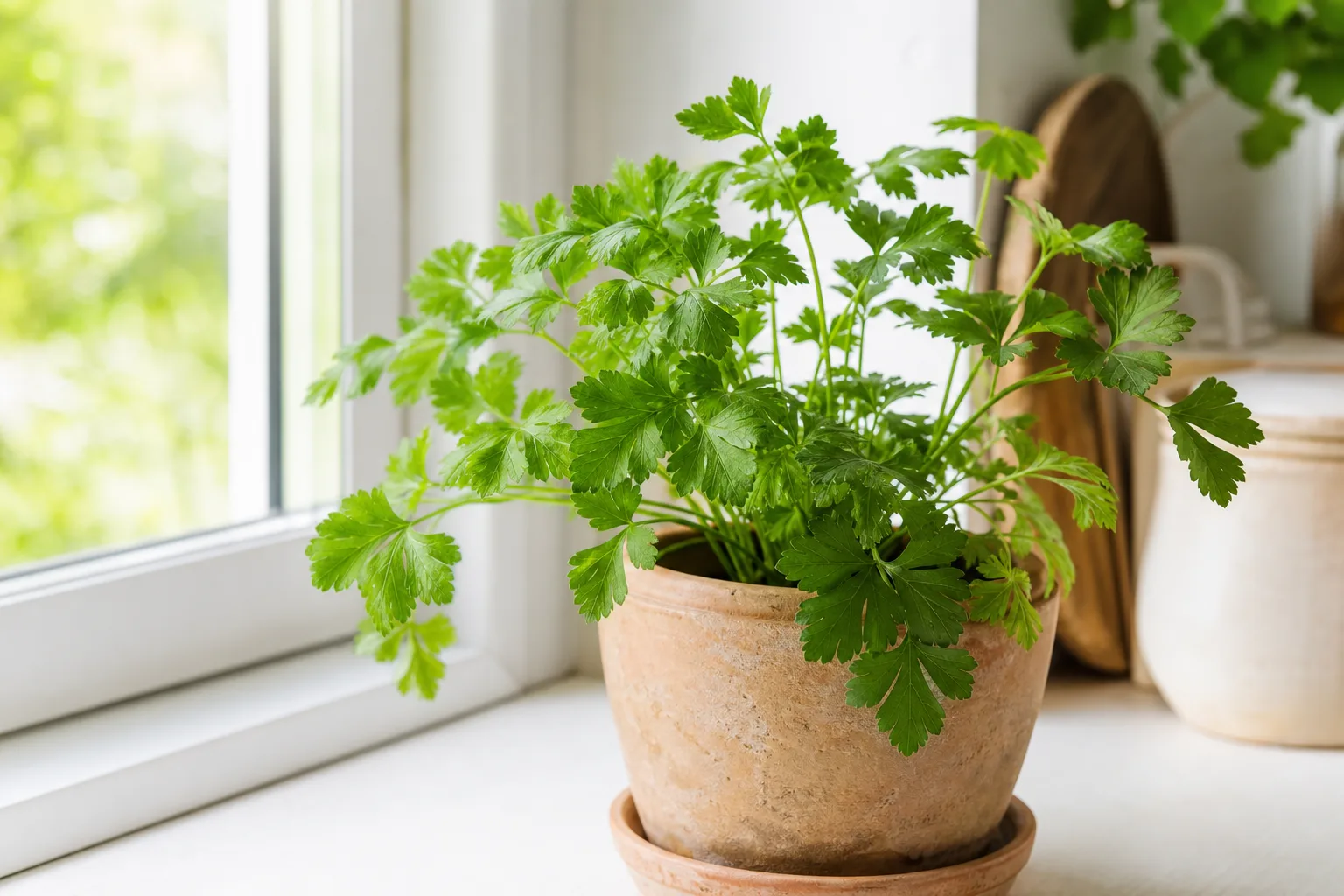
Best Soil for Parsley: Drainage, pH and Potting Mix
Best Soil for Parsley: Drainage, pH and Potting Mix
Parsley (Petroselinum crispum) grows best in fertile soil that holds moisture but drains freely. The target is neither a dry, lean herb mix nor a permanently wet root zone. Purdue Extension describes parsley as preferring rich, moist, well-drained soil, and RHS gives the same moist-but-not-waterlogged guidance. In a pot, begin with a good multipurpose mix and a container with drainage holes; in a bed, loosen compacted soil and add organic matter where needed.
The Soil Balance Parsley Needs
Parsley needs steady moisture for leafy growth, but its roots should not sit in saturated soil. A useful soil mix absorbs water evenly, allows excess to drain, and remains slightly moist between checks. NC State Extension describes parsley as preferring consistently moist, well-drained rich soil. The University of Delaware Extension guide also emphasizes fertile soil and drainage.
This balance matters because both extremes can limit growth. A sandy or shallow mix may dry so fast that a pot needs constant attention; compacted clay or a blocked container may stay wet and airless. Fix the structure before trying to solve the problem with a different watering schedule.
What Makes Soil Suitable for Parsley
A good garden bed is crumbly rather than hard-packed and contains enough organic matter to support moisture retention. It should still drain after rain. For containers, choose a fresh, peat-free multipurpose potting mix rather than scooping heavy garden soil into a pot, where it can compact and drain poorly.
Parsley forms a taproot, so the soil should be deep enough for roots to grow downward without hitting a hard layer or shallow pot base too early. Wisconsin Extension describes parsley’s taproot and its preference for fertile soil. The Parsley overview explains why gentle handling matters once roots are established.
Parsley Soil pH and Fertility
Purdue Extension gives parsley a preferred soil pH range of about 5.3–7.3, a broad mildly acidic to near-neutral range. Its production guide is written for commercial production, so use that range as a soil-test reference rather than a reason to adjust every home garden. If plants are growing well in existing soil, unnecessary pH correction can create more problems than it solves.
Parsley benefits from fertile soil, but fertility does not mean adding a large dose of fertilizer at planting. Improve poor beds with mature compost and use a balanced container mix. The Parsley fertilizer guide covers additional feeding when a pot’s nutrients become depleted.
Improving a Garden Bed
Before planting, remove weeds and loosen the bed to a depth that lets the taproot move into the soil. Work in mature compost if the soil is low in organic matter or drains too quickly. Do not make a rich bed soggy by adding too much fine material or watering before the site can drain.
If the soil forms a hard crust after watering, gently break the surface without digging close to seedlings. A loose surface lets small parsley seedlings emerge more easily. Gardeners’ World recommends sowing into well-prepared soil and keeping it moist while the slow-germinating seed emerges.
Building a Potting Mix for Parsley
Use a quality multipurpose potting mix that retains some moisture while draining through the pot. Avoid a seed-starting mix for the whole growing season because it is designed for germination and may not provide enough structure or nutrients for a mature plant. Do not use a dense, muddy mix that remains saturated after watering.
If your current mix dries very quickly, adding some mature compost or choosing a more moisture-retentive mix can make care easier. If it remains wet for days, improve drainage and use a pot with open holes. RHS container advice for parsley recommends a multipurpose compost and a pot of useful depth; Savvy Gardening also discusses growing parsley in containers.
Choosing Soil Depth for Its Taproot
Parsley’s taproot makes a deep pot a practical choice. RHS recommends a container at least around 25 cm deep and wide for parsley; use a larger or deeper one for multiple plants or Hamburg parsley. A shallow decorative pot may look full at first but can restrict roots and dry rapidly.
For garden beds, avoid a hardpan or compacted layer directly beneath the planting area. If you grow root parsley, loose depth matters even more because the desired harvest is below the soil surface. UF/IFAS distinguishes root parsley from leaf varieties.
Drainage Without Drought
Drainage holes are essential in a parsley pot, but the goal is not to make water race straight through. If water runs out immediately and the mix remains dry, it may have pulled away from the pot sides or become difficult to rewet. Apply water slowly in several passes so the rootball can absorb it.
If the pot remains heavy and wet, check for blocked holes, a full saucer, or dense mix. Do not put gravel at the bottom as a substitute for drainage holes; use an appropriate pot and a uniform mix. The Parsley watering guide explains how to distinguish a dry rootball from one that is too wet.
Using Compost and Mulch
Mature compost can improve a garden bed’s organic matter and help it hold moisture while keeping a workable structure. Mix it through the planting area rather than making a small pocket of rich material around each root. Fresh manure or unfinished compost can be too strong or uneven for seedlings, so use well-rotted material.
A thin mulch layer can slow evaporation in a bed, especially during warm weather. Keep it loose and away from the parsley crown, and still check the soil beneath it before watering. Gardening Know How recommends organic-rich, well-drained soil and mulch for parsley.
Soil for Hamburg Root Parsley
Hamburg parsley is grown for its enlarged edible root as well as its leaves. Prepare a deep, stone-free bed or a tall container so the root can develop without meeting a shallow base or dense obstruction. Do not compact the soil around it or transplant an established plant if you can avoid it.
Curly and flat-leaf parsley are generally grown for foliage, so depth still matters for the taproot but the below-ground harvest is not the main goal. Purdue Extension describes the different commercial parsley types; the Parsley propagation guide explains how to sow in the final location and minimize root disturbance.
When a Raised Bed Helps
A raised bed can help if native soil is heavy, compacted, or slow to drain. Fill it with a fertile soil blend that holds some moisture, not a very sandy mix that dries quickly. Raised beds can also dry faster than ground-level beds, so check moisture during hot weather.
If your existing garden soil drains and supports healthy parsley, there is no need to rebuild it. Amend only the condition you can identify: loosen compaction, add organic matter to a dry bed, or improve drainage where water stands after rain.
How Soil Changes Watering
A moisture-retentive mix may need less frequent watering than a light, fast-draining one. A pot’s size, sunlight and temperature change the interval further. Use the soil test in the watering guide rather than applying the same schedule to every container.
When parsley wilts, soil condition helps you choose the right response. Dry soil calls for a thorough drink; wet soil calls for checking drainage and waiting. Extra water cannot fix a mix that already lacks air.
Diagnosing Soil-Related Stress
If growth is weak, first check whether the mix dries too quickly or stays wet too long. Look at the pot holes, saucer, soil texture, and how long the root zone remains damp after watering. Yellow leaves alone do not prove a soil problem; heat, weak light, aging foliage, or second-year flowering can also change the plant’s appearance.
If you suspect the potting mix is exhausted or compacted, assess whether repotting is justified. Parsley dislikes root disturbance, so avoid lifting it just to inspect the soil. The Parsley repotting guide covers how to decide when a move is worthwhile.
Replacing Old Container Mix
Replace mix when it has become compacted, drains poorly despite clear holes, or is depleted and the plant’s roots have filled the pot. Choose fresh mix and a container only modestly larger so new soil does not stay wet around a small root system. Move a young plant with its rootball intact whenever possible.
Do not wash all soil from an established parsley root system or prune the taproot to fit a shallow pot. If the plant is already flowering in its second year, starting a new plant may be less stressful than repotting it.
What Not to Add to Parsley Soil
Avoid fresh manure, concentrated fertilizer granules in direct contact with roots, and large amounts of amendments that make the mix hold water without drainage. Do not add a thick gravel layer beneath potting mix or rely on stones to repair a pot without drainage holes. Avoid adding lime or sulfur without a soil test showing it is needed.
An amendment should solve a specific problem. If the soil is fertile, loose, and evenly moist, leave it alone and focus on regular watering and harvest.
A Simple Soil Preparation Sequence
- Choose a sunny or partly shaded spot with free drainage.
- Loosen compacted garden soil and blend in mature compost if fertility or moisture retention is poor.
- For a pot, select one with drainage holes and enough depth for the taproot.
- Fill it with fresh multipurpose mix that holds moisture but does not stay saturated.
- Water after planting, let excess drain, and check the mix before the next watering.
Conclusion
Parsley needs fertile, consistently moist soil with good drainage and enough depth for its taproot. Use mature organic matter to improve a poor bed, and choose a moisture-retentive but free-draining potting mix for containers. Resist unnecessary pH adjustments and avoid repeated moves once the plant is established. For a complete routine, see the Parsley overview, then use the watering and repotting guides to protect the roots.
When to use this page vs other Parsley guides
Use this guide to prepare beds and potting mix. The overview covers the whole routine; watering explains when to irrigate; and fertilizer covers feeding beyond soil preparation. Use repotting when the container or mix needs replacing, propagation for seed starting, light for site selection, and pruning for harvesting.
Related Parsley guides
- Parsley overview — connect soil choices to the full growing routine.
- Parsley light — choose sun or shade for your soil and climate.
- Parsley watering — keep a deep pot evenly moist without saturation.
- Parsley fertilizer — feed plants growing in beds or containers.
- Parsley repotting — replace compacted or depleted container mix gently.
- Parsley propagation — sow seed in its final position when practical.
- Parsley pruning — harvest foliage without damaging the rosette.