How to Water Parsley: Soil Checks, Pots and Heat
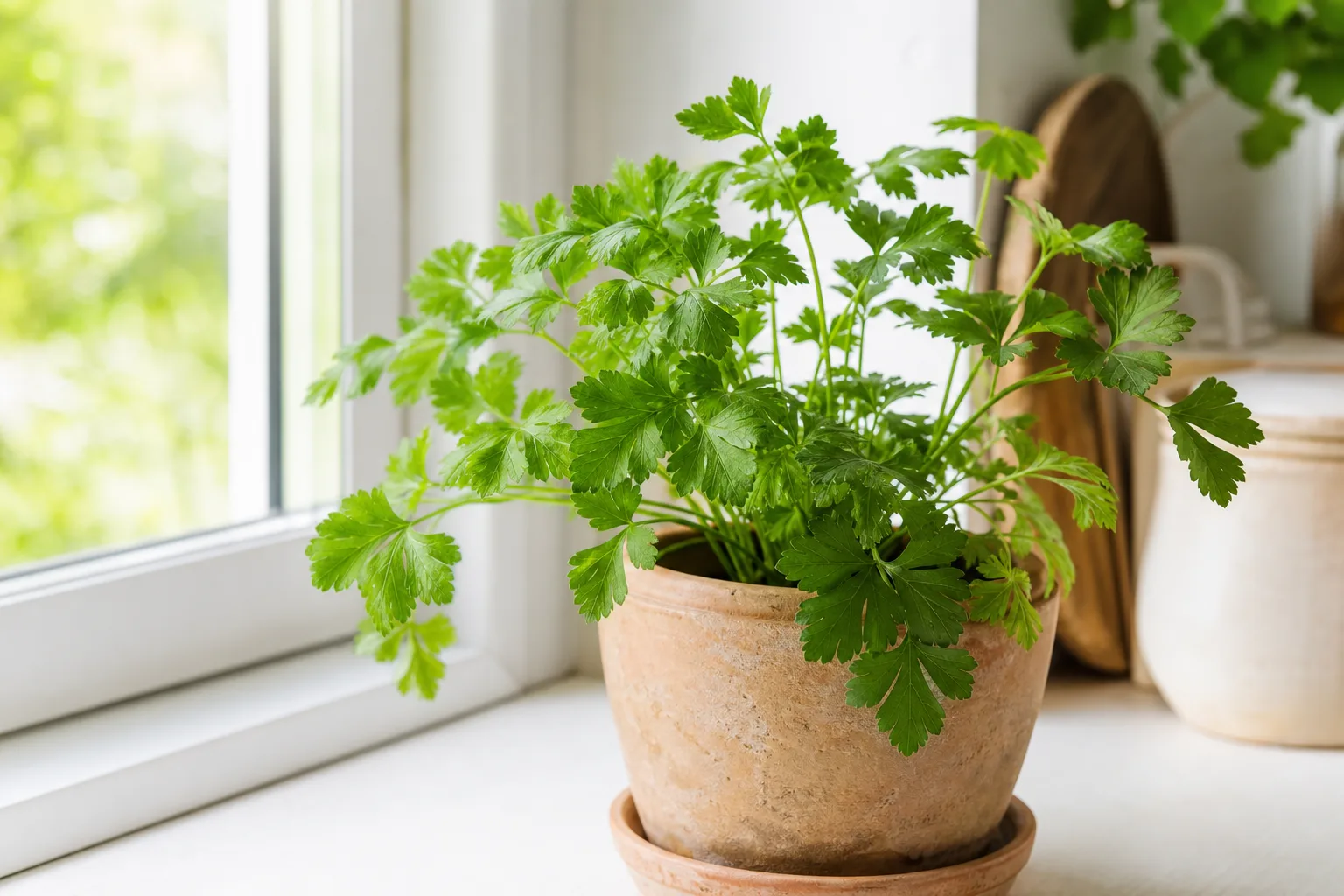
How to Water Parsley: Soil Checks, Pots and Heat
How to Water Parsley: Soil Checks, Pots and Heat
Parsley (Petroselinum crispum) likes soil that stays moist but drains freely. Water when the surface begins to dry, then soak the root zone and let excess water escape. Do not keep the pot sitting in runoff, and do not follow a rigid calendar. NC State Extension likewise describes parsley as preferring consistently moist, well-drained soil. RHS describes parsley as needing moist but not waterlogged soil, and University of Delaware Extension recommends regular moisture with good drainage.
Why Parsley Needs Steady Moisture
Parsley produces tender leaves over a long growing period, so repeated hard drying can slow new growth and make a container plant wilt. At the same time, roots need air as well as water. Saturated soil displaces air from the root zone and may lead to declining roots, even while the foliage looks limp.
That balance—moist, not swampy—is central to parsley care. Purdue Extension describes parsley’s preference for rich, moist, well-drained soil. The Parsley overview explains how moisture fits with light, soil, and its cool-season growth.
How to Decide Whether Parsley Needs Water
Feel the top couple of centimetres of soil or potting mix. If it is beginning to dry, water the root zone thoroughly. If the mix still feels damp, wait and check again later. For a pot, also lift it: a much lighter container often signals that it has lost moisture, while a heavy pot may still contain plenty of water.
Check more than one place in a large container or bed. The surface can dry while soil lower down remains moist, especially in a shaded or cool spot. Do not use leaf droop alone as the cue to water because heat and root damage can also cause limp leaves.
Watering Parsley in Garden Soil
Established parsley in a garden bed usually needs extra water during dry spells, especially while it is actively producing leaves. Water slowly near the base so moisture reaches the root zone instead of running off hard, compacted soil. If rain has already soaked the bed, wait rather than adding more.
Young seedlings need more consistent moisture because their roots have not explored much soil. Keep the seedbed from drying while parsley seed germinates, which can take several weeks. Purdue Extension notes that parsley seed germinates slowly and unevenly; Gardeners’ World also advises keeping the sowing compost moist while seedlings emerge.
Watering Parsley in Containers
Containers dry faster than garden soil, especially in warm, sunny or windy weather. Check parsley pots regularly and water when the surface begins to dry. Apply enough to moisten the rootball, then allow water to drain through the holes. Empty the saucer so the pot is not left standing in water.
A small pot can dry quickly, but an oversized pot filled with dense, wet mix can stay saturated for too long. Use a pot with drainage holes and a free-draining multipurpose mix. RHS recommends growing parsley in a container at least about 25 cm wide and deep, giving its roots and soil volume more room. Savvy Gardening’s indoor parsley advice likewise emphasizes checking moisture and drainage in pots.
How to Water Seed and Young Seedlings
Before germination, keep the top layer evenly moist rather than soaking it repeatedly. A gentle pour or fine spray helps avoid washing small seeds into a clump. Once seedlings appear, water the mix around them and let the top begin to dry slightly between checks, without allowing the small root zone to dry hard.
If you start seed indoors, do not leave trays in water after they have drained. Seedlings are more vulnerable to prolonged wetness than a mature outdoor plant. Wisconsin Extension describes parsley’s slow germination and taproot growth; handle young plants carefully when they are ready to move.
Adjust Watering During Hot Weather
Check parsley pots more often during hot, dry spells. A container in afternoon sun or wind may need water sooner than a bed in partial shade, but inspect the soil before acting. If the plant wilts in the heat while the mix is still moist, move the pot to a cooler bright position or add afternoon shade; extra water may only keep roots too wet.
For a garden bed, a thin organic mulch can slow evaporation, but keep it away from the crown and do not use it to cover saturated soil. UF/IFAS includes parsley among herbs that can grow in sun to partial shade, allowing growers in hot areas to choose a cooler site.
What Changes in Cool or Rainy Weather
When growth slows in cooler weather, the pot may take longer to dry. Reduce watering by checking less often or waiting longer between drinks—not by withholding water until the plant is severely wilted. During rainy periods, make sure container drainage holes remain open and beds do not hold standing water.
Indoor pots also dry more slowly if placed away from a window or near a cool window in winter. Move parsley to a brighter position if growth becomes weak, but avoid setting it directly against cold glass. The Parsley light guide covers suitable indoor placement.
How Much Water to Apply
There is no useful fixed cup amount for every parsley plant. Pot width, mix, root size, light, temperature and airflow all change how much water the root zone can hold. For a container, water evenly until a little drains from the bottom, then stop and empty the saucer. For a bed, water slowly enough that moisture penetrates rather than running away across the surface.
If water rushes through a pot without moistening the mix, the rootball may have dried and pulled away from the sides. Apply water in several slow passes, allowing the mix time to absorb it. If water pools on top, check whether the mix is compacted or the drainage holes are blocked.
Signs Parsley Is Too Dry
A dry plant may wilt, especially during hot weather, and a container may feel noticeably light. The potting mix can pull from the sides or become hard to wet. If dryness is confirmed, water slowly and thoroughly, then let the pot drain. A plant that perks up after the rootball is rehydrated was likely short of water, though recovery speed varies with the severity of stress.
Do not cut away all foliage immediately after a dry spell. Remove only leaves that are fully dead and give the plant a stable watering routine. If the crown and roots are still firm, new leaves may appear as conditions improve.
Signs the Roots Are Staying Too Wet
Warning signs include mix that remains saturated, water collecting in the saucer, yellowing across several leaves, or a plant that stays limp even though the soil is wet. A sour smell or soft, dark roots can indicate serious root damage. These signs overlap with other stresses, so inspect drainage and roots rather than diagnosing from one yellow leaf.
Pause watering until the mix has begun to dry and remove standing water. If the pot lacks drainage, move the plant into a suitable container and fresh mix only if it can be done without excessive root disturbance. See the Parsley soil guide for drainage and the repotting guide for a careful move.
What to Do When Parsley Wilts
First feel the soil. If it is dry, water slowly and let it drain. If it is wet, do not add water: move a container out of intense heat, check that the holes are open, and allow excess moisture to leave. If the plant droops only during hot afternoons and recovers by morning, heat stress may be more likely than a chronic lack of water.
If parsley remains limp in moist soil, inspect the base and roots for soft, discolored tissue. A plant in its second year may also be sending up flowering stems and producing fewer leaves. The Parsley overview describes that normal life-cycle change.
How Soil and Light Change Watering
A free-draining but moisture-retentive soil makes parsley easier to water. Sandy or very small-volume mixes can dry quickly; compacted or heavy mixes may hold water too long. Strong sun and wind speed drying, while shade and cool indoor conditions slow it. Change your checking frequency when the environment changes, but keep the soil test as the decision point.
Do not try to correct poor soil by watering more often. Improve the mix or drainage first. The Parsley soil guide and light guide cover the conditions that set your watering rhythm.
Mulch and Moisture in Beds
A light layer of organic mulch can reduce evaporation and help the bed stay more evenly moist. Keep mulch loose and away from the crown so it does not trap moisture around the stems. Mulch will not make a poorly drained site safe for parsley, and it does not remove the need to check soil after rain.
In a small bed, hand-check beneath the mulch before watering. The surface may look dry while the soil below remains damp. Avoid letting mulch bury young seedlings or the centre of the rosette.
Water Quality and Watering Technique
For ordinary garden parsley, use clean water at a comfortable temperature and water the soil rather than spraying the foliage repeatedly. If your tap water leaves a heavy mineral crust on the pot, occasionally flush the mix thoroughly and let it drain, or use another suitable water source if available. Do not use softened water with a high sodium load for routine irrigation.
Watering early in the day gives splashed leaves time to dry, though correct root-zone moisture and airflow matter more than a strict hour. Avoid shallow frequent splashes that wet only the surface.
Common Parsley Watering Mistakes
- Watering by weekday instead of checking the mix.
- Treating every drooping leaf as proof of dry soil.
- Leaving a container in runoff or a full saucer.
- Letting germinating seed dry out, then soaking it heavily.
- Using more water to compensate for compacted soil or poor drainage.
- Keeping the same watering interval through heat waves and cool weather.
Conclusion
Parsley needs consistent moisture, especially in a container or during hot weather, but its roots should not sit in saturated soil. Check the mix, water the root zone when it begins to dry, and let excess drain. When leaves droop, determine whether the soil is dry or wet before reacting. For the wider care picture, start with the Parsley overview; pair this guidance with the light and soil guides when the plant’s response is unclear.
When to use this page vs other Parsley guides
Use this page to decide when and how to water. The overview covers the overall routine; light explains how sun and heat affect drying; and soil helps fix drainage or water retention. Use fertilizer for feeding, repotting for a pot change, propagation for seed starting, and pruning for harvesting stems.
Related Parsley guides
- Parsley overview — see how moisture fits the plant’s full routine.
- Parsley light — adapt placement to warmth and drying speed.
- Parsley soil — choose mix that drains but holds moisture.
- Parsley fertilizer — feed only when growth and conditions support it.
- Parsley repotting — protect the taproot if changing pots is necessary.
- Parsley propagation — maintain moisture as slow seed germinates.
- Parsley pruning — harvest without removing the central growth point.