Drooping Leaves on Peperomia Hope: Causes, Checks & Fixes
Quick answer
Drooping leaves on Peperomia Hope usually mean the roots are failing to move water-either from chronic wet soil or a fully dry mix. Lift the pot and feel stem bases at the crown before you water.
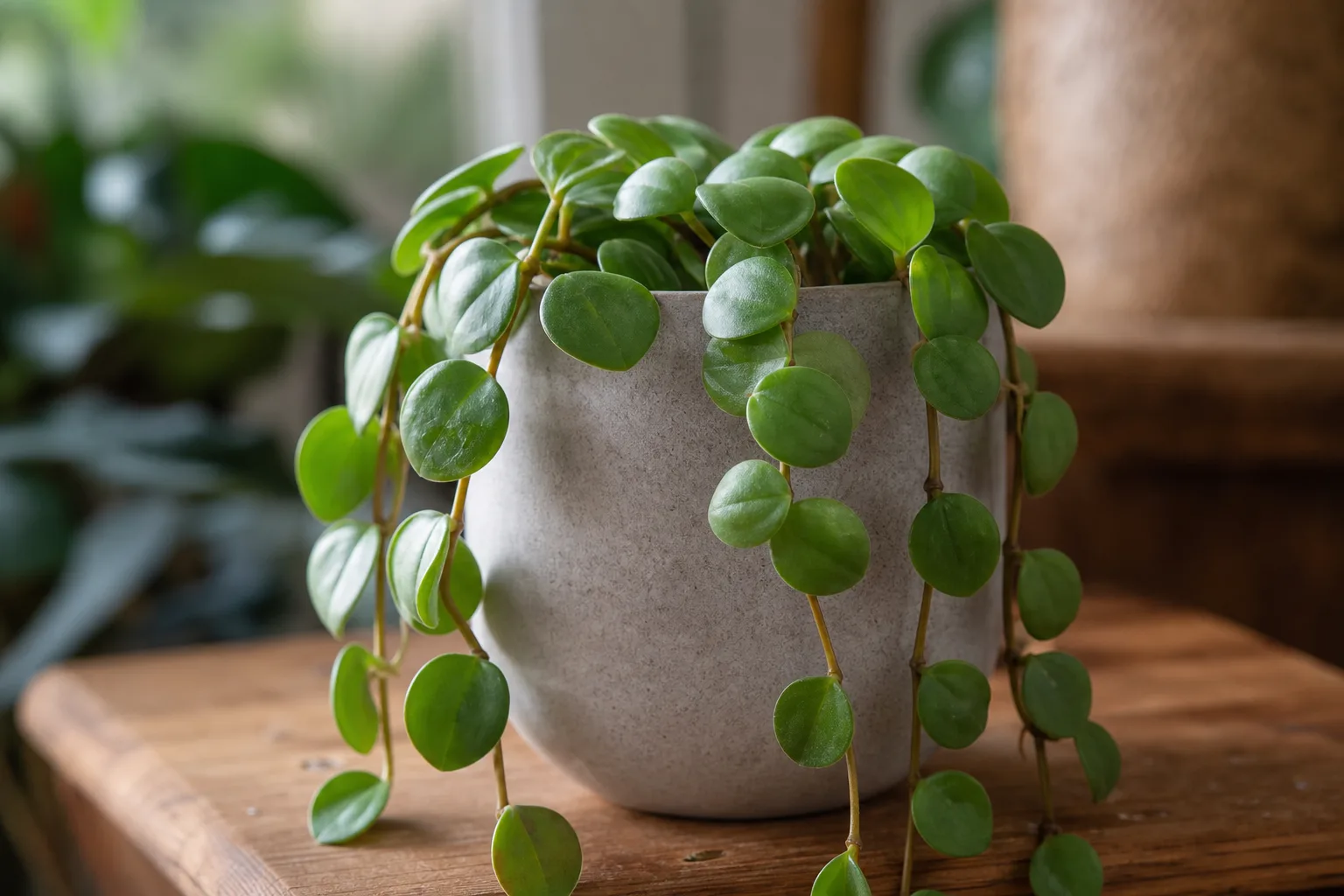
Drooping Leaves on Peperomia Hope: Causes, Checks & Fixes
This guide covers drooping leaves on Peperomia Hope. See also the general Drooping Leaves guide, watering, and light pages for this plant.
Drooping Leaves on Peperomia Hope: Causes, Checks & Fixes
Quick answer
Drooping on Peperomia Hope (Peperomia tetraphylla ‘Hope’) is a water-movement signal, not a mystery disease. This trailing hybrid with round succulent leaves loses turgor when roots cannot supply moisture-whether from rot or drought. Wilted leaves may indicate soil that is too dry or too wet; rotting roots cannot take up water even when the mix is saturated. Your first move: lift the pot, probe moisture deep in the mix, and pinch stem bases at the crown. Do not water until you know which side of that line you are on.
What drooping leaves look like on Peperomia Hope
Healthy Hope naturally trails, so long stems hanging from a shelf or basket can look like droop when they are simply cascading. Stress droop is different: the round leaves hang limply instead of sitting plump and slightly springy, and stems lose stiffness along the whole vine-not just at the lowest arc.
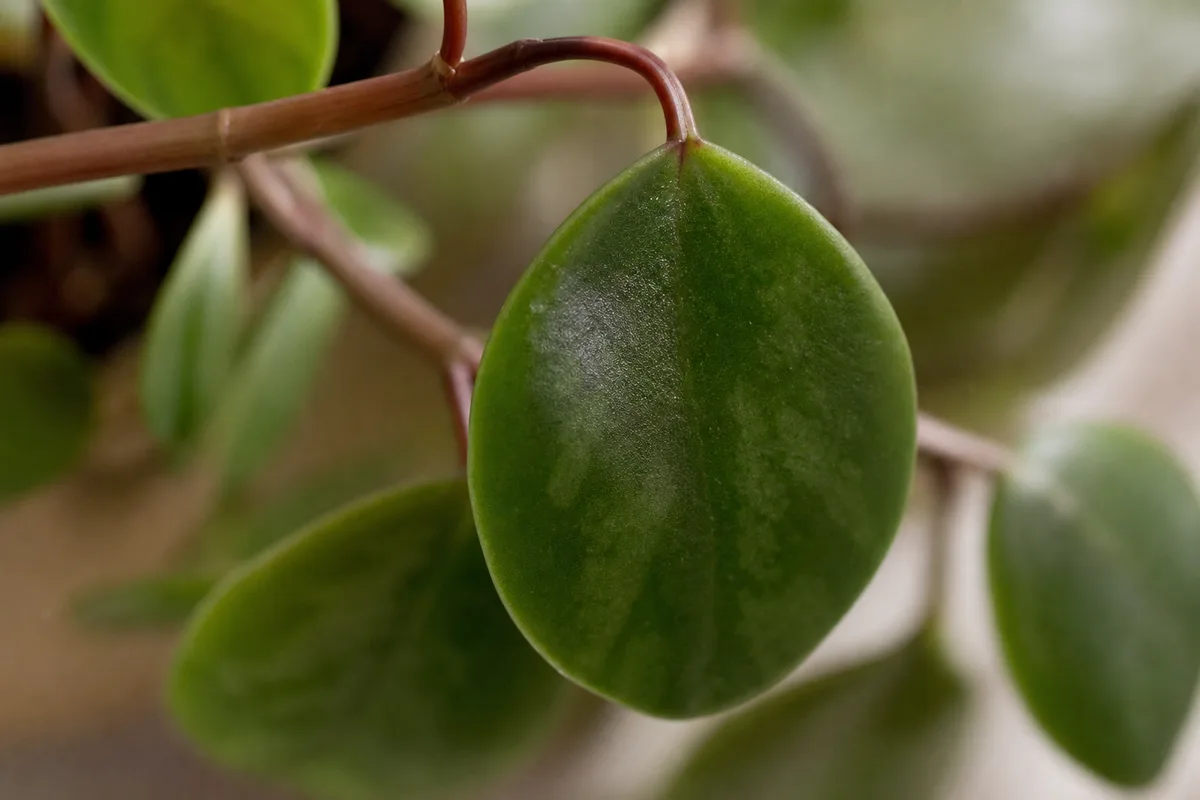
Drooping Leaves symptoms on Peperomia Hope - compare with healthy tissue on the same plant.
Overwatering droop often starts at the crown. Lower round leaves go soft first while trailing tips may still look acceptable for a few days. Stem bases where they meet soil feel spongy or collapse inward. The pot stays heavy, and the surface may look damp even though you have not watered recently.
Underwatering droop shows the opposite pattern. The pot feels very light. Leaves look slightly deflated or thin, sometimes with fine wrinkling on the rounded surface. Stems may still feel firm, but the whole plant hangs lower than usual. A single thorough soak often perks these leaves within hours.
Low light rarely causes sudden collapse, but it pairs with wet-soil droop: the plant uses water slowly, so the same Peperomia Hope watering guide that worked in summer keeps the mix stale indoors. Cold drafts near windows or AC vents can also make firm leaves droop temporarily without changing soil moisture.
Why Peperomia Hope gets drooping leaves
Peperomia Hope stores water in fleshy leaves, yet it depends on a compact root system that is prone to rotting if kept too wet. That combination makes drooping ambiguous: the leaves hold some reserve, so the plant can look fine until root failure is already advanced.
Overwatering before the soil dries is the most common cause on Peperomia Hope overview. Hope needs the mix to dry out between waterings; watering on a calendar without checking dryness suffocates thin roots. Oversized hanging baskets are a hidden trigger-the decorative pot holds water around tiny roots for days while vines keep trailing outward.
Underwatering causes droop when the mix has been dry too long. Semi-succulent leaves release stored water, but compact roots cannot rehydrate the whole trailing mass quickly. Hydrophobic dry pockets in old mix make this worse: surface watering runs down the sides while the center stays desert-dry.
Physical stress adds a third lane. Trailing stems snap easily if handled roughly during watering or rotation. Recent Peperomia Hope repotting guide disturbs fine roots and can cause temporary droop until new root tips form. Heat near a south window or a heating vent increases water loss from small leaves faster than roots can replace it.
How to confirm the cause
Work through these checks in order before changing anything:
- Pot weight. Lift the container. Light and dry suggests underwatering; heavy days after the last watering suggests poor drainage, oversized pot, or chronic overwatering.
- Moisture at depth. Insert a finger or chopstick 5–7 cm into the mix-not just the surface. Dry throughout confirms drought. Cool, clinging soil at mid-depth with a heavy pot confirms saturation.
- Stem bases at the crown. Gently wiggle stems where they enter the soil. Firm bases point away from rot; soft, collapsing bases with wet soil confirm crown trouble.
- Leaf texture. Plump round leaves that feel thin or slightly wrinkled support underwatering. Dull, limp leaves on wet soil support root stress.
- Recent changes. New basket, moved window, repot, or heat wave? Temporary droop from shock improves once conditions stabilize-if roots are still firm.
If drooping persists more than 48 hours after you correct moisture, or wet soil never dries, unpot and inspect roots. Brown mushy roots with a sour smell confirm rot; firm white roots with dry mix confirm thirst or hydrophobic soil.
The first fix to try
Stop and diagnose before you water. That single rule prevents the most expensive mistake on Hope: adding water to a plant that is drooping from root rot on Peperomia Hope.
If the pot is light and the mix is dry throughout, water once thoroughly until water runs from drainage holes, wait a few minutes, and empty every saucer or cachepot. Do not water again until the top half of the mix approaches dry-typically on a 10–14 day rhythm in active growth and every 3–4 weeks in winter for plants in Peperomia Hope light guide.
If the pot is heavy and soil stays wet, do not water. Move the plant to bright indirect light with good airflow so the mix can dry. If stem bases soften or smell sour, unpot, trim mushy roots and soft stems, air-dry 24 hours, and repot into fresh fast-draining mix in the smallest pot that fits trimmed roots.
Step-by-step recovery
Dry droop recovery
Water deeply once, then leave the plant alone. Check perk-up within 6–24 hours. If leaves still hang and soil repels water, bottom-soak the pot in a basin of room-temperature water for 20–30 minutes, then drain fully. Avoid misting as a fix-it does not rehydrate the root zone.
Wet droop recovery
Stop all watering until the top half of the mix dries. Remove standing water from saucers and decorative basket liners. If decline continues, unpot gently, rinse away wet soil, and cut rotted roots back to firm tissue. Repot with 50% potting compost and 50% perlite-or add orchid bark per MOBOT culture notes-in a pot matched to root size, not vine length. Wait at least a week before the first cautious watering.
Propagate if the crown fails
If stem bases are fully mushy but upper sections still feel firm, take stem cuttings from healthy tissue as backup. Hope roots readily from cuttings in moist perlite or water when the parent crown cannot be saved.
Recovery timeline
Simple dry droop often improves within hours and looks normal by the next day. Wet droop with early root damage may take one to three weeks to stabilize once the mix dries and damaged roots are trimmed. Severe crown rot may not recover the original plant-recovery means new cuttings, not old leaves re-firming.
Judge progress by new firm leaves along stems and stable stem bases, not by whether every drooped leaf rises. Older limp leaves may stay bent; focus on whether collapse stops spreading up the vine.
Lookalike symptoms
Wilting and drooping overlap on Hope, but wilting often describes sudden limpness across the whole plant, while drooping emphasizes leaves and stems hanging under their own weight. The diagnostic path is the same: check moisture and stem bases first.
Yellow leaves frequently accompany wet-soil droop as lower crown leaves fade. Yellowing without droop may mean low light or natural aging of old leaves-widespread yellow plus limp stems on wet soil means root stress.
Leggy growth from dim light produces long thin stems that hang, but leaves stay plump and soil dries on a normal schedule. Brighten light rather than changing water.
Mistakes to avoid
- Watering immediately because leaves look thirsty without checking whether the pot is already heavy and wet.
- Assuming trailing length requires a larger pot-oversized containers prolong wet soil and worsen droop.
- Misting leaves instead of fixing root-zone moisture.
- Fertilizing a drooping plant before moisture and light are corrected.
- Repotting into fresh mix on day one without inspecting roots when soil has been wet for days.
- Handling trailing stems roughly during inspection-broken stems mimic stress droop.
How to prevent drooping next time
Learn how fast your specific pot dries in your home’s light, not on a generic schedule. Let compost partially dry between waterings, use drainage holes, and never let the pot stand in pooled water. Match pot size to roots; use a shallow hanging pot or nursery pot inside a decorative basket so wet soil at the crown is visible.
Keep bright indirect light so the plant uses water predictably. Rotate the pot so all sides get light and trailing growth stays even. In winter, reduce watering when growth slows. When in doubt, err toward dryness-Hope tolerates a missed drink better than a soggy week.
When to worry
Treat drooping as urgent when wet soil, sour smell, and soft stem bases appear together-crown rot spreads quickly on trailing peperomias. Also escalate if droop persists beyond 48 hours after you corrected dry soil with a thorough watering, or if whole sections of vine collapse while the pot remains heavy.
Hope is non-toxic to cats and dogs, but inspect roots gently anyway; broken stems and messy mix create cleanup, not poisoning risk.
Conclusion
Drooping leaves on Peperomia Hope almost always trace to water at the roots-too much, too little, or too long in the wrong pot. Lift, probe, and feel the crown before you pour. Dry gets one deep drink; wet gets a pause and possibly a root rescue. Firm new leaves along trailing stems tell you the plant is winning; spreading collapse at the crown tells you to act fast or propagate while you still can.
When to use this page vs other Peperomia Hope guides
- Peperomia Hope watering guide - Use for routine moisture checks before assuming drooping leaves is the main issue.
- Peperomia Hope problems hub - Browse all 7 common issues on this species.
- Root Rot on Peperomia Hope - Different entry point when symptoms overlap with drooping leaves.