Underwatering on Peperomia Hope: Causes, Checks & Fixes
Quick answer
Underwatering on Peperomia Hope shows as a light dry pot, wrinkled round leaves, and limp-but still firm-trailing stems. Water thoroughly once until excess drains, empty the saucer, then resume letting the soil dry completely between drinks.
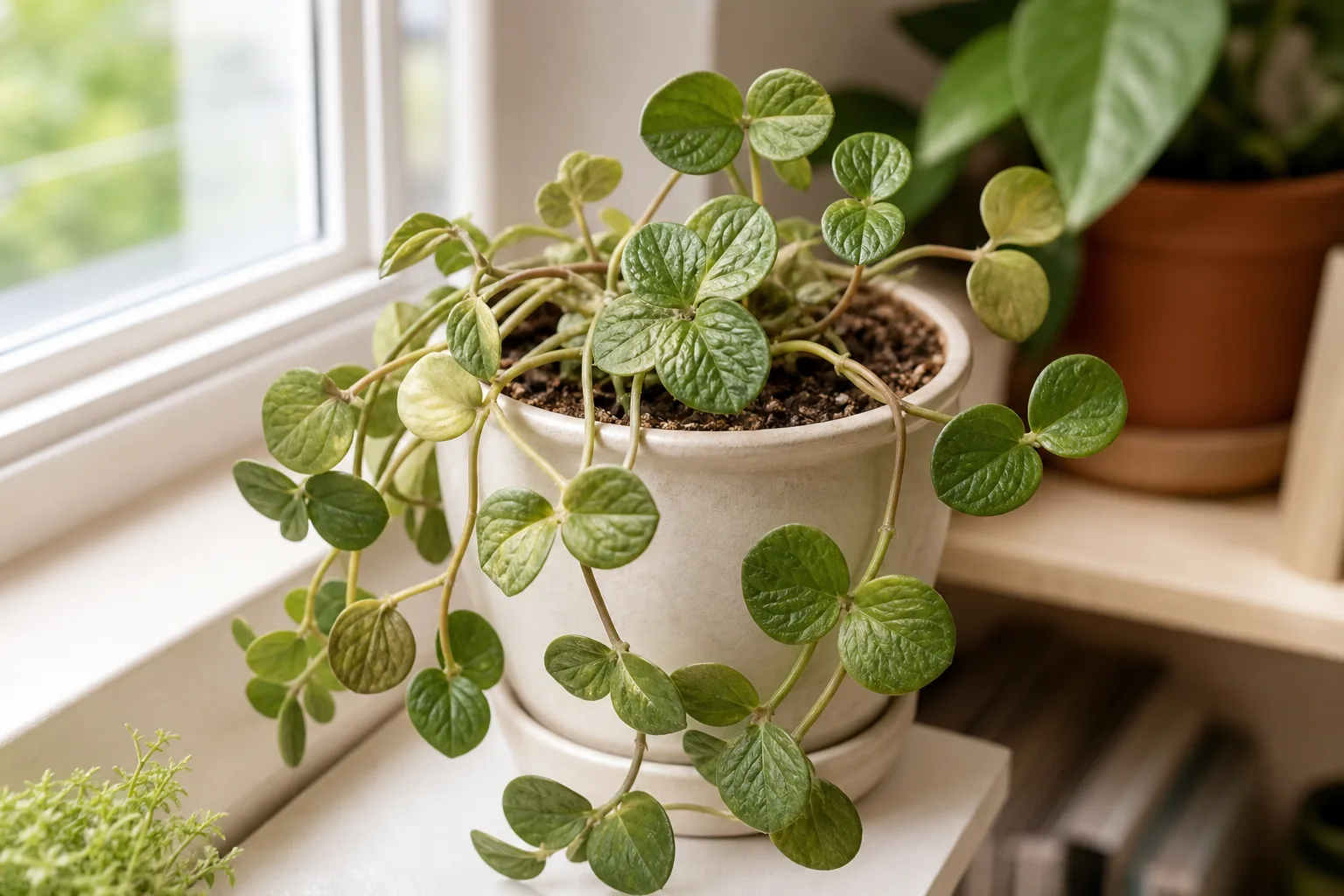
Underwatering on Peperomia Hope: Causes, Checks & Fixes
This guide covers underwatering on Peperomia Hope. See also the general Underwatering guide, watering, and light pages for this plant.
Underwatering on Peperomia Hope: Causes, Checks & Fixes
Quick answer
Underwatering on Peperomia Hope (Peperomia tetraphylla ‘Hope’) means the root zone stayed dry too long for this trailing hybrid to replace the water its round leaves lose. The plant stores moisture in those fleshy semi-succulent leaves, so brief dry spells look worse than they are-but repeated drought still causes wrinkled leaves, limp vines, and eventually yellowing lower leaves.
First step: water thoroughly once. Soak until water runs from the drainage hole, then discard saucer water. Do not mist leaves, fertilize, or repot until you have confirmed the mix is dry throughout and stem bases at the crown are still firm-not soft like rot.
What underwatering looks like on Peperomia Hope
Peperomia Hope is easy to misread because wrinkled round leaves can also appear when roots are weak from past overwatering. True underwatering follows a dry root zone, not wet sour soil.
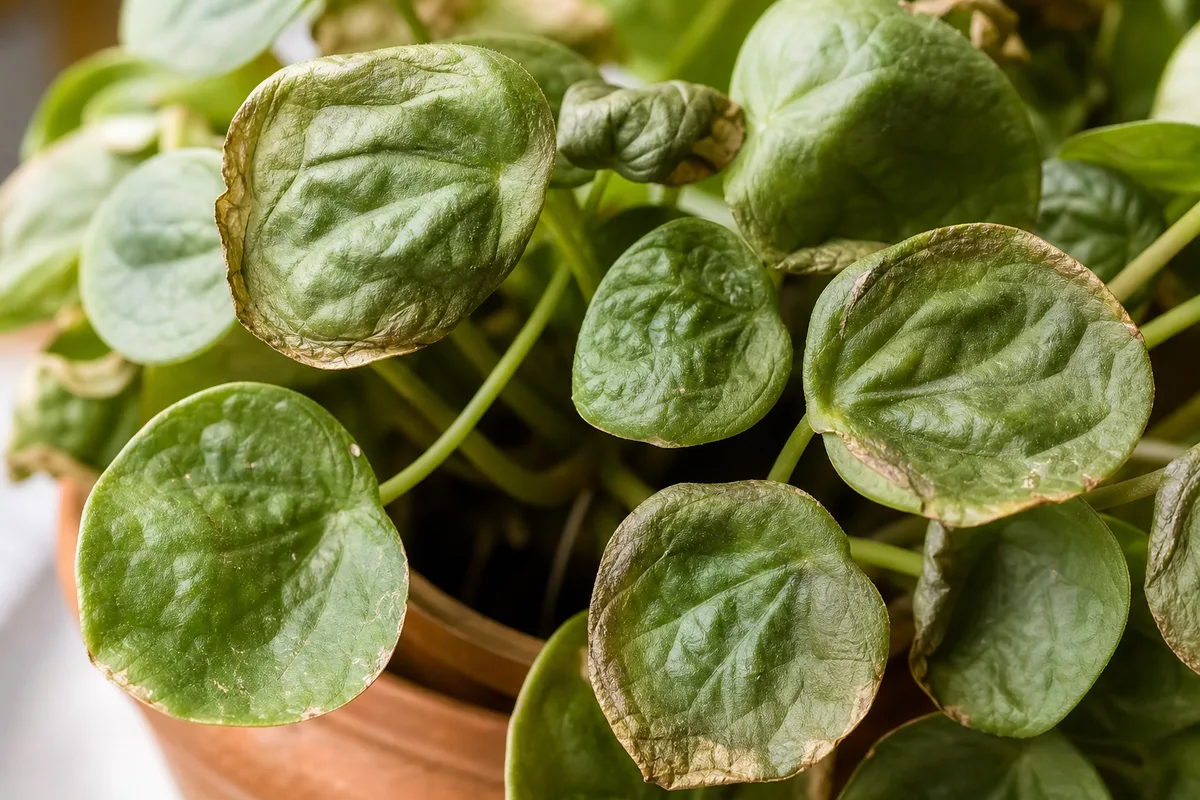
Underwatering symptoms on Peperomia Hope - compare with healthy tissue on the same plant.
Above the mix, watch for:
- Wrinkled, slightly deflated round leaves along trailing stems-the once plump surface looks textured and thin
- Limp trailing vines that still feel firm when you pinch a stem, unlike mushy crown rot
- Dry, papery leaf edges on the oldest round leaves after several missed waterings
- Pale dull green color before crisp brown tips appear
- Slow or stalled new growth at stem tips when drought repeats
Below the rim, underwatering shows as:
- A very light pot when lifted-dry mix weighs far less than a freshly watered one
- Soil dry 5–7 cm down, not just dusty on the surface
- Mix that has shrunk and pulled away from the pot sides; water runs down the gap instead of soaking in
- No sour smell-that points to rot, not drought
Peperomia Hope wilts from thirst faster in small hanging pots near heating vents, bright windows, or air-conditioning drafts. The trailing tips may look worse first because they are farthest from the root ball, while the crown can still hold firm tissue.
Important nuance from this cultivar: grower experience notes that Hope leaves wrinkle when the plant is too dry or sitting on weak roots. If the pot feels heavy, soil stays damp, and stem bases are soft, wrinkling is likely rot or chronic overwatering-not underwatering. Always pair leaf texture with pot weight and moisture at depth.
Why Peperomia Hope gets underwatering
This plant is marketed as forgiving, which pushes many owners toward the opposite error of their overwatering-prone neighbors: under-watering out of fear of root rot on Peperomia Hope. Peperomias do rot when kept wet-but Hope still needs a full soak once the mix has dried completely.
Common Peperomia Hope-specific triggers:
Fear of overwatering after rot scares. One bad experience with a soggy hanging basket leads to long drought gaps. Semi-succulent leaves mask early thirst, so the problem shows up suddenly as widespread wrinkling.
Calendar watering in the wrong season. Hope typically needs water every 10–14 days when actively growing and every 3–4 weeks in cooler winter months-but only when the soil is completely dry, not on a fixed Tuesday schedule. Reduce watering in winter when growth slows. Bright summer windows dry small pots in days; dim winter rooms stretch the interval.
Undersized root ball in a small pot. Hope performs best slightly tight in its container. That means less soil volume to hold moisture-a bright, warm shelf can empty a small pot faster than you expect.
Oversized pots with dry outer zones. Ironically, a pot that is too large for the root ball can also cause drought stress: water runs through the empty outer mix while the small root zone stays dry inside.
Hydrophobic old mix. When peat-heavy soil dries out for weeks, it repels water instead of absorbing it. You pour from the top, water drains immediately, and the center of the root ball stays bone dry-a classic underwatering trap on trailing houseplants in hanging baskets.
Heat and airflow without adjusted rhythm. Heat accelerates transpiration from fleshy round leaves. A plant that thrived on a 14-day rhythm may need checking weekly in a hot, bright spot.
Forgotten hanging baskets. Trailing stems hide a light pot. The vine still looks green while the mix has been dry for days.
How to confirm the cause
Work through these checks before you soak:
- Pot weight - Lift the container. Very light weight strongly suggests dry mix. Heavy weight after days without watering may mean poor drainage or an oversized pot holding moisture away from roots.
- Moisture at depth - Insert a finger or bamboo skewer 5–7 cm deep. Bone dry throughout supports underwatering. Damp deep mix with wilted leaves suggests rot or root damage, not thirst.
- Stem base firmness - Gently press where trailing stems meet the soil. Firm tissue fits drought. Soft, dented bases mean stop-inspect for rot before adding water.
- Leaf texture pattern - Thin, wrinkled, slightly crispy leaves on firm stems fit underwatering. Soft, translucent, yellowing crown leaves on wet soil do not.
- Water behavior - If water runs straight through in seconds and the pot still feels light afterward, suspect hydrophobic mix or shrinkage gaps-not a successful drink.
- Perk test after one soak - Healthy roots should show firmer leaves within hours to a day after proper rehydration. No improvement with wet soil means look elsewhere.
If two or more dry-side clues align and rot signs are absent, underwatering is the working diagnosis.
First fix for Peperomia Hope
Water thoroughly once-right now if the mix is dry throughout and stem bases are firm.
Use room-temperature water and irrigate until it flows freely from the drainage hole. That confirms the root zone received moisture, not just the surface. Empty the saucer within 30 minutes so the plant is not sitting in standing water-Peperomia Hope rots easily if roots stay too wet.
Do not compensate for weeks of drought by watering daily. One deep soak, then return to letting the compost partially dry between waterings. Daily splashes without full saturation leave dry pockets around thin roots.
If water ran through without wetting the mix:
- Bottom-water the pot in a sink or basin for 20–45 minutes until the surface feels moist, then drain fully-an effective fix for hydrophobic soil.
- Or submerge the pot briefly until air bubbles stop, then drain-useful when mix has pulled away from pot sides.
After rehydrating, place the plant back in Peperomia Hope light guide so it can use the water efficiently. Hold fertilizer until new growth looks normal for two weeks.
Step-by-step recovery
Once the first soak is done, follow this order:
- Drain completely - Never leave Hope sitting in a full saucer or decorative basket liner with pooled water.
- Wait for true dry-down - Before the next watering, confirm the mix is dry 5–7 cm deep and the pot feels noticeably lighter. In active growth that may take 10–14 days; in winter, 3–4 weeks is common.
- Adjust placement before schedule - If the same spot dries out in five days every time, the window may be too hot or bright for your current rhythm-not a sign to keep skipping water indefinitely.
- Refresh hydrophobic mix if needed - If repeat soaks still run through instantly, top-dress is not enough. Repot into fresh fast-draining mix with perlite in a pot sized to the root ball-not the vine length.
- Trim only fully crisp tissue - Brown dead edges will not green up. Snip for appearance after the plant firms up, not on day one.
- Monitor trailing tips - New round leaves should emerge plump within one to two weeks once watering stabilizes.
Skip Peperomia Hope repotting guide on day one unless mix is clearly hydrophobic and cannot be rewet. Skip misting as a substitute for root-zone moisture-it does not rehydrate dry soil.
Recovery timeline
Hours to 24 hours: Wrinkled leaves on firm stems should look noticeably plumper after one proper soak. Trailing vines regain turgor before every old leaf looks perfect.
One to two weeks: New growth at stem tips should appear firm and round. Lower leaves that yellowed from repeated drought cycles may drop- that is normal shedding, not failure.
Several weeks: A stable dry-down rhythm in bright indirect light rebuilds a full trailing habit. Crispy brown margins on old leaves stay brown; judge success by new blades, not old damage.
Worsening signs after soaking: Continued wrinkling with wet heavy soil, soft stem bases, sour smell, or widespread yellowing at the crown means rot or another problem-not more drought treatment. Stop watering and inspect roots.
Lookalike symptoms
- Overwatering and root rot - Limp stems with wet heavy soil, soft crown bases, sour odor, and dull yellow lower leaves. Wrinkling here reflects dead roots that cannot take up water despite damp mix.
- Low light stress - Pale, small new leaves on stretched stems with soil that neither dries predictably nor shows classic drought wrinkling. Fix light before chasing water.
- Heat scorch - Crisp patches on leaves facing intense sun while soil moisture is normal. Move out of direct rays; do not flood the pot.
- Normal leaf aging - An occasional lower round leaf yellows and drops on an otherwise firm plant with appropriate soil moisture-not a drought crisis.
- Wilting from recent repotting - Temporary limpness after root disturbance with evenly moist (not bone-dry) mix. Hold steady light and avoid stacking stressors.
What not to do
Do not water on a calendar without checking dryness-Peperomia Hope needs complete dry-down, not a weekly dribble or a monthly neglect gap.
Do not mist instead of soaking dry roots. Surface humidity does not replace soil moisture.
Do not switch to keeping soil constantly moist as an overcorrection after drought-that triggers the rot Peperomia Hope overview is known for.
Do not fertilize a dry plant to “wake it up.” Rehydrate first; salts on drought-stressed roots cause further stress.
Do not repot into a much larger hanging basket because vines are long-extra wet soil volume around a small root ball causes the next overwatering cycle.
Do not assume every wrinkled leaf means thirst when the pot is heavy and stem bases are soft. Adding water then accelerates crown rot.
How to prevent underwatering next time
Build a pot-weight habit: lift the container before you decide. A light pot in bright indirect light means check depth; a heavy pot means wait.
Pair fast-draining mix with a pot sized to roots, not trailing length. Shallow hanging setups work well if water can drain fully from the nursery pot inside the basket.
Track seasonal shifts-short winter days slow water use; active summer growth and heat shrink the dry-down interval even though the plant still needs full dry-out between soaks.
If you travel, arrange soak-and-dry coverage rather than leaving the plant in bone-dry mix for weeks. Brief drought tolerance is not the same as month-long abandonment.
Refresh peat-heavy mix before it turns hydrophobic. A yearly top check-does water soak in or run off?-prevents false watering where the surface looks briefly damp but roots stay dry.
When to worry
Underwatering alone is rarely lethal on Peperomia Hope if caught while stem bases are firm. Escalate if:
- Many leaves crisp at once after prolonged drought in hot dry air
- Water repeatedly runs through without rewetting mix-roots may be dying back in the dry center
- No perk within 24–48 hours after a confirmed thorough soak-inspect for rot or root loss
- Stem bases soften after you have been avoiding water-rot may have started during an earlier overwatering phase
If more than half the trailing stems collapse at the crown, propagate firm upper sections while tissue is still healthy. Hope roots easily from stem cuttings when the parent crown fails.
Conclusion
Underwatering on Peperomia Hope is a rhythm problem, not a mystery disease. Wrinkled round leaves on firm trailing stems, a light pot, and dry mix deep down tell you the plant needs one thorough soak, not panic repotting or constant moisture. Confirm rot is absent, rehydrate fully, drain the saucer, and return to letting soil dry completely between drinks. The same semi-succulent leaves that hide early thirst will plump again within a day when roots are healthy-then your job is matching the next soak to how fast that specific pot dries in your home.
When to use this page vs other Peperomia Hope guides
- Peperomia Hope watering guide - Use for routine moisture checks before assuming underwatering is the main issue.
- Peperomia Hope problems hub - Browse all 7 common issues on this species.
- Yellow Leaves on Peperomia Hope - Different entry point when symptoms overlap with underwatering.