Aphids on Philodendron Birkin: Causes, Checks & Fixes
Quick answer
Aphids on Philodendron Birkin gather on tender new leaves at the rosette center, causing curl, stickiness, and distorted pinstripes. First step: isolate the plant and rinse aphids off with a firm water spray before applying insecticidal soap on repeat intervals.
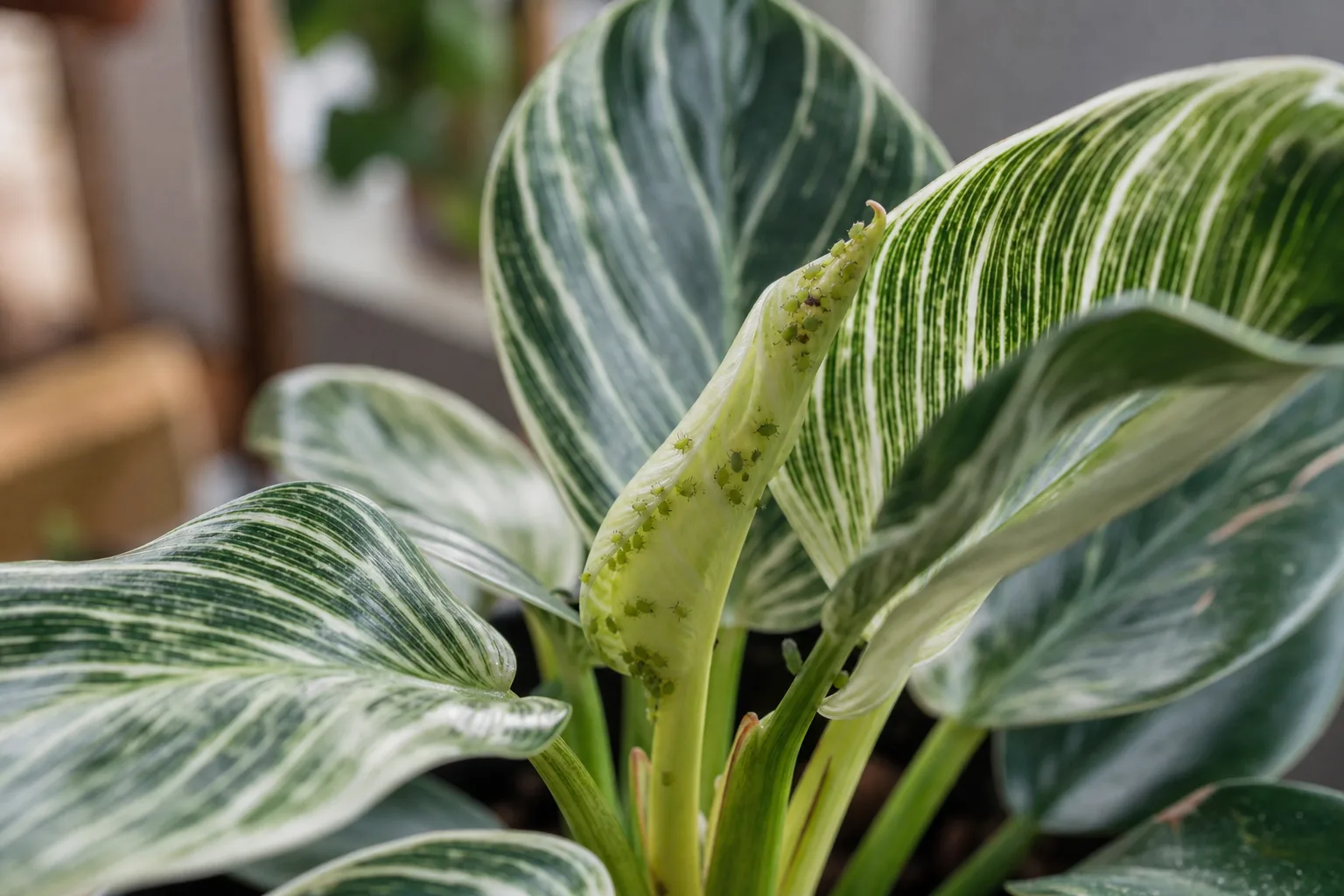
Aphids on Philodendron Birkin: Causes, Checks & Fixes
This guide covers aphids on Philodendron Birkin. See also the general Aphids guide, watering, and light pages for this plant.
Aphids on Philodendron Birkin: Causes, Checks & Fixes
Quick answer
Aphids are small soft-bodied sap feeders that colonize the tender new growth Philodendron Birkin produces at its compact rosette center. On this slow-growing self-heading philodendron, the first visible signs are often sticky honeydew on pinstriped leaves, curled new foliage, or clusters of green, black, or pink insects tucked against unfurling leaf bases-not generic yellowing from watering mistakes.
First step: isolate the plant and rinse aphids off with a firm stream of water, targeting the rosette center and leaf undersides. Birkin’s tight leaf cluster holds pests in protected crevices, so a thorough rinse comes before any spray. Confirm live aphids are present before reaching for insecticide.
What aphids look like on Philodendron Birkin
Birkin grows as an upright rosette with short internodes and distinctive white or cream pinstripes on dark green leaves. Aphids attack the softest tissue Philodendron Birkin overview produces:
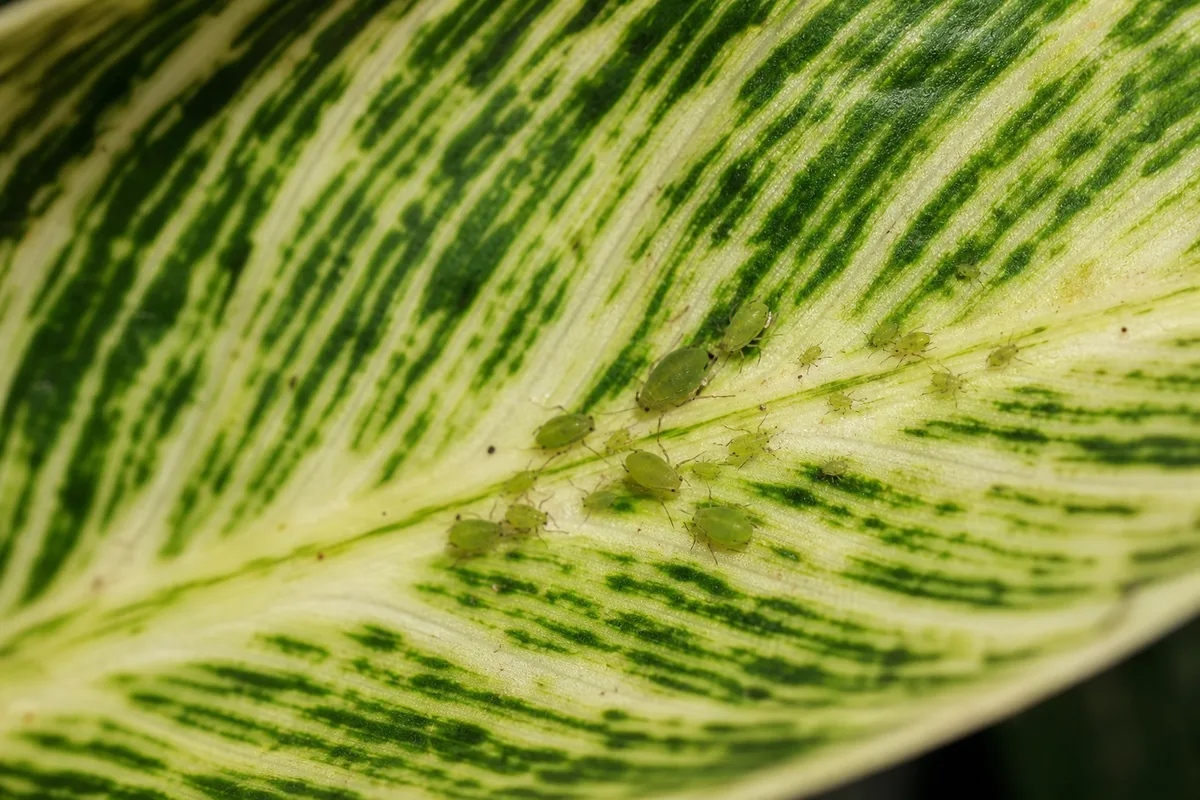
Aphids symptoms on Philodendron Birkin - compare with healthy tissue on the same plant.
- Clusters on new growth - Groups of tiny pear-shaped insects at the center of the rosette, along unfurling leaf edges, and at stem tips where the next pinstriped leaf is emerging
- Sticky honeydew - Shiny tacky residue on upper pinstriped surfaces or the pot rim below feeding sites; unlike normal leaf shine, it attracts dust and may turn black with sooty mold
- Curled or distorted new leaves - Feeding on tender tissue can cup or twist new foliage before pinstripes fully develop, making variegation look uneven or washed out
- Whitish cast skins - Shed aphid exoskeletons left on leaves after molting, often near colonies
- Ant activity - Ants on the pot, saucer, or shelf often indicate aphids or other honeydew producers on the plant above
Older lower leaves on Birkin are leathery and less attractive to aphids. If damage is spread evenly across mature foliage with no insects visible, look at thrips, spider mites, or cultural stress before assuming aphids.
Why Philodendron Birkin gets aphids
Aphids are not a Birkin-specific disease-they are common on philodendrons and many houseplants. Extension references list aphids among insects to monitor on philodendron foliage. What makes Birkin vulnerable is how and where it grows indoors.
Tender new shoots. Birkin pushes new pinstriped leaves slowly from a central crown. Each unfurling leaf is soft and nitrogen-rich-exactly what aphids prefer. A small colony on one new leaf can distort the next several leaves before you notice stickiness elsewhere.
Introduction from outside. Aphids arrive on new nursery plants, cuttings, or when a Birkin spends summer outdoors or near an open window. Skipping quarantine is the most common entry route into a collection.
Soft growth from excess fertilizer. Heavy nitrogen feeding produces lush tender tissue that aphid populations build on faster. Stressed plants attract pests too, but overfed Birkins with weak stretched new growth are especially inviting.
Indoor conditions without predators. Outdoors, lady beetles, lacewings, and parasitic wasps reduce aphid numbers. Indoors, populations can increase with great speed when no natural enemies are present and conditions stay warm.
Crowded plant shelves. Birkin’s compact form sits close to neighbors on windowsills and plant stands. Winged aphids can move between pots when colonies become crowded on the source plant.
How to confirm the cause
Work through these checks before treating:
- Location on the plant - Aphids cluster on newest growth at the rosette center and stem tips. Spider mites cause stippling and webbing on undersides; mealybugs form white cottony masses in leaf axils; scale looks like immobile bumps on stems.
- Magnified inspection - Use a hand lens on the newest unfurling leaf. Aphids have pear-shaped soft bodies, visible legs and antennae, and often a pair of small tail-pipe cornicles at the rear.
- Movement test - Disturb the colony gently. Aphids move slowly compared with thrips; they do not produce webbing like mites.
- Honeydew check - Rub a sticky upper leaf. Honeydew feels tacky and may have black sooty mold that wipes off. Hard water spots or dust feel dry or powdery.
- Ant trails - Ants climbing the pot or stem strongly suggest aphids or other honeydew insects are present above.
- Nearby plants - Check philodendrons, pothos, and other soft-leaved neighbors. Aphids on one Birkin often mean a second plant is hosting the source colony.
If you find no insects, no honeydew, and no cast skins, the stickiness or curl may come from other pests or from fluoride and low humidity browning-not aphids.
First fix for Philodendron Birkin
Move the plant away from others, then rinse all foliage thoroughly with a firm stream of lukewarm water-especially the rosette center and every leaf underside.
Carry Birkin to a shower, sink, or outdoor hose. Support the pot so soil does not waterlog. Spray from multiple angles into the tight crown where aphids hide in curled new leaves. Let foliage dry in Philodendron Birkin light guide the same day.
This single step dislodges many aphids and washes fresh honeydew before ants or sooty mold establish. Do not apply insecticidal soap on day one without confirming live aphids remain after the rinse. Do not fertilize a pest-hit Birkin hoping to push new growth-that produces more tender tissue for aphids to colonize.
Step-by-step recovery
After the initial rinse:
- Re-inspect in 48 hours - Look at the rosette center with a hand lens. If live aphids remain, proceed to soap treatment.
- Apply insecticidal soap per label directions - Use a product labeled for houseplants and aphids. Coat leaf undersides, stem tips, and crevices in the crown thoroughly. Soap kills on contact only and does not reach aphids hidden inside tightly curled leaves, so open or prune badly curled tips if needed before spraying.
- Repeat on label intervals - Most infestations need applications every four to seven days for two to three cycles to catch nymphs that hatch from eggs soap does not kill.
- Spot-test variegated leaves first - Birkin’s white pinstripes sit on thinner tissue that can react to sprays. Test one leaf and wait 24 hours before treating the whole plant.
- Wash off sooty mold - Once honeydew production stops, wipe or rinse black mold from upper pinstriped leaves. Heavily coated leaves can be trimmed if they no longer photosynthesize well.
- Manage ants if present - Ant stakes or barriers on the shelf can help natural predators reach aphids. Ants protect colonies by warding off beneficial insects.
- Hold isolation until clear - Keep Birkin separated until you see no live aphids for at least two weeks after the last treatment.
Avoid Philodendron Birkin repotting guide during active infestation unless soil pests are also confirmed. Aphids on Birkin are almost always a foliage problem, not a root-zone issue.
Recovery timeline
A strong water rinse reduces visible colonies within one to two days on moderate infestations. A full soap course typically takes one to two weeks with scheduled repeats. Because Birkin is slow-growing, expect the next one or two pinstriped leaves to show any remaining curl or dull striping from earlier feeding. Clean new growth with crisp variegation confirms recovery-not the old damaged leaves re-greening.
Sooty mold fades as honeydew dries up; expect cleaner upper leaves within two to three weeks once insects stay gone.
Lookalike symptoms
Sticky leaves without aphids - Mealybugs, scale, and whiteflies also produce honeydew. Mealybugs look cottony in leaf axils; scale forms hard bumps on stems; whiteflies fly in a cloud when disturbed.
Curling new leaves - Thrips scrape tissue and leave silvery streaks. overwatering on Philodendron Birkin causes yellow limp foliage with wet soil, not insect clusters. Low humidity browns pinstripe edges but does not leave honeydew or moving insects.
Pale or washed-out pinstripes - Insufficient light fades variegation without stickiness or pests. Move Birkin to brighter filtered light and compare-aphid damage usually comes with honeydew or visible colonies on new growth.
Ants alone - Ants may farm aphids on a different plant on the same shelf. Trace trails upward to find the actual honeydew source before treating the wrong pot.
Mistakes to avoid
- Spraying once and stopping - Aphid nymphs hatch on a cycle; one application rarely clears an indoor infestation.
- Using dish soap - Homemade detergents burn variegated philodendron leaves. Use products labeled as insecticidal soap for plants.
- Treating without isolation - Winged aphids and crawlers spread to pothos, philodendrons, and other nearby houseplants within days.
- Pruning the entire crown - Removing all new growth sets Birkin back severely. Target only leaves too curled for spray to reach.
- Fertilizing during infestation - Soft new shoots from nitrogen feed aphid populations faster.
- Returning the plant too soon - Two weeks aphid-free after the last live sighting is a safer isolation window than a few days without checking.
Philodendron Birkin care cross-check
Healthy Birkin culture makes repeat infestations less likely but does not replace pest treatment when aphids are present.
- Light: Bright filtered light keeps growth steady without the weak stretched shoots that appear in dim corners. Birkin in too little light produces fewer new leaves-but each one stays soft longer, giving aphids more time on tender tissue.
- Water: Water when the top 3–5 cm of mix is dry. Overwatered stressed roots weaken the plant; underwatering on Philodendron Birkin does not cause aphids but can compound damage on an infested specimen.
- Humidity: 50–60% supports healthy pinstriped foliage. Moderate humidity alone does not prevent aphids indoors.
- Fertilizer: Feed lightly every four to six weeks during active growth only. Skip feeding until pests are controlled and new growth looks firm.
- Handling safety: Philodendron Birkin contains calcium oxalate crystals toxic to cats and dogs. Wear gloves if sap irritates skin when pruning heavily infested leaves, and keep treated plants where pets cannot chew wet foliage until sprays dry per label.
How to prevent aphids next time
Quarantine every new plant, cutting, and gift specimen for at least two weeks before placing it near your Birkin. Inspect the rosette center and leaf axils at intake and again before release.
Scout weekly during spring and summer when Birkin pushes most of its new growth. A quick flip of the newest leaves catches colonies before honeydew spreads.
Rinse Birkin in the shower occasionally during warm months. This dislodges early aphids and dust that blocks light on pinstriped surfaces.
Avoid bringing Birkin indoors from patio summer without a thorough pest check. One outdoor season often introduces aphids, spider mites, or scale.
Keep fertilizer moderate. Steady balanced growth produces firm new leaves less attractive to large aphid colonies than soft nitrogen-flushed shoots.
Preserve beneficial insects if Birkin spends time outdoors in shade. Avoid broad-spectrum insecticides on surrounding garden plants when you plan to bring the pot back inside.
When to worry
Treat aphids as urgent when:
- Colonies cover most of the rosette center and new leaves cannot unfurl cleanly
- Black sooty mold coats multiple pinstriped leaves and blocks light
- Ants swarm the stem base and protect expanding colonies
- The same sticky residue appears on several houseplants at once
- New growth stops entirely for more than a month after heavy feeding damage
Birkin rarely dies from aphids alone on an established plant, but severe sap loss on a small specimen can stall growth for a full season. If the plant is tiny, heavily infested, and declining despite treatment, consider whether a clean replacement costs less than months of recovery-especially if virus-like mottling appears on new leaves after heavy aphid feeding, which does not revert.
Conclusion
Aphids on Philodendron Birkin are manageable when you catch them on the tender new leaves where they start-not after honeydew has spread across the pinstriped rosette. Isolate first, rinse thoroughly into the crown, then follow with labeled insecticidal soap on repeat intervals until nymphs stop hatching. Birkin’s slow growth means damaged leaves stay marked, but firm new pinstriped foliage without stickiness or insects tells you the infestation is behind you.
When to use this page vs other Philodendron Birkin guides
- Philodendron Birkin watering guide - Use for routine moisture checks before assuming aphids is the main issue.
- Philodendron Birkin problems hub - Browse all 42 common issues on this species.
- Sticky Leaves on Philodendron Birkin - Different entry point when symptoms overlap with aphids.
- Ants on Plant on Philodendron Birkin - Different entry point when symptoms overlap with aphids.
- Mealybugs on Philodendron Birkin - Different entry point when symptoms overlap with aphids.
Related Philodendron Birkin guides
- Philodendron Birkin overview
- Philodendron Birkin watering
- Philodendron Birkin light
- Philodendron Birkin soil
- Sticky Leaves on Philodendron Birkin
- Ants on Plant on Philodendron Birkin
- Mealybugs on Philodendron Birkin
- Spider Mites on Philodendron Birkin
- Yellow Leaves on Philodendron Birkin
- Leaf Drop on Philodendron Birkin
- Philodendron Birkin problems