Aphids on Philodendron Gloriosum: Causes, Checks & Fixes
Quick answer
Aphids on Philodendron Gloriosum cluster on soft new growth at the rhizome tip and young leaf undersides. First step: isolate the plant and rinse aphids off with lukewarm water, supporting velvet leaves from below while directing flow at the active growth point.
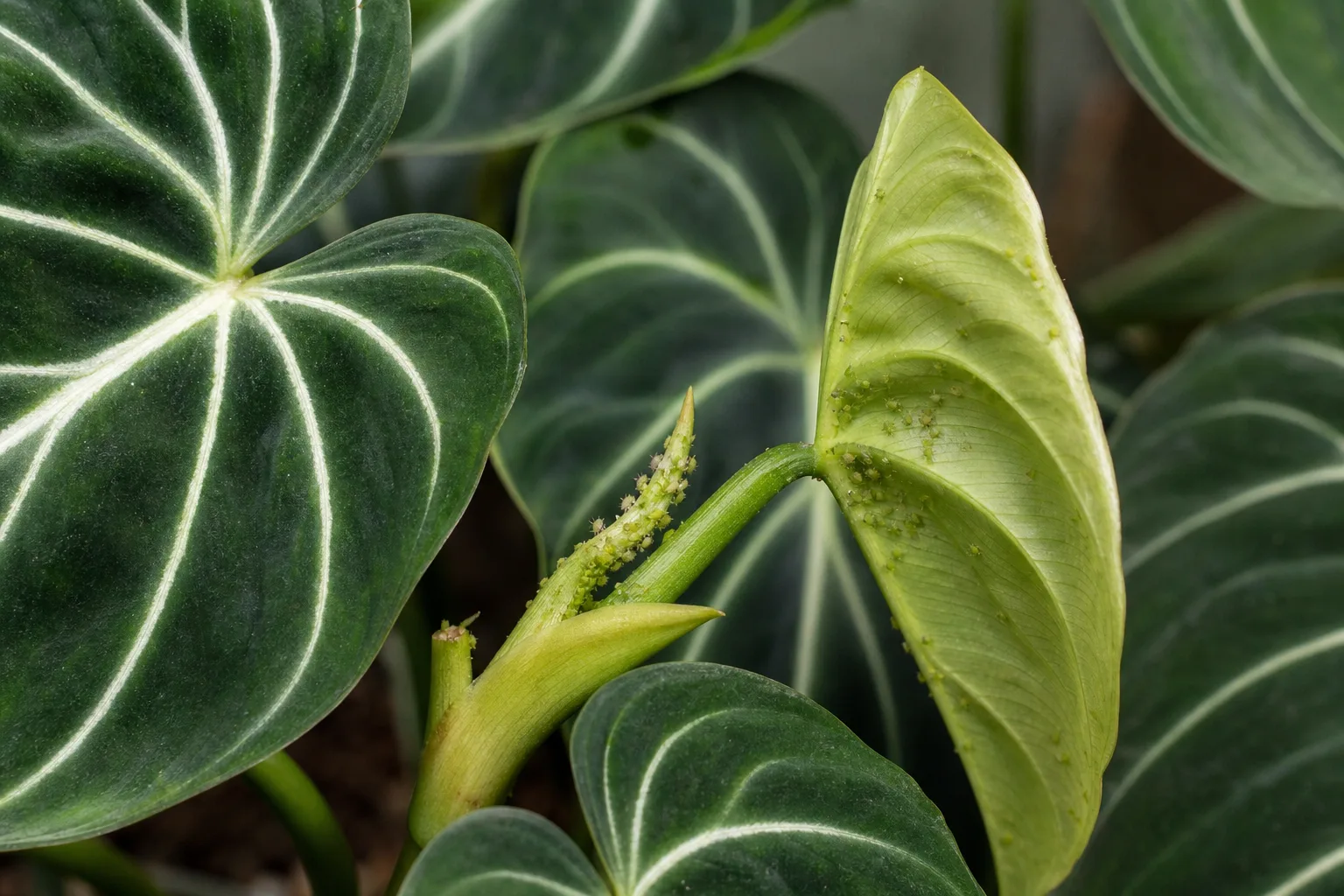
Aphids on Philodendron Gloriosum: Causes, Checks & Fixes
This guide covers aphids on Philodendron Gloriosum. See also the general Aphids guide, watering, and light pages for this plant.
Aphids on Philodendron Gloriosum: Causes, Checks & Fixes
Quick answer
Aphids on Philodendron Gloriosum (Philodendron gloriosum) cluster on soft new growth at the rhizome tip and young leaf undersides. First step: isolate the plant and rinse aphids off with lukewarm water, supporting velvet leaves from below while directing flow at the active growth point.
This Colombia-native terrestrial crawler produces one dramatic velvet heart leaf at a time from a single forward growth front. Aphids target that soft tissue first-unlike fast vining philodendrons, losing one damaged tip can mean weeks or months before the next clean unfurl. Sticky honeydew on matte velvet also holds sooty mold longer than on glossy foliage, so early rinsing matters.
Why Philodendron Gloriosum gets aphids
Gloriosum is not especially pest-prone when healthy, but its growth habit concentrates risk at one vulnerable point. The creeping rhizome advances horizontally across a wide shallow pot, pushing cataphyll-wrapped new leaves from the front edge. That active tip is the softest tissue in the plant-and aphids prefer exactly that.
Common entry routes on Gloriosum:
- Outdoor summer placement - Plants moved to humid patios or shaded porches pick up aphids from garden hosts. Pests hitchhike indoors when colonies crowd on summer placements. Rinse and quarantine before returning indoors.
- New nursery purchases - Aphids hide inside cataphyll folds and along the exposed rhizome on slow crawlers. Two weeks of isolation before placing near other aroids prevents shelf-wide spread.
- Shared humidity trays and aroid benches - Gloriosum collections often group multiple crawlers on one pebble tray or grow shelf. Aphids walk or fly short distances to the next soft tip.
- Nitrogen-soft spring growth - Moderate feeding during active growth pushes tender shoots aphids colonize faster. Heavy nitrogen without matching light produces weak, pest-attractive tissue at the rhizome front.
- Ant-protected colonies - Ants harvest honeydew and protect aphid colonies from lady beetles and other predators. Ant trails on pot rims often appear before you notice insects inside the cataphyll.
Unlike climbing philodendrons with multiple active nodes, Gloriosum typically has one main forward growth point. One coated tip can deform the only leaf emerging this month-a season-long setback on a plant that may produce only two to four leaves per year in average home conditions.
Velvet leaf texture also changes how damage looks. Honeydew sits in the matte surface and dulls pale venation. Sooty mold on velvet is harder to wipe clean than on waxy pothos leaves without marking the foliage.
What aphids look like on Philodendron Gloriosum
Aphids are small, soft-bodied insects with pear-shaped bodies and long legs. Most houseplant species appear green, yellow, brown, or black. A pair of tubelike cornicles projecting from the hind end helps distinguish aphids from all other common pests.
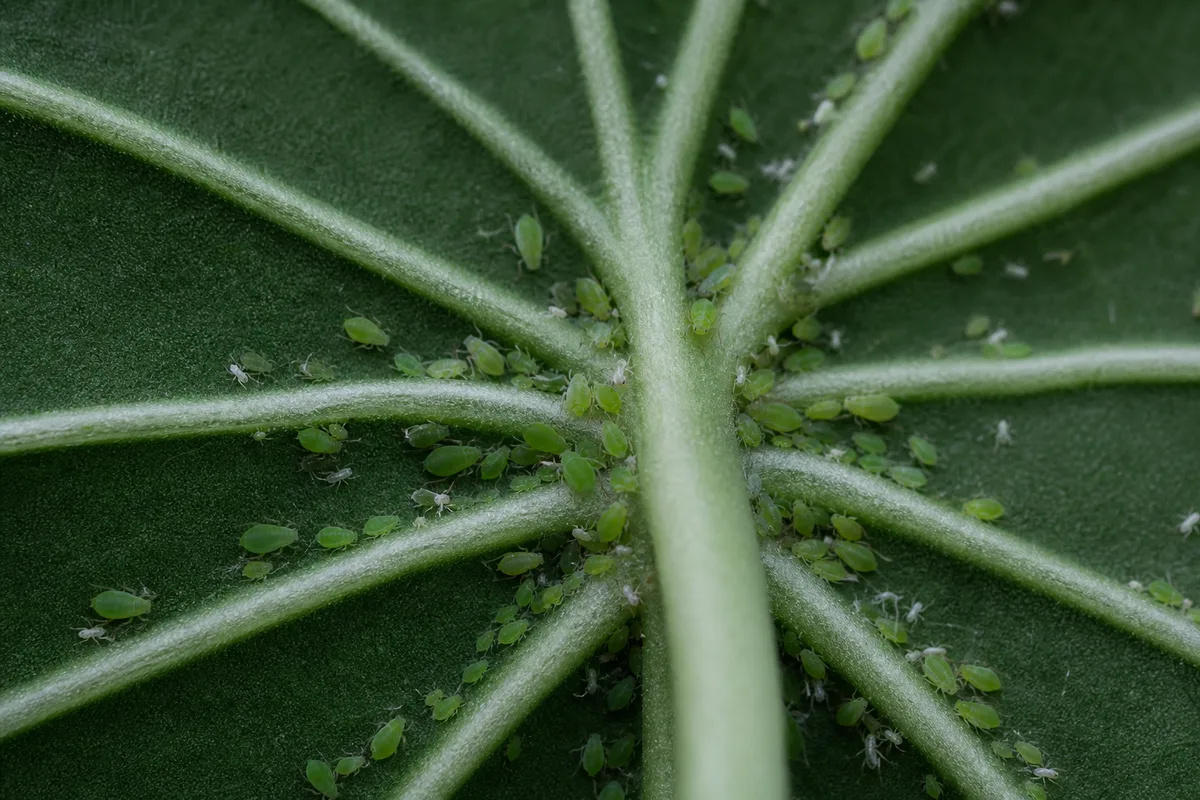
Aphids symptoms on Philodendron Gloriosum - compare with healthy tissue on the same plant.
Typical signs at the rhizome tip and new velvet leaves:
- Clusters of green, black, or brown pear-shaped insects inside cataphyll folds or on tender petioles
- Sticky, shiny honeydew on pale-veined velvet near the growth front
- Curling, puckering, or stuck cataphyll on an emerging heart leaf
- Black sooty mold growing on honeydew deposits, dulling leaf sheen
- A smaller or distorted new leaf compared with the previous flush
- Ant activity on pot rims, saucers, or shelves below the crawler
Aphids are visible without magnification on moderate infestations-unlike spider mites. Check with a hand lens if unsure; cornicles confirm the ID. On Gloriosum, damage shows first on the newest unfurl at the rhizome front. Mature heart leaves farther back on the crawler are less attractive unless the infestation is heavy.
How to confirm aphids on Philodendron Gloriosum
Work through these checks before spraying anything:
- Rhizome tip first - Peel back cataphyll edges gently and look inside folds at the active growth point. Aphids feed where tissue is softest.
- Underside of newest leaf - Lift overlapping velvet hearts and inspect below along the creeping stem.
- Crush test - Press one insect between fingers. Aphids leave a green or black smear. Mealybugs smear pink or waxy residue.
- Honeydew check - Wipe a sticky velvet leaf with a damp cloth. Honeydew wipes off and returns if feeding continues.
- Ant trails - Follow ants from the saucer or pot rim toward aphid clusters at the growth front.
- Neighbor scan - Inspect other aroids on the same humidity tray, windowsill, or shelf-especially herbs and hibiscus that host aphids.
- Recent history - Note new purchases, patio summering, fertilizer spikes, or shared propagation trays in the past month.
If you find pear-shaped insects with cornicles plus honeydew on Gloriosum new growth, aphids are confirmed. Stuck unfurling without insects or stickiness points to low humidity or physical damage-see the deformed new growth guide for that differential.
Lookalike symptoms to rule out
| Pest or problem | What you see on Gloriosum | How it differs from aphids |
|---|---|---|
| Aphids | Pear-shaped soft insects in cataphyll folds; honeydew; ants | Cornicles on hind end; crush smears green or black |
| Mealybugs | White cottony wax in leaf axils along the rhizome | Wax clusters, not loose groups on the tip; alcohol dab removes wax |
| Soft scale | Immobile brown or tan bumps on rhizome nodes and petioles | Does not move when touched; scrapes off with difficulty |
| Thrips | Silver stippling and black frass specks on velvet | Fast when disturbed; minimal thick honeydew |
| Spider mites | Fine stippling and webbing in dry heated air | Nearly microscopic; no pear-shaped bodies or cornicles |
| Low humidity / bud stress | Stuck cataphyll, papery edges, dull velvet | No insects, no sticky shine; hygrometer reads below 50% |
Misidentifying mealybugs or scale as aphids wastes time on rinsing alone-wax and shells need alcohol dabs or labeled oil or soap with repeat applications.
First fix for Philodendron Gloriosum
Isolate the pot away from other houseplants, then rinse aphids off with lukewarm water-directing flow at the rhizome tip and leaf undersides while supporting velvet foliage from below.
Gloriosum velvet is more delicate than pothos or Brasil leaves. Hold each heart leaf in your palm so water pressure does not tear the unfurling tip. Wrap the soil surface in plastic or tilt the pot so mix does not stay saturated after showering-the exposed rhizome rots quickly in wet, compacted substrate per normal Gloriosum watering practice.
This single step knocks off most soft-bodied aphids, washes fresh honeydew before ants establish, and shows how heavy the colony is after the plant dries in bright indirect light. Do not reach for insecticide before rinsing-you may be treating insects water alone removes.
Do not pull a stuck cataphyll forcefully to expose aphids. Support the tip and rinse pests free. Do not fertilize a pest-hit Gloriosum hoping to push replacement growth-tender new shoots attract aphids faster.
Step-by-step recovery
After the initial rinse:
- Repeat water sprays every two to three days until live aphids are gone on inspection. Check cataphyll folds and petiole bases each time.
- Apply insecticidal soap if colonies persist after several rinses. Coat the tip, petiole bases, and leaf undersides thoroughly. Repeat every five to seven days through at least two aphid generations-nymphs hide in curled cataphyll and escape single sprays.
- Manage ants if they protect colonies. Treat the aphids first; ants usually leave once honeydew stops. For persistent ant trails, see the ants on plant guide for bait and barrier options that do not spray velvet foliage directly.
- Wipe honeydew gently with a damp cloth if sooty mold has not formed. Heavy mold dulls velvet but wipes off once honeydew production stops.
- Hold isolation until no live aphids appear for at least two weeks. Indoor populations rebound in days because females birth live nymphs without mating.
- Inspect neighbors on the same tray or shelf. Treat adjacent aroids before returning Gloriosum to the group display.
For severe tip collapse with firm clean rhizome tissue behind the damage, salvage may require a rhizome cutting-see Gloriosum propagation for when and how to cut, callous, and root forward.
Recovery timeline for Philodendron Gloriosum
Gloriosum recovers more slowly than vining philodendrons. Use these milestones rather than expecting pothos-speed regrowth.
| Timeframe | What to expect |
|---|---|
| Days 2–5 | Live aphid count drops after repeated rinsing; honeydew shine fades on velvet |
| Week 1–2 | Soap course completes if needed; ants leave once honeydew stops; cataphyll may still look wrinkled on current flush |
| Week 3–4 | No live insects on tip inspection; sooty mold wipes clean; next cataphyll may appear normal |
| Week 4–8 | New heart leaf unfurls with clean venation if light and humidity stay stable per the light guide |
| Beyond 8 weeks | Current leaf deformity is permanent cosmetic scarring; judge success by the next clean unfurl, not old tissue |
Improvement signs: Pest-free rhizome tip, normal cataphyll progression, new velvet leaf expanding without stickiness, firm rhizome behind the growth front.
Worsening signs: Tip collapse, blackened cataphyll that will not open, aphids reappearing within days after three soap cycles, sooty mold coating most of the newest leaf, or spread to multiple plants on one tray.
Managing ants that protect aphid colonies
Ants rarely damage Gloriosum leaves directly. They climb pot rims and the creeping rhizome to harvest honeydew and may physically protect aphids from predators.
Practical order:
- Rinse and treat aphids at the growth tip first.
- Wipe sticky honeydew from velvet and saucers so ants lose their food source.
- Use ant bait stations or barriers on shelf legs-not broad sprays on velvet foliage-if trails persist after aphids are controlled.
Controlling aphids alone is harder while ants defend colonies. If ant trails are your first clue, follow them to the rhizome tip before assuming root or soil problems below.
What not to do
- Do not pull stuck cataphyll forcefully-support the tip and rinse pests free.
- Do not use systemic insecticides as first resort on a single collector specimen.
- Do not ignore ants-address the aphid colony that feeds them.
- Do not return from quarantine after one rinse; verify for two weeks.
- Do not fertilize heavily while aphids feed on soft new tissue.
- Do not use homemade dish soap on velvet leaves-commercial insecticidal soaps are formulated and tested to reduce burn risk; spot-test one leaf and wait 48 hours.
- Do not apply horticultural oil or soap in direct hot sun; treat when leaves are cool.
- Do not bury or saturate the rhizome after shower treatments-keep the growth point above well-draining mix.
Wear gloves when handling heavily infested plants-philodendrons contain calcium oxalate crystals that irritate skin, and Philodendron varieties are toxic to cats and dogs if chewed.
Philodendron Gloriosum care cross-check during treatment
Pest recovery on a slow crawler depends on stable culture, not just sprays.
- Light - Keep bright indirect light per the light guide. Dim corners slow new leaf production after damage, making one lost tip feel permanent.
- Watering - Let the top 3–5 cm of chunky mix dry between waterings. Stress from soggy rhizomes weakens the plant while you fight aphids.
- Humidity - Target 60–70% for clean unfurling per the overview humidity guidance. Low RH can mimic stuck cataphyll-confirm insects before blaming air alone.
- Fertilizer - Pause heavy nitrogen until aphids are gone and new growth looks normal. Resume at half strength once the tip is clean.
- Quarantine placement - Isolate in similar light and humidity so the plant does not stall during treatment.
How to prevent aphids next time
- Quarantine new and patio-return plants for at least two weeks before placing them on a shared aroid shelf or humidity tray.
- Inspect the rhizome tip weekly during spring and summer active growth-the cataphyll fold is the highest-value check point.
- Rinse dust from leaf undersides occasionally in the shower; early knockdown stops colonies before the only growth point is damaged.
- Limit nitrogen spikes when aphids have been a problem; steady moderate feeding produces less pest-attractive soft tissue.
- Scan tray neighbors whenever you water-aphids on one crawler often appear on the next soft tip within days.
- Wash plants thoroughly before bringing them indoors from summer patios, focusing on cataphyll folds and rhizome joints.
Healthy Gloriosum in stable light, humidity, and watering outgrows a light aphid hit once insects are gone-prevention is easier than cosmetic repair on velvet that unfurls once per flush.
When to worry
Escalate treatment when:
- The only active growth tip is fully coated and cataphyll darkens or collapses
- Sooty mold blocks light across most of the newest velvet leaf
- Ants swarm the pot despite repeated rinsing and aphid treatment
- No normal cataphyll progression for eight or more weeks after insects are gone-rule out deformed new growth from culture stress
- Aphids reappear within days after three labeled soap cycles
- Multiple aroids on one tray show colonies simultaneously
A few aphids on one new leaf after quarantine failure is not a lost cause-prompt isolation and rinsing usually resolves it. Consider rhizome salvage via cutting only when firm clean tissue remains behind a collapsed tip and you cannot wait for the crawler to advance forward on its own.
Conclusion
Aphids on Philodendron Gloriosum are manageable when caught at the rhizome tip before honeydew and ants entrench. Confirm pear-shaped insects with cornicles, isolate, rinse repeatedly, then use labeled soap if needed while managing ant trails through the underlying colony.
Next steps on your plant:
- Stuck unfurl without insects? → Deformed new growth
- Ant trails with honeydew? → Ants on plant
- Tip collapsed but firm rhizome behind? → Propagation
- Culture check after pests clear? → Watering and light
Protect the single active growth point-on this slow velvet crawler, prevention and early rinsing beat months of cosmetic damage on the only leaf emerging from the front of the pot.
When to use this page vs other Philodendron Gloriosum guides
- Philodendron Gloriosum watering guide - Use for routine moisture checks before assuming aphids is the main issue.
- Philodendron Gloriosum problems hub - Browse all 22 common issues on this species.
- Ants on Plant on Philodendron Gloriosum - Different entry point when symptoms overlap with aphids.
- Yellow Leaves on Philodendron Gloriosum - Different entry point when symptoms overlap with aphids.