Leggy Growth on Philodendron Imperial Red: Causes, Checks &
Quick answer
Leggy growth on Philodendron Imperial Red is usually caused by insufficient light-the plant stretches petioles and opens weak green leaves while the rosette thins out. First step: move it to brighter indirect light and watch the next two new leaves for shorter spacing and red-bronze color.
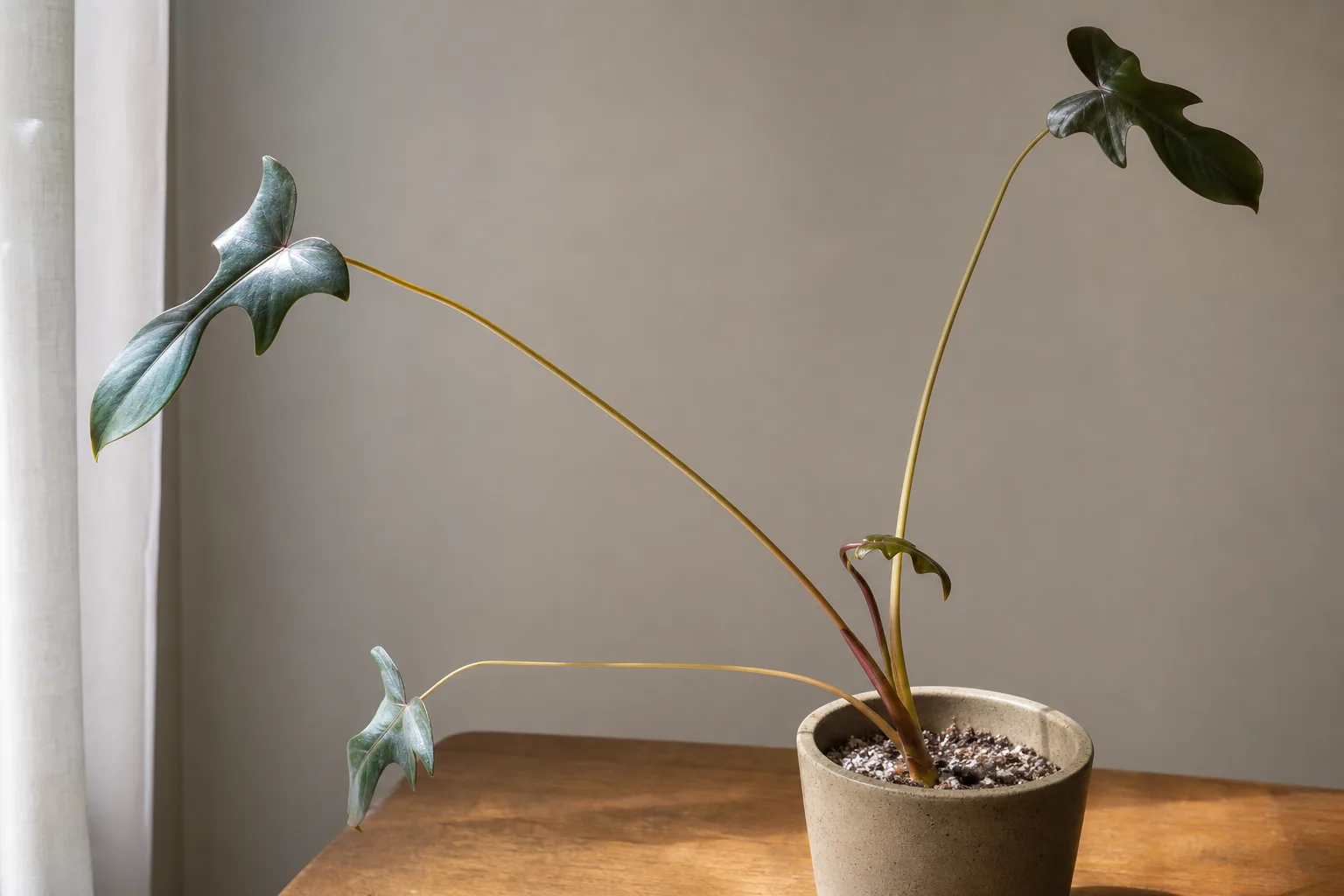
Leggy Growth on Philodendron Imperial Red: Causes, Checks & Fixes
This guide covers leggy growth on Philodendron Imperial Red. See also the general Leggy Growth guide, watering, and light pages for this plant.
Leggy Growth on Philodendron Imperial Red: Causes, Checks & Fixes
Quick answer
Leggy growth on Philodendron Imperial Red is usually caused by insufficient light-the plant stretches petioles and opens weak green leaves while the rosette thins out. First step: move it to brighter indirect light and watch the next two new leaves for shorter spacing and red-bronze color.
Philodendron erubescens ‘Imperial Red’ is an upright self-heading hybrid grown for warm red-bronze new leaves that mature darker. In low light it does not vine outward like heartleaf philodendron; it etiolates at the crown-longer petioles, fewer leaves, and a flat green top where burgundy should be. The plant still looks alive, which is why legginess is often ignored until the rosette loses its compact shape.
Why Philodendron Imperial Red gets leggy growth
Insufficient light is the primary trigger. RHS guidance for philodendrons is explicit: without enough light, plants become leggy and produce fewer, smaller leaves. Imperial Red was selected for vivid new color; in dim corners the plant stretches toward the brightest source and invests in chlorophyll over anthocyanin pigment, so new leaves open weak green with longer gaps between them.
Placement across the room is a common mistake. NC State Extension notes that Philodendron erubescens prefers partial shade and dappled sunlight-bright filtered light at the leaf surface, not ambient room brightness ten feet from a window. Imperial Red needs more of that filtered intensity than plain-green cultivars to stay compact and colored.
One-sided light compounds the pattern. Self-heading rosettes lean toward windows when only one face receives usable light. Clemson Extension describes self-heading growth habits on tree-type philodendrons; Imperial Red behaves the same way-a symmetrical bush in even light, a tilted sparse crown when one side stays shaded for months.
Chronic overwatering in low light can overlap with legginess without being the root cause. Penn State Extension notes that philodendrons should be watered when the top inch or so of soil is dry and that they tolerate indirect high, medium, and low light-but survive and stretch are different outcomes. Imperial Red in a dim spot with wet perlite-amended mix may show soft petioles and stalled unfurling alongside etiolation; fix light first, then match dry-down watering to the brighter spot.
Do not confuse Imperial Red with climbing philodendrons. Vining types become leggy when searching for support or light; Imperial Red does not need a moss pole. RHS notes that bushy self-heading species generally do not need pruning or support-leggy spacing here is a light signal, not a training problem.
What leggy growth looks like on Philodendron Imperial Red
Watch for these patterns together rather than in isolation:
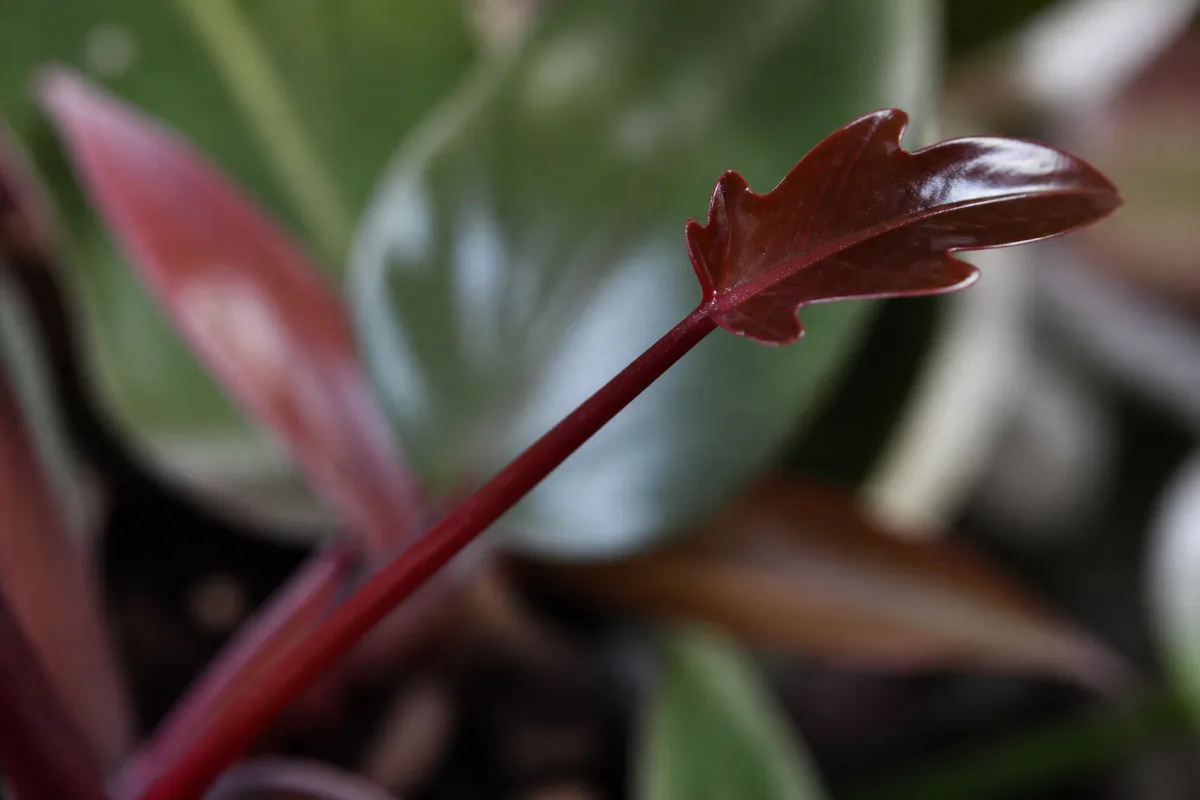
Leggy Growth symptoms on Philodendron Imperial Red - compare with healthy tissue on the same plant.
- Noticeably longer petioles between the newest leaves compared with older crown leaves
- A sparse, open rosette instead of a dense upright bush
- New leaves smaller and weak green or olive, skipping the red-bronze unfurling phase
- The plant leaning or facing one direction toward the brightest wall or window
- Flat, dull crown color while lower mature leaves still show normal green
- Slow unfurling with wide spacing even during spring and summer active growth
On Imperial Red, weak green new growth plus stretched spacing is the clearest low-light portrait. Heartleaf philodendron may look acceptable in the same corner; Imperial Red loses both its shape and its reason to be there. True vining etiolation-long bare stems hunting for a trellis-is uncommon on this cultivar; crown stretching is the typical form.
How to confirm the cause
Do not guess from one pale leaf. Use this inspection order:
- Light at the canopy - Hold your hand where the top leaves sit. A soft, diffuse shadow for several hours suggests usable indirect light; a faint or absent shadow means the plant is too far from the window.
- Internode and petiole spacing - Compare the gap between the two newest leaves to a pair three leaves down. Visible lengthening strongly points to etiolation before fertilizer or Philodendron Imperial Red repotting guide.
- New-leaf color - The newest spear should show red-bronze at unfurling. Plain green on fresh growth confirms light limitation on this cultivar.
- Lean check - Rotate the pot 180° and watch for new growth bending back toward the old bright side within two weeks.
- Pot weight and dry-down - Lift the pot. If it stays heavy and the top 3–5 cm never dries within ten days in summer, root stress may overlap-correct light and watering together.
Lookalike symptoms to rule out
Slow growth without stretching can mean root binding or winter dormancy-petiole length stays normal but unfurling stalls. Over-fertilizing causes tip curl and brown margins per Clemson Extension, not uniform long spacing. Normal color maturation turns old leaves green while new ones stay red-that is expected ontogeny, not legginess. A mislabeled Imperial Green in the same pot will never show burgundy new growth even in good light; verify the cultivar if color never returns after a light upgrade.
First fix for Philodendron Imperial Red
Move the plant to a brighter indirect position before changing anything else. A spot within a few feet of an east window, or three to five feet from a filtered south or west window, usually gives Imperial Red enough energy to tighten new growth. Avoid jumping straight to direct midday sun-acclimate over a week if you increase exposure sharply.
Once light improves:
- Keep watering on the top 3–5 cm dry rule; brighter light means slightly faster dry-down, not more frequent guessing.
- Rotate the pot a quarter turn every week so the rosette fills evenly instead of leaning.
- Wipe dust from leaf surfaces monthly so less light is lost before it reaches the chlorophyll.
- Wait for the next two leaves before repotting or feeding-those two leaves tell you whether light was the bottleneck.
Make one correction at a time. Do not repot, fertilize, and move to a new room on the same day-that hides which change helped.
Step-by-step recovery
After the light move:
- Place Imperial Red where it receives bright but indirect light out of direct summer sun, per RHS philodendron guidance.
- Water only when the top 3–5 cm of standard potting mix with 20–25% perlite is dry-roughly every 7–10 days in summer and 10–14 days in winter in typical homes.
- If natural light remains weak, add a full-spectrum grow light 30–45 cm above the crown for 10–12 hours daily at moderate intensity.
- Remove only leaves that are fully collapsed or pest-damaged; do not shear the crown heavily-self-heading types recover through new central growth, not stump pruning like vines.
- Watch for a firm new red-bronze leaf with shorter petiole spacing within four to eight weeks during active season.
If two new leaves still emerge small, green, and widely spaced after six to eight weeks in clearly brighter light, inspect roots for binding or compacted mix and repot in spring using fresh airy mix-one pot size up at most.
Recovery timeline
Mild low-light cases often show tighter spacing and better color on the next leaf after four to six weeks during spring or summer. Moderate cases with months of dim placement may need two to three new leaves before the rosette looks dense again. Old stretched petioles will not shorten; judge progress only on new crown unfurling.
If spacing keeps widening through an entire active season despite a clear light upgrade, check for chronic wet roots, pest stress on leaf undersides, or cold drafts below the species’ comfort range-NC State recommends keeping P. erubescens between 65 and 85 °F and away from cold drafts.
What not to do
- Do not add a moss pole hoping to stop stretching-Imperial Red is not a climber.
- Do not pour on fertilizer to “bush out” a dim plant; Clemson notes excess fertilizer damages roots and will not replace light.
- Do not keep watering on a summer schedule when the plant sits in low light and the pot stays wet.
- Do not repot into a much larger container hoping for compact growth; extra wet soil volume slows drying.
- Do not assume Imperial Green’s corner works for Imperial Red-the red cultivar needs brighter filtered light to stay tight and colored.
- Do not heavily prune the crown to fix old stretch-remove problem leaves only and let new tight growth replace the silhouette over time.
Causes to rule out
If brighter light does not help within two new leaves, check these in order:
- Rootbound pot - Roots circling heavily, mix broken down to fine dust, water running straight through.
- Chronic wet roots - Sour smell, yellow lower leaves, soft petiole bases; fix drainage and dry-down before expecting compact growth.
- Nutrient depletion - Only after light and roots look sound; use balanced liquid feed monthly in spring and summer at half strength on moist soil.
- Temperature stress - Drafts, cold windowsills, or hot air blasts distort new tips and stall unfurling.
- Pests - Stippling, sticky residue, or webbing on leaf undersides stealing vigor without classic etiolation spacing.
How to prevent leggy growth next time
Match placement to Imperial Red’s color and shape needs, not just survival. Penn State Extension groups philodendrons among houseplants that thrive in indirect high, medium, and low light-Imperial Red sits at the brighter end of that range if you want a compact burgundy crown. Give medium to Philodendron Imperial Red light guide daily, water when the top 3–5 cm of perlite-amended mix dries, and rotate weekly.
In autumn, expect slightly longer spacing as daylight drops; supplement with a grow light if the plant must live away from windows. Weekly checks on new-leaf color catch low light while correction is still a simple move-not months of stretched petioles. RHS also recommends wiping leaves occasionally so dust does not further reduce light absorption-especially important on glossy Imperial Red foliage.
When to worry
Leggy growth alone is low severity on Imperial Red. Escalate if:
- Several lower leaves yellow while soil stays wet and petiole bases soften
- New growth stays weak green for three cycles in a row despite a clear light upgrade
- The crown stalls completely through spring and summer after correcting placement
- Roots are mushy or smell sour on inspection
- Pests or stippling appear on leaf undersides alongside continued stretching
Cosmetic lean on one side is not urgent. Months of weak green new growth with widening spacing in active season is worth fixing promptly before root decline in the same dim, wet corner.
Conclusion
Leggy growth on Philodendron Imperial Red is almost always a light problem wearing a quiet mask. Confirm it with stretched petioles, a sparse rosette, and weak green new leaves instead of red-bronze. Fix it by moving to brighter indirect light, keeping the top 3–5 cm dry-down rhythm, and reading the next two leaves-not by moss poles, heavy pruning, or fertilizer. Prevent it by treating Imperial Red as a brighter-light, self-heading cultivar and watching new color as your early warning system.
When to use this page vs other Philodendron Imperial Red guides
- Philodendron Imperial Red watering guide - Use for routine moisture checks before assuming leggy growth is the main issue.
- Philodendron Imperial Red problems hub - Browse all 10 common issues on this species.
- Slow Growth on Philodendron Imperial Red - Different entry point when symptoms overlap with leggy growth.
- Leaf Drop on Philodendron Imperial Red - Different entry point when symptoms overlap with leggy growth.
- Yellow Leaves on Philodendron Imperial Red - Different entry point when symptoms overlap with leggy growth.
Related Philodendron Imperial Red guides
- Philodendron Imperial Red overview
- Philodendron Imperial Red watering
- Philodendron Imperial Red light
- Philodendron Imperial Red soil
- Slow Growth on Philodendron Imperial Red
- Leaf Drop on Philodendron Imperial Red
- Yellow Leaves on Philodendron Imperial Red
- Plant Leaning on Philodendron Imperial Red
- Philodendron Imperial Red problems