Mold on Soil on Philodendron Imperial Red: Causes, Checks &
Quick answer
Mold on soil on Philodendron Imperial Red is usually harmless saprophytic fungus on chronically damp peat mix-often from overwatering or poor airflow in low light. First step: scrape off visible mold, let the top 3–5 cm dry fully, and check roots only if the crown feels soft or the mix smells sour.
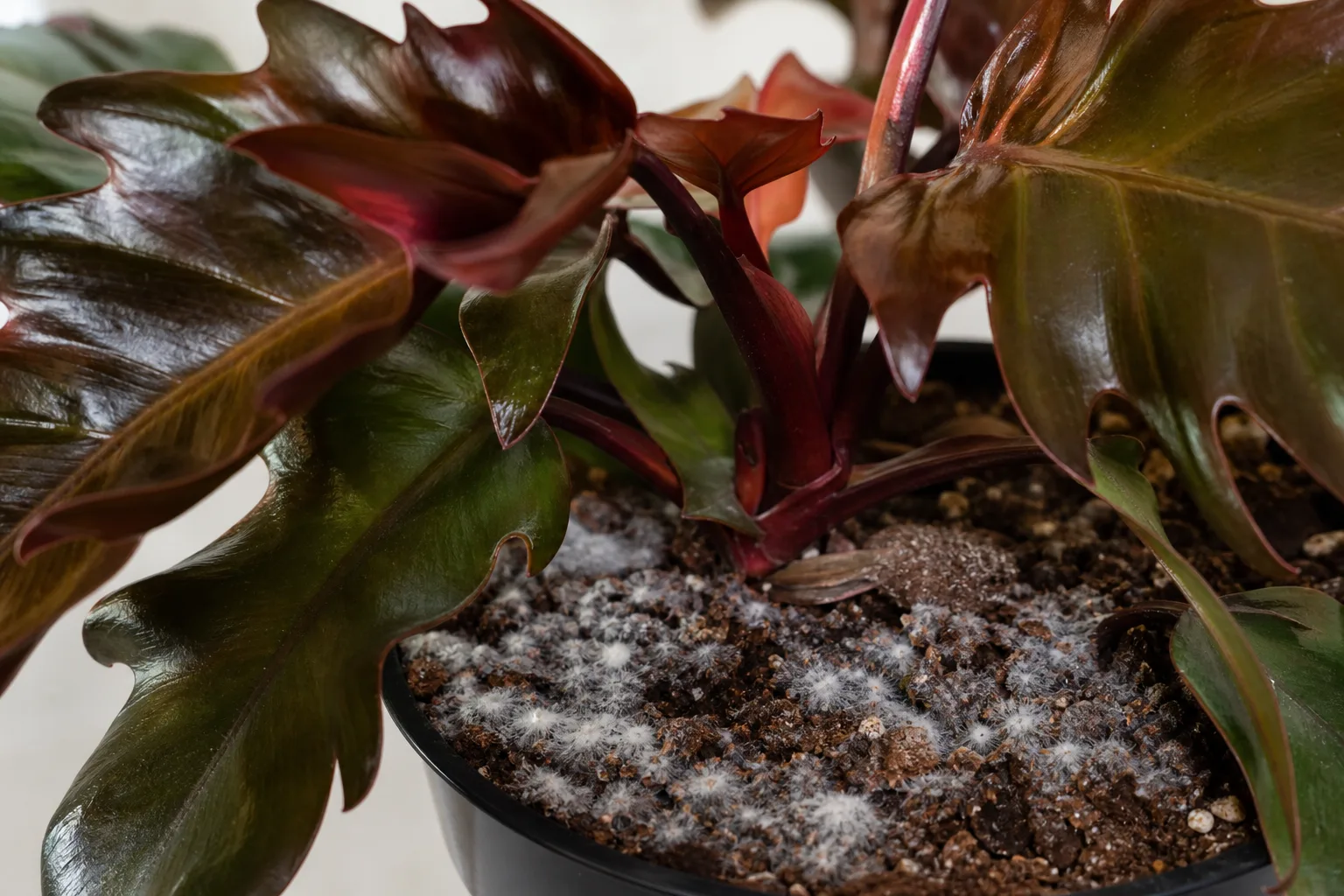
Mold on Soil on Philodendron Imperial Red: Causes, Checks & Fixes
This guide covers mold on soil on Philodendron Imperial Red. See also the general Mold on Soil guide, watering, and light pages for this plant.
Mold on Soil on Philodendron Imperial Red: Causes, Checks & Fixes
Quick answer
Mold on soil on Philodendron Imperial Red is usually harmless saprophytic fungus on chronically damp peat mix-often from overwatering or poor airflow in low light. First step: scrape off visible mold, let the top 3–5 cm dry fully, and check roots only if the crown feels soft or the mix smells sour.
White, gray, or yellowish fuzzy growth on the soil surface looks alarming on a burgundy-leaved floor plant, but it is almost always a moisture and airflow problem-not a mysterious fungal plague requiring heavy fungicides. Philodendron erubescens ‘Imperial Red’ is a self-heading philodendron with thick burgundy petioles and a compact crown that can shade its own pot, slowing surface evaporation and letting mold colonize wet peat.
Why Philodendron Imperial Red gets mold on soil
Chronically damp surface soil is the primary cause. Clemson Extension distinguishes the white or yellow mold-like growth of saprophytic soil fungi from salt crusts on pot rims-surface mold on peat is a living fungus feeding on decaying organic matter, not mineral buildup. Penn State Extension notes that saprotrophic fungi in pots thrive on decaying organic matter in commercial potting soils and that regular appearance is a sign the soil is too moist and the plant is being overwatered.
Overwatering and poor drainage push Imperial Red toward both surface mold and deeper root problems. Clemson warns that overwatering decreases the amount of oxygen available for root growth and favors root diseases-surface mold often appears first, before roots fail. RHS guidance for philodendrons is explicit: take care not to overwater or leave plants standing in water, as saturated compost can eventually cause root rot on Philodendron Imperial Red. On Imperial Red in a large decorative pot, peat-heavy mix may stay damp at the surface for two weeks after one drink, especially in winter when the self-heading rosette uses less water.
Low light and poor airflow slow surface drying. Without enough bright filtered light, burgundy new leaves may fade toward green-but the pot still feels heavy and the top layer never dries. Penn State Extension recommends watering indoor plants only when the top inch or two of soil is dry to the touch and not letting plants sit in saucers of water-both relevant because stagnant, shaded pot surfaces are where saprophytic mold spreads fastest.
Fallen leaf debris from the self-heading rosette collects on wet peat, giving surface fungi fresh organic matter. Decorative moss or bark topdressings trap moisture on the soil line-avoid them on Imperial Red unless you monitor dryness carefully. Overhead misting that wets the surface without drying encourages mold in stagnant corners.
What mold on soil looks like on Philodendron Imperial Red
Early cases are easy to dismiss because the upright rosette still looks structurally strong. Watch for these patterns together rather than in isolation:
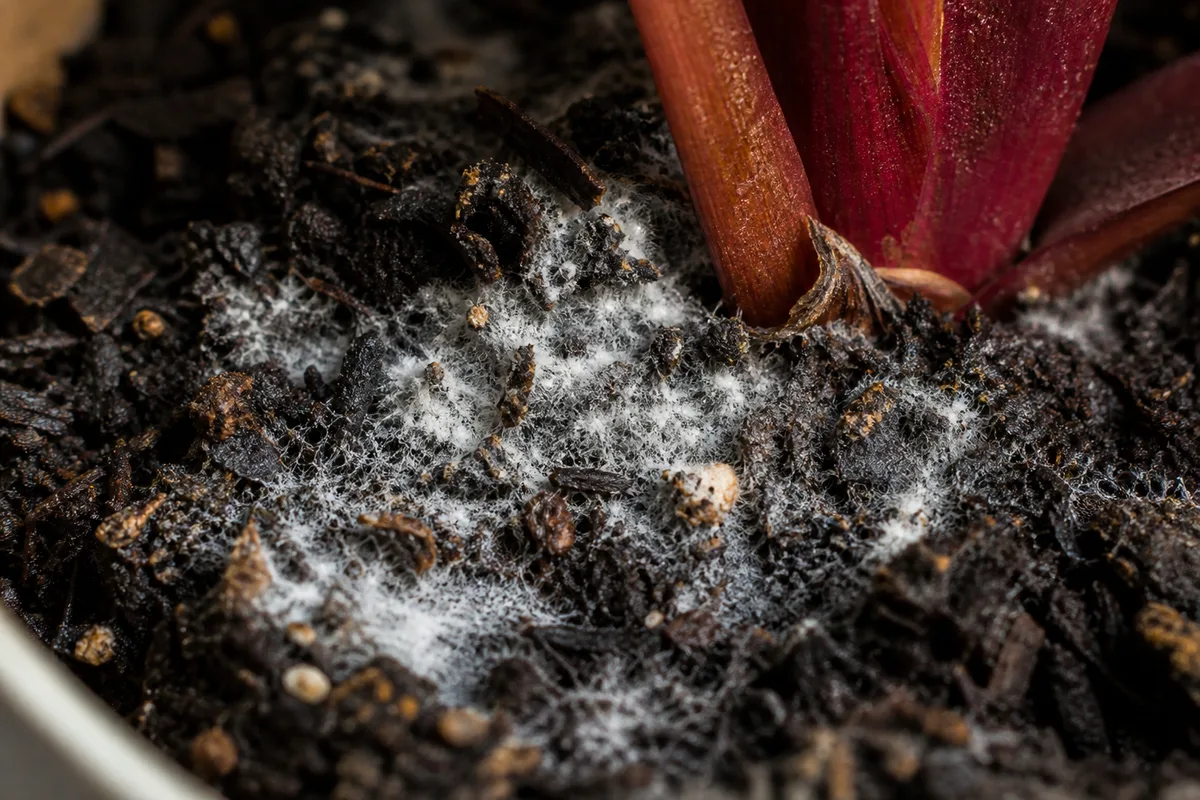
Mold on Soil symptoms on Philodendron Imperial Red - compare with healthy tissue on the same plant.
- White, gray, green, or yellow fuzzy patches on the soil surface-not on leaf tissue
- Soil surface that stays visibly wet or dark for days after watering
- Thread-like mycelium spreading across the top of peat mix
- Fungus gnats hovering near the pot-often a clue that the surface never dries
- Firm burgundy petioles and active red-bronze new leaves in mild cases
- Lower yellow leaves or limp petioles only when chronic wetness has stressed roots
Surface mold differs from mycorrhizae or harmless mineral crust-mold is fuzzy and spreads on wet peat after overwatering. It also differs from gray mold on foliage (Botrytis), which attacks older leaves and flowers, not the soil line alone.
On Imperial Red, do not mistake normal burgundy-to-green hardening on maturing leaves for disease. Surface mold shows up with wet soil and fuzzy growth on peat-not with healthy firm petioles and gradual color change on older foliage.
How to confirm the cause
Do not panic and repot from surface mold alone. Use this inspection order to separate harmless saprophytic mold from a deeper root issue:
- Surface moisture - Push your finger to 3–5 cm depth. If the top layer stays cool and clinging for days, the root zone is chronically wet.
- Pot weight and drainage - Lift the pot. Heavy days after watering, or water pooling in the saucer, suggests saturation beyond the surface.
- Soil smell - Neutral or earthy is fine. A sour or swampy odor from the drainage hole suggests anaerobic conditions and possible root decline-not surface mold alone.
- Petiole bases - Press where burgundy petioles meet the crown. Firm is good; wet, collapsing tissue means escalate to a root check.
- New growth check - Healthy Imperial Red should keep producing firm red-bronze leaves. Stalled new growth with wet soil and sour smell points past surface mold.
If the surface is moldy but petioles are firm, smell is neutral, and new leaves keep emerging, treat it as a surface moisture problem. If several wet-soil clues align with yellow lower leaves and soft crown tissue, unpot and inspect roots-healthy roots feel firm and pale; rotten roots turn brown to black and feel slippery or squishy.
Lookalike symptoms to rule out
Powdery mildew grows on leaf surfaces, not soil. Mineral salt crust is hard and crystalline on pot rims, not fuzzy on peat-Clemson explicitly warns not to confuse salt buildup with saprophytic soil fungi. Beneficial mycelium is usually sparse and uniform-not thick mold after repeated overwatering. Root rot without visible surface mold still shows wilting despite wet soil, sour smell, and mushy roots on inspection-the same diagnostic pattern used for rescue on Philodendron Imperial Red overview.
Underwatering causes dry, lightweight pots and crispy leaf edges, not fuzzy surface growth. Normal old-leaf yellowing on Imperial Red usually affects one or two lowest leaves while the crown and new red growth stay active.
First fix for Philodendron Imperial Red
Scrape off visible mold and the top quarter-inch of wet peat if heavily colonized-discard the material in the trash, not compost. Replace with a thin layer of dry perlite-amended mix only if the crown tissue is still firm.
Let the top 3–5 cm dry fully before the next watering. Empty saucers immediately after any drink. Move the plant to medium to Philodendron Imperial Red light guide with modest airflow-not hot direct sun that scorches burgundy leaves.
Remove fallen leaf debris from the pot surface. Avoid misting soil or wetting the crown.
If fungus gnats are present, reduce surface moisture first-that is the shared cause. Penn State Extension notes that fungus gnat larvae feed on organic matter and roots in damp soil; drying the top layer addresses both gnats and mold more reliably than sprays alone.
Make one correction at a time. Do not drench with fungicide, fertilize, and repot into a much larger pot on the same day without confirming root health.
Step-by-step recovery
After the initial surface cleanup:
- Wait until the top 3–5 cm feels dry and pot weight drops noticeably-often one to two weeks in a badly saturated pot.
- Water thoroughly until water runs from the drainage hole, then empty the saucer immediately.
- Resume the dryness check: water only when the top 3–5 cm is dry, roughly every 7–10 days in summer and 10–14 days in winter in typical homes.
- Watch for a mold-free dry surface after each watering cycle over the next two to three weeks.
- If mold returns within days despite a dry surface, improve airflow, reduce pot size if the container is oversized, or scrape and top-dress with dry perlite again.
If petiole bases are already soft, soil smells sour, or roots are mostly mushy on inspection, switch to the root-rot rescue path: trim decayed tissue, repot into fresh airy mix with 20–25% perlite, and wait one week before the first drink.
Recovery timeline
Surface mold alone should not return within one to two weeks once the top layer dries consistently and airflow improves. Mild cases with firm crown tissue often clear within a single dry-back cycle. If mold reappears within days, the pot is still too wet, lacks airflow, or the container is oversized for the root ball.
Plant growth is unaffected if roots stayed healthy throughout. Old yellow lower leaves will not green up again-judge success by a mold-free dry surface, firm burgundy petioles, and new red-bronze leaves emerging cleanly.
What not to do
- Do not cover mold with decorative stones without fixing watering-the peat underneath stays wet.
- Do not water more to “wash away” mold while the top 3–5 cm is still damp.
- Do not ignore mold plus yellow leaves, sour smell, and soft petioles-inspect roots.
- Do not assume surface mold means the plant is doomed; saprophytic fungi on peat are usually a warning, not a death sentence.
- Do not repot into a much larger container; RHS notes that oversized pots keep compost wet for longer, which raises both mold and rot risk.
- Do not handle cut tissue without gloves; philodendrons contain calcium oxalate crystals that irritate skin.
How to prevent mold on soil next time
Match watering to how fast your pot dries, not a fixed schedule. For most indoor Imperial Red plants, check the top 3–5 cm before every drink. Use a pot only slightly larger than the root mass, medium to bright indirect light so the surface breathes between waterings, and mix with 20–25% perlite for drainage.
Pour away excess runoff, reduce frequency in winter or dim rooms, and refresh compacted peat every one to two years. Clemson recommends keeping philodendron soil evenly moist, but not soggy-on Imperial Red, that means dry surface checks, not constant dampness. Remove fallen debris weekly, avoid dense moss topdressings, and ensure modest airflow around the pot.
Keep the plant away from pets-philodendron is toxic if chewed.
When to worry
Treat surface mold as low severity when petioles are firm and smell stays neutral. Escalate immediately if:
- Mold returns within days of scraping despite a dry top layer
- Soil smells sour even though you have reduced watering
- Lower leaves yellow rapidly while petiole bases feel soft at the crown
- Wilting spreads to multiple leaves despite wet mix
- Roots are brown, slippery, or mushy on inspection
Chronic surface wetness on self-heading philodendrons often precedes deeper crown problems. If only the surface was moldy and roots stayed firm after a one- to two-week dry spell, the odds are good. If the crown pulls apart with no resistance, focus on saving any firm divisions rather than the main rosette.
Conclusion
Mold on soil on Philodendron Imperial Red is usually harmless saprophytic fungus on wet peat-a moisture warning, not automatic root rot. Confirm with fuzzy surface growth on damp mix, firm burgundy petioles, and neutral smell; act by scraping, drying the top 3–5 cm, and improving light and airflow. Escalate to root inspection only when sour smell, soft crown tissue, or mushy roots align. Prevent it by letting the surface dry between drinks, using perlite-amended mix, and never leaving the plant standing in water. Judge success by a mold-free dry surface after each cycle-and firm new burgundy growth continuing from the crown.
When to use this page vs other Philodendron Imperial Red guides
- Philodendron Imperial Red watering guide - Use for routine moisture checks before assuming mold on soil is the main issue.
- Philodendron Imperial Red problems hub - Browse all 10 common issues on this species.
- Root Rot on Philodendron Imperial Red - Different entry point when symptoms overlap with mold on soil.
- Slow Growth on Philodendron Imperial Red - Different entry point when symptoms overlap with mold on soil.