Aphids on Philodendron Melanochrysum: Causes, Checks & Fixes
Quick answer
Aphids on Philodendron Melanochrysum cluster on tender new growth and leaf undersides, sucking sap from soft unfurling leaves. First step: isolate the plant, shower or rinse aphids off velvet foliage with lukewarm water, then treat with insecticidal soap on stems and leaf undersides; repeat every few days until clear.
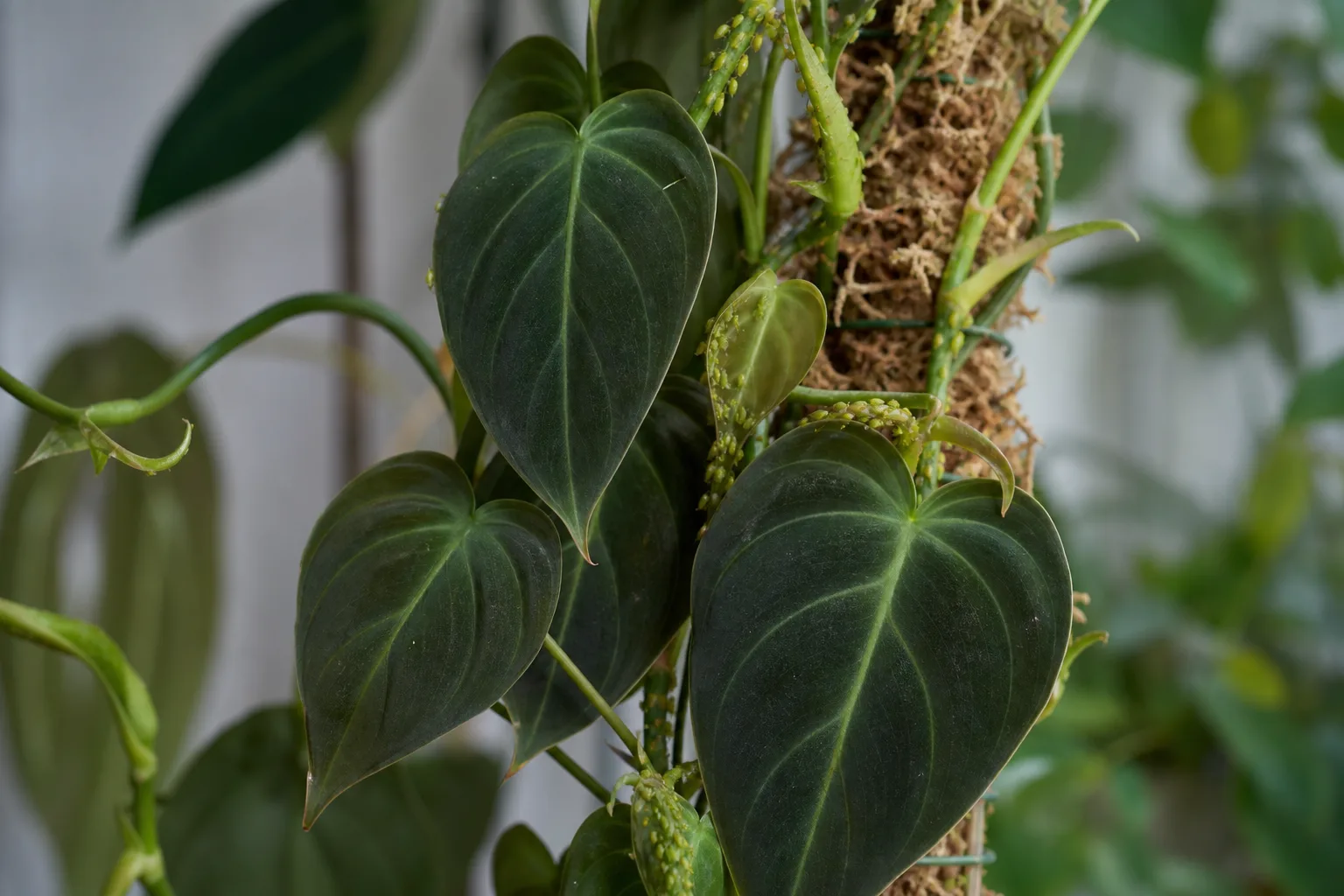
Aphids on Philodendron Melanochrysum: Causes, Checks & Fixes
This guide covers aphids on Philodendron Melanochrysum. See also the general Aphids guide, watering, and light pages for this plant.
Aphids on Philodendron Melanochrysum: Causes, Checks & Fixes
Quick answer
Aphids on Philodendron Melanochrysum cluster on tender new growth and leaf undersides, sucking sap from soft unfurling leaves. First step: isolate the plant, shower or rinse aphids off velvet foliage with lukewarm water, then treat with insecticidal soap on stems and leaf undersides; repeat every few days until clear.
Philodendron melanochrysum is a humidity-loving velvet climber that pushes frequent new leaves along a moss pole. That combination - soft expanding tissue, protected leaf undersides, and steady warmth - is exactly where aphids concentrate on houseplants. The pests are visible, but easy to miss on dark velvety blades until honeydew makes leaves shiny or ants arrive.
Why Philodendron Melanochrysum gets aphids
Aphids are not caused by high humidity alone. They arrive on the plant - usually on a new purchase, a cutting swap, or a philodendron that spent summer outdoors - then settle where sap is easiest to reach. On melanochrysum, that means the newest growth and leaf undersides, plus the soft tissue around cataphylls as leaves unfurl.
Several melanochrysum-specific habits make infestations spread before you notice:
- Frequent new leaves - A climbing melanochrysum on a pole produces regular soft shoots. Aphids reproduce quickly on that tissue and can colonize a whole node before the leaf hardens.
- Velvet texture - The suede-like leaf surface hides small clusters along midribs and petiole joints, especially when viewed from above only.
- Moss pole crevices - Aerial roots and damp pole fiber create tight shelters where aphids and their nymphs stay out of a casual glance.
- Lush growth from feeding - Heavy nitrogen fertilizer pushes soft, aphid-friendly foliage. WSU guidance notes that aphids thrive on lush new growth, so collector-grade feeding schedules can backfire during an outbreak.
- Indoor humidity setups - Humidity tents and crowded plant shelves slow airflow and make it harder to spot early clusters on neighboring philodendrons.
Stressed plants attract pests, but melanochrysum can look slightly off from low humidity or a dry pole while still hosting a vigorous aphid colony on the one healthy new leaf at the tip.
What aphids look like on Philodendron Melanochrysum
Aphids are small, soft-bodied insects - often green, black, or gray - that cluster rather than scatter. On Philodendron Melanochrysum overview, look for these patterns together:
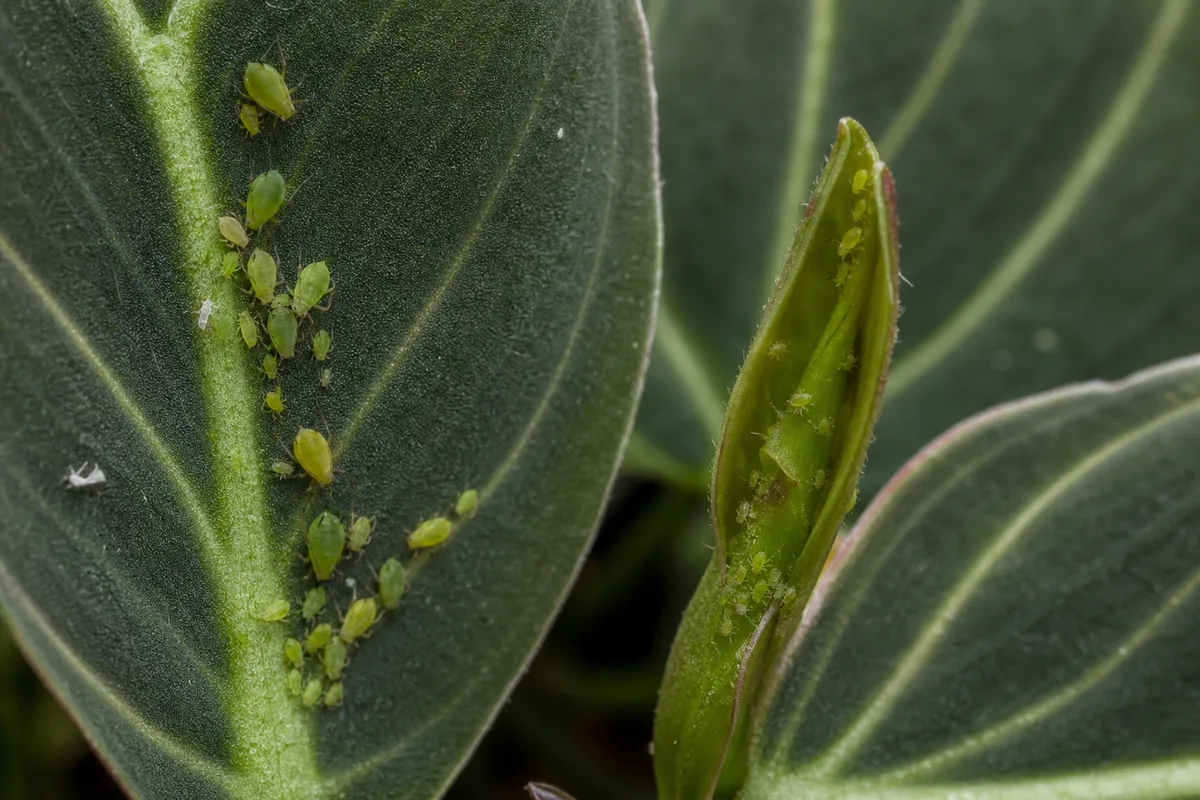
Aphids symptoms on Philodendron Melanochrysum - compare with healthy tissue on the same plant.
- Groups along the underside of new or half-unfurled leaves, especially near the midrib
- Colonies at petiole bases where leaf stalks meet the climbing stem
- Curled, puckered, or distorted young leaves that should otherwise be expanding smoothly
- Shiny, sticky honeydew on velvet blades or on the moss pole below
- Black sooty mold growing on honeydew patches, which shows up as dull gray-black film on dark leaves
- Ants traveling up the pole or pot rim to harvest honeydew
On mature hardened melanochrysum leaves, damage may be limited to stippling or slight cupping. The growing tip is the honest signal - if the top cataphyll and newest leaf are clean, the infestation is likely early or already retreating.
How to confirm the cause
Do not treat every distorted new leaf as aphids. Velvet melanochrysum commonly shows stuck cataphylls and torn unfurling leaves from low humidity, which can look like pest damage without any insects present.
Use this inspection order:
- Growing tip - Peel back or gently lift the newest cataphyll and inspect with a phone light. Aphids will be visible as tiny moving dots in clusters.
- Leaf undersides - Check the bottom three leaves along the vine, focusing on midribs and petiole joints.
- Moss pole and aerial roots - Scan where roots attach; aphids often start on soft root tips and stem nodes.
- Honeydew test - Run a white paper towel along the leaf underside. Sticky residue with visible insects confirms aphids, not humidity tear alone.
- Neighbor plants - Inspect other philodendrons and aroids on the same shelf. Aphids spread plant to plant when populations build.
Lookalike symptoms to rule out
Low-humidity stuck leaves cause torn or crinkled unfurling with no insects, honeydew, or ants. Thrips leave silvery stippling and black specks (frass) across older velvet blades, not dense clusters at the tip. Mealybugs form white cottony masses in crevices rather than scattered soft-bodied colonies on fresh growth. Scale appears as fixed brown or tan bumps you can flick with a fingernail. Normal cataphyll browning on a healthy new leaf is dry and papery, not sticky.
First fix for Philodendron Melanochrysum
Isolate the plant immediately and physically remove aphids before reaching for stronger products. Mississippi State Extension notes that washing aphids off with a forceful spray of water can control light infestations - but on velvet melanochrysum, use a shower or gentle sprayer, not a harsh jet that tears soft new leaves.
Once isolated:
- Wrap the pot in plastic to keep mix contained, then rinse the entire vine, moss pole, and leaf undersides with lukewarm water.
- Wipe honeydew from large leaves with a damp cloth, handling velvet gently.
- Spray insecticidal soap labeled for houseplants, covering stems, petioles, and leaf undersides where aphids hide.
- Repeat every three to five days for at least two to three cycles, because soap kills on contact and misses eggs that hatch later.
Avoid rubbing alcohol wipes across entire velvet leaves unless you have tested a single leaf first - alcohol can mar the suede finish. WSU guidance allows dabbing individual aphids with alcohol on a swab for light cases, which is safer than broad alcohol sprays on melanochrysum.
Make one main intervention at a time. Do not repot, fertilize, and spray systemic insecticide on the same day.
Step-by-step recovery
After the first soap treatment:
- Keep the plant quarantined in Philodendron Melanochrysum light guide with steady humidity - melanochrysum should not dry out severely while recovering.
- Inspect the growing tip every two to three days with a light. Crush or rinse off any survivors immediately.
- Replace yellow sticky traps near the pot if flying aphids or ants were present; they help you monitor population drop.
- Wipe sooty mold off leaves once aphids are gone; the mold itself does not require fungicide on the leaf surface.
- Return the plant to your collection only after you see clean new growth and no live aphids for at least two weeks.
If stems are stunted but roots and the moss pole are healthy, new melanochrysum leaves can resume normal size within four to eight weeks once sap flow stabilizes. Severely distorted leaves that already hardened will not flatten - remove them only if they are mostly brown or heavily coated in sooty mold.
Recovery timeline
Light infestations on one or two new leaves often clear within seven to ten days of repeated rinsing and soap. Moderate colonies along a full node may need three to four weeks and two or three unfurling cycles before you trust the plant is clean. Heavy infestations that reached multiple nodes can set mature leaf size back for a full growing season, even after pests are gone.
Judge success by insect-free new cataphylls and clean velvet on the top leaf - not by older puckered foliage returning to perfect form.
What not to do
- Do not blast velvet leaves with a high-pressure hose; torn unfurling leaves are often permanent.
- Do not apply horticultural oil or alcohol to the entire plant without a leaf test; velvet aroids burn more easily than smooth philodendrons.
- Do not fertilize heavily while aphids are active - lush nitrogen growth feeds the colony.
- Do not return the plant to a crowded shelf before two weeks clean; aphids spread quickly among philodendrons.
- Do not ignore ants; they protect aphids and signal a well-established infestation.
- Do not treat honeydew shine as normal velvet sheen - stickiness confirms sap feeding.
How to prevent aphids next time
Quarantine every new plant for three to four weeks and inspect melanochrysum at the growing tip weekly. WSU recommends isolating outdoor-return plants before merging them with your indoor collection - a common entry path for collector aroids that summer outside.
Keep bright indirect light and 60–70% humidity so new leaves unfurl cleanly, but maintain airflow between pots. Use slow-release or balanced fertilizer instead of heavy nitrogen bursts during spring growth. When misting a moss pole, inspect stem nodes at the same time. A five-minute tip check on watering day catches most outbreaks before honeydew spreads across velvet foliage.
When to worry
Treat aphids as medium severity on melanochrysum - rarely fatal alone, but damaging to the prized new leaves that define the plant’s value.
Escalate if:
- Aphids cover every new leaf for more than two weeks despite repeated soap treatments
- Sooty mold coats multiple mature leaves and blocks light to the vine
- New growth stops entirely while colonies remain at the tip
- Ants are actively tending colonies on the moss pole
- The plant was already stressed by root issues or severe humidity swings
If insecticidal soap fails after three careful rounds, consider a houseplant-labeled systemic drench per product directions, still keeping melanochrysum isolated. Discard only as a last resort when the growing tip is fully colonized and no clean tissue remains to recover from.
Conclusion
Aphids on Philodendron Melanochrysum target the soft new growth that makes this climber desirable. Confirm them at the growing tip and leaf undersides, not from a single crinkled cataphyll. First action: isolate, rinse, and treat with insecticidal soap on a repeat schedule. Prevent reinfestation with quarantine, moderate feeding, and weekly tip inspections on your moss pole vine.
When to use this page vs other Philodendron Melanochrysum guides
- Philodendron Melanochrysum watering guide - Use for routine moisture checks before assuming aphids is the main issue.
- Philodendron Melanochrysum problems hub - Browse all 10 common issues on this species.
- Ants on Plant on Philodendron Melanochrysum - Different entry point when symptoms overlap with aphids.
- Yellow Leaves on Philodendron Melanochrysum - Different entry point when symptoms overlap with aphids.
- Leaf Drop on Philodendron Melanochrysum - Different entry point when symptoms overlap with aphids.
Related Philodendron Melanochrysum guides
- Philodendron Melanochrysum overview
- Philodendron Melanochrysum watering
- Philodendron Melanochrysum light
- Philodendron Melanochrysum soil
- Ants on Plant on Philodendron Melanochrysum
- Yellow Leaves on Philodendron Melanochrysum
- Leaf Drop on Philodendron Melanochrysum
- Philodendron Melanochrysum problems