Low Humidity on Philodendron Melanochrysum: Causes, Checks
Quick answer
Low humidity on Philodendron Melanochrysum shows up as stuck cataphylls, torn new leaves, crispy velvet edges, and dry aerial roots that refuse to attach to a moss pole. First step: place a humidifier within a few feet of the plant and aim for roughly 60% relative humidity before misting or repotting.
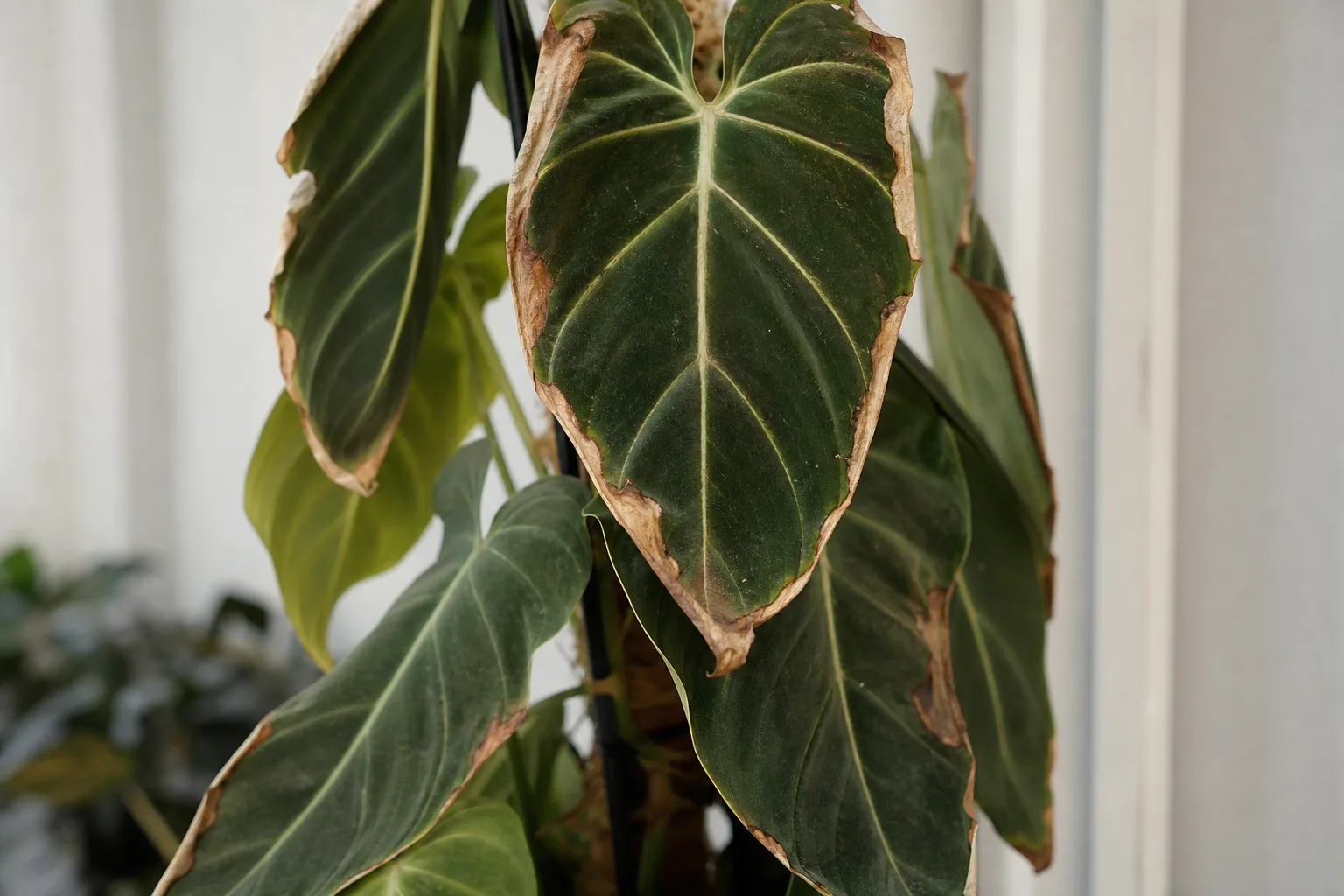
Low Humidity on Philodendron Melanochrysum: Causes, Checks & Fixes
This guide covers low humidity on Philodendron Melanochrysum. See also the general Low Humidity guide, watering, and light pages for this plant.
Low Humidity on Philodendron Melanochrysum: Causes, Checks & Fixes
Quick answer
Low humidity on Philodendron Melanochrysum shows up as stuck cataphylls, torn new leaves, crispy velvet edges, and dry aerial roots that refuse to attach to a moss pole. First step: place a humidifier within a few feet of the plant and aim for roughly 60% relative humidity before misting or Philodendron Melanochrysum repotting guide.
Philodendron Melanochrysum is a Colombian rainforest climber with velvety foliage that evolved in consistently moist air. In homes, winter heating, air conditioning, and open vents can drop relative humidity far below what Philodendron Melanochrysum overview needs for clean leaf unfurling and aerial root attachment. The plant may look watered correctly while new growth fails - because the problem is air moisture around the leaves and roots, not the root zone alone.
Why Philodendron Melanochrysum gets low humidity
Melanochrysum is not a forgiving velvet aroid like heartleaf philodendron. Iowa State Extension lists velour philodendron (P. melanochrysum) among collector species that prefer high humidity, even though many philodendrons tolerate average home air. That tolerance gap matters: general philodendron advice understates how quickly melanochrysum shows stress.
The velvet leaf surface holds a thin humid micro-layer against the blade. When ambient humidity drops, that layer evaporates faster than on smooth-leaved philodendrons. New leaves are the first casualty because the protective cataphyll dries and stiffens before the soft blade can expand, leading to stuck or torn unfurling. Aerial roots on the moss pole need the same moisture; hemiepiphytic climbers like melanochrysum size up when roots attach to a moist support. Dry air leaves them brown, stiff, and unable to grip - which slows leaf sizing even when light is adequate.
Common triggers in real homes include forced-air heating in winter, desk fans pointed at the plant, single-plant placement far from other tropicals, and grow tents or cabinets opened too often. Bathrooms and kitchens help only if the plant still receives bright filtered light; a humid dark corner trades one stress for another.
What low humidity looks like on Philodendron Melanochrysum
Watch for these patterns together on this species:
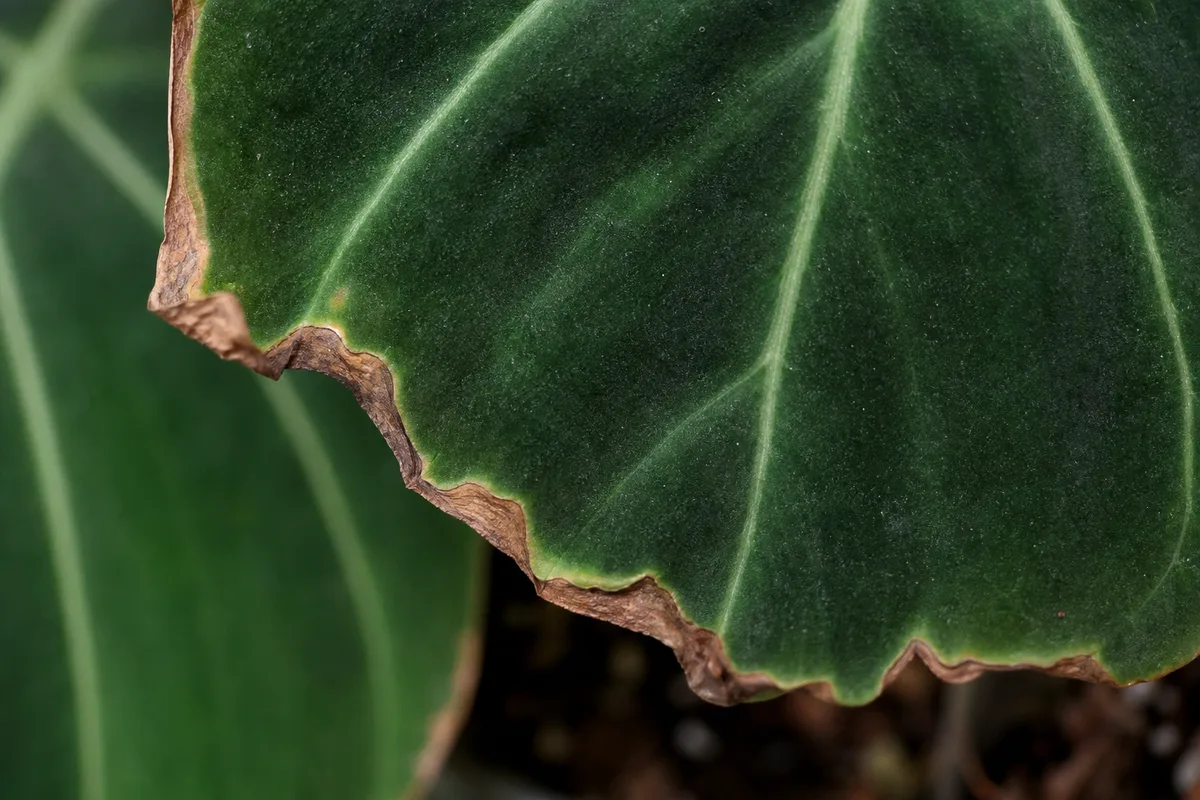
Low Humidity symptoms on Philodendron Melanochrysum - compare with healthy tissue on the same plant.
- New leaves stuck inside a dry, papery cataphyll or tearing as they open
- Crispy brown tips or margins on recently unfurled leaves, not only old lower foliage
- Leaf blades looking dull or slightly cupped inward along the edges
- Aerial roots on the moss pole shriveled, tan, and non-adherent
- Slow or aborted new leaves despite moist, well-draining chunky mix
- Fine spider-mite stippling appearing after prolonged dry air (a secondary risk)
On melanochrysum, the unfurling stage is the clearest signal. A mature dark leaf with only minor tip crisping may be old damage or salt buildup; repeated failure on sequential new leaves almost always points to humidity or airflow at the growing tip.
How to confirm the cause
Use this inspection order before changing watering or repotting:
- Hygrometer at leaf height - Place a meter beside the foliage, not across the room. Readings below 45% for several days strongly support low humidity on this species.
- Newest cataphyll - Peel back gently if safe. A healthy emerging leaf should push freely; a stiff, crackling sheath that tears the blade confirms dry air.
- Aerial root texture - Plump, green-tipped roots reaching into moist moss indicate adequate humidity. Wiry, brittle roots on an otherwise watered pole confirm the air is too dry.
- Airflow path - Trace vents, fans, and door drafts. Direct dry airflow on velvet leaves accelerates edge crisping.
- Watering cross-check - Push your finger into the top 3–5 cm of mix. If soil is soggy and roots are firm, overwatering is unlikely; if mix is appropriately dry and new leaves still tear, humidity is the lead suspect.
Lookalike symptoms to rule out
Underwatering causes limp petioles and dry, lightweight pots, but cataphylls usually open - the blade may be small or crisp afterward, not mechanically torn mid-unfurl. Overfertilizing or hard-water buildup produces tip burn on established leaves while new growth opens normally. Red spider mites add stippling and webbing on undersides; humidity fixes alone will not clear an active infestation. Normal aging yellows the lowest leaf while new growth at the vine tip stays clean.
First fix for Philodendron Melanochrysum
Add consistent humidity at the plant, not occasional misting. Place a cool-mist or evaporative humidifier within 1–2 metres of the foliage and run it long enough each day to keep readings near 60% at leaf level. That is the single most reliable correction for melanochrysum in dry homes.
While humidity rises, keep the moss pole evenly moist - not flooded - so aerial roots have a humid surface to contact. Mist the pole and aerial roots lightly if needed, but avoid soaking velvet leaf blades repeatedly; lingering water on suede-textured foliage can spot or invite fungal issues. Grouping with other tropical plants adds a small buffer but rarely replaces a humidifier for this species.
Make one change at a time. Do not repot, fertilize, and relocate to a new room on the same day as adding humidity.
Step-by-step recovery
After the humidifier is running:
- Move the plant out of direct heating or AC streams while keeping bright indirect light.
- Moisten the moss pole and tuck aerial roots against it with soft ties if they have drifted away.
- Remove only fully dead cataphyll tissue; do not force open a stuck leaf - support humidity and wait 48–72 hours.
- Monitor the next emerging leaf. A clean unfurl with plump aerial roots means the fix is working.
- Reduce watering slightly if higher humidity slows evaporation from the chunky mix - check moisture before each drink.
If two consecutive new leaves open cleanly and roots attach, resume normal Philodendron Melanochrysum watering guide for your light level. If tearing continues above 60% humidity, inspect for mites and confirm the pole stays moist at the attachment zone.
Recovery timeline
Mild cases with one torn leaf often stabilize within two to three weeks once humidity stays steady and the pole is moist. Aerial roots may take four to six weeks to rehydrate and grip the support visibly. Already torn or stuck-open leaves do not repair cosmetically; use the next two growth cycles as your benchmark.
Winter recovery can take longer because heating runs constantly. Expect slower progress in dry months even with a humidifier unless runtime is adequate.
What not to do
- Do not rely on occasional handheld misting as the primary fix - it spikes humidity briefly but leaves melanochrysum dry within an hour.
- Do not place the pot inside a pebble tray and assume that alone solves velvet unfurling at canopy height.
- Do not increase watering to compensate for dry air; wet mix with dry leaves raises root-rot risk without fixing torn cataphylls.
- Do not wipe velvet leaves with wet cloths daily; dry brushing is safer for texture and reduces spotting.
- Do not seal the plant in a cabinet without bright filtered light and airflow; stagnant damp can follow.
- Do not prune the growing tip after one bad leaf unless tissue is clearly dead - the vine needs the apical bud for recovery.
How to prevent low humidity next time
Run a humidifier through heating season and any month readings dip below 50% at the plant. Position melanochrysum where it receives bright indirect light and sits near - but not under - the humidifier outlet. Keep the moss pole on a regular moistening schedule so aerial roots and ambient humidity work together.
Check a hygrometer weekly at leaf height, not eye level across the room. When travel or HVAC maintenance disrupts humidity, expect the next leaf to show stress first - that is your early warning on this species.
When to worry
Low humidity is medium severity on melanochrysum but becomes urgent when:
- Three or more new leaves in a row tear or abort
- Aerial roots remain brittle after four weeks of corrected humidity and a moist pole
- Leaf edges crisp on every new expansion while older leaves also desiccate rapidly
- Stippling and webbing appear on undersides, suggesting mites exploiting dry stress
If humidity is corrected and the next two leaves still fail, review light intensity and root health before assuming the plant is a lost cause. Firm roots and a healthy apical bud justify patience.
Conclusion
Low humidity on Philodendron Melanochrysum is an air-moisture problem that shows on new velvet leaves and aerial roots before it looks like a watering mistake. Confirm with hygrometer readings below 50%, stuck cataphylls, and shriveled pole roots; fix by running a humidifier near the plant and keeping the moss pole moist. Prevent recurrence through steady winter humidity and weekly checks at leaf level. Judge success by clean unfurling on the next growth cycles - not by old torn foliage smoothing out.
When to use this page vs other Philodendron Melanochrysum guides
- Philodendron Melanochrysum watering guide - Use for routine moisture checks before assuming low humidity is the main issue.
- Philodendron Melanochrysum problems hub - Browse all 10 common issues on this species.
- Brown Tips on Philodendron Melanochrysum - Different entry point when symptoms overlap with low humidity.
- Leaf Drop on Philodendron Melanochrysum - Different entry point when symptoms overlap with low humidity.